
An Ice-Cream War
by William Boyd
On This Page
Description
Millions die on the Western Front but in East Africa a quite different war is being waged - one with little point and which is so ignored that it will carry on after the Armistice because no one bothers to tell both sides to stop.Tags
Recommendations













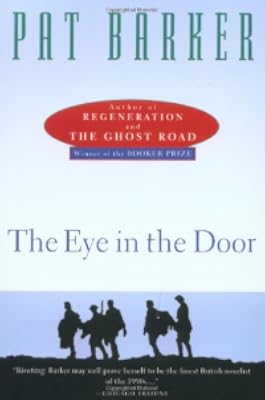
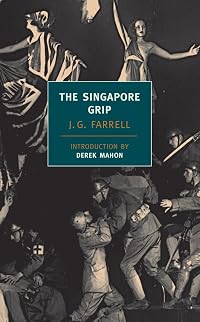


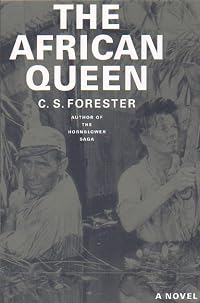



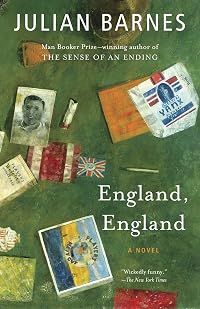




Member Recommendations
Member Reviews
AN ICE-CREAM WAR (1983) is the fourth William Boyd book I've read, but it was one of his first novels. He's written a couple dozen books by now, since he began publishing nearly forty years ago. You'd never know that this was one of his first books, because it's just so damn good, so absorbing and well-crafted that it's hard to put down. Set in East Africa (and England) just before, during and after the First World War, it braids together the story of four different characters - the two Cobb brothers, Gabriel and Felix; an American entrepreneur-farmer, Temple Smith, and Gabriel's bride, Charis. I doubt if too many people know much about the Great War as it was waged in Africa, but Boyd has obviously done his homework about German, show more British and Portuguese East Africa in that era. And Boyd himself was born and grew up in Africa. His Scottish father was a physician in various places there. So he makes the climate, the smells, the sounds, the heat, the flies - the atmosphere - as real as you'll find it anywhere in fiction. Having gone to school in Scotland, Boyd also has some fun with the broad Scottish accents and idiosyncrasies of its particular brand of 'English.' Here's a sample, from Felix's Scottish NCO, Sergeant Gilzean, who's worried about a dark urine he's been passing -
"I've been passin' this drumlie loppert water for a week. I just get a mitchkin, ya ken. A jaup ... I'm fair dotted with worry. This grugous stuff ... it's oorie. It could be a clyre in my culls ... Or my monopolies. My jug. Yes my jug even."
Felix, a Lieutenant with a Nigerian unit, mostly has no idea what his sergeant is saying about half the time, which makes for some rather hilarious exchanges.
Equally hilarious is a disastrous encounter with an English prostitute in which Felix 'sort of' loses his virginity - a classic case of premature ejaculation, which angers the whore, who exclaims -
"Ach, you dirty little bugger .. All over the bloody blankets. Go on ... You dirty little squirter ... Clear off out of it!"
Boyd even manages to make some cringingly hilarious humor from scenes of battle. Gabriel and his men, while advancing on the German lines are suddenly attacked by swarms of angry bees causing them all to retreat in wild disarray, swatting and shouting.
Perhaps one of the most striking of Boyd's talents is his ability to have you chuckling and laughing one minute and gasping in horror the next, as he juxtaposes the comic and the tragic elements of this ridiculous little 'ice-cream war,' sometimes even on the same page. You will find all manner of the savagery of war and its cruel results and side effects here - suicide, adultery, disease (the Spanish influenza epidemic), murders, even a beheading. The English characters often bring to mind the antics of the Monty Python troupe of comic actors. I also thought often of Evelyn Waugh's comic novels of WWII, MEN AT ARMS and OFFICERS AND GENTLEMEN, which I read many years ago.
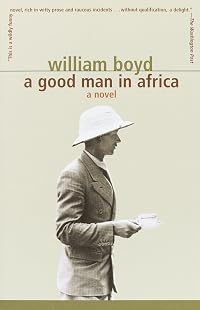
Boyd is a deft master at what he does, combining the comic and the tragic. It's a rare talent, and man, is he GOOD at it. The other Boyd books I've read over the years were A GOOD MAN IN AFRICA, BRAZZAVILLE BEACH, and THE BLUE AFTERNOON. I'm so glad there are still so many more, because, after this one, I definitely want to read more of his work. My highest recommendation.
- Tim Bazzett, author of the memoir, BOOKLOVER show less
"I've been passin' this drumlie loppert water for a week. I just get a mitchkin, ya ken. A jaup ... I'm fair dotted with worry. This grugous stuff ... it's oorie. It could be a clyre in my culls ... Or my monopolies. My jug. Yes my jug even."
Felix, a Lieutenant with a Nigerian unit, mostly has no idea what his sergeant is saying about half the time, which makes for some rather hilarious exchanges.
Equally hilarious is a disastrous encounter with an English prostitute in which Felix 'sort of' loses his virginity - a classic case of premature ejaculation, which angers the whore, who exclaims -
"Ach, you dirty little bugger .. All over the bloody blankets. Go on ... You dirty little squirter ... Clear off out of it!"
Boyd even manages to make some cringingly hilarious humor from scenes of battle. Gabriel and his men, while advancing on the German lines are suddenly attacked by swarms of angry bees causing them all to retreat in wild disarray, swatting and shouting.
Perhaps one of the most striking of Boyd's talents is his ability to have you chuckling and laughing one minute and gasping in horror the next, as he juxtaposes the comic and the tragic elements of this ridiculous little 'ice-cream war,' sometimes even on the same page. You will find all manner of the savagery of war and its cruel results and side effects here - suicide, adultery, disease (the Spanish influenza epidemic), murders, even a beheading. The English characters often bring to mind the antics of the Monty Python troupe of comic actors. I also thought often of Evelyn Waugh's comic novels of WWII, MEN AT ARMS and OFFICERS AND GENTLEMEN, which I read many years ago.
Boyd is a deft master at what he does, combining the comic and the tragic. It's a rare talent, and man, is he GOOD at it. The other Boyd books I've read over the years were A GOOD MAN IN AFRICA, BRAZZAVILLE BEACH, and THE BLUE AFTERNOON. I'm so glad there are still so many more, because, after this one, I definitely want to read more of his work. My highest recommendation.
- Tim Bazzett, author of the memoir, BOOKLOVER show less
This was my first book by William Boyd and it has immediately won him a place on my favorite author’s list. An Ice Cream War is a beautifully written story that delves into a corner of World War I of which very little has been written. Set in Tanzania, Kenya and England, the story follows a number of people of various nationalities whose lives are impacted by the war and who, during the course of the book, come to share unique connections with each other.
I found this a wonderfully readable story, both dark and humorous at times. The portions of the book that were set in England introduced one of the most dysfunctional families I have read about in some time. The American and German were both farmers and neighbours that were destined show more to end up on opposite sides, but they also shared in the stifled coldness of their marriages. One had a wife who never raised her head out of a book, while the other escaped both literally and mentally to her home in Germany. So many excellent characters were scattered throughout this book, including the unforgettable Wheech-Browning, a upper class British dolt whose appearance always brought disaster to someone.
An Ice Cream War is an excellent mix of satire, humor, pathos and great story telling. Both the multiple plot lines and the well developed characters made this a five star read for me. I am so glad that I have finally picked up a book by this author and I look forward to discovering more of his works. show less
I found this a wonderfully readable story, both dark and humorous at times. The portions of the book that were set in England introduced one of the most dysfunctional families I have read about in some time. The American and German were both farmers and neighbours that were destined show more to end up on opposite sides, but they also shared in the stifled coldness of their marriages. One had a wife who never raised her head out of a book, while the other escaped both literally and mentally to her home in Germany. So many excellent characters were scattered throughout this book, including the unforgettable Wheech-Browning, a upper class British dolt whose appearance always brought disaster to someone.
An Ice Cream War is an excellent mix of satire, humor, pathos and great story telling. Both the multiple plot lines and the well developed characters made this a five star read for me. I am so glad that I have finally picked up a book by this author and I look forward to discovering more of his works. show less
This historical novel set in Tanzania, Kenya and the UK during WW I, is darkly humorous and beautifully detailed. The focus is on a group of people whose own lives and plans are spun into disarray by the war and its consequences. Von Bishop enjoys farming in German East Africa, but his wife, Liesl, longs to return to Germany. Across the border, the American, Walter, cares about little in life by his farm, his sisal decorticator, and his future agricultural plans. In England, the Cobb family drifts in the moral and intellectual haze of the 1920s, absorbed in family squabbles. International forces, however, drag each family out of their normal path and into a confusion of life, death and love. The writing is beautifully descriptive, show more portraying the individuals as unregarded pawns who are incapable of making sense of larger historical forces sweeping over them. Boyd's book is largely character driven. There are, honestly speaking, no African characters in the book at all. While one can certainly argue that using a large and obviously relevant group of people merely as a backdrop may seem strange, I appreciate that Boyd focuses on the characters whose story he is telling. This, in my opinion, is preferable to tacking on a modern view of the world through some "sensitive" character who will "understand" the "natives" as is so often done in contemporary historical novels. show less
Dans la tradition des humoristes anglais Evelyn Waugh ou Saki, Boyd passe la vitesse supérieure de foudroyante manière. Le sujet s'y prête : rien moins que la Première Guerre mondiale, sommet d'horreur absurde, plus absurde encore observée dans ces réserves naturelles de grands bizarres que constituaient les colonies allemandes et anglaises d'Afrique-Orientale, de part et d'autre du Kilimandjaro. Ni le pittoresque ni le sarcasme ne manquent au rendez-vous. Ni la fougue ni l'art de tricoter les fils du destin. Boyd sait mettre en relief le pire et le dérisoire, exhibe les plaies de la bêtise, y jette une pincée de sel. Un brio implacable.
For most of us, any mention of World War I conjures up images of trench warfare on the Western front in France and Belgium. However, there were other fronts, including East Africa. Boyd's novel examines the war's effects in East Africa through the experiences of an American resident in British East Africa, a German couple in German East Africa, and an English family whose oldest son was an officer in an Indian Regiment that was sent to East Africa. What appear to be separate stories eventually intersect.
The novel held my interest but failed to engage my emotions. I felt like an observer rather than a participant. I think the characters had a lot to do with that. The characters are all so self-absorbed that the war is merely a means to show more their own ends for each of them. The few female characters all seem underdeveloped.
One of the minor characters steals the scene each time he appears. Wheech-Browning is a government official in British East Africa before the war, and he holds various military posts during the war. He's so focused on following regulations to the letter that he's oblivious to the chaos and destruction that he leaves in his wake. Wheech-Browning is described as a tall and lanky man, and my mental image of him looks a lot like John Cleese. show less
The novel held my interest but failed to engage my emotions. I felt like an observer rather than a participant. I think the characters had a lot to do with that. The characters are all so self-absorbed that the war is merely a means to show more their own ends for each of them. The few female characters all seem underdeveloped.
One of the minor characters steals the scene each time he appears. Wheech-Browning is a government official in British East Africa before the war, and he holds various military posts during the war. He's so focused on following regulations to the letter that he's oblivious to the chaos and destruction that he leaves in his wake. Wheech-Browning is described as a tall and lanky man, and my mental image of him looks a lot like John Cleese. show less
An entertaining and occasionally laugh out loud account of warfare in East Africa during WWI. As with many of William Boyd's books, the reader has to pick the plot out from the very dense background detail and though the writing is of a consistently high standard, it can be difficult at times. It certainly took me a while to get into this novel - but once the 'egregious' Cobb family made their appearance, the entertainment level certainly moved up a notch or two.
Events alternate between the farcical and the gruesome. Some quite horrific events interspersed with episodes of military incompetence - at one point a ship full of troops is unsure whether it is supposed to land at Beach A, Beach B or Beach C. Rather like conducting a war in a show more branch of Argos. There is an impressive sense of the ridiculous - two sides in a conflict unable to quite understand what they are fighting over, and struggling to muster sufficient enmity to make it convincing. And the sergeant who spoke entirely in Celtic dialect was fab.
What fascinated me in particular about this book was the character Felix - an 'odious little prig' according to his sister-in-law. An accurate description, and yet I rather liked him by the end. If this wasn't a book written by one of my fave authors I would no doubt be grumbling about inconsistent characterisation, but under the circumstances I'd have to conclude that it's a highly skilled depiction of the effects of war on the individual show less
Events alternate between the farcical and the gruesome. Some quite horrific events interspersed with episodes of military incompetence - at one point a ship full of troops is unsure whether it is supposed to land at Beach A, Beach B or Beach C. Rather like conducting a war in a show more branch of Argos. There is an impressive sense of the ridiculous - two sides in a conflict unable to quite understand what they are fighting over, and struggling to muster sufficient enmity to make it convincing. And the sergeant who spoke entirely in Celtic dialect was fab.
What fascinated me in particular about this book was the character Felix - an 'odious little prig' according to his sister-in-law. An accurate description, and yet I rather liked him by the end. If this wasn't a book written by one of my fave authors I would no doubt be grumbling about inconsistent characterisation, but under the circumstances I'd have to conclude that it's a highly skilled depiction of the effects of war on the individual show less
An Ice Cream War is the story of American, German, and British lives in the little-known East African theater of World War I. As indicated by the book title, the British expected the campaign to be a joke. The action takes place mostly in the European colonies of East Africa and England between 1914 and 1919. Some of the characters expect war, and some doubt it will occur, but none of the characters have any idea how devastating the war will be to everyone, even those far from the battlefield.
The book draws four separate narrative strands together in an engaging novel of war, love and revenge. Walter Smith owns a farm in British East Africa. Just across the border, in German East Africa, are his neighbors, Erich von Bishop and his wife show more Liesl. Back in England Felix Cobb returns home from boarding school for the wedding of his older brother, Gabriel. Gabriel is a professional soldier, a captain in the British Army, but Felix is more of an intellectual currently dabbling with pacifism. For all their flaws, the important characters share a sense of humanity and fatalism in the face of hardship. Through the course of the novel some issues are resolved, but few if any are resolved in ways that the characters want or expect. Despite the beliefs they held concerning armed conflict between nations before the outbreak of war, their beliefs change, and they come to realize that no one anywhere is immune to the effects of war. show less
The book draws four separate narrative strands together in an engaging novel of war, love and revenge. Walter Smith owns a farm in British East Africa. Just across the border, in German East Africa, are his neighbors, Erich von Bishop and his wife show more Liesl. Back in England Felix Cobb returns home from boarding school for the wedding of his older brother, Gabriel. Gabriel is a professional soldier, a captain in the British Army, but Felix is more of an intellectual currently dabbling with pacifism. For all their flaws, the important characters share a sense of humanity and fatalism in the face of hardship. Through the course of the novel some issues are resolved, but few if any are resolved in ways that the characters want or expect. Despite the beliefs they held concerning armed conflict between nations before the outbreak of war, their beliefs change, and they come to realize that no one anywhere is immune to the effects of war. show less
Members
- Recently Added By
Lists

The Guardian's 1000 Novels Everyone Must Read
1,005 works; 552 members

Booker Prize
491 works; 62 members

Favourite Books
1,820 works; 308 members

Man Booker Prize Longlist 1982
6 works; 1 member

Booker Prize Shortlist: Titles Not Yet Read
161 works; 4 members

THE WAR ROOM
813 works; 24 members

Books whose title names an object usually found in the kitchen
171 works; 14 members
Author Information

78+ Works 20,468 Members
William Boyd is a writer who was born in Ghana on March 7, 1952. He was educated at Gordonstoun school; and then the University of Nice, France, the University of Glasgow, and finally Jesus College, Oxford. Between 1980 and 1983 he was a lecturer in English at St Hilda's College, Oxford, and it was while he was there that his first novel, A Good show more Man in Africa (1981), was published. He was appointed Commander of the Order of the British Empire in 2005. Boyd was selected in 1983 as one of the 20 "Best of Young British Novelists" in a promotion run by Granta magazine and the Book Marketing Council. His novels include: A Good Man in Africa, for which he won the Whitbread Book award and Somerset Maugham Award in 1981; An Ice-Cream War, which won the John Llewellyn Rhys Prize and was nominated for the Booker Prize for Fiction in 1982; Brazzaville Beach, published in 1991, and Any Human Heart, which was long-listed for the Booker Prize in 2002. Restless, the tale of a young woman who discovers that her mother had been recruited as a spy during World War II, was published in 2006 and won the Novel Award in the 2006 Costa Book Awards. Boyd published Waiting for Sunrise: A Novel in early 2012. In 2015 his title, Sweet Caress: The Many Lives of Clay, Amory made the new Zealand Best Seller List. (Bowker Author Biography) show less
Awards and Honors
Series
Belongs to Publisher Series
Penguin Decades (1980s)
Work Relationships
Common Knowledge
- Canonical title
- An Ice-Cream War
- Original title
- An Ice-Cream War
- Original publication date
- 1982
- People/Characters
- Temple Smith; Erich Von Bishop; Liesl Von Bishop; Felix Cobb; Gabriel Cobb; Charis Lavery Cobb
- Important places
- German East Africa (included present-day Burundi, Rwanda, and the mainland part of Tanzania); Kenya (as British East Africa)
- Important events
- World War I (1914 | 1918); East Africa Campaign
- First words
- 'What do you think would happen,' Colonel Theodore Roosevelt asked his son Kermit, 'if I shot an elephant in the balls?'
Classifications
Statistics
- Members
- 1,028
- Popularity
- 25,350
- Reviews
- 17
- Rating
- (3.67)
- Languages
- 8 — Dutch, English, Finnish, French, German, Polish, Spanish, Swedish
- Media
- Paper, Audiobook, Ebook
- ISBNs
- 28
- ASINs
- 7