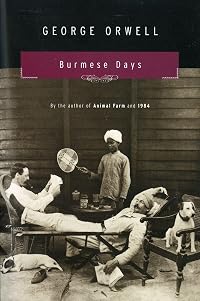
Burmese Days
by George Orwell 
On This Page
Description
George Orwell's first novel Burmese Days, presents a devastating picture of British colonial rule, inspired by his experiences in the Indian Imperial Police in Burma. The story describes both indigenous corruption and imperial bigotry. John Flory is a white timber-merchant in 1920s in Burma. Disillusioned by imperial life, Flory defies orthodoxy and befriends Indian Dr. Veraswami. The doctor is being pursued by a corrupt magistrate, U Po Kyin, who is orchestrating his downfall. The only show more thing that can save his reputation is membership of the all-white Club, and Flory is in a position to help. Flory's life is also upended by the arrival of beautiful Parisian Elizabeth Lackersteen, who offers an escape from loneliness and the deceit of colonial life. 'Burmese Days' is a spectacular examination of the debasing effect of empire on occupied and occupier. show lessTags
Recommendations
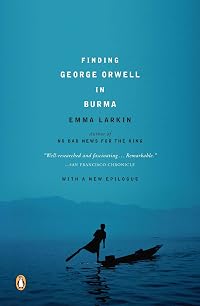
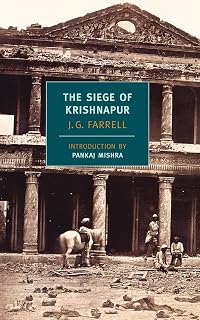
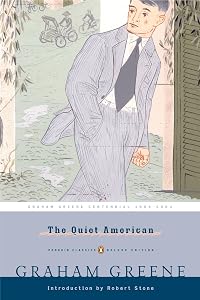
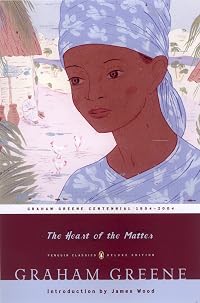
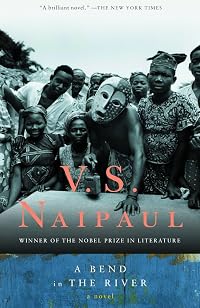
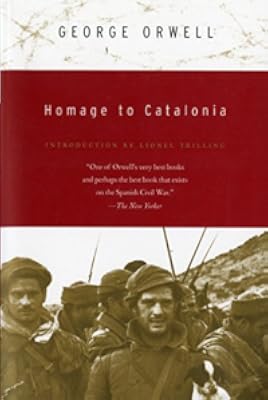

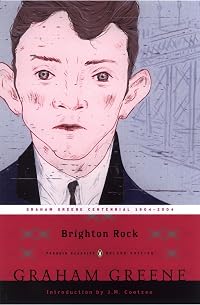
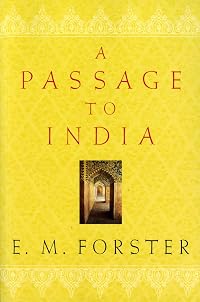















Member Recommendations
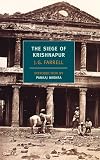
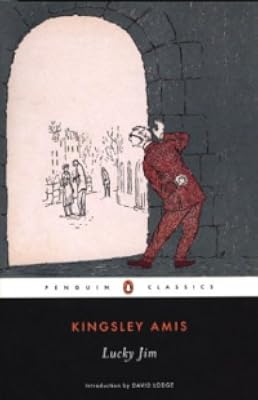
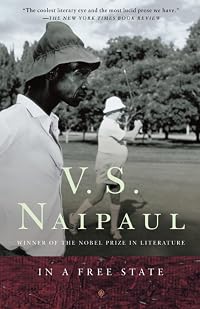
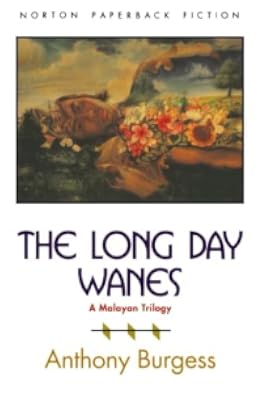
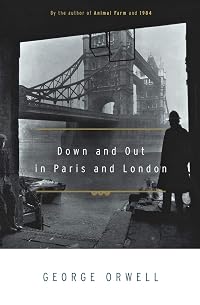
lmichet Another work of biting commentary about the British in India
Also recommended by Philosofiction
40

by anonymous user
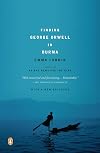
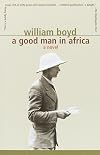
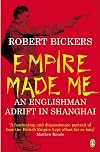



by aprille
Member Reviews
The first novel by Orwell uses his own experience as a policeman in Burma between 1922 and 1928 (technically he comes back to England in 1927 due to his illness but does not formally leave the service until 1928). In those days Burma (now Myanmar) is controlled from Delhi as part of the British Raj. Orwell invents a district, Kyauktada, but uses real locations to situate it (matching places he had served) - on a railway branch off Mandalay, on the Irrawaddy River. Considering how close his invented locale is to the real world, one wonders how close the characters are to the people he met...
Talking about the characters - it is the waning days of the empire and the British feel entitled and superior. Even the only somewhat positive show more character, Flory, is not the best example. Racism, classism and pure hatred for the natives seem to be the norm - Flory is the only one who sees them as people, who befriends the local doctor (who is Indian and not native but still too brown for the rest of the English people) and is interested in the local as people and not just as servants and as someone who needs to be used.
And then there are the natives. Classism is not reserved for the white men and women - the locals appear to be as bad more often than not. There are some characters who feel almost like a caricature but I suspect that was intentional - the whole novel amplifies the greed and self-importance of anyone who had achieved something.
And then Elizabeth arrives - a young woman who had remained orphaned so is shipped to her aunt in Burma (as was usual at the times) and is expected to find a husband. Flory is the obvious choice and for a bit it seems like it can work - but from the beginning Elizabeth is horrified by the notion that the natives are interesting or worth understanding or that the English are not superior. A young and dashing captain showing up does not help matter much.
The novel is suffocating - most of it happens while everyone is waiting for the rain and the writing amplifies that - small spaces, woods closing on people... You can feel the heat (and then the rain when it finally comes). The love story that is technically in the center of the novel is soon joined by death while the local club is still proud that they may be the last one that had never allowed anyone native (or brown) in their ranks.
The ending is designed to distress - not that I expected a happy ending but Orwell did not pull his punches when ending up with happiness for the people who deserve it the least.
Read as a straight novel, Burmese Days is a tragic love story at the waning days of the Empire. But pull up the covers a bit and you see the rotting corpse of the Empire - from the men and women who leave England to "help" the Raj to the locals who seem to have learned the worst possible lessons from their "betters". I am sure that at least some of it was satire but the line is blurred and while it was probably sensational in the 30s when it was published, almost a century later, we know that most of that could have happened. show less
Talking about the characters - it is the waning days of the empire and the British feel entitled and superior. Even the only somewhat positive show more character, Flory, is not the best example. Racism, classism and pure hatred for the natives seem to be the norm - Flory is the only one who sees them as people, who befriends the local doctor (who is Indian and not native but still too brown for the rest of the English people) and is interested in the local as people and not just as servants and as someone who needs to be used.
And then there are the natives. Classism is not reserved for the white men and women - the locals appear to be as bad more often than not. There are some characters who feel almost like a caricature but I suspect that was intentional - the whole novel amplifies the greed and self-importance of anyone who had achieved something.
And then Elizabeth arrives - a young woman who had remained orphaned so is shipped to her aunt in Burma (as was usual at the times) and is expected to find a husband. Flory is the obvious choice and for a bit it seems like it can work - but from the beginning Elizabeth is horrified by the notion that the natives are interesting or worth understanding or that the English are not superior. A young and dashing captain showing up does not help matter much.
The novel is suffocating - most of it happens while everyone is waiting for the rain and the writing amplifies that - small spaces, woods closing on people... You can feel the heat (and then the rain when it finally comes). The love story that is technically in the center of the novel is soon joined by death while the local club is still proud that they may be the last one that had never allowed anyone native (or brown) in their ranks.
The ending is designed to distress - not that I expected a happy ending but Orwell did not pull his punches when ending up with happiness for the people who deserve it the least.
Read as a straight novel, Burmese Days is a tragic love story at the waning days of the Empire. But pull up the covers a bit and you see the rotting corpse of the Empire - from the men and women who leave England to "help" the Raj to the locals who seem to have learned the worst possible lessons from their "betters". I am sure that at least some of it was satire but the line is blurred and while it was probably sensational in the 30s when it was published, almost a century later, we know that most of that could have happened. show less
It feels good to return to Orwell. Although this is his first novel, the style of the great master of political literary prose is already on display.
It's easy to condemn colonialism and you can choose to do it in a number of ways. You could take a point of view of the oppressed, you could describe the horrors of the occupation, tell stories of people who are subjected to appalling humiliation, who are beaten to pulp without a cause, who are raped just because it is a normal thing to do, who are murdered indiscriminately in a punishment for their discontent. There are many good books written about these dark matters.
You could choose a somewhat different approach and instead of horrors recount tales of boredom and annoyance, you could show more focus on the rulers and their difficulties of managing the chaos surrounding them, you could show on how the expected privileges are lost and how hard it is to continue without them. There are many bad books about this gone with the wind.
Alternatively, like Orwell here, you could pretend that you are writing a book of the second kind, when in reality you are producing something even more disturbing than the first. You focus on the inherent weakness of human nature. You show how a position of privilege brings out the worst both in those who have this privileged status and in those who don't but aspire to have it. Turns out, in such an environment there is no possibility for a decent human being to exist. Not surprisingly there not a single likable character in this novel.
Suddenly, it dawns on a reader that this is not just an issue of a colonial society, this is equally valid in our seemingly more progressive times. As long as we have social inequality, people with similar values to those of Ellis or Westfield or U Po Kyin will dominate the world, protecting or acquiring their status with any means necessary, trumpeting their right to having what they have and wanting what they want, no matter where their perceived sense of entitlement comes from. show less
It's easy to condemn colonialism and you can choose to do it in a number of ways. You could take a point of view of the oppressed, you could describe the horrors of the occupation, tell stories of people who are subjected to appalling humiliation, who are beaten to pulp without a cause, who are raped just because it is a normal thing to do, who are murdered indiscriminately in a punishment for their discontent. There are many good books written about these dark matters.
You could choose a somewhat different approach and instead of horrors recount tales of boredom and annoyance, you could show more focus on the rulers and their difficulties of managing the chaos surrounding them, you could show on how the expected privileges are lost and how hard it is to continue without them. There are many bad books about this gone with the wind.
Alternatively, like Orwell here, you could pretend that you are writing a book of the second kind, when in reality you are producing something even more disturbing than the first. You focus on the inherent weakness of human nature. You show how a position of privilege brings out the worst both in those who have this privileged status and in those who don't but aspire to have it. Turns out, in such an environment there is no possibility for a decent human being to exist. Not surprisingly there not a single likable character in this novel.
Suddenly, it dawns on a reader that this is not just an issue of a colonial society, this is equally valid in our seemingly more progressive times. As long as we have social inequality, people with similar values to those of Ellis or Westfield or U Po Kyin will dominate the world, protecting or acquiring their status with any means necessary, trumpeting their right to having what they have and wanting what they want, no matter where their perceived sense of entitlement comes from. show less
The Empire, the generations of British rule over vast territories and peoples, then as now perceived by those peoples as fundamentally iniquitous, remains largely unexamined in the consciousness, and indeed the conscience, of the British themselves. So this easily overlooked first novel from George Orwell, based on his experiences as an imperial official in small outposts in 1920s Burma, and taking a critical, at times cynical line on any redeeming mission, is welcome, and ought still to feel controversial. Although a first novel, it holds together well, with credible characters and plot. Orwell’s characteristic style and content are already evident - the sententiousness, the plain speaking, the novel similes, the disdain for the show more hypocrisies of his fellow Britons and their own obliviousness to them. Less familiar from his later works is the numerous, rather heady description of sights, smells, colours of the East. The flowers and plants, the various peoples and the heat are all carefully referenced. show less
Some books feel less like a story and more like a slow suffocation. Burmese Days is one of them. George Orwell’s first novel is a bleak, airless account of life in colonial Burma (now Myanmar) in the 1920s, where the British elite cling desperately to power in a world they barely understand, let alone deserve to control. It is not a novel of heroes, nor of redemption. It is a novel about cowardice—the kind that lets corrupt systems persist because those within them are too afraid, too comfortable, or too exhausted to fight.
If that feels uncomfortably relevant to modern America, it should.
A Colonial House of Cards
The British Raj, under which Burma was governed as part of India, was an empire sustained by illusion. The colonizers were show more not, as they claimed, bringing civilization—they were holding onto it by their fingernails, lording over a population that despised them while maintaining the fiction that they were in control. Orwell captures this in the novel’s central setting: the European Club, where a handful of British officials, merchants, and military men isolate themselves in drunken self-congratulation, ignoring the reality crumbling outside their walls.
It’s not hard to draw a modern parallel. The Republican Party—particularly its elected officials—have built a similar house of cards. Trump’s second presidency rests on a foundation of denial: denial of electoral realities, of policy consequences, of international fallout. To acknowledge the truth would be to admit that the system they have propped up is unsustainable. So they don’t. They circle the wagons, flatter themselves, and pretend things will hold together a little longer.
The Man Who Knows Better
The novel’s protagonist, John Flory, is an outsider among his own kind. He recognizes the corruption of colonial rule and the pettiness of his fellow Brits. He understands, in a way they do not, that the empire is rotting from within. But understanding is not the same as action. Flory does not resist the system; he tolerates it. He despises the men at the Club but still drinks with them. He pities the Burmese people but does nothing to help them. He sees what’s wrong but lacks the courage to stand apart.
Sound familiar?
Flory could be a moderate Republican today, too afraid of the far-right to say out loud what they admit in private. He could be a Democrat who talks about the Constitution while failing to defend it when it counts. He could be any ordinary American who knows things are headed in the wrong direction but assumes someone else will step in to "fix it" before it gets too bad.
In short, Flory is a person who knows better but looks away. And Orwell makes clear what happens to such people: the system they enable consumes them.
The Slow Collapse of a Corrupt System
Burmese Days is not a fun book. It is a slow, grim march toward an ending that feels both inevitable and avoidable. Orwell doesn’t offer much hope, either. His later works (1984, Animal Farm) suggest he believed corrupt systems rarely fall because of moral awakening. They fall when they finally become too dysfunctional to sustain themselves. By then, the damage is usually irreversible.
The United States is not British Burma. But the lesson holds. There is no guarantee that someone will step in at the last moment to prevent further decline. Waiting and hoping are not strategies. If Orwell were alive today, he would likely see America’s predicament with the same cold clarity he brought to this book: a system upheld by those too afraid to challenge it and too cynical to fix it, moving steadily toward collapse.
Recommendation
Burmese Days is not a pleasant read, but if you've made it this far in my review, I recommend you attempt it. The book drags. It suffocates. But that is also the source of its power. Orwell understood something fundamental about corruption and abuse of power: it does not require grand conspiracies or brilliant villains to persist. It only requires enough people to look away.
That is as true now as it was then.
Postscript
I realize this review isn’t in the same vein as my others—no key takeaways, no lessons for the future. Burmese Days is so bleak that it’s hard to focus on anything constructive. The novel offers no redemption, no change, no grand moment of realization. And yet, that might be the most important lesson of all: when corruption and cowardice go unchallenged, nothing changes.
That said, a few days after I drafted the review, I pulled together a few key points that we would do well to remember:
Complicity enables corrupt systems. In Burmese Days, colonial rule persists not because it is strong, but because too many people—like Flory—see its flaws and do nothing. In politics today, the same holds true. Corrupt systems do not need active defenders; they survive through silence and inaction.
Colonialism, like all oppressive systems, poisons both the oppressors and the oppressed. The British in Kyauktada are not noble rulers but petty, bitter people clinging to an illusion of superiority. Meanwhile, Burmese elites like U Po Kyin manipulate the system for their own gain. This echoes today’s world, where power structures—whether political, economic, or social—create winners and losers but leave everyone compromised.
Power is about perception, not legitimacy. U Po Kyin rises not through skill or merit, but by controlling the narrative. Orwell understood something that still holds true today: people in power often maintain their grip not by proving their worth, but by shaping the public’s understanding of reality.
Isolation and loneliness can be just as destructive as tyranny. Flory’s downfall is not just political—it is deeply personal. He lacks connection, purpose, and the will to fight. In today’s fractured society, where disillusionment and apathy are rampant, Orwell’s warning is clear: when people feel powerless, they disengage—and when they disengage, those in power face no resistance.
The system does not punish the guilty—it erases the weak. Flory, Veraswami, and anyone else who fails to conform to the colonial order are cast aside. Meanwhile, U Po Kyin dies comfortably, Elizabeth moves on, and the British Club remains unchanged. This is Orwell’s coldest, most sobering truth: corrupt systems do not collapse from their own failures; they persist because they are designed to crush those who challenge them.
Nothing changes unless people fight for it. Burmese Days ends exactly as it began—nothing is different because no one took a stand. Orwell would later refine this idea in Animal Farm and 1984, but the core message is here: power concedes nothing on its own. If people wait for things to get better, they won’t.
This is not a hopeful book, and it does not pretend to be. Orwell does not offer solutions—he simply holds up a mirror. The question he forces us to ask is whether we will look at the reflection and accept it, or whether we will finally decide to change what we see. show less
If that feels uncomfortably relevant to modern America, it should.
A Colonial House of Cards
The British Raj, under which Burma was governed as part of India, was an empire sustained by illusion. The colonizers were show more not, as they claimed, bringing civilization—they were holding onto it by their fingernails, lording over a population that despised them while maintaining the fiction that they were in control. Orwell captures this in the novel’s central setting: the European Club, where a handful of British officials, merchants, and military men isolate themselves in drunken self-congratulation, ignoring the reality crumbling outside their walls.
It’s not hard to draw a modern parallel. The Republican Party—particularly its elected officials—have built a similar house of cards. Trump’s second presidency rests on a foundation of denial: denial of electoral realities, of policy consequences, of international fallout. To acknowledge the truth would be to admit that the system they have propped up is unsustainable. So they don’t. They circle the wagons, flatter themselves, and pretend things will hold together a little longer.
The Man Who Knows Better
The novel’s protagonist, John Flory, is an outsider among his own kind. He recognizes the corruption of colonial rule and the pettiness of his fellow Brits. He understands, in a way they do not, that the empire is rotting from within. But understanding is not the same as action. Flory does not resist the system; he tolerates it. He despises the men at the Club but still drinks with them. He pities the Burmese people but does nothing to help them. He sees what’s wrong but lacks the courage to stand apart.
Sound familiar?
Flory could be a moderate Republican today, too afraid of the far-right to say out loud what they admit in private. He could be a Democrat who talks about the Constitution while failing to defend it when it counts. He could be any ordinary American who knows things are headed in the wrong direction but assumes someone else will step in to "fix it" before it gets too bad.
In short, Flory is a person who knows better but looks away. And Orwell makes clear what happens to such people: the system they enable consumes them.
The Slow Collapse of a Corrupt System
Burmese Days is not a fun book. It is a slow, grim march toward an ending that feels both inevitable and avoidable. Orwell doesn’t offer much hope, either. His later works (1984, Animal Farm) suggest he believed corrupt systems rarely fall because of moral awakening. They fall when they finally become too dysfunctional to sustain themselves. By then, the damage is usually irreversible.
The United States is not British Burma. But the lesson holds. There is no guarantee that someone will step in at the last moment to prevent further decline. Waiting and hoping are not strategies. If Orwell were alive today, he would likely see America’s predicament with the same cold clarity he brought to this book: a system upheld by those too afraid to challenge it and too cynical to fix it, moving steadily toward collapse.
Recommendation
Burmese Days is not a pleasant read, but if you've made it this far in my review, I recommend you attempt it. The book drags. It suffocates. But that is also the source of its power. Orwell understood something fundamental about corruption and abuse of power: it does not require grand conspiracies or brilliant villains to persist. It only requires enough people to look away.
That is as true now as it was then.
Postscript
I realize this review isn’t in the same vein as my others—no key takeaways, no lessons for the future. Burmese Days is so bleak that it’s hard to focus on anything constructive. The novel offers no redemption, no change, no grand moment of realization. And yet, that might be the most important lesson of all: when corruption and cowardice go unchallenged, nothing changes.
That said, a few days after I drafted the review, I pulled together a few key points that we would do well to remember:
This is not a hopeful book, and it does not pretend to be. Orwell does not offer solutions—he simply holds up a mirror. The question he forces us to ask is whether we will look at the reflection and accept it, or whether we will finally decide to change what we see. show less
Let's get the bad out the way first, this has not aged well. The language used to describe the native people, the attitudes are difficult to stomach at this remove. I can understand not being able to put that aside, it jolted me every time, and it is throughout.
Having got that out the way. this is not a flattering portrait of the empire and I don't think it is meant to be. The story is set in a small town in Burma, where the small white community revolves around the Club. There is a lot of drinking goes on and not a lot of working. The club is in ferment as there's been an edict from the government that clubs should elect a native member, which gives rise to exactly the kind of racism you'll expect from my opening paragraph. It is not show more pretty. Of the local natives, we see the scheming of a local deputy against the doctor, with the prize being the club membership. They contrast in way of going about things and make for an odd pair of adversaries. Things change when Elizabeth arrives, a young lady out of England. Flory falls for her, turns over a new leaf and, ultimately, fails to understand the gulf between her and himself. He is the most relatable of the whites and the one we spend the most time with. He has odd views, somewhat communist and, to the modern ear, more liberal and more palatable, but he still takes a native mistress and treats her badly. He is the most sympathetic of the whites portrayed, but, ultimately, is not sufficiently strong enough of character or morals to stand up against the rest of the whites. He is not persuasive enough to get anyone else to see his perspective. It is ironic that the most sympathetic to the native people should be undermined by the schemes of a native.
So, enter with care, know what you are going into. If you can get through that, this is a not at all tender portrait of the empire in action. Seems to me a dammed good thing it ended. show less
Having got that out the way. this is not a flattering portrait of the empire and I don't think it is meant to be. The story is set in a small town in Burma, where the small white community revolves around the Club. There is a lot of drinking goes on and not a lot of working. The club is in ferment as there's been an edict from the government that clubs should elect a native member, which gives rise to exactly the kind of racism you'll expect from my opening paragraph. It is not show more pretty. Of the local natives, we see the scheming of a local deputy against the doctor, with the prize being the club membership. They contrast in way of going about things and make for an odd pair of adversaries. Things change when Elizabeth arrives, a young lady out of England. Flory falls for her, turns over a new leaf and, ultimately, fails to understand the gulf between her and himself. He is the most relatable of the whites and the one we spend the most time with. He has odd views, somewhat communist and, to the modern ear, more liberal and more palatable, but he still takes a native mistress and treats her badly. He is the most sympathetic of the whites portrayed, but, ultimately, is not sufficiently strong enough of character or morals to stand up against the rest of the whites. He is not persuasive enough to get anyone else to see his perspective. It is ironic that the most sympathetic to the native people should be undermined by the schemes of a native.
So, enter with care, know what you are going into. If you can get through that, this is a not at all tender portrait of the empire in action. Seems to me a dammed good thing it ended. show less
This is another of those discoveries thanks to the 1001 Books to Read Before You Die list. I have read Orwell's better known works (1984 and Animal Farm) but I didn't even know about this book until the 1001 list came out. I also didn't know that Orwell spent a number of years in Burma (before the name was changed to Myanmar) as a military policeman. That sojourn had a life-changing effect on Eric Blair (George Orwell is a pseudonym for Blair).
The central figure of this book is John Flory, a middle-aged Englishman who has spent most of his adult years as a timber merchant in Burma. Flory has a prominent birthmark on his face about which he is very self-conscious. He has never returned to England and now he is more Burman than English, a show more fact that does not endear him to the other members of the British Raj stationed in the small town of Kyauktada. The few English inhabitants gather daily and nightly in the English club where there is copious alcohol if not ice to cool the drinks. The weather is hot and dry at the opening of the book and everyone's nerves are frayed. The situation is exacerbated by a dictum from on high that there should be at least one native allowed into the club membership. Flory is good friends with the Indian doctor, Veraswami, and would not mind if he was allowed in the club but most of the other members are strident racists. Trouble is brewing. Into this boiling mixture comes the beautiful Elizabeth Lackersteen, the orphaned niece of the alcoholic manager of a timber firm. Flory is instantly smitten and, as the only bachelor on hand, has a good chance of wooing Elizabeth. In reality, Flory is much too good for Elizabeth who is shallow and rather stupid. After a day when Flory takes Elizabeth out on a shooting expedition and they bag a leopard it looks like Flory will propose and Elizabeth will accept. An earthquake and the imminent arrival of an Honourable with the military police interrupt. From then on it is downhill for Flory.
Many years ago I stumbled across the novels and short stories of W. Somerset Maugham which were set amongst the British stations in the East. This book reminded me a lot of Maugham and, according to the introduction by David Eimer, it is highly likely that Orwell was influenced by Maugham's writing which would have been readily available in Burma when Orwell was stationed there. The British Empire, like most colonial regimes, pillaged the land and resources of Burma and treated the native inhabitants with bigotry and oppression. It seems that the current deplorable state of the Rohingya people in Myanmar even has roots in the British rule of the country. show less
The central figure of this book is John Flory, a middle-aged Englishman who has spent most of his adult years as a timber merchant in Burma. Flory has a prominent birthmark on his face about which he is very self-conscious. He has never returned to England and now he is more Burman than English, a show more fact that does not endear him to the other members of the British Raj stationed in the small town of Kyauktada. The few English inhabitants gather daily and nightly in the English club where there is copious alcohol if not ice to cool the drinks. The weather is hot and dry at the opening of the book and everyone's nerves are frayed. The situation is exacerbated by a dictum from on high that there should be at least one native allowed into the club membership. Flory is good friends with the Indian doctor, Veraswami, and would not mind if he was allowed in the club but most of the other members are strident racists. Trouble is brewing. Into this boiling mixture comes the beautiful Elizabeth Lackersteen, the orphaned niece of the alcoholic manager of a timber firm. Flory is instantly smitten and, as the only bachelor on hand, has a good chance of wooing Elizabeth. In reality, Flory is much too good for Elizabeth who is shallow and rather stupid. After a day when Flory takes Elizabeth out on a shooting expedition and they bag a leopard it looks like Flory will propose and Elizabeth will accept. An earthquake and the imminent arrival of an Honourable with the military police interrupt. From then on it is downhill for Flory.
Many years ago I stumbled across the novels and short stories of W. Somerset Maugham which were set amongst the British stations in the East. This book reminded me a lot of Maugham and, according to the introduction by David Eimer, it is highly likely that Orwell was influenced by Maugham's writing which would have been readily available in Burma when Orwell was stationed there. The British Empire, like most colonial regimes, pillaged the land and resources of Burma and treated the native inhabitants with bigotry and oppression. It seems that the current deplorable state of the Rohingya people in Myanmar even has roots in the British rule of the country. show less
”Time passed, and each year Flory found himself less at home in the world of the sahibs, more liable to get into trouble when he talked seriously on any subject whatever. So he had learned to live inwardly, secretly, in books and secret thoughts that could not be uttered. Even his talks with the doctor were kind of talking to himself; for the doctor, a good man, understood little of what was said to him. But it is a corrupting thing to live one’s real life in secret. One should live with the stream of life, not against it.” (Page 78)
This was Orwell’s first novel although that wasn’t apparent to me. While it didn’t have any of the otherworldly elements of his most well-known works, it was very well written and very enjoyable show more and at the same time maddening, as it contained all the elements usually found in works that attempt to describe life under British imperialism in India and, in this case, 1920s Burma where Orwell was stationed. He drew from his experiences to write this novel.
The bleakness that is evident in his dystopian novels is evident here as well. The blatant racism is shocking but apparently very common among those English stationed in the colonies at the time. There are no holds barred so be prepared for deplorable language in describing how the English spoke of and treated the natives.
John Flory is the exception. He’s never gone home in the fifteen or so years that he’s been stationed here, working for a lumber company. He enjoys the land and its people and his outspokenness, especially at the English club gets him in constant frays with the rest of the English. His closest friend is a native doctor. Flory is a vehicle for Orwell to express his disdain for the English Imperialism in its dying days. Flory’s loneliness and hopelessness seems about to be assuaged when a niece of one of the other Englishmen comes to live with him and Flory hopes for someone to talk to and share some of his life with. He makes feeble attempts to convince her of the wonderful qualities of Burmese life but she is a stalwart racist who can’t tolerate the native population. You know this relationship isn’t going to work and poor Flory is going to lose out in the end. And of course, he does.
I’ve read quite a few books about the British colonialism in the East but this book I have to say, is the most brutal depiction of life in the east. I still need to read [A Passage to India] which may offer a different perspective but I doubt it. This was quite brilliant. I’ll read more of Orwell’s early works. show less
Members
- Recently Added By
Published Reviews
Overall, Burmese Days is a thoroughly impressive piece of work which is a suspenseful, tragic and at times beautiful depiction of upper Burma. It marks a great contribution towards an artistic reflection of the issue of race (and more subtly in the text, gender) as well as providing insight into the corruption and immorality behind Anglo- Indian imperialism.
An undeniable masterpiece.
An undeniable masterpiece.
added by John_Vaughan
Lists

The Guardian's 1000 Novels Everyone Must Read
1,005 works; 550 members

1001 Books You Must Read Before You Die
1,448 works; 1,134 members
20th Century Literature
1,161 works; 54 members

Top Five Books of 2020
982 works; 348 members

Western World's Greatest Books - Project Gutenberg
295 works; 15 members

In or About the 1930s
198 works; 27 members

Top Five Books of 2017
757 works; 230 members

One Book, Many Authors
441 works; 40 members

1930s
262 works; 5 members

Books Read in 2023
5,547 works; 145 members

My Wishlist
9 works; 1 member

Books Read in 2017
4,249 works; 129 members

New Lifetime Reading Plan by Fadiman and Major
225 works; 5 members

Books Read in 2011
684 works; 20 members

Best British Empire History Books
39 works; 8 members

Books With Time Words in the Title
160 works; 4 members

Books Read in 2019
4,052 works; 110 members

The Books I Read in 2017
96 works; 1 member

Literary Travel Fiction
6 works; 4 members

Exposing the Man Behind the Curtain
28 works; 3 members

Global Reads: Books Set in South Asia
30 works; 3 members
Reading LIst
648 works; 1 member
Talk Discussions
Past Discussions
Group Read, August 2021: Burmese Days in 1001 Books to read before you die (May 2022)
Author Information

389+ Works 221,229 Members
George Orwell was born Eric Arthur Blair on June 25, 1903 in Motihari in Bengal, India and later studied at Eton College for four years. He was an assistant superintendent with the Indian Imperial Police in Burma. He left that position after five years and moved to Paris, where he wrote his first two books: Burmese Days and Down and Out in Paris show more and London. He then moved to Spain to write but decided to join the United Workers Marxist Party Militia. After being decidedly opposed to communism, he served in the British Home Guard and with the Indian Service of the BBC during World War II. After the war, he wrote for the Observer and was literary editor for the Tribune. His best known works are Animal Farm and 1984. His other works include A Clergyman's Daughter, Keep the Aspidistra Flying, The Road to Wigan Pier, Homage to Catalonia, and Coming Up for Air. He died on January 21, 1950 at the age of 46. (Bowker Author Biography) show less
George Orwell has a Legacy Library. Legacy libraries are the personal libraries of famous readers, entered by LibraryThing members from the Legacy Libraries group.
Some Editions
Awards and Honors
Series
Belongs to Publisher Series
Work Relationships
Is contained in
Is abridged in
Common Knowledge
- Canonical title*
- Päivät Burmassa
- Original title
- Burmese Days
- Original publication date
- 1934-10-25 (USA) (USA); 1935-06-24 (UK) (UK)
- People/Characters
- U Po Kyin; John Flory; Dr. Veraswami; Elizabeth Lackersteen
- Important places
- Burma; Southeast Asia; Kyauktada, Burma; British Empire
- Epigraph
- This desert inaccessible under the shade of melancholy boughs.
~As You Like It - First words
- U Po Kyin, Subdivisional Magistrate of Kyauktada, in Upper Burma, was sitting in his veranda.
- Quotations
- For somehow, he had never been able to talk to her as he longed to talk. To talk, simply to talk! It sounds so little, and how much it is! When you have existed to the brink of middle age in bitter loneliness, among people to... (show all) whom your true opinion on every subject on earth is blasphemy, the need to talk is the greatest of all needs. Yet with Elizabeth serious talk seemed impossible. It was as though there had been a spell upon them that made all their conversation lapse into banality: gramophone records, dogs, tennis racquets—all that desolating Club-chatter. She seemed not to want to talk of anything but that. He had only to touch upon a subject of any conceivable interest to hear the evasion, the 'I shan't play', coming into her voice. … Later, no doubt, she would understand him and give him the companionship he needed. Perhaps it was only that he had not won her confidence yet.
For a moment it seemed to him that an endless procession of Burmese women, a regiment of ghosts, were marching past him in the moonlight. Heavens, what numbers of them!A thousand- no, but a full hundred at least! "Eyes Right!... (show all)" he thought despondently. Their faces turned towards him, but they had no faces, only featureless discs. He remembered a blue longyi here, a pair of ruby earrings there,but hardly a face or a name. The gods are just and of our pleasant vices (pleasant, indeed) make instruments to plague us. He had dirtied himself beyond redemption, and this was his just punishment.
He stood at the gate, watching them as they went. Elizabeth—lovely name, too rare nowadays. He hoped she spelt it with a 'z'. Ko S'la trotted after her at a queer and uncomfortable gait, reaching the umbrella over her head ... (show all)and keeping his body as far away from her as possible. - Last words
- (Click to show. Warning: May contain spoilers.)She has an exhaustive knowledge of the Civil List, gives charming little dinner-parties and knows how to put the wives of subordinate officials in their places—in short, she fills with complete success the position for which Nature had designed her from the first, that of a burra memsahib.
- Original language
- English
*Some information comes from Common Knowledge in other languages. Click "Edit" for more information.
Classifications
Statistics
- Members
- 4,200
- Popularity
- 3,630
- Reviews
- 86
- Rating
- (3.78)
- Languages
- 19 — Catalan, Czech, Danish, Dutch, English, Finnish, French, German, Greek, Hungarian, Italian, Latvian, Polish, Portuguese, Romanian, Russian, Spanish, Swedish, Turkish
- Media
- Paper, Audiobook, Ebook
- ISBNs
- 121
- UPCs
- 2
- ASINs
- 66