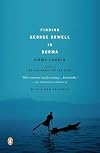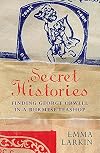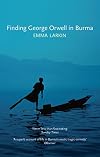
Finding George Orwell in Burma
by Emma Larkin
On This Page
Description
"Over the years the American writer Emma Larkin has spent traveling in Burma, she's come to know all too well the many ways this police state can be described as "Orwellian." The life of the mind exists in a state of siege in Burma, and it long has. The connection between George Orwell and Burma is not simply metaphorical, of course; George Orwell's mother was born in Burma, and he was shaped by his experiences there as a young man working for the British Imperial Police. Both his first show more novel, Burmese Days, and the novel he left unfinished upon his death were set in Burma. And then there is the place of Orwell's work in Burma today: Emma Larkin found it a commonplace observation in Burma that Orwell did not write one book about the country but three - the other two being Animal Farm and Nineteen Eighty-Four. When Larkin quietly asked one Burmese man if he knew the work of George Orwell, he stared blankly for a moment and then said, "Ah, you mean the prophet."" "Finding George Orwell in Burma is the story of the year Emma Larkin spent traveling across this shuttered police state using the life and work of Orwell as her guide. Traveling from Mandalay and Rangoon to poor delta backwaters and up to the old hill-station towns in the mountains of Burma's far north, Larkin visits the places Orwell worked and lived, and the places his books live still. She brings to life a country and a people cut off from the rest of the world, and from one another, by the ruling military junta and its network of spies and informers."--Jacket. show lessTags
Recommendations
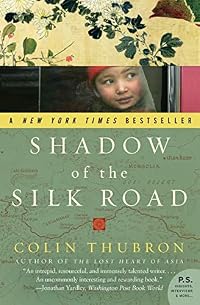
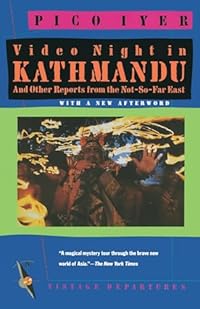
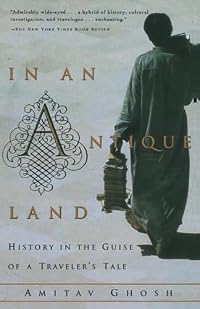
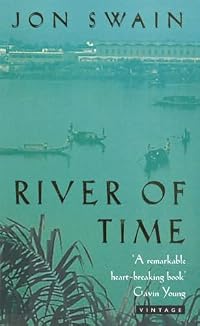





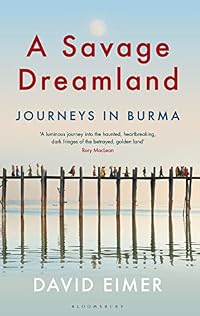
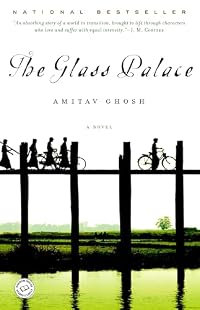
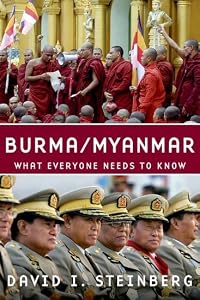
Member Recommendations
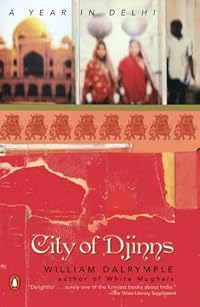
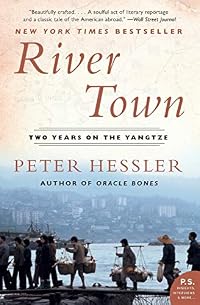
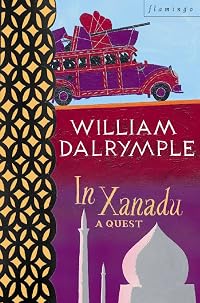
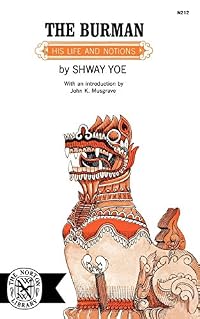
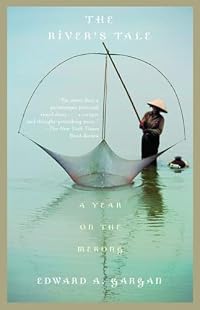
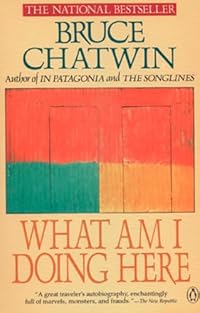
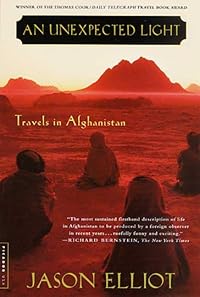
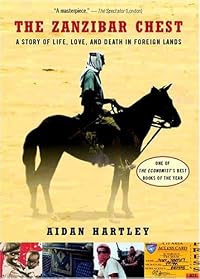
charl08 Similar approach: travel and literary criticism.
Member Reviews
This is a powerful, well-written book that will open eyes - especially for anyone not familiar with what is happening in Myanmar today. The present regime is killing the soul of the country, bit by bit, despite much propaganda that insists otherwise. Yes, new and refurbished hotels look swell and whirlwind tours have become expert at whisking visitors past the glorious sites at mind-numbing speed, but if you are smart enough to venture off the beaten track just a little, as Ms Larkin does, you will learn much. Larkin shows how Yangon and other cities have been reduced to "memory" (ghost of their former selves) and "meaning" (if you care to ferret out the "real" state of affairs in the country). Larkin does a wonderful job of show more interviewing a broad range of citizens to lend a personal, emotionally-gripping view of what could easily be intellectualized and safely kept at a distance while reading this book in a room, in a house, in a country far, far away. She also does a bang up job of connecting the dots between Orwell's life, his writings and the country that became so deeply imprinted upon him. Having said all this, do I have any gripes? Yes. First, Larkin occasionally comes up with odd descriptions that seem to reveal more about herself than her subject. A group of men huddled in a tea house are described as "girlish and secretive." ?? Second, while railing against a regime which censors whatever is politically inexpedient, since commits the same sin herself. She is a journalist in Asia and soft pedals the Burmese-Chinese tensions (lest she offend those with whom she does business should her cover be blown?) Yes, those mansions in Maymyo are often owned by the military elite and drug lords (as she says), but many are also owned by Chinese who are given preferential treatment due to their business investments while local Burmese are forced out of the way to make room for these invaders. The tension cannot be missed; it is palpable. Also, likely out of fear of alienating other powerful entities which can make life nice or nasty for her, she deliberately "misses" every opportunity to draw parallels between policies and practices of Myanmar's oppressive regime with similar policies and practices which have crept into what is supposed to be the model democracy in the world, the Shangrila with a system so craved by the Burmese people (Myanmar government officials censor every written article and news broadcast while pretending this doesn't happen; the Bush administration blacklists any journalist who asks "difficult" questions - denying that journalist access to future press conferences, etc - so that all journalists impose strict, self-censorship while pretending that this doesn't happen). Drawing such parallels would force the reader not to simply see this as a tale of what can happen elsewhere under extreme circumstances, but, ironically, what can happen even under his nose, under "ideal" circumstances. And that would add an important message to this worthy project, one summed up by the exhortatory words of a citizen quoted in the book: "We Burmese are experts at looking for what is not there. It's something you should learn to do, too." show less
Emma Larkin first went to Burma in 1995 in search of George Orwell. Not just a literary detective, Larkin writes about totalitarianism in Burma with an insight appropriate to an Orwell scholar. The analogy of three of Orwell's novels with the history of Burma is uncannily prophetic: Burmese Days tells of the country under British rule; in Animal Farm the pigs take over the running of the farm just as the military took over the running of Burma; and 1984 describes the current tyrannical regime. Although Larkin writes extensively about Burma and its people, she does not lose focus of the main topic, that of Orwell in Burma. The result is excellent.
For anyone interested in Orwell and his life this is essential reading. That it is show more fascinating and well-written is a bonus. Larkin accepts no credit for the bravery required in such an undertaking, but reflects all respect and admiration on the gentle Burmese people.
Like Larkin, I will reject the name Myanmar, a name made up by the current military oppressors. show less
For anyone interested in Orwell and his life this is essential reading. That it is show more fascinating and well-written is a bonus. Larkin accepts no credit for the bravery required in such an undertaking, but reflects all respect and admiration on the gentle Burmese people.
Like Larkin, I will reject the name Myanmar, a name made up by the current military oppressors. show less
I ended up with an unexpected slot of free time yesterday and so I decided to use it to finish the thoughtful and graceful Emma Larkin on Finding George Orwell in Burma. Probably the most significant effect Larkin's book will have on me is dropping forever the name Myanmar from my vocabulary. I NEVER liked it, always thought it sounded utterly stupid and lo and behold the military junta that rules the country made it up. One could debate forever whether a harsh and repressive monarchy or the British Empire is worse, but the fact seems to be that Burma is one of those countries that is flypaper to authoritarian rule. And it is beautiful, hauntingly so. I remember that from reading Orwell's Burmese Days' during an Orwell phase (time well show more spent) and I know, but can't think of the titles, that I've read one or two other memoirs of Burma in the colonial period. Larkin follows the path of Orwell's five years in Burma, visiting in turn each of the five places he was stationed, as a policeman, for the five years that he served. She seeks out what remains of clubs, houses, churches -- amazingly finds the occasional person who might have been old enough to catch a glimpse of Eric Blair himself, or whose family has stories about him. What makes the book remarkable is a calm that suffuses it, Larkin is at ease with the Burmese and herself and has, as far as I can tell, a deep affection and understanding and sympathy for Orwell then and the plight of the Burmese people now. She slips back and forth from past to present smoothly without sentiment -- a remarkable feat. One thing that emerges is that the Burmese (there are other ethnic groups in abundance, but I will limit myself to one name) have a great capacity for small joys from tea time to a good discussion which is what is saving them from being crushed. I hope the seer that Larkin spoke of who predicts the end of the military regime in the not-too-distant future is right! Highly recommended if Orwell or the Far East is an area of interest. ****1/2 show less
This is a fascinating tour of Burma under the military regime which has dominated this nation for decades, circa 2001. Framed by the author's search for traces of Orwell's years in British colonial Burma, Larkin explores the present day affinities between the world of Orwell's 1984 and Burma today. She powerfully conveys the atmosphere of uncertainty and suspicion which often hangs in the air of despotic regimes, the stagnation of the economy and the erasure of Burma's history. In some ways, this is a depressing book to read but I spent some time in Burma a few years before the period of which Larkin writes and it is an accurate, compassionate portrayal of a people betrayed by their leaders. Larkin even sounds an early warning abut show more treatment of the Rohingya and other minorities. show less
This book is just so unique, filled with interesting facts and summations, it tells the story of a journalist's efforts to retrace the footprints that George Orwell left when he spent five years in service there in the 1920s. Emma Larkin gives us more than a travelogue; she gives us an inside look into the repercussions of colonialism and makes us look at the body of Orwell's work with new eyes, wondering if, in fact, Orwell did write a trilogy (unintentionally) that tells the story of Burma. As she journeys through the country, she gives us an inside look into the spirit of a people that have been repressed but not completely silenced, who have been beaten but not broken. It is a familiar story, but it is freshly and innovatively told. show more It also shows us clearly why Burma should never be referred to as Myanmar.
"...the regime claimed that the changes were a long-overdue move to discard these colonial tags. But there was a deeper-rooted motive. The generals were rewriting history. When a place is renamed, the old name disappears from maps and, eventually, from human memory. If that is possible, then perhaps the memory of past events can also be erased. By renaming cities, towns and streets, the regime seized control of the very space within which people lived; home and business addresses had to be rewritten and relearned. And, when the regime changed the name of the country, maps and encyclopedias all over the world had to be corrected. The country known as Burma was erased and replaced with a new one: Myanmar."
As Larkin retraces Orwell's steps from his time spent in Burma, she provides insights into how his time there shaped his views and therefore his writing. Her thoughts and analogies are shared side by side with direct quotes from his work and also with explanations of the stories that he told, making it possible for someone who has not read any of Orwell's work to appreciate the points that she is making.
"Orwell had based Animal Farm on the Russian Revolution of 1917 and Stalin's fearsome drive to collectivize the Soviet Union's farmland, resulting in the death of millions of peasants. I preferred to read it as the second part of Orwell's unintentional trilogy on Burmese history....When I discussed Animal Farm with my Orwell Book Club in Mandalay, Tui Lin, the jovial retired teacher, did most of the talking. He had, as he liked to say, lived through a real-life version of Animal Farm. Tui Lin refers to the years under Ne Win as 'the time of the green spectacles'. To look at something through green spectacles, he explained, is to look at a thing that is bad and be forced to think that it is good. The phrase has a curious history. The battles and bombs of the Second World War devastated Burma's paddy fields and plantations, and by the time the Japanese army eventually occupied the country farmers found it hard to grow any edible produce. Even the farm animals and pack-horses refused to eat the parched grain, because of its unhealthy-looking white colour. The Japanese, fearful that the donkeys they needed to transport munitions in the mountainous terrain of Upper Burma would starve, came up with an ingenious solution. They fashioned spectacles out of green-tinted glass and wire and hooked them around the donkeys' ears. 'The donkeys saw that the grain was green and happily ate it,' explained Tui Lin. 'that's what we had to do during our years in Burma's Animal Farm. The entire nation was forced to wear green spectacles just like those donkeys.'"
Larkin's journey provides us with not only a history of Orwell, but also a history of Burma, and when you have finished, you will never look at either one the same way again.
"The few snippets of autobiography that Orwell left behind indicate that his time in Burma was a major turning point in his life, marking his transformation from a snobbish public-school boy to a writer with a social conscience who would seek out the underdogs of society and try to tell their stories." show less
"...the regime claimed that the changes were a long-overdue move to discard these colonial tags. But there was a deeper-rooted motive. The generals were rewriting history. When a place is renamed, the old name disappears from maps and, eventually, from human memory. If that is possible, then perhaps the memory of past events can also be erased. By renaming cities, towns and streets, the regime seized control of the very space within which people lived; home and business addresses had to be rewritten and relearned. And, when the regime changed the name of the country, maps and encyclopedias all over the world had to be corrected. The country known as Burma was erased and replaced with a new one: Myanmar."
As Larkin retraces Orwell's steps from his time spent in Burma, she provides insights into how his time there shaped his views and therefore his writing. Her thoughts and analogies are shared side by side with direct quotes from his work and also with explanations of the stories that he told, making it possible for someone who has not read any of Orwell's work to appreciate the points that she is making.
"Orwell had based Animal Farm on the Russian Revolution of 1917 and Stalin's fearsome drive to collectivize the Soviet Union's farmland, resulting in the death of millions of peasants. I preferred to read it as the second part of Orwell's unintentional trilogy on Burmese history....When I discussed Animal Farm with my Orwell Book Club in Mandalay, Tui Lin, the jovial retired teacher, did most of the talking. He had, as he liked to say, lived through a real-life version of Animal Farm. Tui Lin refers to the years under Ne Win as 'the time of the green spectacles'. To look at something through green spectacles, he explained, is to look at a thing that is bad and be forced to think that it is good. The phrase has a curious history. The battles and bombs of the Second World War devastated Burma's paddy fields and plantations, and by the time the Japanese army eventually occupied the country farmers found it hard to grow any edible produce. Even the farm animals and pack-horses refused to eat the parched grain, because of its unhealthy-looking white colour. The Japanese, fearful that the donkeys they needed to transport munitions in the mountainous terrain of Upper Burma would starve, came up with an ingenious solution. They fashioned spectacles out of green-tinted glass and wire and hooked them around the donkeys' ears. 'The donkeys saw that the grain was green and happily ate it,' explained Tui Lin. 'that's what we had to do during our years in Burma's Animal Farm. The entire nation was forced to wear green spectacles just like those donkeys.'"
Larkin's journey provides us with not only a history of Orwell, but also a history of Burma, and when you have finished, you will never look at either one the same way again.
"The few snippets of autobiography that Orwell left behind indicate that his time in Burma was a major turning point in his life, marking his transformation from a snobbish public-school boy to a writer with a social conscience who would seek out the underdogs of society and try to tell their stories." show less
What a wonderful find! I only wish I had read Burmese Days and Larkin's trek through Burma following in the footsteps of Orwell's five year stint there BEFORE attending the lecture series on this country at the Seattle Asian Art Museum. It would have helped me tremendously, since I had no real "connection" to this place, its people or its history.
Larkin sets upon her journey from Mandalay, moving from town to town in the pattern writer George Orwell took during his youth as an imperial police stationed in Burma. She explores his possible experiences, wonders about what made him suddenly leave after five years, and ponders how this critical man of words--a man noted for his focus on the underdog, the trodden upon, the show more disenfranchised--came to think the way he did.
Ever cautious and aware of her surroundings, Larkin provides the reader with a succinct taste of the overwhelming and all-encompassing nature of a totalitarian state, and how individuals fight to maintain dignity and a sense of freedom within the confines of severe censorship, ever-changing laws and rules, and threat of torture, imprisonment or death.
Although much has recently changed in Burma during the past year or so, there seems to remain a looming cloud of possible return to the despotic, militaristic state. And as uprisings of intolerance commence (Buddhists and Muslims), it makes one wonder whether the current government factions will succumb to "business as usual" policies and controls to re-establish the "peace" that is tyranny. show less
Larkin sets upon her journey from Mandalay, moving from town to town in the pattern writer George Orwell took during his youth as an imperial police stationed in Burma. She explores his possible experiences, wonders about what made him suddenly leave after five years, and ponders how this critical man of words--a man noted for his focus on the underdog, the trodden upon, the show more disenfranchised--came to think the way he did.
Ever cautious and aware of her surroundings, Larkin provides the reader with a succinct taste of the overwhelming and all-encompassing nature of a totalitarian state, and how individuals fight to maintain dignity and a sense of freedom within the confines of severe censorship, ever-changing laws and rules, and threat of torture, imprisonment or death.
Although much has recently changed in Burma during the past year or so, there seems to remain a looming cloud of possible return to the despotic, militaristic state. And as uprisings of intolerance commence (Buddhists and Muslims), it makes one wonder whether the current government factions will succumb to "business as usual" policies and controls to re-establish the "peace" that is tyranny. show less
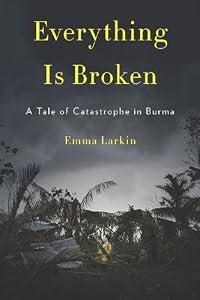
Emma Larkin is the pseudonym for an American journalist living in Thailand who studied Burmese in London, and who writes often about events in Burma. This book was first published in 2004; my Granta edition contains an epilogue written in 2011. Larkin’s other book on Burma is entitled Everything is Broken: Life Inside Burma; it details with the aftermath of the 2008 cyclone that struck Burma killing an estimated 138,000 people and leaving millions homeless without food or adequate shelter while the military government then in control refused outside assistance, maintaining that it could take care of things.
Finding George Orwell in Burma is a travelogue, a review of current events and society, and some history of the Burmese experience show more under British colonial rule followed by a focus on the reign of the Generals that started in 1962 with what Larkin calls, “Burma’s miserable experiment with socialism” under Ne Win. The connecting thread throughout the book is Larkin visiting various sites where George Orwell (then Eric Blair) was posted in Burma as a member of the Imperial Police Force, 1922-1927. Some of the buildings that Orwell would have known still exist, some were identifiable but decrepit, and others have simply disappeared.
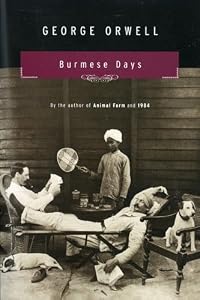
Larkin frames her book with the argument that Orwell in effect wrote a trilogy about Burma: his novel Burmese Days was based on his time in Burma, an experience that greatly informed his views on colonialism and classes, while Animal Farm and 1984, describe and reflect what Burma has become politically and socially under military rule, through the pervasive use of “propaganda, surveillance, censorship, and the ever present threat of violence.”
Larkin argues that one of the most pernicious effects of the military rule, a principal theme in 1984, is the constant reshaping and rewriting of history: “Events happen in Burma and then they are systematically unhappened. By maintaining an effective gag order on all public forums, the regime ensures that there is no space for any collective remembrance, and recent historical events—no matter how earth-shattering or all-consuming—can only be remembered in private, within the confines of the human skull’s, ‘few cubic centimeters.’ As personal memories become corrupted with time and age, the stories of Burma are, quite literally, vanishing.” Orwellian echoes abound in Burma; what could be more appropriate than a government organization called the “Committee for Propaganda and Agitation to Intensify Patriotism”?
Larkin meets a wide range of people, some through happenstance, some through contacts: older Burmese and British who remember life under the British Raj, young people who might or might not be able to get into the erratically functioning universities, students who might or might not be able to graduate from those universities, people who can find no employment, writers who write for the drawer or in their minds because they can never be published, publishers who live under total control of censors, dissidents and ethnic minority peoples subjected to brutal treatment and prisons, readers of George Orwell, people happy to meet briefly but only once with a foreigner, bureaucrats and police officials….all living under an atmosphere of surveillance that makes everyone suspicious and watchful and careful, very careful, with what they say, especially in public places, and with whom they are seen.
Larkin’s knowledge of, and sympathy for, Burma and its people and its history is clear. She writes well: descriptions of cities, towns, villages, countryside, rivers, are colourful and evocative; she conveys well the atmosphere of the places she sees and visits.
The search for Orwell’s roots is sometimes a little tentative, but I like the framework that it provides to the book. For any who also read and enjoy this book, I would suggest two others by the Canadian writer, Karen Connelly: Burmese Lessons and The Lizard Cage; both are excellent in their exploration and portrayal of life under the repressive military regime in Burma. show less
Finding George Orwell in Burma is a travelogue, a review of current events and society, and some history of the Burmese experience show more under British colonial rule followed by a focus on the reign of the Generals that started in 1962 with what Larkin calls, “Burma’s miserable experiment with socialism” under Ne Win. The connecting thread throughout the book is Larkin visiting various sites where George Orwell (then Eric Blair) was posted in Burma as a member of the Imperial Police Force, 1922-1927. Some of the buildings that Orwell would have known still exist, some were identifiable but decrepit, and others have simply disappeared.
Larkin frames her book with the argument that Orwell in effect wrote a trilogy about Burma: his novel Burmese Days was based on his time in Burma, an experience that greatly informed his views on colonialism and classes, while Animal Farm and 1984, describe and reflect what Burma has become politically and socially under military rule, through the pervasive use of “propaganda, surveillance, censorship, and the ever present threat of violence.”
Larkin argues that one of the most pernicious effects of the military rule, a principal theme in 1984, is the constant reshaping and rewriting of history: “Events happen in Burma and then they are systematically unhappened. By maintaining an effective gag order on all public forums, the regime ensures that there is no space for any collective remembrance, and recent historical events—no matter how earth-shattering or all-consuming—can only be remembered in private, within the confines of the human skull’s, ‘few cubic centimeters.’ As personal memories become corrupted with time and age, the stories of Burma are, quite literally, vanishing.” Orwellian echoes abound in Burma; what could be more appropriate than a government organization called the “Committee for Propaganda and Agitation to Intensify Patriotism”?
Larkin meets a wide range of people, some through happenstance, some through contacts: older Burmese and British who remember life under the British Raj, young people who might or might not be able to get into the erratically functioning universities, students who might or might not be able to graduate from those universities, people who can find no employment, writers who write for the drawer or in their minds because they can never be published, publishers who live under total control of censors, dissidents and ethnic minority peoples subjected to brutal treatment and prisons, readers of George Orwell, people happy to meet briefly but only once with a foreigner, bureaucrats and police officials….all living under an atmosphere of surveillance that makes everyone suspicious and watchful and careful, very careful, with what they say, especially in public places, and with whom they are seen.
Larkin’s knowledge of, and sympathy for, Burma and its people and its history is clear. She writes well: descriptions of cities, towns, villages, countryside, rivers, are colourful and evocative; she conveys well the atmosphere of the places she sees and visits.
The search for Orwell’s roots is sometimes a little tentative, but I like the framework that it provides to the book. For any who also read and enjoy this book, I would suggest two others by the Canadian writer, Karen Connelly: Burmese Lessons and The Lizard Cage; both are excellent in their exploration and portrayal of life under the repressive military regime in Burma. show less
Members
- Recently Added By
Published Reviews
As Ms. Larkin makes her way across the country, her movements are tracked, sometimes blocked, by the police, military personnel, bureaucrats, spies, informers and ordinary citizens instructed to report on any encounters with foreigners. When registering at a guest house she must fill out forms to be sent to nine separate departments. Shopping at a local market, a police informer dogs her show more heels, asking, over and over, who she is, where she is going and what she is trying to find out. She has changed the names of most of the Burmese she talked to and, lest she be barred from returning to Myanmar, has published this book under a pseudonym. show less
added by John_Vaughan
Lists

Really Good Narrative Non-Fiction
65 works; 24 members

Books We Discovered On LibraryThing
530 works; 130 members
Author Information
9+ Works 911 Members
Awards and Honors
Awards
Common Knowledge
- Original title
- Secret History by John Murray
- Alternate titles
- Secret Histories: Finding George Orwell in a Burmese Teashop
- Original publication date
- 2004
- People/Characters
- George Orwell
- Important places
- Burma
- Dedication
- For my friends in Burma
- First words
- George Orwell,' I said slowly.
- Last words
- (Click to show. Warning: May contain spoilers.)I look forward to the day when Orwell's unwitting prophecy wiil have been ridden out and the pages of my copy of Nineteen Eighty-Four can finally be closed.
- Disambiguation notice
- First published in Great Britain under the title Secret History by John Murray (2004)
Classifications
- Genres
- Travel, Nonfiction, General Nonfiction, Biography & Memoir, Literature Studies and Criticism
- DDC/MDS
- 915.910453 — History & geography Geography & travel Geography of and travel in Asia Southeast Asia; Indochina; Mekong River Myanmar {Burma}
- LCC
- DS527.7 .L37 — History of Europe, Asia, Africa and Oceania Asia History of Asia Southeast Asia Burma
- BISAC
Statistics
- Members
- 781
- Popularity
- 35,532
- Reviews
- 29
- Rating
- (3.94)
- Languages
- Chinese, English, Italian, Spanish
- Media
- Paper, Audiobook, Ebook
- ISBNs
- 15
- ASINs
- 6