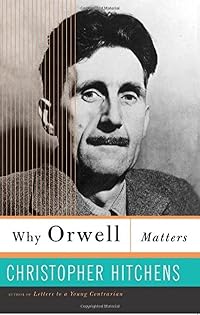
Why Orwell Matters
by Christopher Hitchens
On This Page
Description
In this widely acclaimed biographical essay, the masterful polemicist Christopher Hitchens assesses the life, the achievements, and the myth of the great political writer and participant George Orwell. True to his contrarian style, Hitchens is both admiring and aggressive, sympathetic yet critical, taking true measure of his subject as hero and problem. Answering both the detractors and the false claimants, Hitchens tears down the façade of sainthood erected by the hagiographers and rebuts show more the critics point by point. He examines Orwell and his perspectives on fascism, empire, feminism, and Englishness, as well as his outlook on America, a country and culture toward which he exhibited much ambivalence. Whether thinking about empires or dictators, race or class, nationalism or popular culture, Orwell's moral outlook remains indispensable in a world that has undergone vast changes in the seven decades since his death. Combining the best of Hitchens' polemical punch and intellectual elegance in a tightly woven and subtle argument, this book addresses not only why Orwell matters today, but how he will continue to matter in a future, uncertain world. show lessTags
Recommendations









Member Recommendations

Member Reviews
A lucid and readable short biography of George Orwell by one of his most sincere and respectful imitators. Christopher Hitchens' admiration for the writer extended beyond his essays – a path which Hitchens followed – to include an appreciation for the man's general bearing. Orwell, Hitchens writes, was a writer "forever taking his own temperature" (pg. 114); "the outstanding English example of the dissident intellectual who preferred above all other allegiances the loyalty to truth" (pg. 47).
While not a piece of literary criticism (only the eighth chapter, about twenty pages long, is explicitly dedicated to Orwell's novels), Orwell's Victory is trying throughout to appraise the author's legacy; to demonstrate why (as the American show more title of the book says) Orwell matters. To do this, Hitchens not only covers Orwell's biography, and his essay and fiction writing, but the depth and origin of his various political opinions. He wades into the various debates surrounding Orwell with formidable fists, remarking on the "body-snatching of Orwell" (pg. 91) by both the left and right wings.
Hitchens' book is not a hagiography, and he does well to prevent it from becoming so. More than just an author to be invoked for political point-scoring or (sometimes apposite) prophetic warnings about totalitarianism, Orwell is shown to be, in Hitchens' account, a flawed but disciplined individual. A writer "sensitive to intellectual hypocrisy" (pg. 6), whether from the left or right, Orwell emerges as someone prescient regarding the challenges of our time, not least "his views on the importance of language, which anticipated much of what we now debate under the rubric of psychobabble, bureaucratic speech, and 'political correctness'" (pg. 10).
The use of apostrophes around the words 'political correctness' in Hitchens' book might seem dated (the book was published in 2002), because of how ubiquitous and accepted that malignancy has since become, but none of the rest of it does. Hitchens takes the opportunity (with appropriate restraint) to rail against contemporary enemies that Orwell might have identified, including an observation on some of the more foolish extremes of postmodernism that remains pertinent:
"It may one day seem strange that, in our own time of extraordinary and revolutionary innovation in the physical sciences, from the human genome to the Hubble telescope, so many 'radicals' spent so much time casting casuistic doubt on the concept of verifiable truth." (pg. 176)
Ultimately, Hitchens succeeds in his attempt to demonstrate why Orwell matters. This sickly writer, who "never enjoyed a stable income, and never had a completely reliable publishing outlet" (pg. 7), has the enviable legacy of perhaps the largest (or at least the broadest) political footprint in English-language letters. With Animal Farm and Nineteen Eighty-Four, he altered "the way in which even relatively unlettered people became aware of the power" and manipulation of political language (pg. 175). And, Hitchens shows through his biographical journey, he operated with the "decent minimum of hypocrisy" (pg. 137). Orwell represents, if not the best English writing, then the best of the spirit of English writing: how an honest man, with a love for honest Saxon words, can, for all the competing influences and prejudices of class, race and personal experience, emerge a rational individual.
And that prescience, that honesty of the writer, is not only not going away, but perhaps becoming even more necessary to acknowledge. Hitchens quotes an immediate post-war essay by Orwell which says: "We may be heading not for general breakdown but for an epoch as horribly stable as the slave empires of antiquity" (pg. 77). Orwell was referring to the atom bomb and the Cold War, and later developed the idea for the dystopia of Nineteen Eighty-Four, but it says a lot to his diligent maintenance of intellectual honesty (if not to the general character of mankind) that such lines still hold today. We can think of those "horribly stable" slave empires and think on the increasingly unbridgeable gaps between the haves and have-nots in our contemporary society. Even the Covid pandemic did not result in a general breakdown; unlike any other comparable event in history, it did not flip the gameboard and provide opportunity, but in fact entrenched those with existing power. In light of this, and the general realisation that Orwell (and Hitchens) would still have a lot to write about, is it not the case that Orwell still matters – and perhaps more than ever? show less
While not a piece of literary criticism (only the eighth chapter, about twenty pages long, is explicitly dedicated to Orwell's novels), Orwell's Victory is trying throughout to appraise the author's legacy; to demonstrate why (as the American show more title of the book says) Orwell matters. To do this, Hitchens not only covers Orwell's biography, and his essay and fiction writing, but the depth and origin of his various political opinions. He wades into the various debates surrounding Orwell with formidable fists, remarking on the "body-snatching of Orwell" (pg. 91) by both the left and right wings.
Hitchens' book is not a hagiography, and he does well to prevent it from becoming so. More than just an author to be invoked for political point-scoring or (sometimes apposite) prophetic warnings about totalitarianism, Orwell is shown to be, in Hitchens' account, a flawed but disciplined individual. A writer "sensitive to intellectual hypocrisy" (pg. 6), whether from the left or right, Orwell emerges as someone prescient regarding the challenges of our time, not least "his views on the importance of language, which anticipated much of what we now debate under the rubric of psychobabble, bureaucratic speech, and 'political correctness'" (pg. 10).
The use of apostrophes around the words 'political correctness' in Hitchens' book might seem dated (the book was published in 2002), because of how ubiquitous and accepted that malignancy has since become, but none of the rest of it does. Hitchens takes the opportunity (with appropriate restraint) to rail against contemporary enemies that Orwell might have identified, including an observation on some of the more foolish extremes of postmodernism that remains pertinent:
"It may one day seem strange that, in our own time of extraordinary and revolutionary innovation in the physical sciences, from the human genome to the Hubble telescope, so many 'radicals' spent so much time casting casuistic doubt on the concept of verifiable truth." (pg. 176)
Ultimately, Hitchens succeeds in his attempt to demonstrate why Orwell matters. This sickly writer, who "never enjoyed a stable income, and never had a completely reliable publishing outlet" (pg. 7), has the enviable legacy of perhaps the largest (or at least the broadest) political footprint in English-language letters. With Animal Farm and Nineteen Eighty-Four, he altered "the way in which even relatively unlettered people became aware of the power" and manipulation of political language (pg. 175). And, Hitchens shows through his biographical journey, he operated with the "decent minimum of hypocrisy" (pg. 137). Orwell represents, if not the best English writing, then the best of the spirit of English writing: how an honest man, with a love for honest Saxon words, can, for all the competing influences and prejudices of class, race and personal experience, emerge a rational individual.
And that prescience, that honesty of the writer, is not only not going away, but perhaps becoming even more necessary to acknowledge. Hitchens quotes an immediate post-war essay by Orwell which says: "We may be heading not for general breakdown but for an epoch as horribly stable as the slave empires of antiquity" (pg. 77). Orwell was referring to the atom bomb and the Cold War, and later developed the idea for the dystopia of Nineteen Eighty-Four, but it says a lot to his diligent maintenance of intellectual honesty (if not to the general character of mankind) that such lines still hold today. We can think of those "horribly stable" slave empires and think on the increasingly unbridgeable gaps between the haves and have-nots in our contemporary society. Even the Covid pandemic did not result in a general breakdown; unlike any other comparable event in history, it did not flip the gameboard and provide opportunity, but in fact entrenched those with existing power. In light of this, and the general realisation that Orwell (and Hitchens) would still have a lot to write about, is it not the case that Orwell still matters – and perhaps more than ever? show less
An interesting exploration of Orwell's literary and political persona and how he has been both claimed and vilified by both the political left and political right. His staunch opposition to both Stalin and Hitler were heroic especially in retrospect and earned him a lot of opprobrium both from those intellectuals who should have known better but made excuses for Stalin, and from British and American officialdom during the wartime alliance with the Soviet Union. Worth reading in light of the modern tendency of some contemporaries to brush over the horrors of certain dictatorships in Africa and Asia and come to support, or at least make excuses for them, simply because they are anti-Western, on the "principle" that "they're against show more America/the capitalist West, so they must be alright". show less
Ironically, this is the first book of Hitchens that I have read, but it is also fitting since, like Orwell, he seems to fit none of our tightly defined political orthodoxies. This book is an honest, critical appraisal of George Orwell that examines many of the anti-Orwell critiques. Hitchens concludes: "Orwell's 'views' have been largely vindicated by Time....But what he illustrates, by his commitment to language as the partner of truth, is that 'views' do not really count; that it matters not what you think, but how you think; and that politics are relatively unimportant, while principles have a way of enduring, as do the few irreducible individuals who maintain allegiance to them."
I love George Orwell, but I haven’t read 1984 and Animal Farm since I was 17—the summer before college—and I haven’t read the rest of his fiction at all. But I love the nonfiction. I taught “Shooting and Elephant” and “Politics and the English Language” to countless freshman and not only memorized important passages, but stored away their main ideas, about anti-colonialism and about deliberate obfuscation, among those very most important ideas to me. I recently read Down and Out in Paris and London, The Road to Wigan Pier, and Homage to Catalonia and was convinced that Orwell matters significantly. So this book was a natural for me.Hitchens’ writing and his arguments are sophisticated. I read this one like a text at show more school, looking up relevant stuff, marking passages, writing in the margins. It’s a little book. Hitchen’s goal was not a complete analysis of Orwell so much a plea to take this guy seriously, don’t let this 20th century writer fade away as relevant only to his own time (1903-1950—Orwell died of TB and he might have been saved had he been able to get the appropriate antibiotic from the US in the immediate post-war period).Hitchens seems to think Orwell’s anti-colonial stance his most significant since that’s the first concept he tackles. So do I. I’m positive that “Shooting an Elephant”, which I read first in a Freshman English class myself, colored my view of colonialism, arguments about postcolonial literature, and about the third world generally. Before reading this book I’d have said my own anti-colonial bent was learned as a Peace Corps Volunteer in Africa; now I’d say the fire was probably lit by Orwell and that was a huge part of my motivation to join the Peace Corps in the first place. Hitchens goes on to analyze how both the left and the right have used and abused Orwell as well as his ideas about America, “Englishness”, feminism, and anti-Communism. He typically deals not only with Orwell’s relationship with the ideas but how proponents of those ideas deal with Orwell. Finally he analyzes the fiction, convincing me to reread 1984 if not to read all the fiction. He even touches on Orwell and post-modernism in a chapter that not only rescues Orwell from the post-modernists, but causes me embarrassment at my initial enthusiasm for post-modernist analysis of literature and validates my current views that it’s just as well the academic world is getting over that craze. show less
"What he illustrates, by his commitment to language as the partner of truth, is that ‘views’ do not really count; that it matters not what you think, but how you think; and that politics are relatively unimportant, while principles have a way of enduring, as do the few irreducible individuals who maintain allegiance to them."
The book is a defense of Orwell's character written in a time where these things still held some value in the broader picture of society. I'm not sure Hitchens would still see the use in it nowadays, had he been alive in today's 280 characters attention span society.
Orwell was a pretty flaud individual and it makes it that much more important to reflect on his role in the development of post WW2 politics. The show more world doesnt need perfect individuals to make it better. It needs open minds with goals other than self-enrichment and sharp enough to know fact from fiction. It also shows that humans should not be defined by one mistake or a few if they could arguably be counterbalanced by a multitude of good. show less
The book is a defense of Orwell's character written in a time where these things still held some value in the broader picture of society. I'm not sure Hitchens would still see the use in it nowadays, had he been alive in today's 280 characters attention span society.
Orwell was a pretty flaud individual and it makes it that much more important to reflect on his role in the development of post WW2 politics. The show more world doesnt need perfect individuals to make it better. It needs open minds with goals other than self-enrichment and sharp enough to know fact from fiction. It also shows that humans should not be defined by one mistake or a few if they could arguably be counterbalanced by a multitude of good. show less
CH's erudition on Orwell is very impressive and the smoothness of his acerbity is frequently entertaining. He does answer the question, "Why does Orwell matter?" on the book's last page:
that it matters not what you think, but how you think; and that politics are relatively unimportant, while principles have a way of enduring, as do the few irreducible individuals who maintain allegiance to them.
Or, in my own abbreviated summary, Orwell lived an exposed mostly Leftist intellectual life, with occasional vacillations and, in retrospect, some misogyny and homophobia, but he tried to have an honest and rational approach to his convictions.
Hitchens spends some time running down Orwell's fiction, and ultimately I don't think the title's show more implied question is really answered since I think most of Orwell's readers would respond simply that the reason that he matters is that he wrote well about things that mattter, then and now.
Lastly, in terms of lines of print, this book is mostly Hitchens criticizing the critics of Orwell. This can dry things out rather extensively, and consequently, I did not feel that I was brought closer to Orwell in the same way that I did, for example, in the author's book on Thomas Paine. show less
that it matters not what you think, but how you think; and that politics are relatively unimportant, while principles have a way of enduring, as do the few irreducible individuals who maintain allegiance to them.
Or, in my own abbreviated summary, Orwell lived an exposed mostly Leftist intellectual life, with occasional vacillations and, in retrospect, some misogyny and homophobia, but he tried to have an honest and rational approach to his convictions.
Hitchens spends some time running down Orwell's fiction, and ultimately I don't think the title's show more implied question is really answered since I think most of Orwell's readers would respond simply that the reason that he matters is that he wrote well about things that mattter, then and now.
Lastly, in terms of lines of print, this book is mostly Hitchens criticizing the critics of Orwell. This can dry things out rather extensively, and consequently, I did not feel that I was brought closer to Orwell in the same way that I did, for example, in the author's book on Thomas Paine. show less
In Why Orwell Matters Christopher Hitchens seeks to explore George Orwell’s writings and to rescue them from those who have sought to use them (or abuse them) for their own political purposes. Hitchens, who has long venerated Orwell in his own works, argues (with even more hyperbole than is usual for him) that “Orwell requires extricating from a pile of saccharine tablets and moist hankies; an object of sickly veneration and sentimental overpraise, employed to stultify schoolchildren with his insufferable rightness and purity.” In Hitchens’ view, Orwell’s ideas have been wrongly used by the rightwing (in support of their own political agenda) and subjected to misplaced criticism by detractors on the left.
Orwell (argues show more Hitchens) was right about the three great issues of the 20th century – fascism, Stalinism, and Empire (imperialism). Hitchens first explores Orwell’s anti-colonialist views, which reflected his experience in Burma; these are manifested in several essays (such as Shooting and Elephant) and his novel Burmese Days. In successive chapters, he then considers Orwell’s relationship to the political left, to the rightwing, his attitudes towards the US, and his relationship to sex and to feminism. He also explores ideas presented in Orwell’s major novels and the relevance of his views to post-modernism.
Given the complexity of Orwell’s views, it’s easy to understand the ambivalence of both conservatives and progressives. Although one might have thought his anti-imperialist stance and his veneration of the working class would have endeared him to the left, Hitchens considers that leftists have disliked Orwell due to his strong anti-Stalinist stance (itself borne of his experience in the Spanish Civil War). In addition, although he was anti-fascist, progressives were put off by his traditional stance towards sexual and reproductive matters (including his abhorrence of homosexuality and abortion). As for the attitude of conservative intellectuals, Hitchens notes that it has been “a fluctuating and uneven one”… despite many attempts to annex him.” Whereas Orwell was a staunch anti-Communist, he also was an individualist who despised both bureaucracy and government. Furthermore, Orwell was hostile to conventional patriotism, and horrified by the “cynicism and stupidity” of the British conservatives in the face of fascism. On the eve of World War II, these views led him to the peculiar and difficult position that fascism and “so-called democracy” were really no different; that “Britain” was not worth fighting for; and that such a war would in fact be imperialist towards Germany. Indeed he even made foolish proposal for an underground resistance to Churchill’s government. He held such views until the war in Europe was well underway.
Another reason why progressives remain uneasy about Orwell is his attitudes towards women and feminism. His relationship towards the female gender “was in general a distraught one.” As evidence Hitchens cites an extended passage by the narrator in the novel Keep the Apidistra Flying. Skeptics could note that Hitchens makes the mistake of attributing to Orwell an assertion of a fictional character – the very criticism that he levels against Orwell’s leftist critics. Nevertheless, it is the case (notes Hitchens) that Orwell had difficult relationships with women, and an ambivalence towards feminist issues.
In a chapter on “Orwell and America,” Hitchens notes that Orwell had little curiosity towards the USA and no inclination to visit it, issues that represent a “missed opportunity.” A chapter on Orwell’s fiction briefly explores the major novels. His novel 1984 (asserts Hitchens) is “the only time his efforts as a novelist rise to the level of his essays.” (Hitchens relates how the manuscript for Animal Farm was rejected by Dial Press on the grounds that “animal stories are not a commercial proposition in the USA”!). Hitchens also devotes a chapter to post-modernism, an inclusion that may seem incongruous given that this arcane set of movements post-dates Orwell by decades. However, he justifies its inclusion on the grounds that Orwell’s commitments towards clarity and truth-telling offer counterpoints to the muddled and self- contradictory post-modernist precepts, and that his name was sometimes invoked in debates about the movement.
Why Orwell Matters will be of interest to readers already very familiar its subject's writings, especially the non-fiction. The work is esoteric and dense, and in my view, lacks the sharp focus, the wit, and the clarity of most of Hitchens’ writing. I found it tough reading, at times, due to its style and because it presumed a level of familiarity with some issues that I lacked; in fact, despite its brevity (just over 200 pages), it took me quite a while to finish the book. However, Why Orwell Matters offers a tribute to Orwell as well as an original perspective on the lasting value of his writing, by one of his most vocal admirers. show less
Orwell (argues show more Hitchens) was right about the three great issues of the 20th century – fascism, Stalinism, and Empire (imperialism). Hitchens first explores Orwell’s anti-colonialist views, which reflected his experience in Burma; these are manifested in several essays (such as Shooting and Elephant) and his novel Burmese Days. In successive chapters, he then considers Orwell’s relationship to the political left, to the rightwing, his attitudes towards the US, and his relationship to sex and to feminism. He also explores ideas presented in Orwell’s major novels and the relevance of his views to post-modernism.
Given the complexity of Orwell’s views, it’s easy to understand the ambivalence of both conservatives and progressives. Although one might have thought his anti-imperialist stance and his veneration of the working class would have endeared him to the left, Hitchens considers that leftists have disliked Orwell due to his strong anti-Stalinist stance (itself borne of his experience in the Spanish Civil War). In addition, although he was anti-fascist, progressives were put off by his traditional stance towards sexual and reproductive matters (including his abhorrence of homosexuality and abortion). As for the attitude of conservative intellectuals, Hitchens notes that it has been “a fluctuating and uneven one”… despite many attempts to annex him.” Whereas Orwell was a staunch anti-Communist, he also was an individualist who despised both bureaucracy and government. Furthermore, Orwell was hostile to conventional patriotism, and horrified by the “cynicism and stupidity” of the British conservatives in the face of fascism. On the eve of World War II, these views led him to the peculiar and difficult position that fascism and “so-called democracy” were really no different; that “Britain” was not worth fighting for; and that such a war would in fact be imperialist towards Germany. Indeed he even made foolish proposal for an underground resistance to Churchill’s government. He held such views until the war in Europe was well underway.
Another reason why progressives remain uneasy about Orwell is his attitudes towards women and feminism. His relationship towards the female gender “was in general a distraught one.” As evidence Hitchens cites an extended passage by the narrator in the novel Keep the Apidistra Flying. Skeptics could note that Hitchens makes the mistake of attributing to Orwell an assertion of a fictional character – the very criticism that he levels against Orwell’s leftist critics. Nevertheless, it is the case (notes Hitchens) that Orwell had difficult relationships with women, and an ambivalence towards feminist issues.
In a chapter on “Orwell and America,” Hitchens notes that Orwell had little curiosity towards the USA and no inclination to visit it, issues that represent a “missed opportunity.” A chapter on Orwell’s fiction briefly explores the major novels. His novel 1984 (asserts Hitchens) is “the only time his efforts as a novelist rise to the level of his essays.” (Hitchens relates how the manuscript for Animal Farm was rejected by Dial Press on the grounds that “animal stories are not a commercial proposition in the USA”!). Hitchens also devotes a chapter to post-modernism, an inclusion that may seem incongruous given that this arcane set of movements post-dates Orwell by decades. However, he justifies its inclusion on the grounds that Orwell’s commitments towards clarity and truth-telling offer counterpoints to the muddled and self- contradictory post-modernist precepts, and that his name was sometimes invoked in debates about the movement.
Why Orwell Matters will be of interest to readers already very familiar its subject's writings, especially the non-fiction. The work is esoteric and dense, and in my view, lacks the sharp focus, the wit, and the clarity of most of Hitchens’ writing. I found it tough reading, at times, due to its style and because it presumed a level of familiarity with some issues that I lacked; in fact, despite its brevity (just over 200 pages), it took me quite a while to finish the book. However, Why Orwell Matters offers a tribute to Orwell as well as an original perspective on the lasting value of his writing, by one of his most vocal admirers. show less
Members
- Recently Added By
Published Reviews
ThingScore 50
It is not easy to write a good book about Orwell now. He has been written about so extensively, and sometimes well, that to justify devoting a whole book to him one would really need to have discovered some new material or be able to set him in some new context (not that this will deter publishers eager to cash in on his centenary). The main problem with Orwell’s Victory is that Hitchens show more doesn’t have enough to say about Orwell to fill a book, so he writes, in effect, as Orwell’s minder, briskly seeing off various characers who have in some way or other got him wrong. This is the structuring principle for a series of chapters on ‘Orwell and Empire’, ‘Orwell and the Left’, ‘Orwell and the Right’ and so on. Some of the offenders clearly deserve what they get, but there’s something repetitive and relentless about it, as though the duffing-up were more important than dealing with Orwell’s own writing. show less
added by Shortride
My verdict: it’s worth a read, but only if you a) like Christopher Hitchens and, more important, b) have read a lot of Orwell.
added by jimroberts
Lists

Best Biographies
216 works; 26 members

Books I want to read
25 works; 3 members

In Our Time books
4,934 works; 2 members
Author Information

88+ Works 29,834 Members
Christopher Hitchens was born in Portsmouth, England on April 13, 1949. He was a contributing editor to Vanity Fair and wrote for numerous other publications throughout his lifetime. He was the author of numerous books including No One Left to Lie To, For the Sake of Argument, Prepared for the Worst, God Is Not Great, Hitch-22: A Memoir, and show more Arguably. He died due to complication from esophageal cancer on December 15, 2011 at the age of 62. (Bowker Author Biography) show less
Work Relationships
Is a study of
Common Knowledge
- Canonical title
- Why Orwell Matters
- Alternate titles
- Orwell's Victory
- Original publication date
- 2002
- People/Characters
- George Orwell; Friedrich Hayek; T. S. Eliot; James Burnham; Konni Zilliacus; Claude Simon (show all 8); Theodor W. Adorno; W. H. Auden
- Dedication
- Dedicated by permission: To Robert Conquest—premature anti-fascist, premature anti-Stalinist, poet and mentor, and founder of the united front against bullshit.
- First words
- Moral and mental glaciers melting slightly
Betray the influence of his warm intent. - Last words
- (Click to show. Warning: May contain spoilers.)But what he illustrates, by his commitment to language as the partner of truth, is that "views" do not really count; that it matters not what you think, but how you think, and that politics are relatively unimportant, while principles have a way of enduring, as do the few irreducible individuals who maintain allegiance to them.
- Blurbers
- Posner, Richard; Croft, Andy; Heer, Jeet
Classifications
- Genres
- Literature Studies and Criticism, Nonfiction, Biography & Memoir, Philosophy
- DDC/MDS
- 809 — Literature & rhetoric Literature, rhetoric & criticism History, description, critical appraisal of more than two literatures
- LCC
- PR6029 .R8 .Z664 — Language and Literature English English Literature 1900-1960
- BISAC
Statistics
- Members
- 1,285
- Popularity
- 18,937
- Reviews
- 16
- Rating
- (3.81)
- Languages
- English, Italian, Portuguese, Spanish
- Media
- Paper, Ebook
- ISBNs
- 12
- ASINs
- 3