On This Page
Description
India, 1857 - the year of the Great Mutiny, when Muslim soldiers turned in bloody rebellion on their British overlords. This time of convulsion is the subject of The Siege of Krishnapur, widely considered to the one of the finest British novels of the last fifty years. A witty and individual take on the many traditions and follies of Empire, it is also a gripping account of survival under siege, illuminating how extreme conditions can influence and affect people's behaviour and the human spirit.Tags
Recommendations

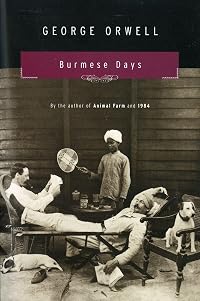
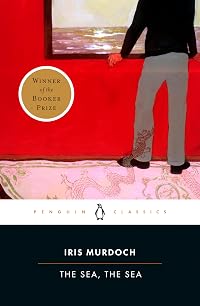

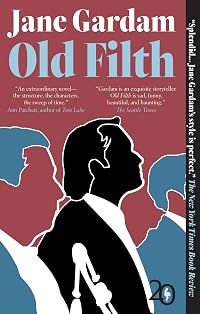
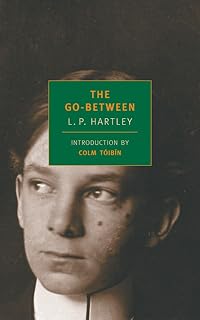





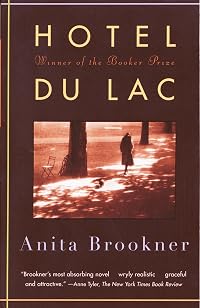
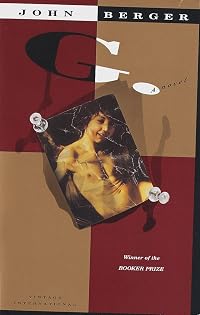
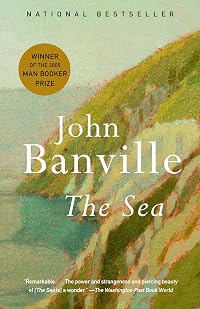
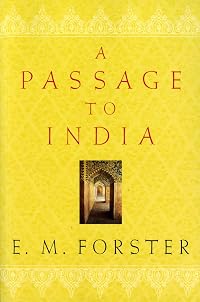




Member Recommendations
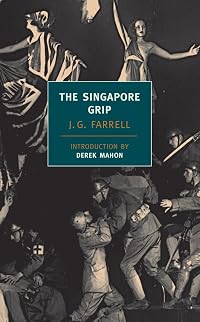
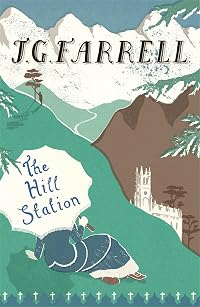
kidzdoc The third novel in Farrell's Empire Trilogy, which is about the fall of the British Empire in 1930s Singapore.
80
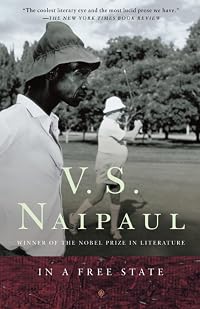
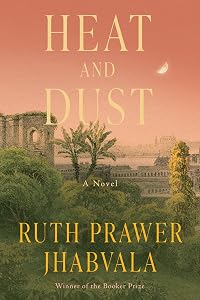
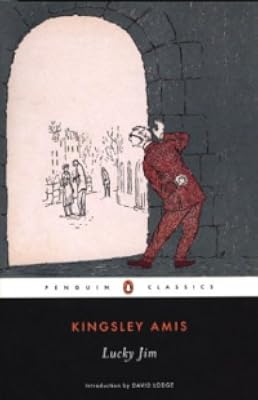
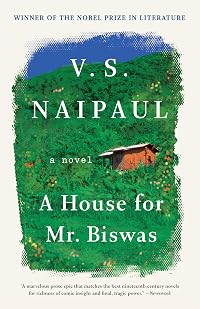
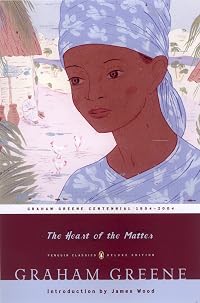
lmichet Another work of biting commentary about the British in India
Also recommended by Philosofiction
60
kidzdoc The first novel in Farrell's Empire Trilogy, which was awarded the Lost Man Booker Prize for the best novel of 1970.
60
Rynooo English Passengers is an awesome work of historical fiction - it is by turns hilarious, shocking and thought provoking.
30

terrazoon Good satires are hard to find. Although the subject matter is different, if you like one you will probably like the other.
20
chrisschoeters Beautiful, amazingly simple but emotionally complex. I would recommend this book to alle readers older than 14!
13
Member Reviews
I'm reading all the Booker Prize winners this year. Follow along at www.methodtohermadness.com.
J. G. Farrell was the first writer to win two Booker Prizes. He won the third one in 1970 for Troubles, and the sixth in 1973 for The Siege of Krishnapur. Both books are intimate accounts in the form of a microcosm that depicts British colonialism. Troubles takes place in a decrepit English-owned resort hotel in Ireland, while Krishnapur takes place in a “residency” owned by a British trade company at the beginning of India’s own troubles, and is based on actual people and events. Both stories throw strangers together in a siege situation in order to ridicule the notion that the British way is inherently better than the ways of its show more colonies.
In both the Hotel Majestic and the Residency, the walls literally crumble around the characters, who still absurdly manage to believe themselves better than their “inferiors.” Here, the microcosm is composed of The Magistrate, an atheist and rationalist; Fleury, the aptly named Romantic poet who believes that the most important aspect of religion is feeling; and The Collector, chief of the Residency and self-described “whole” man; as well as a priest, a military man, and two doctors opposed in their methods. Louise, Lucy, and Miriam fill the roles of virgin, whore, and Modern Woman.
The irony is introduced early on, as we find that the British are thriving due to their exports of opium to China – while they spread The Gospel in Asia. The Collector, the Magistrate, and Fleury all believe themselves to be men of ideas – until they are forced by siege-induced famine to daydream of food. Civilization at first seems to mean respecting others’ religions, but then necessity drives the besieged to tear down a mosque. Finally, all must question whether civilization is truly a source of progress, or simply a sign of decay, as all of their fine European belongings are sacrificed to reinforce the ineffectual mud ramparts. The Indian soil literally swallows up all the material things that its oppressors hold dear.
The dueling doctors show that the “superior” British civilization has its own superstitions and blind spots. The two physicians wage a war of ideas over cholera: one has grasped the modern notion that cholera is transmitted through contaminated water, and that the disease can be treated through rehydration. The other clings to the outdated notion that cholera is caught from the air, and can be treated with mustard and brandy. In a moment that had me mentally screaming “No!” the second doctor drinks a bottle of dirty water to prove his point. You can guess the outcome.
More than one of the main characters undergoes a shift in perspective thanks to their ordeal. One of the most enlightened, The Collector, even questions his ideas about the natural inferiority of women, and wonders what he is missing about Indian religion, but never goes so far as to respect the natives.
I enjoyed both books. There is a dry, black, absurdist humor to both, but especially Krishnapur. The bathos of the English aristocracy reduced to sucking on horsehide and shooting pieces of statuary out of their cannons brings home Farrell’s point with wry wit. If I had to choose one, it would be Krishnapur: it is wittier and more action-packed, as well as shorter. But I recommend both for their brutal post-colonial honesty. show less
J. G. Farrell was the first writer to win two Booker Prizes. He won the third one in 1970 for Troubles, and the sixth in 1973 for The Siege of Krishnapur. Both books are intimate accounts in the form of a microcosm that depicts British colonialism. Troubles takes place in a decrepit English-owned resort hotel in Ireland, while Krishnapur takes place in a “residency” owned by a British trade company at the beginning of India’s own troubles, and is based on actual people and events. Both stories throw strangers together in a siege situation in order to ridicule the notion that the British way is inherently better than the ways of its show more colonies.
In both the Hotel Majestic and the Residency, the walls literally crumble around the characters, who still absurdly manage to believe themselves better than their “inferiors.” Here, the microcosm is composed of The Magistrate, an atheist and rationalist; Fleury, the aptly named Romantic poet who believes that the most important aspect of religion is feeling; and The Collector, chief of the Residency and self-described “whole” man; as well as a priest, a military man, and two doctors opposed in their methods. Louise, Lucy, and Miriam fill the roles of virgin, whore, and Modern Woman.
The irony is introduced early on, as we find that the British are thriving due to their exports of opium to China – while they spread The Gospel in Asia. The Collector, the Magistrate, and Fleury all believe themselves to be men of ideas – until they are forced by siege-induced famine to daydream of food. Civilization at first seems to mean respecting others’ religions, but then necessity drives the besieged to tear down a mosque. Finally, all must question whether civilization is truly a source of progress, or simply a sign of decay, as all of their fine European belongings are sacrificed to reinforce the ineffectual mud ramparts. The Indian soil literally swallows up all the material things that its oppressors hold dear.
The dueling doctors show that the “superior” British civilization has its own superstitions and blind spots. The two physicians wage a war of ideas over cholera: one has grasped the modern notion that cholera is transmitted through contaminated water, and that the disease can be treated through rehydration. The other clings to the outdated notion that cholera is caught from the air, and can be treated with mustard and brandy. In a moment that had me mentally screaming “No!” the second doctor drinks a bottle of dirty water to prove his point. You can guess the outcome.
More than one of the main characters undergoes a shift in perspective thanks to their ordeal. One of the most enlightened, The Collector, even questions his ideas about the natural inferiority of women, and wonders what he is missing about Indian religion, but never goes so far as to respect the natives.
I enjoyed both books. There is a dry, black, absurdist humor to both, but especially Krishnapur. The bathos of the English aristocracy reduced to sucking on horsehide and shooting pieces of statuary out of their cannons brings home Farrell’s point with wry wit. If I had to choose one, it would be Krishnapur: it is wittier and more action-packed, as well as shorter. But I recommend both for their brutal post-colonial honesty. show less
Towards the end of SoK, the once-sanguine Collector meets the once-romantic Fleury. Fleury asks him about his collection of art; the Collector says that "Culture is a sham. It's a cosmetic painted on life by rich people to conceal its ugliness."
I enjoyed Farrell's 'Troubles,' but something about it was a bit off. In part, it just wasn't as streamlined or controlled as SoK is. I was worried that SoK would end up as unsatisfying as T through the first 100 or so pages. But by the time the Collector said this to Fleury, I had realized what was so odd about the former book: it was a story, fundamentally sympathetic to the colonized, told in the voice of Establishment English Culture. Farrell's style is a lovely, readable combination of show more Austen, Trollope and Forster, as well as his own favorite influence, Richard Hughes. His stories, though, go to great lengths to reveal the bloody-minded chaos that went into building the world Austen, Trollope and Forster wrote about (excepting 'A Passage to India'); Farrel, on the other hand, writes about the (hoped for?) end of that world.
In 'Troubles,' the style seems to win out over the story; in SoK, the story and the style conflict, but end up producing an extraordinary novel that blends high irony, wonderful character development, fascinating description, and a deeply troubling, ultimately rewarding investigation of the mind of the colonisers.
And this, despite what the Collector says, is the proof that culture is never merely a sham. It can be, maybe it often is, but in the hands of a Farrell - as in the hands of the late twentieth century's very best theorists, critics, novelists and poets - 'culture' is put at the services of humanity, instead of inhumanity. show less
I enjoyed Farrell's 'Troubles,' but something about it was a bit off. In part, it just wasn't as streamlined or controlled as SoK is. I was worried that SoK would end up as unsatisfying as T through the first 100 or so pages. But by the time the Collector said this to Fleury, I had realized what was so odd about the former book: it was a story, fundamentally sympathetic to the colonized, told in the voice of Establishment English Culture. Farrell's style is a lovely, readable combination of show more Austen, Trollope and Forster, as well as his own favorite influence, Richard Hughes. His stories, though, go to great lengths to reveal the bloody-minded chaos that went into building the world Austen, Trollope and Forster wrote about (excepting 'A Passage to India'); Farrel, on the other hand, writes about the (hoped for?) end of that world.
In 'Troubles,' the style seems to win out over the story; in SoK, the story and the style conflict, but end up producing an extraordinary novel that blends high irony, wonderful character development, fascinating description, and a deeply troubling, ultimately rewarding investigation of the mind of the colonisers.
And this, despite what the Collector says, is the proof that culture is never merely a sham. It can be, maybe it often is, but in the hands of a Farrell - as in the hands of the late twentieth century's very best theorists, critics, novelists and poets - 'culture' is put at the services of humanity, instead of inhumanity. show less
Somewhere on the arid plains of Bengal lay an English enclave in a town called Krishnapur, equipped with a Magistrate and a Collector (of taxes, of course) and a Padre, a couple of doctors, and some soldiers and all the other necessary people, buildings, animals and belongings to give to thewives and children of a sizeable community meant to administer an extremely large area, a feeling of "home." As in [Troubles], the main character, The Collector, is very sympathetic which makes all the difference. Unlike the Major in many ways, oth men are innately kind and dutiful, and in some important way, indefatigable, possibly exemplars of the "best" of the ruling British hegemony. There is a huge house, more of a compound and a host of show more absorbing characters, not the least of which is Fleury, a young man who comes to court "the prettiest girl in India" and ends up finding himself. And there is the siege, the Collector, anticipating the rebellion, has dug fortifications around the core of the Residency, has stored provisions and weaponry and gunpowder, and is, in fact, ready when the rebellion descends upon Krishnapur. What is of paramount interest throughout is the changes that occur in various characters when survival becomes paramount. The implied critique of Empire building--that of making an assumption that your own culture is superior to everyone else's-- is brilliantly, slyly, tragically, and comically demonstrated once again. ***** show less
“The British could leave and half India wouldn't notice us leaving just as they didn't notice us arriving. All our reforms of administration might be reforms on the moon for all it has to do with them..”
“India itself was now a different place; the fiction of happy natives being led forward along the road to civilization could no longer be sustained.”
“All our actions and intentions are futile unless animated by warmth of feeling. Without love everything is a desert. Even Justice, Science, and Respectability.”
India, 1857. An isolated British outpost, on the subcontinent. The British here are living a comfortable life, clutching to their noble, old-world principles. There are are hints and rumblings that an uprising is about show more to occur, by Muslim soldiers. The colonists start to prepare for an attack but they are soon surrounded and the siege begins. I like how the tension grows in the story to an almost unbearable pitch and the subtle humor, that permeates the first half of the novel slowly begins to crumble. Based on historical events, Farrell does an incredible job with the writing and the story-telling. He was a genuine talent. Too bad he died at a young age. This is the second book in his Empire Trilogy. show less
“India itself was now a different place; the fiction of happy natives being led forward along the road to civilization could no longer be sustained.”
“All our actions and intentions are futile unless animated by warmth of feeling. Without love everything is a desert. Even Justice, Science, and Respectability.”
India, 1857. An isolated British outpost, on the subcontinent. The British here are living a comfortable life, clutching to their noble, old-world principles. There are are hints and rumblings that an uprising is about show more to occur, by Muslim soldiers. The colonists start to prepare for an attack but they are soon surrounded and the siege begins. I like how the tension grows in the story to an almost unbearable pitch and the subtle humor, that permeates the first half of the novel slowly begins to crumble. Based on historical events, Farrell does an incredible job with the writing and the story-telling. He was a genuine talent. Too bad he died at a young age. This is the second book in his Empire Trilogy. show less
When I was 16 or 17 we read Catch-22 in English class and because I was a 16 or 17 year-old boy — and because it's brilliant — I loved it. My enthusiasm must have been palpable because my teacher gave me a copy of J.G. Farrell's The Siege of Krishnapur, set in a fictional colonial outpost during the Indian Rebellion (or "Mutiny" as she would have said) of 1857, and suggested I do a compare-and-contrast on the two novels. I probably wrote about how a rich vein of black-comic absurdity runs through both of them, and how they're both about people going mad in confined spaces — an army base in one, a colonial cantonment in the other — in the midst of death and indecency. I probably didn't make much of Siege's discussion of the show more nature of civilisation and the relative worth of faith and reason, words and deeds, and definitely not of its unflinching post-mortem of the (British) colonial project. (Incidentally I think Catch-22 can also be read through a colonial lens). I don't remember being quite as smitten with Siege as with Catch back then, perhaps because it forwent the cartoon anarchy and balls-to-the-wall yank attitude of the latter in favour of a more phlegmatic, British kind of humour. But I did enjoy it, and doing so made me feel grown-up in a way a book hadn't before.
Since then I've read each of Farrell's so-called "Empire trilogy" — of which Siege is the second and shortest — twice, and I'm convinced that his misadventurous death at 44 (slipped on rocks while angling) deprived English lit. of an unknown but non-zero number of masterpieces. I love his controlled raconteurism, his way of telling a story as if he were sitting by you telling you his story without any intermediate bookish artifice. This isn't to say that his prose is ordinary or plain, just that it's always a medium, never the message itself. It takes courage, I think, to write this kind of prose, but it brings a detachment to the narrative that's essential for its overarching irony, verging on mordancy, to be effective. Irony is Farrell's principal mode; he delights in all kinds of irony, especially unsubtle ones. Troubles and The Singapore Grip both evolve into siege-type situations, too, but it's here that all the glorious gradual disintegrations of dignity — disease, distress, dirt, famine — that go with being besieged are displayed to their fullest.
The broader canvases of Troubles and The Singapore Grip allow for more character development, but even in the course of the relatively punchy Siege we see one character lose his faith in reason (or at least in progress, civilisation, "ideas" as the Collector dismisses it all in the story's coda) while another, the fresh-off-the-boat Fleury, is perversely transformed by the barbarous crucible of the siege from a moon-faced dreamer into an emblem of Victorian (Christian) rationality who tinkers fondly with an experimental 15-barrelled pistol. This is one of the ironies of Empire, and especially of its chief architects the Victorians, that interests Farrell — how its tenet of divine providence, of the White man's dominion over God's creation, was antithetical to the original Garden of Eden setup. Faith trumps reason when the senior of the camp's two doctors, vehement in his erroneous espousal of an airborne vector for cholera, wins most of the population to his side in his debate with the logical, softer-spoken, Scottish, and correct Dr McNab through a combination of his seniority, Englishness, and vehemence. But reason (or at any rate civilisation and "ideas") trumps faith when an electro-metal head of Shakespeare, detached from a statue and shot from a cannon, takes out a swath of besiegers:
"...it had scythed its way through a whole astonished platoon of sepoys advancing in single file through the jungle. The Collector suspected that the Bard's success in this respect might have a great deal to do with the ballistic advantages stemming from its baldness."
Keats's lavishly-coiffured noggin fares less well, and Voltaire's only succeeds in jamming the gun. show less
Since then I've read each of Farrell's so-called "Empire trilogy" — of which Siege is the second and shortest — twice, and I'm convinced that his misadventurous death at 44 (slipped on rocks while angling) deprived English lit. of an unknown but non-zero number of masterpieces. I love his controlled raconteurism, his way of telling a story as if he were sitting by you telling you his story without any intermediate bookish artifice. This isn't to say that his prose is ordinary or plain, just that it's always a medium, never the message itself. It takes courage, I think, to write this kind of prose, but it brings a detachment to the narrative that's essential for its overarching irony, verging on mordancy, to be effective. Irony is Farrell's principal mode; he delights in all kinds of irony, especially unsubtle ones. Troubles and The Singapore Grip both evolve into siege-type situations, too, but it's here that all the glorious gradual disintegrations of dignity — disease, distress, dirt, famine — that go with being besieged are displayed to their fullest.
The broader canvases of Troubles and The Singapore Grip allow for more character development, but even in the course of the relatively punchy Siege we see one character lose his faith in reason (or at least in progress, civilisation, "ideas" as the Collector dismisses it all in the story's coda) while another, the fresh-off-the-boat Fleury, is perversely transformed by the barbarous crucible of the siege from a moon-faced dreamer into an emblem of Victorian (Christian) rationality who tinkers fondly with an experimental 15-barrelled pistol. This is one of the ironies of Empire, and especially of its chief architects the Victorians, that interests Farrell — how its tenet of divine providence, of the White man's dominion over God's creation, was antithetical to the original Garden of Eden setup. Faith trumps reason when the senior of the camp's two doctors, vehement in his erroneous espousal of an airborne vector for cholera, wins most of the population to his side in his debate with the logical, softer-spoken, Scottish, and correct Dr McNab through a combination of his seniority, Englishness, and vehemence. But reason (or at any rate civilisation and "ideas") trumps faith when an electro-metal head of Shakespeare, detached from a statue and shot from a cannon, takes out a swath of besiegers:
"...it had scythed its way through a whole astonished platoon of sepoys advancing in single file through the jungle. The Collector suspected that the Bard's success in this respect might have a great deal to do with the ballistic advantages stemming from its baldness."
Keats's lavishly-coiffured noggin fares less well, and Voltaire's only succeeds in jamming the gun. show less
An outpost of the British Empire comes under siege during the Great Mutiny of 1857. In the midst of astonishing violence and increasing deprivation and suffering, the men and women of the British Raj find their very ideals and way of life under siege, as rationalism and science wrestle with spirituality and conscience, and the civilised forms of living, including the roles of women and their sense of decorum and honour are gradually abraded. Yet few seem to realise or comprehend the forces at work, their belief and faith in their natural superiority so absolute that they hardly notice or question the source of their physical danger. Conscious of their appearances and roles and responsibilities, the idea of something outside of them show more seems beyond their comprehension. Staggeringly good, though as in Troubles, it rather pointedly does not presume to attempt to create a native point of view, but the limited perceptions of the ruling British speak volumes. show less
This is a novel of change. Set in 1857 and based on the Siege of Lucknow, at a far remote Indian outpost, many miles from Calcutta, it tells the story of the mutiny of the native sepoys but more importantly, solidifies the total ignorance of the British in thinking their superiority over all things, but especially over these Indians that they are determined to educate in one way or another, will always prevail. Farrell has written an incredibly nuanced satire that points out how wrong the British were, even a year before Queen Victoria signed a proclamation formally naming India a part of the British Empire. At the time of the siege, The East India Company was ruling India with a violent hand implemented by the British military.
There show more are few named Indian characters in a story where they are the main object and somehow this method is part of Farrell’s brilliance. The British treat them with so little respect that they are nearly invisible. Until they’re not and the British are forced to confront the reality of the state of their lives during the five months that the siege lasts. Besides the obvious bodies piling up as a result of the shelling of the Residency, where all the British are forced to retreat, they are fighting an outbreak of cholera, the intense heat common in the sub continent, intense insect infestations to the area and this:
"The smell, which was so atrocious that the butchers had to work with cloths tied over their noses, came from rejected offal which they were in the habit of throwing over the wall in the hope that the vultures would deal with it. But the truth was that the scavengers of the district, both birds and animals, were already thoroughly bloated from the results of the first attack…the birds were so heavy with meat that they could hardly launch themselves into the air, the jackals could hardly drag themselves back to their lairs."
Loaded with complex characters whose interaction provide thought-provoking narrative conflict, they wait for the arrival of the saving military regiment but steadily lose hope that they will ever be rescued. This book won the Booker prize in 1973 and rightly so. Just absolutely brilliant. show less
There show more are few named Indian characters in a story where they are the main object and somehow this method is part of Farrell’s brilliance. The British treat them with so little respect that they are nearly invisible. Until they’re not and the British are forced to confront the reality of the state of their lives during the five months that the siege lasts. Besides the obvious bodies piling up as a result of the shelling of the Residency, where all the British are forced to retreat, they are fighting an outbreak of cholera, the intense heat common in the sub continent, intense insect infestations to the area and this:
"The smell, which was so atrocious that the butchers had to work with cloths tied over their noses, came from rejected offal which they were in the habit of throwing over the wall in the hope that the vultures would deal with it. But the truth was that the scavengers of the district, both birds and animals, were already thoroughly bloated from the results of the first attack…the birds were so heavy with meat that they could hardly launch themselves into the air, the jackals could hardly drag themselves back to their lairs."
Loaded with complex characters whose interaction provide thought-provoking narrative conflict, they wait for the arrival of the saving military regiment but steadily lose hope that they will ever be rescued. This book won the Booker prize in 1973 and rightly so. Just absolutely brilliant. show less
Members
- Recently Added By
Published Reviews
ThingScore 88
Farrell is the funniest novelist in English since Evelyn Waugh, with the same eye for the absurd as Tom Sharpe. This is the fictitious account, hilarious and horrifying by turns, of a besieged British garrison which held out for four months in the summer of 1857, the year of the Great Indian Mutiny, against a horde of native Sepoys. Despite the omens, the young British cavalry officers show more continue to indulge their taste for galloping into the nearest memsahib's drawing room, jumping over the sofas and then filling their sola topis with champagne instead of water to quench their horses' thirst. It is left to the Governor of Krishnapur, a sensitive, cultured man with a collection of treasures in his residence, to prepare for the siege. By the end of it cholera, starvation and the Sepoys have done for most of the inhabitants, who are reduced to eating beetles and, in the absence of powder and shot, loading their cannons with monogrammed silver cutlery and false teeth. The final retreat of the British, still doggedly stiff-upper-lipped, through the pantries, laundries, music rooms and ballroom of the residency, using chandeliers and violins as weapons, is a comic delight. And so is the usually serious Tim Pigott-Smith, whose repertoire of characters, from petulant maharajas to pink-faced subalterns - "I say, may we come in, we've come to relieve you" - is dazzling. show less
added by kidzdoc
1974-09-30
Farrell can write with a fury to match his theme. As spectacle, The Siege of Krishnapur has the blaze and the agony of a scenario for hell. But as moral commentary, it is overcalculated—and its ironies unsuitably neat.
Farrell can write with a fury to match his theme. As spectacle, The Siege of Krishnapur has the blaze and the agony of a scenario for hell. But as moral commentary, it is overcalculated—and its ironies unsuitably neat.
added by stephmo
Lists

The Guardian's 1000 Novels Everyone Must Read
1,005 works; 550 members

1001 Books You Must Read Before You Die
1,448 works; 1,134 members

Favourite Booker Prize contenders
73 works; 21 members

Recommend the 20 best books you've read in the last five years
2,168 works; 606 members
Booker Prize
491 works; 62 members

All Things India
95 works; 21 members

Historical Fiction
889 works; 91 members

Top Five Books of 2019
387 works; 111 members
Folio Society
831 works; 53 members

Top Five Books of 2016
795 works; 228 members
TML 200 Best Books 1950-1999
202 works; 10 members

Man Booker Prize Longlist 1973
4 works; 1 member

1,001 BYMRBYD Concensus
723 works; 27 members

I Can't Finish This Book
189 works; 22 members

Booker Prize Shortlist: Titles Not Yet Read
161 works; 4 members

History: Asia
103 works; 1 member

THE WAR ROOM
813 works; 24 members

Novels with a city or town in the title
61 works; 1 member
School Made Us Read It
380 works; 196 members

My TBR
371 works; 3 members
Franklit
95 works; 1 member
Harold Bloom - The Western Canon: D. The Chaotic Age
833 works; 24 members

Most Popular Books Tagged India
36 works; 5 members

The Modern Library (The Two Hundred Best Novels....
202 works; 1 member
Author Information

9 Works 5,311 Members
Some Editions
Awards and Honors
Awards
Notable Lists
Series

Belongs to Publisher Series
Work Relationships
Is contained in
Has as a student's study guide
Common Knowledge
- Canonical title
- The Siege of Krishnapur
- Original title
- The Siege of Krishnapur
- Original publication date
- 1973
- People/Characters
- Fleury; Lucy; The Collector; The Magistrate; Doctor Dunstable; Doctor McNab (show all 9); Louise Dunstable; Harry Dunstable; Miriam Lang
- Important places
- Krishnapur (fictional); India
- Important events
- Victorian Era (1837 | 1901); British Raj (1857 | 1947); Indian Mutiny (1857-05 | 1858-06); Indian Rebellion of 1857
- Dedication
- For W.F.F.
- First words
- In 1857, the eighth Earl of Elgin was on his way to punish the Manchu rules of China for daring to close the city of Canton to British opium traders when he heard about the Indian Mutiny. The anti-British insurrections were c... (show all)onfined to North Indian, especially the Gangetic Plain, from where most of the mutinous sepoys, or Indian soldiers, of the British East India Company has been recruited. But they threatened to undo all that the British had gained in Indian in the previous hundred years. Elgin immediately diverted his punitive expedition to Indian and spent a few anxious weeks in Calcutta, waiting for news of British victories, before moving on to deal with the Chinese. -Introduction, Pankai Mishra
Anyone who has never before reached Krishnapur, and who approaches from the east, is likely to think that he has reached the end of his journey a few miles sooner than he expected. While still some distance from Krishnapur he... (show all) begins to ascend a shallow ridge. From here he will see what appears to be a town in the heat-distorted distance. He will see the white flitter of walls and roofs and a handsome grove of trees, perhaps even the dome of what might be a temple. Round about there will be the unending plain still, exactly as it has been for many miles back, a dreary ocean of bald earth, in the immensity of which an occasional field of sugar cane or mustard is utterly lost. -Chapter I - Last words
- (Click to show. Warning: May contain spoilers.)Perhaps, by the very end of his life, in 1880, he had come to believe that a people, a nation, does not create itself according to its own best ideas, but is shaped by other forces, of which it has little knowledge.
- Blurbers
- McCarthy, Mary
- Canonical DDC/MDS
- 823.914
- Canonical LCC
- PR6056.A75 S57
Classifications
Statistics
- Members
- 2,304
- Popularity
- 8,634
- Reviews
- 74
- Rating
- (4.01)
- Languages
- 6 — Danish, English, French, German, Italian, Spanish
- Media
- Paper, Audiobook, Ebook
- ISBNs
- 36
- ASINs
- 20