On This Page
Description
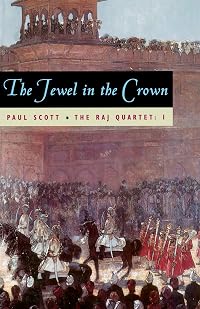
The first novel in the epic quartet about the last days of British rule in India, "as much a story of romantic love as it is of crime . . . an artful triumph" (The New Yorker). The Jewel in the Crown is the first of Paul Scott's renowned historical novels that "limn the Anglo-Indian world with its lovers, friends, family servants, soldiers, businessmen, murderers and suicides-all involved in one another's fate" (The New York Times). It opens in 1942 as the British fear both Japanese invasion show more and Indian demands for independence. On the night after the Indian Congress Party votes to support Gandhi, riots break out and an ambitious police sergeant arrests a young Indian for the alleged rape of the woman they both love. "What has always astonished me about The Raj Quartet is its sense of sophisticated and total control of its gigantic scenario and highly varied characters . . . The politics are handled with an expertise that intrigues and never bores, and are always seen in terms of individuals." -New Republic "Paul Scott's vision is both precise and painterly." -The New York Times Book Review "Few people have written about India quite as seductively, or as intelligently, with a sense of loss but also a sense of responsibility and fallibility." -Kirkus Reviews (starred review.) show lessTags
Recommendations



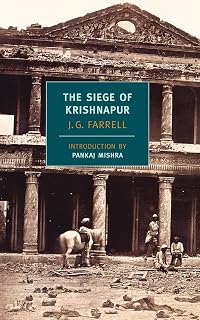

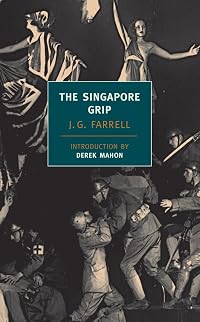
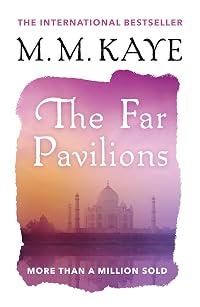

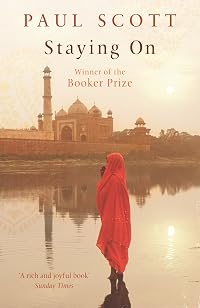



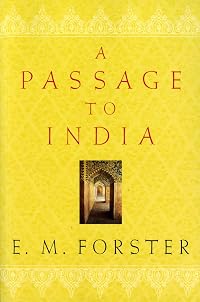








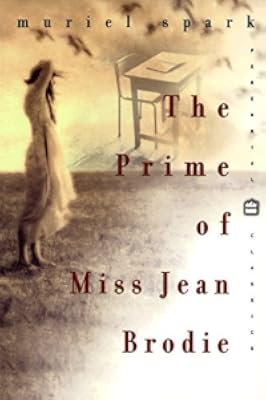
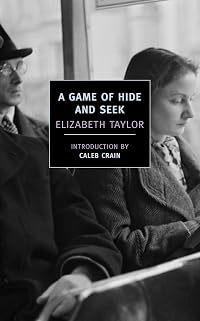
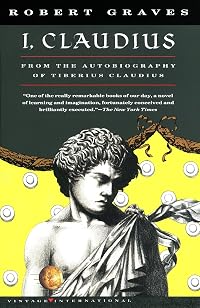
Member Recommendations
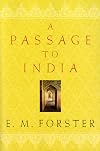
Cecrow These two novels bear close relationship in setting and circumstance.
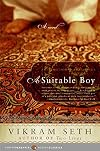
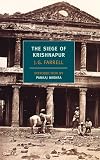
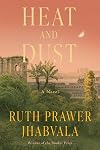
FemmeNoiresque Anglo-Indian relations
Member Reviews
It would not be an exaggeration to say that this is the most awesome novel which I have read about British India. The story is gripping: the language poetic ("the indigo dreams of flowers fallen asleep", to recall a phrase which lingers in the memory): and the characterisation near flawless. Even after more than twenty years (I think it's nearer twenty-five), I can recall the some scenes as if I had read the novel yesterday.
Just look at how Scott starts the novel off:
Imagine, then, a flat landscape, dark for the moment, but even so conveying to a girl running in the still deeper shadow cast by the wall of the Bibighar Gardens an idea of immensity, of distance, such as years before Miss Crane had been conscious of, standing where a lane show more ended and cultivation began...
Like To Kill a Mockingbird and One Hundred Years of Solitude, the first paragraph hooks you with the whole story encapsulated in it. Then when the novelist goes on to say "this is the story of a rape...", you are lost for good.
It is 1942, and Gandhi has delivered the ultimatum to the British - "Quit India!" - in his quietly arrogant way. Everywhere, the winds of change are felt, as the worm is finally turning. In this chaotic situation, a British woman is raped by Indians-and all hell breaks loose. “The Bibighar Incident”, as it comes to be known, grows into a metaphor: the beginning of the end of the British Raj.
Paul Scott’s extraordinary achievement is to encapsulate this huge canvas into the private lives of a few misfits. Daphne Manners, large boned and clumsy, with none of the charms of the English girl: Hari Kumar (or Harry Coomer, as he likes to call himself), Indian on the outside and English on the inside: and Merrick, the policeman, acutely conscious of his low social standing in British society. This triangle is unlike any other seen in literature, as love and hate in equal measure bind these people together, pulling them into the inevitable vortex at the Bibighar gardens.
The novel unfolds through the perspectives of different characters, often not central to the story. It gives a jagged, kaleidoscopic feel to the narrative which is perfectly in keeping with India. And as the mystery of what happened at Bibighar is revealed, we seem to hear the bells start to ring the death knell of the British Empire.
Read it! show less
Just look at how Scott starts the novel off:
Imagine, then, a flat landscape, dark for the moment, but even so conveying to a girl running in the still deeper shadow cast by the wall of the Bibighar Gardens an idea of immensity, of distance, such as years before Miss Crane had been conscious of, standing where a lane show more ended and cultivation began...
Like To Kill a Mockingbird and One Hundred Years of Solitude, the first paragraph hooks you with the whole story encapsulated in it. Then when the novelist goes on to say "this is the story of a rape...", you are lost for good.
It is 1942, and Gandhi has delivered the ultimatum to the British - "Quit India!" - in his quietly arrogant way. Everywhere, the winds of change are felt, as the worm is finally turning. In this chaotic situation, a British woman is raped by Indians-and all hell breaks loose. “The Bibighar Incident”, as it comes to be known, grows into a metaphor: the beginning of the end of the British Raj.
Paul Scott’s extraordinary achievement is to encapsulate this huge canvas into the private lives of a few misfits. Daphne Manners, large boned and clumsy, with none of the charms of the English girl: Hari Kumar (or Harry Coomer, as he likes to call himself), Indian on the outside and English on the inside: and Merrick, the policeman, acutely conscious of his low social standing in British society. This triangle is unlike any other seen in literature, as love and hate in equal measure bind these people together, pulling them into the inevitable vortex at the Bibighar gardens.
The novel unfolds through the perspectives of different characters, often not central to the story. It gives a jagged, kaleidoscopic feel to the narrative which is perfectly in keeping with India. And as the mystery of what happened at Bibighar is revealed, we seem to hear the bells start to ring the death knell of the British Empire.
Read it! show less
"There's a difference between trying to stop an injustice and obstructing justice."
Set in 1942, shortly after the collapse of British Burma and the Japanese forces threatening other British colonies in the east, 'The Jewel in the Crown' is the first book in Scott's Raj quartet which cover the final decline of the British Raj in India. The novel features such hefty issues as racism, class and colonialism but revolves around one particular incident, the rape of a young English woman.
The novel is told as if the incident is being investigated years later from the point of view of a number of characters and times using a variety of forms, from diaries and letters to interviews which allows the author to cover a number of topics such as the show more war, the independence movement and various social, political and religious concerns of the time without the reader being sidetracked by too much extraneous plot.
Using a sexual assault to explore themes of race and class is nothing new, in fact it had already been done within a colonial Indian context in 'A Passage to India' as well as more modern classics like 'To Kill a Mockingbird'. However, what I found the most interesting aspect of this book was the tale of Hari. In an age where migration seems to have become the norm I found his experiences thought provoking. How are we altered, even benignly, when we move to another country and would we or our offspring be ever able to resettle back in their home nation? Or is it simply a matter of the age we are when we do it? My own brother has lived in Germany for over thirty years (not as varied as Britain and India I realise) but was left wondering just how he would manage if he moved back and would his children be able to do so? Equally is his presence in the country having any affects on the natives that he comes into contact with?
This is not an easy read by any means. Some of the topics are difficult and uncomfortable reading, Britain doesn't come out of it very well as you would expect, but I also feel that at times it was rather over-blown (there are a lot of brackets) and could have done with some judicious editing. However, I still feel that it is worth tackling and as such am moving on to the next in the series. show less
Set in 1942, shortly after the collapse of British Burma and the Japanese forces threatening other British colonies in the east, 'The Jewel in the Crown' is the first book in Scott's Raj quartet which cover the final decline of the British Raj in India. The novel features such hefty issues as racism, class and colonialism but revolves around one particular incident, the rape of a young English woman.
The novel is told as if the incident is being investigated years later from the point of view of a number of characters and times using a variety of forms, from diaries and letters to interviews which allows the author to cover a number of topics such as the show more war, the independence movement and various social, political and religious concerns of the time without the reader being sidetracked by too much extraneous plot.
Using a sexual assault to explore themes of race and class is nothing new, in fact it had already been done within a colonial Indian context in 'A Passage to India' as well as more modern classics like 'To Kill a Mockingbird'. However, what I found the most interesting aspect of this book was the tale of Hari. In an age where migration seems to have become the norm I found his experiences thought provoking. How are we altered, even benignly, when we move to another country and would we or our offspring be ever able to resettle back in their home nation? Or is it simply a matter of the age we are when we do it? My own brother has lived in Germany for over thirty years (not as varied as Britain and India I realise) but was left wondering just how he would manage if he moved back and would his children be able to do so? Equally is his presence in the country having any affects on the natives that he comes into contact with?
This is not an easy read by any means. Some of the topics are difficult and uncomfortable reading, Britain doesn't come out of it very well as you would expect, but I also feel that at times it was rather over-blown (there are a lot of brackets) and could have done with some judicious editing. However, I still feel that it is worth tackling and as such am moving on to the next in the series. show less
A rich and intense novel. It's impressive from a technical point of view. So many diverse characters' voices and hardly a line of dialogue to be seen. The opening section is a master-class in authorial voice. Almost poetry with its clusters of alliteration.
But there's a lot more to it than just technical brilliance. I noticed that every character is in some way an outsider. It's more than just a story-telling technique and I wondered if there was some metaphorical point about India. The characters are outsiders because of the divisions of race, class etc and the novel explores these complex distinctions rather wonderfully. But ultimately the division boils down to predator and prey. He calls it The Jewel in the Crown but perhaps The show more Bird in the Hand or The Fish in the Maw would do as well because what you have is a set of predatory types hunting the resources and people of a foreign land. Set against this you have the rape.
The characters feel so real I found the book emotionally affecting. How Scott manages to do that while having the characters hold symbolic meaning I'll never know. Nice to discover an author who's in total control of his tools. show less
But there's a lot more to it than just technical brilliance. I noticed that every character is in some way an outsider. It's more than just a story-telling technique and I wondered if there was some metaphorical point about India. The characters are outsiders because of the divisions of race, class etc and the novel explores these complex distinctions rather wonderfully. But ultimately the division boils down to predator and prey. He calls it The Jewel in the Crown but perhaps The show more Bird in the Hand or The Fish in the Maw would do as well because what you have is a set of predatory types hunting the resources and people of a foreign land. Set against this you have the rape.
The characters feel so real I found the book emotionally affecting. How Scott manages to do that while having the characters hold symbolic meaning I'll never know. Nice to discover an author who's in total control of his tools. show less
”This is the story of a rape, of the events that led up to it and followed it and of the place in which it happened. There are the action, the people and the place; all of which are interrelated but in their totality incommunicable in isolation from the moral continuum of human affairs.”
In 1942, after the Japanese defeated the English in Burma, Mhatma Ghandi was encouraging sedition and the British living in the confines of “the jewel in the crown,” India, were starting to feel the pressure of the Indian people on their continued rule over them. It was the beginning of the end of the Raj, but most of the British living in India didn’t realize it yet. Paul Scott’s novel tells the story in breathtaking prose by delineating the show more story of an Indian man and an English woman who fall in love. This is of course, taboo, at a time when the question of race was more significant than just about anything else.
The narrative is compelling and is related by several different characters who readily spell out the conditions in India at this time. It should come as no surprise that race is at the center of everything. I mean, isn’t it always?
Yes, as the author says, this is the story of a rape. But for me it was actually a story of RACE. And I will be looking forward to the second volume which I planned to read next month. If I can wait that long. Simply divine. show less
Paul Scott’s Jewel in the Crown is an expansive work that tackles every difficult issue that could be imagined for British ruled India. It takes place during the 1940’s, with World War II being fought and ravaging the English homeland, India being used as a buffer between the British forces and Japan, and the painful transition to self-government that can no longer be pushed off by the British rulers. Into this powder keg are dropped an English girl, Daphne Manners, who has been raised by a liberal-minded aunt and uncle, and an Indian boy, Hari Kumar, who has been reared in England and knows nothing of India and the squalor or prejudices she contains.
On page one we are told, This is the story of a rape, of the events that led up to show more it and followed it and of the place in which it happened. It is indeed all of that, but it is also the story of people caught in an out-of-control situation that is both personal and political, and an event that is subjected to interpretations that do not seek for truth or justice and are rooted in prejudice and preconception.
"The action of such an attitude is rather like that of a sieve. Only what is relevant to the attitude gets through. The rest gets thrown away. The real relevance and truth of what gets through the mesh then depends on the relevance and truth of the attitude, doesn't it? If one agrees with that one is at once back on the ground of personal preference--even prejudice--which may or may not have anything to do with truth."
Therein lies the problem, even the most even-handed of the British find it almost impossible not to view the Indian people through this sieve, this attitude, that always leaves them with more or less the outcome they anticipate, primarily because they have pre-ordained it. They do not know what to do with a person who should be on their side of the divide but who fails to look at the Indian population through this filter.
In consequence of this attitude, any Indian who does not fit the mold is suspect. Any Indian who does not know and keep his place is dangerous. Any Indian who cannot see that the color of his skin excludes him from a higher society must be taught the finer lessons of societal behavior. Which brings us to Ronald Merrick, a small-minded man who holds a position of too much authority and with too much power and does not hesitate to abuse it or the people who are put in his path. The heightened tensions of the time allow him the latitude he needs to take a very personal revenge on a woman whom he feels has spurned him in favor of an inferior, and a man for whom he has only contempt.
This might be the story of the physical rape of Daphne Manners, but it is as much the story of the emotional rape of Hari Kumar. He is subjected to a kind of demoralization and dehumanization that makes a person weep in despair for all of mankind. At one point in the novel he states that he has become invisible, and he is right that the true self, the individual who is really Harry Coomer (the name he used in England all of his first eighteen years of life), can no longer be seen by anyone beneath the forced personae of Hari Kumar. In his lonely, isolated existence, in which he belongs to neither side of the society--not English because his skin is the wrong color, not Indian because his upbringing and exposures make him foreign--he finds Daphne Manners, a person who sees Harry Kumar, the whole person, both the Indian and the English reality. For Daphne, Harry is real, he is visible.
Kumar was a man who felt in the end he had lost everything, even his Englishness, and could then only meet every situation--even the most painful--in silence, in the hope that out of it he would dredge back up some self-respect.
It hurt me to think that Harry felt the need to gather his self-respect. He had done nothing to deserve the loss of it in the first place. The fact that he was anything but proud of himself was a result of the demeaning reactions of those around him, but in a society that was this constricted, knowing your place was difficult for even those who were raised in full knowledge of their station.
During the English Raj, there were two Indias. They existed side-by-side and they required contact, but there was no tolerance for intermingling them and most of the British population thought of the Indians as a lower species of being, undeserving of their attentions. For those Indians who did achieve some status in government or business, the general attitude was that they should be grateful and remember precisely where the invisible line was drawn. The truly accepting and open officials, such as Daphne’s Aunt Ethel and Uncle Henry, were rare.
The Jewel in the Crown is an impressive and important work. Scott manages to bring India to life in a physical as well as a spiritual sense. He paints scenes that swelter, you can smell the stench of the waste in the river, you can picture the long verandah of The MacGregor House and the lush and overgrown remains of the Bibighar Gardens, smell the fetid breath of the beggars and the acrid smoke of the cheap cigarettes. He is just as facile in painting emotional territory. It was easy to feel the confusion, distress, unhappiness, humiliation, condescension, and momentary joys of his characters.
Perhaps this is why Mayapore had got bigger but made me smaller, because my association with Hari--the one thing that was beginning to make me feel like a person again--was hedged about, restricted, pressed in on until only by making yourself tiny could you squeeze into it and stand, imprisoned but free, diminished by everything that loomed from outside, but not diminished from the inside; and that was the point, that’s why I speak of joy.
I am looking forward to reading the next novel in this series that make up the Raj Quartet. With all the novels and movies I have seen that dealt with this time period, this one stands out as the first time I have felt that India was at my fingertips in all her guises and with all her glories and flaws. show less
On page one we are told, This is the story of a rape, of the events that led up to show more it and followed it and of the place in which it happened. It is indeed all of that, but it is also the story of people caught in an out-of-control situation that is both personal and political, and an event that is subjected to interpretations that do not seek for truth or justice and are rooted in prejudice and preconception.
"The action of such an attitude is rather like that of a sieve. Only what is relevant to the attitude gets through. The rest gets thrown away. The real relevance and truth of what gets through the mesh then depends on the relevance and truth of the attitude, doesn't it? If one agrees with that one is at once back on the ground of personal preference--even prejudice--which may or may not have anything to do with truth."
Therein lies the problem, even the most even-handed of the British find it almost impossible not to view the Indian people through this sieve, this attitude, that always leaves them with more or less the outcome they anticipate, primarily because they have pre-ordained it. They do not know what to do with a person who should be on their side of the divide but who fails to look at the Indian population through this filter.
In consequence of this attitude, any Indian who does not fit the mold is suspect. Any Indian who does not know and keep his place is dangerous. Any Indian who cannot see that the color of his skin excludes him from a higher society must be taught the finer lessons of societal behavior. Which brings us to Ronald Merrick, a small-minded man who holds a position of too much authority and with too much power and does not hesitate to abuse it or the people who are put in his path. The heightened tensions of the time allow him the latitude he needs to take a very personal revenge on a woman whom he feels has spurned him in favor of an inferior, and a man for whom he has only contempt.
This might be the story of the physical rape of Daphne Manners, but it is as much the story of the emotional rape of Hari Kumar. He is subjected to a kind of demoralization and dehumanization that makes a person weep in despair for all of mankind. At one point in the novel he states that he has become invisible, and he is right that the true self, the individual who is really Harry Coomer (the name he used in England all of his first eighteen years of life), can no longer be seen by anyone beneath the forced personae of Hari Kumar. In his lonely, isolated existence, in which he belongs to neither side of the society--not English because his skin is the wrong color, not Indian because his upbringing and exposures make him foreign--he finds Daphne Manners, a person who sees Harry Kumar, the whole person, both the Indian and the English reality. For Daphne, Harry is real, he is visible.
Kumar was a man who felt in the end he had lost everything, even his Englishness, and could then only meet every situation--even the most painful--in silence, in the hope that out of it he would dredge back up some self-respect.
It hurt me to think that Harry felt the need to gather his self-respect. He had done nothing to deserve the loss of it in the first place. The fact that he was anything but proud of himself was a result of the demeaning reactions of those around him, but in a society that was this constricted, knowing your place was difficult for even those who were raised in full knowledge of their station.
During the English Raj, there were two Indias. They existed side-by-side and they required contact, but there was no tolerance for intermingling them and most of the British population thought of the Indians as a lower species of being, undeserving of their attentions. For those Indians who did achieve some status in government or business, the general attitude was that they should be grateful and remember precisely where the invisible line was drawn. The truly accepting and open officials, such as Daphne’s Aunt Ethel and Uncle Henry, were rare.
The Jewel in the Crown is an impressive and important work. Scott manages to bring India to life in a physical as well as a spiritual sense. He paints scenes that swelter, you can smell the stench of the waste in the river, you can picture the long verandah of The MacGregor House and the lush and overgrown remains of the Bibighar Gardens, smell the fetid breath of the beggars and the acrid smoke of the cheap cigarettes. He is just as facile in painting emotional territory. It was easy to feel the confusion, distress, unhappiness, humiliation, condescension, and momentary joys of his characters.
Perhaps this is why Mayapore had got bigger but made me smaller, because my association with Hari--the one thing that was beginning to make me feel like a person again--was hedged about, restricted, pressed in on until only by making yourself tiny could you squeeze into it and stand, imprisoned but free, diminished by everything that loomed from outside, but not diminished from the inside; and that was the point, that’s why I speak of joy.
I am looking forward to reading the next novel in this series that make up the Raj Quartet. With all the novels and movies I have seen that dealt with this time period, this one stands out as the first time I have felt that India was at my fingertips in all her guises and with all her glories and flaws. show less
(12) For whatever reason, I love fiction set in India. I have never been, and don't have a drop of British nor Indian ancestry. The first in this series written about the end days of Britain's colonial rule in India was excellent. The novel is written in 4 or 5 sections that really vary in focus and perspective. In the end they mostly tell the tale of a relationship between the niece of a former district commissioner of Mayapore, Daphne Manners, and a young Indian, Hari Kumar, raised in England but now back in India on his own. Hari is educated by a rich father who escaped India and fancies making his son as English as possible despite the color of his skin, when he dies Hari is left penniless and forced to live with middle-class Indian show more relatives in relative squalor. His relationship with India and Indians as well as with Daphne is the central allegory of the British-India relationship.
Then there is the incident in Bibighar gardens (I am going to miss that name) that forms the central tension of the book. . .
The book is very well written though is sometimes very dense - the text is small and the pages large and there is a decent amount of politics of the time in there. WW2; Japanese invasion of Burma, lots of references to the Mutiny, the All India Congress, Ghandi - things that I am not well versed on, and that I really didn't feel like doing a lot of additional research - so there were parts that almost begged to be skimmed which prevents me from giving a 5 star rating. But the section 'the diary of Miss Manners' is so spell-binding, transporting, and affecting - it is rare that I stay up way past my bedtime reading anything but the most shameless thriller/mystery - but I din't want to put the book down during this section.
I am so sad regarding Hari and Daphne. Scott is just so restrained and he avoids the Hollywood ending which is so right; but SO wistful. I am looking forward to immersing myself in the next novel. This reminded me of 'The Siege of Krishnapur' by J.G. Farrell a real favorite of mine in recent years. Highly recommended for lovers of literary fiction - especially relating to India such as books by V.S. Naipul, Jhumpha Lahiri, Rohinton Mistry to name a few. show less
Then there is the incident in Bibighar gardens (I am going to miss that name) that forms the central tension of the book. . .
The book is very well written though is sometimes very dense - the text is small and the pages large and there is a decent amount of politics of the time in there. WW2; Japanese invasion of Burma, lots of references to the Mutiny, the All India Congress, Ghandi - things that I am not well versed on, and that I really didn't feel like doing a lot of additional research - so there were parts that almost begged to be skimmed which prevents me from giving a 5 star rating. But the section 'the diary of Miss Manners' is so spell-binding, transporting, and affecting - it is rare that I stay up way past my bedtime reading anything but the most shameless thriller/mystery - but I din't want to put the book down during this section.
I am so sad regarding Hari and Daphne. Scott is just so restrained and he avoids the Hollywood ending which is so right; but SO wistful. I am looking forward to immersing myself in the next novel. This reminded me of 'The Siege of Krishnapur' by J.G. Farrell a real favorite of mine in recent years. Highly recommended for lovers of literary fiction - especially relating to India such as books by V.S. Naipul, Jhumpha Lahiri, Rohinton Mistry to name a few. show less
I have to say, this is an excellent novel, presenting the varying aspects of life in India in the last years of British rule. Paul Scott captures many of the attitudes and struggles of both the British and Indians in those years. However, it took a long time for me to get into this novel. Not until nearly the very end did I feel truly interested in the story. This is partially due to the way the story is presented, switching narrators and a nonlinear timeline. All in all, I was glad I made it to the end of this novel, since it was definitely worth it, but I still wish the story had been written in a different manner.
Members
- Recently Added By
Lists

All Things India
95 works; 21 members

Read the book and saw the movie
1,170 works; 195 members

20th Century Literature
1,161 works; 55 members

Folio Society
831 works; 49 members

Top Five Books of 2014
1,064 works; 398 members

Best books made into television
66 works; 4 members
TML 200 Best Books 1950-1999
202 works; 10 members

Most Popular Books Tagged India
36 works; 5 members

Asia
178 works; 7 members

Daniel S. Burt's recommended historical novels
8 works; 1 member

The Modern Library (The Two Hundred Best Novels....
202 works; 1 member
Talk Discussions
Past Discussions
March Group Read:The Raj Quartet 1 - The Jewel in the Crown in 2014 Category Challenge (June 2014)
Author Information

27+ Works 6,914 Members
Author Paul Scott was born in England on March 25, 1920. At the age of 16, he left the Winchmore Hill Collegiate School because of financial difficulties and started a career as an accountant. In 1940, he joined the army and was sent to India. After World War II, he worked as an accountant for two small publishing houses and then as a literary show more agent. In 1952, he published his first novel Johnny Sahib and in 1960, he decided to become a full-time author. He is best-known for his series the Raj Quartet and his novel Staying On won the 1977 Booker Prize. He also wrote reviews and was a visiting professor at the University of Tulsa in Oklahoma. He died on March 1, 1978. (Bowker Author Biography) show less
Some Editions
Awards and Honors
Series

Belongs to Publisher Series
Work Relationships
Common Knowledge
- Canonical title
- The Jewel in the Crown
- Original publication date
- 1966
- People/Characters
- Miss Crane (Edwina Crane); Sister Ludmila (Ludmila Smith); Hari Kumar (Harry Coomer); Daphne Manners; Ronald Merrick; Lili Chatterjee (Lady Chatterjee, Auntie Lili) (show all 14); Colin Lindsey; Shalini Gupta (Aunt Shalini); Pandit Baba (Pandit B. N. V. Baba); Judge Menon; Parvati Manners; Dr. Krishnamurti; Dr. Anna Klaus; Mr. Srinivasan
- Important places
- India; Bibighar Gardens; Mayapore, India (fictional); Dibrapur, India (fictional); British India
- Important events
- World War II
- Related movies
- The Jewel in the Crown (1984 | IMDb)
- First words
- Imagine, then, a flat landscape, dark for the moment, but even so conveying to a girl running in the still deeper shadow cast by the wall of the Bibighar Gardens an idea of immensity, of distance, such as years before Miss Cr... (show all)ane had been conscious of standing where a lane ended and cultivation began: a different landscape but also in the alluvial plain between the mountains of the north and the plateau of the south.
- Disambiguation notice
- 1966 novel
Classifications
Statistics
- Members
- 1,635
- Popularity
- 13,752
- Reviews
- 34
- Rating
- (3.99)
- Languages
- 12 — Danish, Dutch, English, Estonian, Finnish, French, German, Hungarian, Norwegian, Polish, Spanish, Swedish
- Media
- Paper, Audiobook, Ebook
- ISBNs
- 46
- UPCs
- 1
- ASINs
- 25