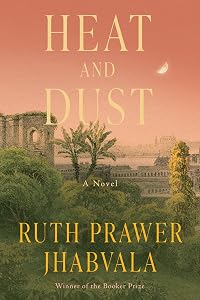
Heat and Dust
by Ruth Prawer Jhabvala
On This Page
Description
The Booker Prize–winning novel—intertwining the narratives of two women, past and present, and their relationships to India—from the novelist, short story writer, and two–time Academy Award–winning screenwriter Ruth Prawer JhabvalaPartly set in colonial India during the 1920s, Heat and Dust tells the story of Olivia, a beautiful woman suffocated by the propriety and social constraints of her position as the wife of an important English civil servant. Longing for passion and show more independence, Olivia is drawn into the spell of the Nawab, a minor Indian prince deeply involved in gang raids and criminal plots. She is intrigued by the Nawab's charm and aggressive courtship, and soon begins to spend most of her days in his company. But then she becomes pregnant, and unsure of the child's paternity, she is faced with a wrenching dilemma. Her reaction to the crisis humiliates her husband and outrages the British community, breeding a scandal that lives in collective memory long after her death. show less
Tags
Recommendations


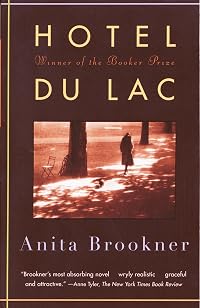
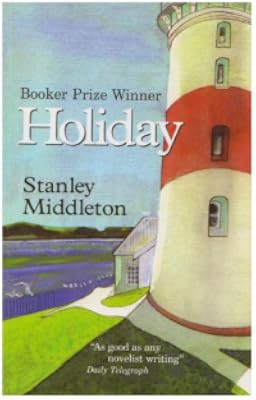




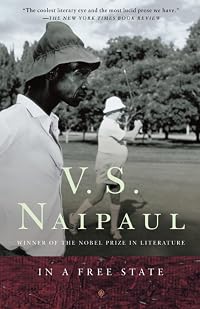
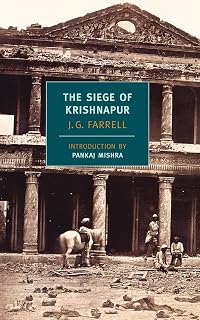











Member Recommendations
FemmeNoiresque Anglo-Indian relations
Member Reviews
In Heat and Dust, we have Olivia, the beautiful society wife of Douglas, the “upright and just” civil servant who “worked like a Trojan” in pre-independence India. Left to her own devices in a house full of servants all day long, Olivia is bored out her mind, but one fine day they get invited to a dinner party the Nawab’s palace at Khatm.
"His eyes often rested on her, and she let him study her while pretending not to notice. She liked it – as she had liked the way he had looked at her when she had first come in. His eyes had lit up – he checked himself immediately, but she had seen it and realised that here at last was one person in India to be interested in her the way she was used to."
After the first few pages, it is show more clear to us Olivia’s story will be intertwined with Nawab’s.
Fast forward fifty years, we have Olivia’s step-granddaughter, the narrator of the story whose name we never learn, visiting post-independence India to find out more about her ‘scandalous’ ancestor.
I don’t believe the story of Heat and Dust will stay with me for long. After all the plot is not much to rave of. However, I found Ruth Jhabvala’s writing to be dazzling. Her depictions of India read like a love letter, and through the eyes of two foreign women belonging to two generations who come to fall in love with India, despite their reservations, she paints us, her India.
"‘Yes it [Himalayas] is climbing up into heaven. There is cool air and breezes, clouds, birds, and trees. Then there is only snow, everything is white and sun also is shining white."
She reminds us there is more to India than people living in small huts squatting by the side of roads, that there’s something serene and simple amidst its bustling cities. But not even Elizabeth Gilbert who went to India on a spiritual journey to find herself in Eat, Pray, Love captures its incredible dimensions the way Ruth Jhabvala does.
"I have not yet traveled on a bus in India that has not been packed to bursting-point, with people inside and luggage on top; and they are always so old that they shake up every bone in the human body and every screw in their own. If the buses are always the same, so is the landscape through which they travel. Once a town is left behind, there is nothing till the next one expect flat land, broiling sky, distances and dust."
Ruth Jhabvala, the only person ever to have won both the Man Booker and Academy awards, was married to an Indian architect and lived in Delhi for over a twenty years. Event though as we read the novel we feel a hint of nostalgia, in her writing Ruth Jhabvala is not pretentious. She doesn’t shy away from ancient customs such as Suttee that got outlawed in 1829, where faithful widows jump into the fires that burn their dead husbands’ bodies, which most people would call barbaric, or claim Indian curries a gastronomical experience no one should miss!
"He accompanied them to the place of execution and joined them in their last prayers. He watched the noose being placed around their necks and stayed till the very last moment. At that last moment, one of them – Tikku Ram, a man of very high caste – suddenly turned to the hangman and began to ask ‘Are you a—?’ but could not finish because the hangman had slipped the hood over his face. The missing word was probably ‘chamar‘ – he was worried about the caste of the hangman who was performing this last intimate function for him. It was apparently his only worry at that moment of departure."
Instead, her observations delivered in humorous prose grow in us, making us see past the imperfections of India and fall for everything – from its vibrant hues and cacophony of sounds to the overwhelming chaos – it has to offer. show less
"His eyes often rested on her, and she let him study her while pretending not to notice. She liked it – as she had liked the way he had looked at her when she had first come in. His eyes had lit up – he checked himself immediately, but she had seen it and realised that here at last was one person in India to be interested in her the way she was used to."
After the first few pages, it is show more clear to us Olivia’s story will be intertwined with Nawab’s.
Fast forward fifty years, we have Olivia’s step-granddaughter, the narrator of the story whose name we never learn, visiting post-independence India to find out more about her ‘scandalous’ ancestor.
I don’t believe the story of Heat and Dust will stay with me for long. After all the plot is not much to rave of. However, I found Ruth Jhabvala’s writing to be dazzling. Her depictions of India read like a love letter, and through the eyes of two foreign women belonging to two generations who come to fall in love with India, despite their reservations, she paints us, her India.
"‘Yes it [Himalayas] is climbing up into heaven. There is cool air and breezes, clouds, birds, and trees. Then there is only snow, everything is white and sun also is shining white."
She reminds us there is more to India than people living in small huts squatting by the side of roads, that there’s something serene and simple amidst its bustling cities. But not even Elizabeth Gilbert who went to India on a spiritual journey to find herself in Eat, Pray, Love captures its incredible dimensions the way Ruth Jhabvala does.
"I have not yet traveled on a bus in India that has not been packed to bursting-point, with people inside and luggage on top; and they are always so old that they shake up every bone in the human body and every screw in their own. If the buses are always the same, so is the landscape through which they travel. Once a town is left behind, there is nothing till the next one expect flat land, broiling sky, distances and dust."
Ruth Jhabvala, the only person ever to have won both the Man Booker and Academy awards, was married to an Indian architect and lived in Delhi for over a twenty years. Event though as we read the novel we feel a hint of nostalgia, in her writing Ruth Jhabvala is not pretentious. She doesn’t shy away from ancient customs such as Suttee that got outlawed in 1829, where faithful widows jump into the fires that burn their dead husbands’ bodies, which most people would call barbaric, or claim Indian curries a gastronomical experience no one should miss!
"He accompanied them to the place of execution and joined them in their last prayers. He watched the noose being placed around their necks and stayed till the very last moment. At that last moment, one of them – Tikku Ram, a man of very high caste – suddenly turned to the hangman and began to ask ‘Are you a—?’ but could not finish because the hangman had slipped the hood over his face. The missing word was probably ‘chamar‘ – he was worried about the caste of the hangman who was performing this last intimate function for him. It was apparently his only worry at that moment of departure."
Instead, her observations delivered in humorous prose grow in us, making us see past the imperfections of India and fall for everything – from its vibrant hues and cacophony of sounds to the overwhelming chaos – it has to offer. show less
Winner of the Booker Prize in 1975, Heat and Dust is a short but interesting study in contrasts. It is the story of two women, both British, who find themselves living in unfamiliar India. Olivia is the new, young wife of a civil servant stationed in India in 1923, and the unnamed narrator is a young woman seeking to learn more about her grandfather's first wife, i.e. Olivia, in the present time.
The narrator arrives in Bombay and finds a room to rent in the compound of an Indian functionary. He feels embarrassed by her bohemian lack of furniture, and she writes in her journal, "It would have been easier for him if I had been like Olivia. She was everything I'm not." The idea that, although related, the two women are opposites in some show more fundamental way, shapes the book.
Olivia is the stereotypical sheltered British woman of a certain class who feels constrained by the strictures of "polite" society. An innocent in the ways of seduction and politics, she is soon caught up in both in the person of the local Nawab, a charismatic but impoverished Indian prince. As she is drawn more and more into his influence, like an "irresistible force of nature", Olivia realizes that she is no longer the person she was when she came to India.
She felt that now-out of pride, or to prove her innocence-she ought to be the one to hang back. She hesitated for a moment but found that she did not, after all, have enough pride (or innocence) for that. She followed him quite quickly to the car.
Olivia is the perpetual outsider. Longing to be accepted by the British ex-pats, yet feeling the pull of "the other side", Olivia floats through her days on an excess of emotion. She makes few decisions, and when she does, they seem an outcome of the moment, not of rational reflection.
I found Olivia's naiveté to be cloying after a while, as she remains ignorant of reality far longer than seems plausible. She never seems to get it, even when it is right in front of her.
The narrator, on the other hand, is proactive in her desire to become "one of them", and seeks out the exact same experiences which just seem to happen to Olivia. Uninhibited, worldly, and with a touch of youthful callousness, the narrator changes the lives of those around her. Yet, she too is not immune to the sensuality of the Other.
India always changes people, and I have been no exception. But this is not my story, it is Olivia's as far as I can follow it.
But Olivia's story is her story, and the two are mirror images reflecting back to each other the consequences of making choices and accepting them.
Heat and Dust reminded me of The Painted Veil in that both Olivia and Kitty are awakened to a more mature life through their experiences in an exotic setting. Kitty’s character and understanding develop throughout the book, and I was touched by the story’s ending. Olivia doesn’t seem to evolve in the same way. We are left assuming that she has been changed by her experiences, but unsure how. It is the presence of the narrator and her story that add the necessary complexity to make this a more thoughtful read. Although I failed to empathize fully with either Olivia or the narrator, I found myself rereading a few sections after finishing the book: always a sign to me that the author has managed to do more than simply write a good story. show less
The narrator arrives in Bombay and finds a room to rent in the compound of an Indian functionary. He feels embarrassed by her bohemian lack of furniture, and she writes in her journal, "It would have been easier for him if I had been like Olivia. She was everything I'm not." The idea that, although related, the two women are opposites in some show more fundamental way, shapes the book.
Olivia is the stereotypical sheltered British woman of a certain class who feels constrained by the strictures of "polite" society. An innocent in the ways of seduction and politics, she is soon caught up in both in the person of the local Nawab, a charismatic but impoverished Indian prince. As she is drawn more and more into his influence, like an "irresistible force of nature", Olivia realizes that she is no longer the person she was when she came to India.
She felt that now-out of pride, or to prove her innocence-she ought to be the one to hang back. She hesitated for a moment but found that she did not, after all, have enough pride (or innocence) for that. She followed him quite quickly to the car.
Olivia is the perpetual outsider. Longing to be accepted by the British ex-pats, yet feeling the pull of "the other side", Olivia floats through her days on an excess of emotion. She makes few decisions, and when she does, they seem an outcome of the moment, not of rational reflection.
I found Olivia's naiveté to be cloying after a while, as she remains ignorant of reality far longer than seems plausible. She never seems to get it, even when it is right in front of her.
The narrator, on the other hand, is proactive in her desire to become "one of them", and seeks out the exact same experiences which just seem to happen to Olivia. Uninhibited, worldly, and with a touch of youthful callousness, the narrator changes the lives of those around her. Yet, she too is not immune to the sensuality of the Other.
India always changes people, and I have been no exception. But this is not my story, it is Olivia's as far as I can follow it.
But Olivia's story is her story, and the two are mirror images reflecting back to each other the consequences of making choices and accepting them.
Heat and Dust reminded me of The Painted Veil in that both Olivia and Kitty are awakened to a more mature life through their experiences in an exotic setting. Kitty’s character and understanding develop throughout the book, and I was touched by the story’s ending. Olivia doesn’t seem to evolve in the same way. We are left assuming that she has been changed by her experiences, but unsure how. It is the presence of the narrator and her story that add the necessary complexity to make this a more thoughtful read. Although I failed to empathize fully with either Olivia or the narrator, I found myself rereading a few sections after finishing the book: always a sign to me that the author has managed to do more than simply write a good story. show less
I'm reading all the Booker Prize winners this year. Follow me at www.methodtohermadness.com.
Ruth Prawer Jhabvala's Heat and Dust is an excellent follow-up to J.G. Farrell's The Siege of Krishnapur. Siege is about the Indian Rebellion of 1857. In it, a British official, the Collector, is able to imprison the local Indian prince and his prime minister. In Heat and Dust, the British and Indian rulers seem to be on more equal footing, but their dance is delicate and easily thrown off balance.
Heat and Dust’s double narrative is original and thought-provoking. The frame story is that of an unnamed contemporary woman researching her grandfather’s first wife, Olivia. Olivia’s story takes place in 1923, in the uneasy decades between the show more Rebellion and Indian Independence ninety years later. The narrator makes clear from the first sentence that Olivia “went away” with the Nawab, the prince of the region next to the one that her British husband manages. The dual mysteries are how an Englishwoman came to such an extreme, and whether her step-granddaughter will follow in her footsteps.
Jhabvala constructs artfully parallel lives for the two women, yet with striking contrasts due to their differing times. The narrator seems to actually care about the natives, performing acts of charity that repel her higher-caste Indian friends, while Olivia seems oblivious to all Indians but her prince. The narrator is able to evict the parasitic Englishman Chid from her house, while Olivia must put up with both her husband Douglas, and her lover’s hanger-on Harry. Both women take an Indian lover, but their reactions to their pregnancies are diametrically opposed. Both stay in India. The narrator seems to do so out of love for the country, but it is unclear what Olivia’s motivations are: is she simply too humiliated to return to England?
Olivia’s prince is a pathetic character: he wants to lead a life of adventure, as his ancestors did, but instead is spoiled and dependent upon English people, like Harry, and English things, such as his wife’s two pianos, which are both ruined by the tropical climate. And it is the narrator who takes the initiative with her own shy Indian lover. However, after the military and class conflict of Siege, in which India is treated solely as enemy and servant, it was a great relief to read this more nuanced tale of two women truly interacting with “the Other.” show less
Ruth Prawer Jhabvala's Heat and Dust is an excellent follow-up to J.G. Farrell's The Siege of Krishnapur. Siege is about the Indian Rebellion of 1857. In it, a British official, the Collector, is able to imprison the local Indian prince and his prime minister. In Heat and Dust, the British and Indian rulers seem to be on more equal footing, but their dance is delicate and easily thrown off balance.
Heat and Dust’s double narrative is original and thought-provoking. The frame story is that of an unnamed contemporary woman researching her grandfather’s first wife, Olivia. Olivia’s story takes place in 1923, in the uneasy decades between the show more Rebellion and Indian Independence ninety years later. The narrator makes clear from the first sentence that Olivia “went away” with the Nawab, the prince of the region next to the one that her British husband manages. The dual mysteries are how an Englishwoman came to such an extreme, and whether her step-granddaughter will follow in her footsteps.
Jhabvala constructs artfully parallel lives for the two women, yet with striking contrasts due to their differing times. The narrator seems to actually care about the natives, performing acts of charity that repel her higher-caste Indian friends, while Olivia seems oblivious to all Indians but her prince. The narrator is able to evict the parasitic Englishman Chid from her house, while Olivia must put up with both her husband Douglas, and her lover’s hanger-on Harry. Both women take an Indian lover, but their reactions to their pregnancies are diametrically opposed. Both stay in India. The narrator seems to do so out of love for the country, but it is unclear what Olivia’s motivations are: is she simply too humiliated to return to England?
Olivia’s prince is a pathetic character: he wants to lead a life of adventure, as his ancestors did, but instead is spoiled and dependent upon English people, like Harry, and English things, such as his wife’s two pianos, which are both ruined by the tropical climate. And it is the narrator who takes the initiative with her own shy Indian lover. However, after the military and class conflict of Siege, in which India is treated solely as enemy and servant, it was a great relief to read this more nuanced tale of two women truly interacting with “the Other.” show less
Published in 1975, this book tells the story of an unnamed British woman who travels to India in search of her step–grandmother’s past. Her English step-grandmother, Olivia, had lived with her husband, a British official, in Satipur in the 1920s, during the era of the British Raj. She had developed a friendship with the local Nawab, an Indian Muslim prince. Later, the friendship became an infatuation, and a scandal ensued. The narrator has always been intrigued with her family’s history. In the 1970s, she inherits Olivia’s letters and journals, which further piques her curiosity. While in India, the narrator’s life starts to parallel that of her step-grandmother.
Throughout this story, the reader will become familiar with show more conditions in India in the 1920s – poverty, disease, crime, and the ever-present “heat and dust.” The letters contain the views of Olivia’s British social circle. Their view of India’s population comes across as mostly negative. Women have a subservient role and are expected to be dutiful and reserved. Olivia, through her contact with the Nawab, provides his views of the British, so the reader gains multiple perspectives. Both the British and the Nawab live in relative luxury compared to the majority of the population.
The reader comes to understand why Olivia and the Nawab are mutually attracted. He treats her with respect, confides in her, and sees her as a woman of agency. It is a character-driven novel. The 1970s story is narrated in first person. The historical story is told as if it were unfolding. Near the end there is conflict introduced by two male characters that results in Olivia taking a drastic action. It is not a happy story and not for anyone seeking one with all the loose ends tied up. I can see why this book won the Booker prize. show less
Throughout this story, the reader will become familiar with show more conditions in India in the 1920s – poverty, disease, crime, and the ever-present “heat and dust.” The letters contain the views of Olivia’s British social circle. Their view of India’s population comes across as mostly negative. Women have a subservient role and are expected to be dutiful and reserved. Olivia, through her contact with the Nawab, provides his views of the British, so the reader gains multiple perspectives. Both the British and the Nawab live in relative luxury compared to the majority of the population.
The reader comes to understand why Olivia and the Nawab are mutually attracted. He treats her with respect, confides in her, and sees her as a woman of agency. It is a character-driven novel. The 1970s story is narrated in first person. The historical story is told as if it were unfolding. Near the end there is conflict introduced by two male characters that results in Olivia taking a drastic action. It is not a happy story and not for anyone seeking one with all the loose ends tied up. I can see why this book won the Booker prize. show less
This is a short but intricate nove where lives carefully and slowly interweave. A woman becomes curious about her grandfather's first wife and goes out to India to seek out her story. We hear both the past and the present, the British and the Indian perspectives, the new and the old morals. At the heart of this is the mysterious India teeming with emotions and desires in a hot, dusty land that excites all who live there.
It's beautifully written - the pace is slow but the story unfolds in a way that's impossible to put it down. What is most remarkable, however, is how the lives of the main two characters, separated by time, generation and family, start to meld in different ways but to the same inescapable destiny that they would not have show more foreseen but that they embrace fully and happily. show less
It's beautifully written - the pace is slow but the story unfolds in a way that's impossible to put it down. What is most remarkable, however, is how the lives of the main two characters, separated by time, generation and family, start to meld in different ways but to the same inescapable destiny that they would not have show more foreseen but that they embrace fully and happily. show less
I like the way the two strands of the story were woven together. One the story of the British grandmother who ran away from her husband and married an Indian prince. The second story of the grandmother trying to piece together this story. Both are stories about the power of India. Both women are drawn into the culture in ways that estrange them from their own English stories. Neither can really go back.
The book was read in a lovely way by Julie Christie. I would recommend the book just for the reading.
The book was read in a lovely way by Julie Christie. I would recommend the book just for the reading.
This feels a bit slight for a Booker winner, but its fine. Young women in India in different timelines 50 years apart have experiences that somewhat mirror each other. It pokes fun at the boring Brits that administer colonial India, and at the daft hippies that go there in the 70s to find religion.
Members
- Recently Added By
Lists

Booker Prize
491 works; 62 members

All Things India
95 works; 21 members

500 Great Books by Women
507 works; 60 members

Books You Read During High School (For School)
301 works; 52 members

Harold Bloom - The Western Canon: D. The Chaotic Age
833 works; 24 members
TML 200 Best Books 1950-1999
202 works; 10 members

Man Booker Prize Longlist 1975
2 works; 1 member

Booker Prize Shortlist: Titles Not Yet Read
161 works; 4 members

Swinging Seventies
255 works; 18 members

Books by Jewish Authors
68 works; 5 members

Mustich's 1000 Books to Read Before You Die: A Life Changing List
1,001 works; 20 members
John Murray Publishers
2 works; 1 member

2025 Christmas Gifts
70 works; 19 members

The Modern Library (The Two Hundred Best Novels....
202 works; 1 member

To Read
13 works; 1 member
Author Information

58+ Works 4,154 Members
Ruth Prawer Jhabvala was born in Cologne, Germany on May 7, 1927. She had to emigrate to England in 1939 with her family because of their Jewish faith. She earned a degree in English literature at London University. In 1951, she married an Indian architect, moved to India and raised three daughters. She began writing in 1955 and has written a show more dozen novels. Several novels were set in India such as The Nature of Passion, Esmond in India, Travelers and The Householder, which was also her first motion picture project. Shakespeare Wallah was her first collaboration on an original project. She also wrote screenplays such as Roseland and Jefferson in Paris. Her other fiction works included In Search of Love and Beauty, Three Continents, Poet and Dancer, Shards of Memory, East into Upper East and My Nine Lives: Chapters of a Possible Past. She won numerous awards including Britain's Booker Prize for her novel Heat and Dust in 1975, the BAFTA award for Best Screenplay for the filmed adaptation of Heat and Dust in 1984, an Academy Award for Best Adapted Screenplay for A Room With a View in 1986, the Best Screenplay Award from the New York Film Critics Circle for Mr. & Mrs. Bridge in 1990, an Academy Award for Best Adapted Screenplay for Howards, the MacArthur Foundation Award in 1984 and the Writers Guild of America's Screen Laurel Award in 1994. She died on April 3, 2013 at the age of 85. (Bowker Author Biography) show less
Awards and Honors
Awards
Distinctions
Notable Lists
Series
Belongs to Publisher Series
Perennial Library (P431)
Work Relationships
Is retold in
Has the adaptation
Common Knowledge
- Canonical title
- Heat and Dust
- Original publication date
- 1975
- Important events
- British Raj (1857 | 1947)
- Related movies
- Heat and Dust (1983 | IMDb)
- First words
- Shortly after Olivia went away with the Nawab, Beth Crawford returned from Simla.
- Last words
- (Click to show. Warning: May contain spoilers.)In any case, it will have to be some time because of my condition which will make it more and more difficult to get down again, even if I should want to.
- Original language
- English
Classifications
Statistics
- Members
- 1,335
- Popularity
- 18,075
- Reviews
- 40
- Rating
- (3.53)
- Languages
- 8 — Dutch, English, Finnish, French, German, Italian, Slovenian, Swedish
- Media
- Paper, Audiobook, Ebook
- ISBNs
- 36
- ASINs
- 10