On This Page
Description
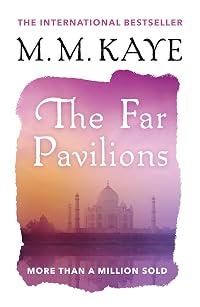
From its beginning in the foothills of the towering Himalayas, to the burning plains, to the besieged British Mission in Kabul., M.M. Kaye's masterwork is a vast, rich and vibrant tapestry of love and war that ranks with the greatest panoramic sagas of modern fiction. It begins in 1857 when, following the Indian Mutiny, young English orphan Ashton is disguised by his ayah Sita as her Indian son, Ashok. As he forgets his true identity, his destiny is set. This is a story of divided loyalties show more and fierce friendship; of true love made impossible by class and race; a critique of the imperialist adventure; and an examination of the cultural and spiritual clash between East and West. show lessTags
Recommendations























Member Recommendations
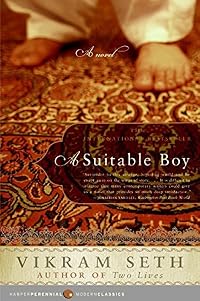
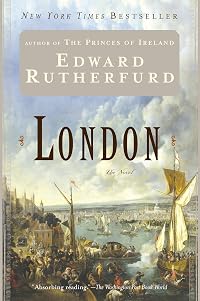
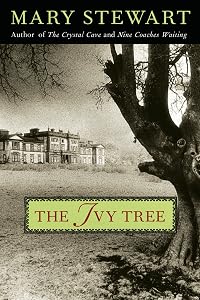
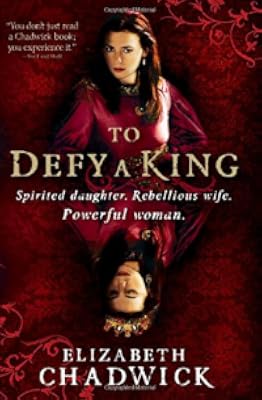
MarthaJeanne I think that Ash in Far Pavillions was based partly on Kim. Both books deal with the ambivalence between cultures of those who were brought up in a different culture to the one they belonged to by birth and later education. Both are also great adventure stories that take place during the British Raj in India. The big difference being that Kim only deals with childhood, but Ash has to go on to life as an adult.
40
Raj by Gita Mehta
by mcenroeucsb
Member Reviews
There's a lot to say about The Far Pavilions, but here's the crux of it for me: it's a decent book that has the potential to be a great book, but the protracted emphasis on a badly-developed romance takes a lot away from it.
Don't get me wrong, the book has merit. It's a gripping story right from the start--I felt immediately invested in the protagonist, Ash, and his surrogate mother, Sita, and could not put the book down until I knew what happened to them. Once the narrative gets its traction, it doesn't slow down (with one notable exception, which I'll get to later). It's a 955-page novel, and I finished it in a week.
It also beautifully evokes the time and place in which it is set. I think that's the novel's greatest strength: it show more brings the India of the 1860's - 1870's to life by weaving together fictional elements with historical events, cultural/religious traditions, and geographical details. It's the richness of those details and the complex portrayal of historical events that make this book worth reading. For example, I was surprised by how the novel treated the British colonization of India--how through Ash (who, because of his situation, has "one foot in each camp") we see the systemic violence and arrogance of colonization, the way in which it damages the colonized country/peoples; but we also see the inherent humanity of the colonizers. That same complexity is brought to bear on other historical events throughout the book, and that is the book's great strength.
That being said, the book also has a great and glaring weakness: the aforementioned badly-developed romance. If the rest of the book is complex, the romance is quite the opposite. And the problem is, the romance isn't just bad, it's lengthy. The narrative spends a good two-thirds of its time on "developing" this angst-ridden romance between Ash and his childhood friend, Anjuli ("Juli" for short). It's a shallow, melodramatic affair that would only be a minor drawback if it weren't so damn long. But because the book spends so much time on it, it's impossible to ignore it and focus on other (far more interesting) events. This is where the story dragged the most for me.
Worse than that, their relationship is... well, gross, for lack of a better term. At best it's highly unhealthy, and at worst it's downright abusive. In practically every scene they have together, Ash gets physically domineering and abusive with Juli (the number of times he's described as shaking her by the shoulders until her teeth rattle would actually be laughable if it weren't horrible). He thinks and speaks a great deal about how much he loves her, and then proceeds to treat her with little to no respect. Ash is definitely at his worst in his scenes with Juli, and their relationship marred my experience with the rest of the book. Individually, they're both interesting characters, but together... yikes.
As I said at the beginning, it's a decent book that, were it not for the badly done romance, could have been a great book. It's a worthwhile read if you can stomach the romance. show less
Don't get me wrong, the book has merit. It's a gripping story right from the start--I felt immediately invested in the protagonist, Ash, and his surrogate mother, Sita, and could not put the book down until I knew what happened to them. Once the narrative gets its traction, it doesn't slow down (with one notable exception, which I'll get to later). It's a 955-page novel, and I finished it in a week.
It also beautifully evokes the time and place in which it is set. I think that's the novel's greatest strength: it show more brings the India of the 1860's - 1870's to life by weaving together fictional elements with historical events, cultural/religious traditions, and geographical details. It's the richness of those details and the complex portrayal of historical events that make this book worth reading. For example, I was surprised by how the novel treated the British colonization of India--how through Ash (who, because of his situation, has "one foot in each camp") we see the systemic violence and arrogance of colonization, the way in which it damages the colonized country/peoples; but we also see the inherent humanity of the colonizers. That same complexity is brought to bear on other historical events throughout the book, and that is the book's great strength.
That being said, the book also has a great and glaring weakness: the aforementioned badly-developed romance. If the rest of the book is complex, the romance is quite the opposite. And the problem is, the romance isn't just bad, it's lengthy. The narrative spends a good two-thirds of its time on "developing" this angst-ridden romance between Ash and his childhood friend, Anjuli ("Juli" for short). It's a shallow, melodramatic affair that would only be a minor drawback if it weren't so damn long. But because the book spends so much time on it, it's impossible to ignore it and focus on other (far more interesting) events. This is where the story dragged the most for me.
Worse than that, their relationship is... well, gross, for lack of a better term. At best it's highly unhealthy, and at worst it's downright abusive. In practically every scene they have together, Ash gets physically domineering and abusive with Juli (the number of times he's described as shaking her by the shoulders until her teeth rattle would actually be laughable if it weren't horrible). He thinks and speaks a great deal about how much he loves her, and then proceeds to treat her with little to no respect. Ash is definitely at his worst in his scenes with Juli, and their relationship marred my experience with the rest of the book. Individually, they're both interesting characters, but together... yikes.
As I said at the beginning, it's a decent book that, were it not for the badly done romance, could have been a great book. It's a worthwhile read if you can stomach the romance. show less
1000 pages of epic historical fiction, romance, history, and war, set in 1860s-80s India and Afghanistan, and I loved every minute of it. The story follows the life of Ashton Pelham-Martyn, who is born to British parents in India who die while he is still a toddler. It is turbulent times, and the Hindu woman, Sita, who has been his caretaker is unable to get him back to any British areas. Instead she changes his name to Ashok and claims him as her own. His dark skin from his Greek mother aids this. He grows up as a servant to the local ruler in Gulkote and Ash knows nothing about his British heritage. When there is a change in rule in Gulkote, Ash and Sita need to escape. On the journey Sita dies but not before giving Ash letters from show more his parents proving his lineage. He makes his way to the British and is adopted and sent back to England to go to school and learn to accept his new life.
This beginning is very important because it sets the major impetus for the rest of Ash's story - his dual life as a Hindu Indian and a British man. He goes back to India when he is a young adult to join the British army, where he will be valuable as someone who can fully pass for an Indian. But Ash never really believes in the British interference in India, and his loyalty to his Indian family and friends (who are both Hindu and Muslim) compete with his loyalty to new friends and mentors in the British army. On top of that, Ash reconnects with the Indian princess, Anjuli, who he knew as a child, and they fall in love. As you can imagine, there is nothing simple about that relationship.
I was wonderfully pleased with the depth of the characters in this book. There are no caricatures here, and all the characters are fully developed, whether they are Hindu Indians, Muslim Indians, or British. That's one of the things I love about a really long book - there is so much time for that. Ash's friendships realistically have ups and downs. Ash's conflict between his Indian experience and his British heritage creates real, complicated situations.
The end of the book takes place during the Second Afghan War, when Britain tries to assert dominance in Afghanistan over Russia with disastrous consequences. All the way through this book, I was impressed with the nuance in this novel. There was not one right answer to any of the complex issues. This took a long time to read, but I really loved it and I'm glad I spent the time on it. show less
This beginning is very important because it sets the major impetus for the rest of Ash's story - his dual life as a Hindu Indian and a British man. He goes back to India when he is a young adult to join the British army, where he will be valuable as someone who can fully pass for an Indian. But Ash never really believes in the British interference in India, and his loyalty to his Indian family and friends (who are both Hindu and Muslim) compete with his loyalty to new friends and mentors in the British army. On top of that, Ash reconnects with the Indian princess, Anjuli, who he knew as a child, and they fall in love. As you can imagine, there is nothing simple about that relationship.
I was wonderfully pleased with the depth of the characters in this book. There are no caricatures here, and all the characters are fully developed, whether they are Hindu Indians, Muslim Indians, or British. That's one of the things I love about a really long book - there is so much time for that. Ash's friendships realistically have ups and downs. Ash's conflict between his Indian experience and his British heritage creates real, complicated situations.
The end of the book takes place during the Second Afghan War, when Britain tries to assert dominance in Afghanistan over Russia with disastrous consequences. All the way through this book, I was impressed with the nuance in this novel. There was not one right answer to any of the complex issues. This took a long time to read, but I really loved it and I'm glad I spent the time on it. show less
This is a big novel, part romantic fantasy and part a gritty history of invasion and war. It has to be big, to combine the two. Historically, it’s fascinating and very real. Romantically, it’s pleasurable and escapist, with dashing heroes and rescued princesses. It never gets overly sentimental, and the writing is both precise and dynamic. The close description of a suttee chilled me to the bone.
What holds the history and the fantasy together is a detailed understanding of India and Afghanistan, and of Britain’s relationships with these two countries in the late 19th century. The relationships between many religions, practiced by people living at close quarters with each other, is an ongoing theme of this novel. It’s really show more about the intersections between cultures. The geography of this novel is amazing too, beautifully and lovingly described. show less
What holds the history and the fantasy together is a detailed understanding of India and Afghanistan, and of Britain’s relationships with these two countries in the late 19th century. The relationships between many religions, practiced by people living at close quarters with each other, is an ongoing theme of this novel. It’s really show more about the intersections between cultures. The geography of this novel is amazing too, beautifully and lovingly described. show less
I read The Far Pavilions back in the 1980s while visiting my parents in Oman. It was hardly my usual reading fare, but the book choice was limited. (I also read Shirley Conran and Judith Krantz that holiday.) I enjoyed it so much I went on to read all of Kaye’s novels, and even tracked down copies of her Death in… series, which were hard to find at the time. Since then, I’ve watched the TV adaptation of The Far Pavilions, starring Ben Cross and Amy Irving, a couple of times, but it’s a poor adaptation.
The Far Pavilions is set during the 1860s and 1870s, when the Raj ruled much of India. The plot follows Ashton Pelham-Martyn, whose parents died when he was young, and he was brought up, believing himself to be Indian, by his show more nanny in the invented Himalayan kingdom of Gulkote. He learns he is British at age eleven and is shipped off to Britain, returning a decade later as an officer of the Corps of Guides. After going AWOL for a year to recover stolen rifles from Afghan tribesmen, he is suspended and charged with escorting a royal wedding party across India. One of the princesses proves to be his childhood playmate, Anjuli, and the two fall in love. She is married to the rana of Bhithor, and Ash is sent to various places in India until the Guides are ready to have him back. Then he learns the rana Anjuli has died and the widows will commit suttee. So he rescues her and spirits her away. Meanwhile, there’s been trouble in Afghanistan - once labelled the "graveyard of empires” - thanks to the Great Game, with the Russians sending a mission. Ash goes undercover among the tribes. The Second Anglo-Afghan War takes place. Afterwards, the British send a mission to Kabul, which Ash tells them is ill-advised. And so it proves…
I’d forgotten how good this book was. The TV adaptation overrode some of my memories of the novel, and not for the better (it didn’t help they had a white actress in brown make-up play Anjuli). The Far Pavilions is also a thick novel, and does occasionally get bogged down.
Much of it is historically accurate - the two main characters are invented, as are the two princely states involved in the wedding party; but many of the supporting cast are real historical figures. Kaye is critical of the treatment of India by the Raj, and before it the East India Company, and of the English’s behaviour towards the Indian people. It’s clear where her sympathies lay (Kaye was born in India, and lived there a number of times throughout her life). There’s some lovely descriptive writing of the landscape, but Ash in an almost constant state of anguish gets a little wearying. The final section of the book, about the British mission in Kabul, is also drawn out somewhat. But it’s good stuff, and I’m glad I reread it. Recommended.
Incidentally, it was Kaye’s agent who persuaded her to write about India. She had previously published a series of murder-mysteries. He was Paul Scott… who later went on to write the Raj Quartet, which I very much recommend. show less
The Far Pavilions is set during the 1860s and 1870s, when the Raj ruled much of India. The plot follows Ashton Pelham-Martyn, whose parents died when he was young, and he was brought up, believing himself to be Indian, by his show more nanny in the invented Himalayan kingdom of Gulkote. He learns he is British at age eleven and is shipped off to Britain, returning a decade later as an officer of the Corps of Guides. After going AWOL for a year to recover stolen rifles from Afghan tribesmen, he is suspended and charged with escorting a royal wedding party across India. One of the princesses proves to be his childhood playmate, Anjuli, and the two fall in love. She is married to the rana of Bhithor, and Ash is sent to various places in India until the Guides are ready to have him back. Then he learns the rana Anjuli has died and the widows will commit suttee. So he rescues her and spirits her away. Meanwhile, there’s been trouble in Afghanistan - once labelled the "graveyard of empires” - thanks to the Great Game, with the Russians sending a mission. Ash goes undercover among the tribes. The Second Anglo-Afghan War takes place. Afterwards, the British send a mission to Kabul, which Ash tells them is ill-advised. And so it proves…
I’d forgotten how good this book was. The TV adaptation overrode some of my memories of the novel, and not for the better (it didn’t help they had a white actress in brown make-up play Anjuli). The Far Pavilions is also a thick novel, and does occasionally get bogged down.
Much of it is historically accurate - the two main characters are invented, as are the two princely states involved in the wedding party; but many of the supporting cast are real historical figures. Kaye is critical of the treatment of India by the Raj, and before it the East India Company, and of the English’s behaviour towards the Indian people. It’s clear where her sympathies lay (Kaye was born in India, and lived there a number of times throughout her life). There’s some lovely descriptive writing of the landscape, but Ash in an almost constant state of anguish gets a little wearying. The final section of the book, about the British mission in Kabul, is also drawn out somewhat. But it’s good stuff, and I’m glad I reread it. Recommended.
Incidentally, it was Kaye’s agent who persuaded her to write about India. She had previously published a series of murder-mysteries. He was Paul Scott… who later went on to write the Raj Quartet, which I very much recommend. show less
“Thou art everywhere, but I worship thee here; Thou art without form, but I worship thee in these forms; Thou needest no praise, yet I offer thee these prayers and salutations.”
The prayer for the sins of human limitations.
When I was planning my year of reading and mentioned including this book, scores of people told me how wonderful it was and that they were excited for me. I now understand why I got that reaction. This is what an epic novel ought to be: characters that sing, a plot that twists and turns and always surprises, a foreign culture that you feel completely immersed in, history, over the top adventures, and of course, love.
Have you ever seen the movie Secondhand Lions? Well, the first part of this book feels like a real show more life version of the spectacular tale Garth tells Walter about Hub. Ash is larger than life, but then he is very lifelike. We believe in him and his abilities, but he isn’t always right or always able to pull it off, or always cool headed; what he is is always true to himself, filled with an innate courage, and blessed with the luck that only the gods can bestow.
Perhaps what makes this expansive book work so beautifully is that India of this era is such an expansive country, containing ancient places and ancient people of different religious and cultural backgrounds. M.M. Kaye lived in the country and knew its people, and her understanding of the complicated minds involved is always evident. I completely appreciated that none of the three distinct groups, the Hindi and Muslim natives nor the British Christians, is portrayed as either pure, innocent or evil.
This book spans India during the time of the Raj, and explores the parts and pockets that have not yet succumbed to the British influence. It centers on the royal houses, Ranas, Ranis, and Maharajas who are still in control of territory and bow only in appearance to the rule of the foreigners, then it sweeps into the problematic world of Afghanistan, where cultural miscalculation is deadly. What makes it special and completely believable is that the main character, Ash, is a Brit who was raised as a Hindi until he was twelve. He is truly part of both worlds and he understands India in a way that his peers do not, which enables him to go and do what it would normally seem a British soldier could not. All of the Indian characters are marvelous and we get to see an intimate side of both the Hindu and the Muslim nationals.
The novel takes a turn about midway, and it almost seems like we leave one book behind and enter another. It is done seamlessly, it is part of the plot that has already been established, but it has a feel and a significance that overpowers the first half of the book for me. There is a dedication at the beginning of the book that lets me know how important and close to the heart Mary Margaret Kaye held this portion of her tale.
The writing itself is beautiful throughout:
The years that had once seemed to drift by so slowly were now passing with ever-increasing swiftness, like a sluggish train that pants and jerks and puffs as it draws away from a station platform, and then, gathering speed, rattles forward faster and faster on the iron rails, eating up the miles as time eats up the years. And Ash, sitting cross-legged on the mud floor and gazing unseeingly at a white-washed wall, looked back down the long corridor of those years and saw many Zarins.
With the beauty of her writing, we readers look down that corridor and see all those Zarins as well.
It cannot be said of every 950 page book that nothing should or could have been edited out, but that was exactly how I felt about this one. Every word, every description, every nuance is deftly included and adds to the vision of this time, this history, this country, and these people.
The second half of this book, that was set in Afghanistan felt eerily like it might have come from the headlines of the 21st Century.
”...you know as well as I do that I must go on with it as long as there is a ghost of a chance that even at this eleventh hour reason may prevail; because Afghanistan is no country to fight a war in–and an impossible one to hold if you win.
I’m always finding examples of lessons we ought to have learned from history but fail to. This book was written in 1978, so I couldn’t help thinking these were events in which the past might have informed the future, but seem to have been ignored. I wonder if it isn’t because we always believe the other guy just didn’t do it right and we can do it better.
One of the best series of books ever written about India is [b:The Raj Quartet|267745|The Raj Quartet|Paul Scott|https://i.gr-assets.com/images/S/compressed.photo.goodreads.com/books/1405060315l/267745._SY75_.jpg|1436755] by [a:Paul Scott|3119|Paul Scott|https://images.gr-assets.com/authors/1238040850p2/3119.jpg], and it was interesting to me to find that Scott was Kaye’s literary agent. The Raj Quartet is unforgettable and truly amazing. This book comes the closest to touching it of anything else I have ever read set in this period of India under British rule. From just a historical perspective it is a no-miss read. And, if your idea of a great book is an all-encompassing love story, gird your loins and dive right in, for it is surely that! show less
The prayer for the sins of human limitations.
When I was planning my year of reading and mentioned including this book, scores of people told me how wonderful it was and that they were excited for me. I now understand why I got that reaction. This is what an epic novel ought to be: characters that sing, a plot that twists and turns and always surprises, a foreign culture that you feel completely immersed in, history, over the top adventures, and of course, love.
Have you ever seen the movie Secondhand Lions? Well, the first part of this book feels like a real show more life version of the spectacular tale Garth tells Walter about Hub. Ash is larger than life, but then he is very lifelike. We believe in him and his abilities, but he isn’t always right or always able to pull it off, or always cool headed; what he is is always true to himself, filled with an innate courage, and blessed with the luck that only the gods can bestow.
Perhaps what makes this expansive book work so beautifully is that India of this era is such an expansive country, containing ancient places and ancient people of different religious and cultural backgrounds. M.M. Kaye lived in the country and knew its people, and her understanding of the complicated minds involved is always evident. I completely appreciated that none of the three distinct groups, the Hindi and Muslim natives nor the British Christians, is portrayed as either pure, innocent or evil.
This book spans India during the time of the Raj, and explores the parts and pockets that have not yet succumbed to the British influence. It centers on the royal houses, Ranas, Ranis, and Maharajas who are still in control of territory and bow only in appearance to the rule of the foreigners, then it sweeps into the problematic world of Afghanistan, where cultural miscalculation is deadly. What makes it special and completely believable is that the main character, Ash, is a Brit who was raised as a Hindi until he was twelve. He is truly part of both worlds and he understands India in a way that his peers do not, which enables him to go and do what it would normally seem a British soldier could not. All of the Indian characters are marvelous and we get to see an intimate side of both the Hindu and the Muslim nationals.
The novel takes a turn about midway, and it almost seems like we leave one book behind and enter another. It is done seamlessly, it is part of the plot that has already been established, but it has a feel and a significance that overpowers the first half of the book for me. There is a dedication at the beginning of the book that lets me know how important and close to the heart Mary Margaret Kaye held this portion of her tale.
The writing itself is beautiful throughout:
The years that had once seemed to drift by so slowly were now passing with ever-increasing swiftness, like a sluggish train that pants and jerks and puffs as it draws away from a station platform, and then, gathering speed, rattles forward faster and faster on the iron rails, eating up the miles as time eats up the years. And Ash, sitting cross-legged on the mud floor and gazing unseeingly at a white-washed wall, looked back down the long corridor of those years and saw many Zarins.
With the beauty of her writing, we readers look down that corridor and see all those Zarins as well.
It cannot be said of every 950 page book that nothing should or could have been edited out, but that was exactly how I felt about this one. Every word, every description, every nuance is deftly included and adds to the vision of this time, this history, this country, and these people.
The second half of this book, that was set in Afghanistan felt eerily like it might have come from the headlines of the 21st Century.
”...you know as well as I do that I must go on with it as long as there is a ghost of a chance that even at this eleventh hour reason may prevail; because Afghanistan is no country to fight a war in–and an impossible one to hold if you win.
I’m always finding examples of lessons we ought to have learned from history but fail to. This book was written in 1978, so I couldn’t help thinking these were events in which the past might have informed the future, but seem to have been ignored. I wonder if it isn’t because we always believe the other guy just didn’t do it right and we can do it better.
One of the best series of books ever written about India is [b:The Raj Quartet|267745|The Raj Quartet|Paul Scott|https://i.gr-assets.com/images/S/compressed.photo.goodreads.com/books/1405060315l/267745._SY75_.jpg|1436755] by [a:Paul Scott|3119|Paul Scott|https://images.gr-assets.com/authors/1238040850p2/3119.jpg], and it was interesting to me to find that Scott was Kaye’s literary agent. The Raj Quartet is unforgettable and truly amazing. This book comes the closest to touching it of anything else I have ever read set in this period of India under British rule. From just a historical perspective it is a no-miss read. And, if your idea of a great book is an all-encompassing love story, gird your loins and dive right in, for it is surely that! show less
A sweeping epic of adventure, war, and romance. I can certainly see why it's loved by many, but two things keep me from being completely satisfied with it: first, the love story is kind of weak because the lovers don't really spend that much time together; and second, the main character practically disappears for the last few hundred pages, leaving us with nothing to do but wait for the inevitable slaughter brought on by British political and military incompetence. Still, I'm glad I read it and may well read it again--albeit with some judicious skimming.
The Far Pavilions follows the story of Ashton Pelham-Martyn, the son of a British botanist working in India. When his mother and father die, Ash is taken by his Hindu nanny who, after an uprising against the British, claims him as her son. Eventually, he makes his way to England but returns to India as an officer in the Guides. Ash's background causes friction in the conservative British army and he finds himself often close to being cashiered.
While at its heart, the novel is a love story, that story is embedded in an action-adventure tale that takes place during the late 19th century during the Great Game, when Russia and Britain fought over Afghanistan. Kaye's history is impeccable, with a detailed description of the massacre in Kabul show more that touched off the second Anglo-Afghan war. Her description of Afghanistan and its people are still valid, I think, and the book would be a good read along with some nonfiction histories. show less
While at its heart, the novel is a love story, that story is embedded in an action-adventure tale that takes place during the late 19th century during the Great Game, when Russia and Britain fought over Afghanistan. Kaye's history is impeccable, with a detailed description of the massacre in Kabul show more that touched off the second Anglo-Afghan war. Her description of Afghanistan and its people are still valid, I think, and the book would be a good read along with some nonfiction histories. show less
Members
- Recently Added By
Lists

The Guardian's 1000 Novels Everyone Must Read
1,005 works; 551 members

Best Historical Fiction
620 works; 261 members

BBC Big Read
191 works; 46 members

Favorite Long Books
330 works; 41 members

Historical Fiction
889 works; 91 members

Sense of place
156 works; 13 members
BBC's 100 Novels That Shaped Our World
100 works; 22 members

All Things India
95 works; 21 members

Best Love Stories
107 works; 14 members

1970s
657 works; 23 members
LibraryThingers' 1001 Books You Must Read Before You Die
442 works; 29 members

Most Popular Books Tagged India
36 works; 5 members

Favourite books by Female Authors
43 works; 4 members

Historical Fiction Lovers
88 works; 4 members

Allie's Favourite 150 Books
145 works; 3 members

Lit Lattes Ep 003
22 works; 1 member

My TBR list
38 works; 1 member

Favourite Love Stories
53 works; 1 member

Favourite Books
50 works; 1 member
Which Books Made You Cry?
11 works; 1 member

Allie's Wishlist
217 works; 2 members

Retrospective of Historical Fiction
48 works; 7 members

Tagged 19th Century
104 works; 7 members
Favorite Romance Fiction
247 works; 115 members

Books With the Most Memorable Titles
478 works; 158 members

Queen Camilla's Reading Room
65 works; 6 members
Read These Too
458 works; 9 members
Books We Love to Reread
695 works; 298 members

The "A" List
67 works; 8 members
Author Information

30+ Works 9,028 Members
M. M. Kaye was born on August 21, 1908 in Simla, India to British parents. She wrote numerous books during her lifetime including Death Walks in Kashmir, Later than You Think, Shadow of the Moon, Trade Wind, The Far Pavilions, The Sun in the Morning, Golden Afternoon, and Enchanted Evening. She also wrote and illustrated children's books including show more The Ordinary Princess. She died on January 29, 2004 at the age of 95. (Bowker Author Biography) show less
Some Editions
Awards and Honors
Distinctions
Series

Belongs to Publisher Series
Work Relationships
Contains
Has the adaptation
Has as a supplement
Common Knowledge
- Canonical title*
- Palast der Winde
- Original title
- The far pavilions
- Original publication date
- 1978
- People/Characters
- Anjuli-Bai; Ashton Pelham-Martyn; Walter Hamilton; Gul Baz; Zarin; Shushila-Bai
- Important places
- Kabul, Afghanistan; Bhithor; India
- Related movies
- The Far Pavilions (1984 | IMDb)
- Epigraph
- We are the Pilgrims, Master: We shall go
Always a little further. It may be
Beyond that last blue mountain barred with snow
Across that angry or that glimmering sea,
White on a throne, or guarded in a cave
Why men are born . . .
James Elroy Flecker
'Tis not too late to seek a newer world.
Tennyson - Dedication
- To all those Officers and Men
of different races and creeds who,
since 1846, have served with such pride and devotion
in
THE CORPS OF GUIDES
among them
Lieutenant Walter Hamilton V.C.,
my husband Ma... (show all)jor General Goff Hamilton CD, CBE, DSO,
and his father Colonel Bill Hamilton OBE, DL, JP. - First words
- Ashton Hilary Akbar Pelham-Martyn was born in a camp near the crest of a pass in the Himalayas, and subsequently christened in a patent canvas bucket.
- Last words
- (Click to show. Warning: May contain spoilers.)And it may even be that they found their Kingdom.
- Publisher's editor
- Mayer, Peter
- Original language
- English
*Some information comes from Common Knowledge in other languages. Click "Edit" for more information.
Classifications
- Genres
- Fiction and Literature, General Fiction, Romance, Historical Fiction
- DDC/MDS
- 823.914 — Literature & rhetoric English & Old English literatures English fiction 1900- 1901-1999 1945-1999
- LCC
- PZ4 .K233 — Language and Literature Fiction and juvenile belles lettres Fiction and juvenile belles lettres Fiction in English
- BISAC
Statistics
- Members
- 2,563
- Popularity
- 7,444
- Reviews
- 74
- Rating
- (4.11)
- Languages
- 10 — Danish, Dutch, English, Estonian, Finnish, French, German, Italian, Spanish, Swedish
- Media
- Paper, Audiobook, Ebook
- ISBNs
- 59
- ASINs
- 42