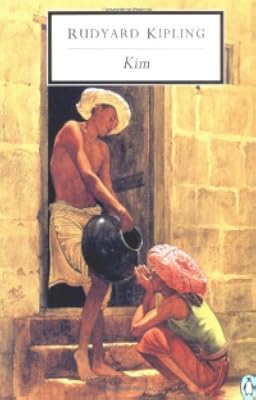
Kim
by Rudyard Kipling 
On This Page
Description
The orphan Kim, whose father was an Irish soldier, makes his living by begging on the streets of Lahore and running errands. An aged Tibetan Lama is on a journey to find the mythical "River of the Arrow" and in doing so free himself from the Wheel of Things. Becoming his disciple, Kim joins the Lama to travel along the Grand Trunk Road. But Kim also gets himself involved in the Great Game, Russia and Britain's political conflict in Central Asia, and is given a task by the British - to carry show more a message to Umballa's British commander.. show less
Tags
Recommendations


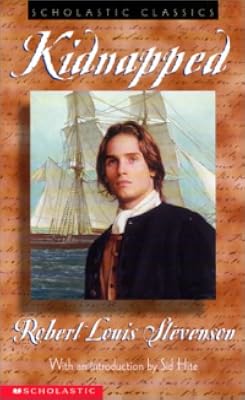
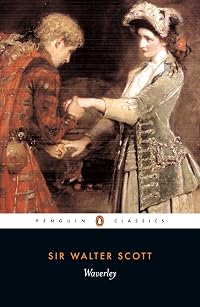
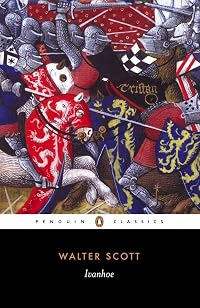

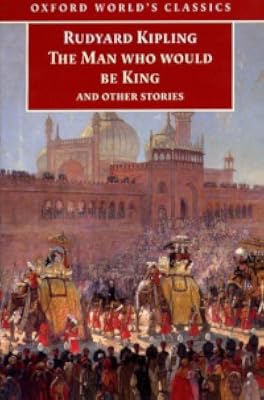







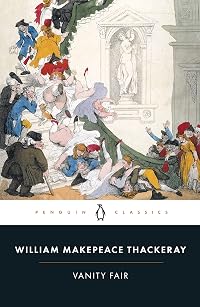

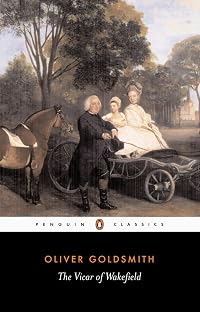


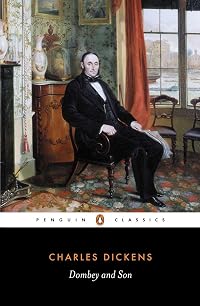
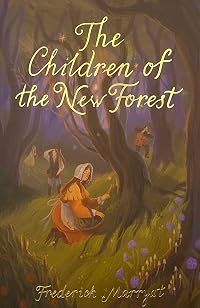






Member Recommendations
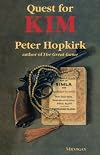
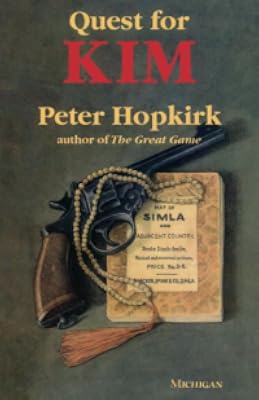
DuncanHill Hopkirk follows Kim's travels across India, exploring the places and the historical events and people which inspired Kipling.
30
MarthaJeanne I think that Ash in Far Pavillions was based partly on Kim. Both books deal with the ambivalence between cultures of those who were brought up in a different culture to the one they belonged to by birth and later education. Both are also great adventure stories that take place during the British Raj in India. The big difference being that Kim only deals with childhood, but Ash has to go on to life as an adult.
21
aulsmith Another orphan meets a helpful older man with a mission
21
CGlanovsky Orphaned kid with plenty of street-smarts embarks on a dangerous journey interwoven with high-stakes matters from the adult world (Slavery/Russo-British Espionage).
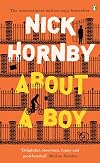
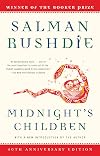
Gregorio_Roth The book is a modern interpretation of KIM in a number of ways. I think it will complete your point of view on Imperialism and India.
12

ed.pendragon More spying and skulduggery

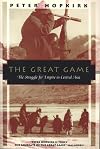
Tanya-dogearedcopy Narrative NF which lays out the geopolitical background of Great Britain’s interest in Central & South Asia in the 19th century

wandering_star Both these books feature cunning, clever spies who speak several languages and can pass for several different nationalities - they are also both great adventures.
02
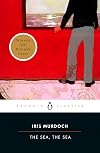
thorold Two books that demonstrate that it's possible to use a Buddhist holy man to power the plot of a complex modern novel without getting all mystical and Hermann Hesse.
02
Member Reviews
A mistake. Rudyard Kipling is a seriously unfashionable writer nowadays, but I'd enjoyed my only previous encounter with him (The Man Who Would Be King and Other Stories) so I was keen to try his classic adventure novel, Kim. Unfortunately, the story has aged very, very poorly.
I'm not referring to the outdated worldview or language (which are common criticisms of Kipling), and to be honest those features are not much in evidence in Kim. But Kipling's qualities, durable in the small doses of his short stories, are exposed in this long-form novel format. The thread of the plot, hard to gauge from the start, disintegrates badly during the hard miles of the prose, which is far too busy and chock-a-block with redundant dialogue and baseless show more noodling. Characterisation is similarly poor; the titular Kim never rises beyond a sketch, and his relationship with the lama lacks camaraderie or affection. The espionage plot-line (Kim popularised the term 'the Great Game') is surprisingly lacking in intrigue – that is, on the rare occasions when the reader can make heads or tails out of what is going on. For an adventure novel – for any novel, in fact – this is dull.
The only creditable part of Kim is its recreation of the "roaring whirl of India" during British rule (pg. 149); in this respect, and only in this respect, the fact that the book has aged poorly is a boon. With its dialects and rituals and its general chaotic portrayal of the subcontinent, it has value as a time capsule. "India was awake, and Kim was in the middle of it" (pg. 95), and this, in truth, is the only lasting appeal of the book.
There's little of literary merit to the novel; this is a boy's book (albeit a dull and needlessly complicated one) and its attempt to reach higher is clumsy. There is a lot of mysticism in the novel – with the lama who Kim accompanies seeking to free himself from the 'Wheel of Things' by finding a legendary 'River' – but it's all very shallow and unearned, despite Kipling's attempts to add some woo-woo resonance by capitalising words like 'Road', 'Search', 'Hills' and 'Sea'. The only point of recommendation remains the book's capture of some of the flavours of India, but as Kim himself says, "that is kichree – vegetable curry" (pg. 231), and I was left craving a bit more meat. show less
I'm not referring to the outdated worldview or language (which are common criticisms of Kipling), and to be honest those features are not much in evidence in Kim. But Kipling's qualities, durable in the small doses of his short stories, are exposed in this long-form novel format. The thread of the plot, hard to gauge from the start, disintegrates badly during the hard miles of the prose, which is far too busy and chock-a-block with redundant dialogue and baseless show more noodling. Characterisation is similarly poor; the titular Kim never rises beyond a sketch, and his relationship with the lama lacks camaraderie or affection. The espionage plot-line (Kim popularised the term 'the Great Game') is surprisingly lacking in intrigue – that is, on the rare occasions when the reader can make heads or tails out of what is going on. For an adventure novel – for any novel, in fact – this is dull.
The only creditable part of Kim is its recreation of the "roaring whirl of India" during British rule (pg. 149); in this respect, and only in this respect, the fact that the book has aged poorly is a boon. With its dialects and rituals and its general chaotic portrayal of the subcontinent, it has value as a time capsule. "India was awake, and Kim was in the middle of it" (pg. 95), and this, in truth, is the only lasting appeal of the book.
There's little of literary merit to the novel; this is a boy's book (albeit a dull and needlessly complicated one) and its attempt to reach higher is clumsy. There is a lot of mysticism in the novel – with the lama who Kim accompanies seeking to free himself from the 'Wheel of Things' by finding a legendary 'River' – but it's all very shallow and unearned, despite Kipling's attempts to add some woo-woo resonance by capitalising words like 'Road', 'Search', 'Hills' and 'Sea'. The only point of recommendation remains the book's capture of some of the flavours of India, but as Kim himself says, "that is kichree – vegetable curry" (pg. 231), and I was left craving a bit more meat. show less
I'd never read Kim or, in fact, anything by Rudyard Kipling before. I've been told that Kipling is the "poster boy" supporting colonialism, as well as racist so I started this book with some trepidation.
It would be nice to be able to say simply "this is a story of a great quest" and enjoy it on its own terms, but I think we have to be aware of at least some of the assumptions Kipling is asking us to make about the world. While I noted some references that are clearly racist (especially by today's standards), I could live with those because most major characters, of all races, were presented as multi-dimensional human beings. What was harder for me to accept is the way the author, and his characters, refuse to consider any challenges to show more the status quo of colonialism. In Kim himself, we have someone who has grown up in an Indian cultural environment, having lost his European parents at a very young age, but who nevertheless has a special destiny because of his racial origins. I don't think we can absolve Kipling of racism on this point.
The debate on whether to continue to read Kipling has a parallel in today's debate over the naming of schools after our first Prime Minister, Sir John A. Macdonald. As Senator Murray Sinclair said in a CBC Radio interview, I think it is important to understand and learn from history. That is why we must read Kim as a product of its time, not as a product of today. That is why it is better to use Kim (and Kipling) as a launching pad for discussion of our history and how it influences our present rather than hiding them in a dark closet.
I enjoyed Kim as a character. His character is pulled in opposite directions which parallels the broader geopolitical situation around him. But as a story, Kim was, at best, adequate. The part of the book dealing with espionage was juvenile. I strongly preferred the part dealing with Kim's relationship and quest with the lama.
Mr. Kipling's writes well; his descriptions are fantastic, and I really felt like I was on the train with Kim and the lama.
On balance, there are good points: the writing, the rich detail of Indian culture, Kim himself and his search for his identity, the quest story. There are also bad points: the colonialism for sure, and the plot, especially the spy story, left something to be desired. show less
It would be nice to be able to say simply "this is a story of a great quest" and enjoy it on its own terms, but I think we have to be aware of at least some of the assumptions Kipling is asking us to make about the world. While I noted some references that are clearly racist (especially by today's standards), I could live with those because most major characters, of all races, were presented as multi-dimensional human beings. What was harder for me to accept is the way the author, and his characters, refuse to consider any challenges to show more the status quo of colonialism. In Kim himself, we have someone who has grown up in an Indian cultural environment, having lost his European parents at a very young age, but who nevertheless has a special destiny because of his racial origins. I don't think we can absolve Kipling of racism on this point.
The debate on whether to continue to read Kipling has a parallel in today's debate over the naming of schools after our first Prime Minister, Sir John A. Macdonald. As Senator Murray Sinclair said in a CBC Radio interview, I think it is important to understand and learn from history. That is why we must read Kim as a product of its time, not as a product of today. That is why it is better to use Kim (and Kipling) as a launching pad for discussion of our history and how it influences our present rather than hiding them in a dark closet.
I enjoyed Kim as a character. His character is pulled in opposite directions which parallels the broader geopolitical situation around him. But as a story, Kim was, at best, adequate. The part of the book dealing with espionage was juvenile. I strongly preferred the part dealing with Kim's relationship and quest with the lama.
Mr. Kipling's writes well; his descriptions are fantastic, and I really felt like I was on the train with Kim and the lama.
On balance, there are good points: the writing, the rich detail of Indian culture, Kim himself and his search for his identity, the quest story. There are also bad points: the colonialism for sure, and the plot, especially the spy story, left something to be desired. show less
Kipling's classic tale of the orphaned son of an Irish soldier growing up on the streets of Colonial India and discovering his natural talent as a spy.
Between the somewhat old-fashioned language and the many, many unfamiliar cultural references, I fear that parts of this may have gone past me a bit, but I enjoyed it a great deal, anyway. There's a wonderfully subtle sense of humor to it, and an equally wonderful sense of the vibrancy and diversity of the Indian landscape and culture. And the sly, savvy Kim is a terrific character, as are many of the people he shares his adventures with.
Between the somewhat old-fashioned language and the many, many unfamiliar cultural references, I fear that parts of this may have gone past me a bit, but I enjoyed it a great deal, anyway. There's a wonderfully subtle sense of humor to it, and an equally wonderful sense of the vibrancy and diversity of the Indian landscape and culture. And the sly, savvy Kim is a terrific character, as are many of the people he shares his adventures with.
A memorably vivid evocation of the life and landscapes of India in the late nineteenth century. Kim himself is a resourceful lad who befriends a lama, an ageing priest; and both embark on a combined quest. Whereas Kim has an insatiable interest in the varied activities around him, the lama seeks redemption from the 'Wheel of Life'. Kim becomes involved in the 'Great Game', undertaking espionage for the British rulers.
This engrossing and moving novel, with its diversity of memorable characters, offers many insights into political, religious and social tensions.
This engrossing and moving novel, with its diversity of memorable characters, offers many insights into political, religious and social tensions.
Poor Kim. Like author Kipling, the boy Kim is torn between East and West.
As a young orphan, Kim befriends a lama who is on a quest for the River of the Arrow, which will cleanse him of his sins and help him attain enlightenment. Very soon Kim becomes completely devoted to the Teshoo Lama, will follow him anywhere, serving the Lama as his chela, or disciple. Kim’s love for this man is complete and touching. And the Lama’s love for Kim is equally strong.
Meanwhile, though, Kim has come to the attention of the British governmental spy system. They’re eager to exploit the boy’s amazing talent in languages, his ability to adopt the manners and dress of any one of the many cultures in India, his outstanding memory and mental strength, show more and his desire for adventure.
In a slightly complicated plot line, Kim is sent to a British school, learns surveying, and, at 17, is sent on a dangerous and important mission.
Kim’s continued devotion to his Lama, his bravery and cleverness, and his sense of fun all work together to make him beloved by many of the men who oversee his education, bookish and otherwise.
But. Has it all been too much weight for his slim shoulders? Does he have a nervous collapse, perhaps made worse by dengue fever? And what will Kim make of his adult life? He accomplishes his mission, but takes a long time to recover, physically and emotionally, from the strain.
The reader is given a tiny glimpse that all may not go well for Kim. And yet it might.
I loved this book when I first read it, and I love it still today. I do have one response to those who say Kipling indulges in stereotyping here, citing the character of Babu. Babu is often afraid, and is the only character who admits to that. And yet he risks his life and the acute possibility of torture, both to accomplish British aims and to save Kim and the Lama. I would argue that he’s a true hero: smart enough to be afraid, but brave and loyal enough to overcome those very real fears and do what he sees as the right thing, and his duty. show less
As a young orphan, Kim befriends a lama who is on a quest for the River of the Arrow, which will cleanse him of his sins and help him attain enlightenment. Very soon Kim becomes completely devoted to the Teshoo Lama, will follow him anywhere, serving the Lama as his chela, or disciple. Kim’s love for this man is complete and touching. And the Lama’s love for Kim is equally strong.
Meanwhile, though, Kim has come to the attention of the British governmental spy system. They’re eager to exploit the boy’s amazing talent in languages, his ability to adopt the manners and dress of any one of the many cultures in India, his outstanding memory and mental strength, show more and his desire for adventure.
In a slightly complicated plot line, Kim is sent to a British school, learns surveying, and, at 17, is sent on a dangerous and important mission.
Kim’s continued devotion to his Lama, his bravery and cleverness, and his sense of fun all work together to make him beloved by many of the men who oversee his education, bookish and otherwise.
But. Has it all been too much weight for his slim shoulders? Does he have a nervous collapse, perhaps made worse by dengue fever? And what will Kim make of his adult life? He accomplishes his mission, but takes a long time to recover, physically and emotionally, from the strain.
The reader is given a tiny glimpse that all may not go well for Kim. And yet it might.
I loved this book when I first read it, and I love it still today. I do have one response to those who say Kipling indulges in stereotyping here, citing the character of Babu. Babu is often afraid, and is the only character who admits to that. And yet he risks his life and the acute possibility of torture, both to accomplish British aims and to save Kim and the Lama. I would argue that he’s a true hero: smart enough to be afraid, but brave and loyal enough to overcome those very real fears and do what he sees as the right thing, and his duty. show less
This book is probably Kipling's most problematic - though Stalky & Co. comes close. It's also Kipling's most eloquent work, and the perfect example of how a sexist, racist, imperialist can show love for those they consider utterly beneath them.
I try to re-read it every couple of years for the words - and the reminder that sweet *censored* pants, humans are utterly terrifying in their capacity to demean and diminish those they have the slightest iota of power over.
I try to re-read it every couple of years for the words - and the reminder that sweet *censored* pants, humans are utterly terrifying in their capacity to demean and diminish those they have the slightest iota of power over.
Well, even though I had been a member of the scouting movement, this was my first reading of this taut, well thought-out spy novel. It's proof that Kipling was a writer capable of adult themes, and with a good eye for details. There are many parallels with the later figure of "James Bond", the creation of a false familial relationship, the need for a father figure, and the recruitment of those with great emotional needs to serve national ends. Come to think of it, John Le Carre is also another obvious student. Suitable for young adults, and a good place for adult discussions of espionage to begin.
this book was originally published in 1901.
this book was originally published in 1901.
Members
- Recently Added By
Lists

1001 Books You Must Read Before You Die
1,448 works; 1,131 members

The Guardian's 1000 Novels Everyone Must Read
1,005 works; 550 members

Favorite Childhood Books
1,646 works; 517 members

Radcliffe's 100 Best Novel of the 20th Century
100 works; 32 members
BBC Big Read
191 works; 46 members
501 Must-Read Books
508 works; 72 members
Best of British Literature
226 works; 41 members
New York Public Library's Books of the Century
120 works; 20 members

Best Books About Journeys and Quests
117 works; 30 members
20th Century Literature
1,161 works; 54 members

Books featuring monks and/or nuns
166 works; 33 members

All Things India
95 works; 21 members

Favorite Coming of Age Novels.
164 works; 51 members
Newsweek's Top 100 Books: The Meta-List
100 works; 18 members

Unread books
1,063 works; 85 members

Best Espionage (Fiction)
55 works; 20 members
Folio Society
831 works; 53 members

New York Public Library's Books of the Century - All
170 works; 14 members

Fiction For Men
142 works; 11 members

Canon de la narrativa universal del siglo XX
254 works; 6 members
Harold Bloom - The Western Canon: D. The Chaotic Age
833 works; 24 members
Best Friendship Stories
205 works; 16 members

Good Buddhist Novels
30 works; 4 members

Nobel Price Winners
222 works; 20 members

Best 20th Century Books as of 1924
100 works; 6 members

Childhood: Books for or about children in different cultures around the wor
345 works; 18 members
1,001 BYMRBYD Concensus
723 works; 27 members

1964 College Preparatory Reading List
202 works; 8 members

The Guardian's 100 Best Novels Written in English
105 works; 13 members

Best Books Read for TIOLI
49 works; 14 members
Honey For a Child's Heart
1,152 works; 25 members

Third-Culture-Kid Lit
10 works; 2 members
Most Popular Books Tagged India
36 works; 5 members

Asia
178 works; 7 members
The Modern Library's 100 Best Novels: The Board's List
85 works; 6 members

Books Read in 2014
2,343 works; 89 members

Best books read in the first half of 2012
38 works; 6 members
Fake Top 100 Fiction
81 works; 4 members

A Child's Book Tour of India
71 works; 3 members
Ambleside Books
459 works; 18 members
I Can't Finish This Book
189 works; 22 members

100
56 works; 1 member

Novels featuring Orphans
76 works; 10 members

Ambleside Year 5
55 works; 1 member

DigitalDreamDoor top 300
300 works; 4 members

.
194 works; 2 members

Books talked about in Pamela Dean's Tam Lin
74 works; 1 member
.
396 works; 1 member
Canon de la narrativa universal del s. XX (cicutadry)
499 works; 3 members

Recommended Reading : 600 Classics Reviewed, Editors of Salem Press, 2015
634 works; 6 members
The Story of the World: Activity Book Four: The Modern Age
333 works; 2 members

Fiction with Men's Given Names in the Title
302 works; 11 members
Modern Library's 100 Best Novels
100 works; 2 members

Works Referenced in The League of Extraordinary Gentlemen
122 works; 6 members

Before Austen Comes Aesop
318 works; 9 members

Greatest Books, allegedly
484 works; 9 members

Michael Dirda's Desert Island Books
62 works; 5 members
Books mentioned in Fire and Hemlock by Diana Wynne Jones
33 works; 1 member
Mensa for Kids Excellence in Reading Award Program (Grades 7-8)
62 works; 1 member

Mensa for Kids Excellence in Reading Award Program (Grades 7-8)
62 works; 3 members

KayStJ's to-read list
1,616 works; 11 members

Biggest Disappointments
606 works; 168 members
Novels of Great Adventures
34 works; 6 members

Books About Boys
175 works; 15 members

In Our Time books
4,934 works; 2 members
CCE 1000 Good Books List
1,033 works; 12 members

Blue Pyramid 1,276 Best Books of All Time
1,248 works; 32 members
Talk Discussions
Past Discussions
GROUP READ-- KIM by Rudyard Kipling in The 12 in 12 Category Challenge (March 2019)
The obligatory Kim thread in Kipling wasn't (just!) an imperialist (July 2014)
GROUP READ -- KIM by Rudyard Kipling (SPOILERS) in The 12 in 12 Category Challenge (May 2012)
Author Information

2,458+ Works 90,959 Members
Kipling, who as a novelist dramatized the ambivalence of the British colonial experience, was born of English parents in Bombay and as a child knew Hindustani better than English. He spent an unhappy period of exile from his parents (and the Indian heat) with a harsh aunt in England, followed by the public schooling that inspired his "Stalky" show more stories. He returned to India at 18 to work on the staff of the Lahore Civil and Military Gazette and rapidly became a prolific writer. His mildly satirical work won him a reputation in England, and he returned there in 1889. Shortly after, his first novel, The Light That Failed (1890) was published, but it was not altogether successful. In the early 1890s, Kipling met and married Caroline Balestier and moved with her to her family's estate in Brattleboro, Vermont. While there he wrote Many Inventions (1893), The Jungle Book (1894-95), and Captains Courageous (1897). He became dissatisfied with life in America, however, and moved back to England, returning to America only when his daughter died of pneumonia. Kipling never again returned to the United States, despite his great popularity there. Short stories form the greater portion of Kipling's work and are of several distinct types. Some of his best are stories of the supernatural, the eerie and unearthly, such as "The Phantom Rickshaw," "The Brushwood Boy," and "They." His tales of gruesome horror include "The Mark of the Beast" and "The Return of Imray." "William the Conqueror" and "The Head of the District" are among his political tales of English rule in India. The "Soldiers Three" group deals with Kipling's three musketeers: an Irishman, a Cockney, and a Yorkshireman. The Anglo-Indian Tales, of social life in Simla, make up the larger part of his first four books. Kipling wrote equally well for children and adults. His best-known children's books are Just So Stories (1902), The Jungle Books (1894-95), and Kim (1901). His short stories, although their understanding of the Indian is often moving, became minor hymns to the glory of Queen Victoria's empire and the civil servants and soldiers who staffed her outposts. Kim, an Irish boy in India who becomes the companion of a Tibetan lama, at length joins the British Secret Service, without, says Wilson, any sense of the betrayal of his friend this actually meant. Nevertheless, Kipling has left a vivid panorama of the India of his day. In 1907, Kipling became England's first Nobel Prize winner in literature and the only nineteenth-century English poet to win the Prize. He won not only on the basis of his short stories, which more closely mirror the ambiguities of the declining Edwardian world than has commonly been recognized, but also on the basis of his tremendous ability as a popular poet. His reputation was first made with Barrack Room Ballads (1892), and in "Recessional" he captured a side of Queen Victoria's final jubilee that no one else dared to address. (Bowker Author Biography) show less
Rudyard Kipling has a Legacy Library. Legacy libraries are the personal libraries of famous readers, entered by LibraryThing members from the Legacy Libraries group.
Some Editions
Awards and Honors
Awards
Notable Lists
BBC's Big Read (159)
Torchlight List (#112)
Series
Belongs to Publisher Series
Corticelli [Mursia] (23)
Libri pocket [Longanesi] (335)
Fischer Bücherei (223)
Penguin English Library, 2012 series (2012-10)
Airmont Classics (75)
Gyldendals Tranebøger (197)
Gallimard, Folio (559-4206)
Work Relationships
Is contained in
Jungle Book / 2nd Jungle Book / Just So Stories / Puck of Pook's Hill / Stalky and Co. / Kim by Rudyard Kipling
Has the (non-series) sequel
Has the adaptation
Is abridged in
Inspired
Has as a reference guide/companion
Has as a commentary on the text
Common Knowledge
- Canonical title
- Kim
- Original title
- Kim
- Original publication date
- 1901-01: Serialised; 1901: Book
- People/Characters
- Kimball O'Hara; Mahbub Ali; Teshoo Lama; Lurgan Sahib; Hurree Chunder Mookherjee (Hurree Babu, also The Babu); Abdullah, the sweetmeat seller's son (show all 14); The Kulu woman (the Sahiba); The Woman of Shamlegh (Lispeth); The Amritzar girl (a courtesan); The Arain Farmer; Reverend Arthur Bennett; Father Victor; Colonel Creighton (British Army officer and spy); Strickland
- Important places
- Tibet; India; Lahore, Punjab, Pakistan (then in India); Lucknow, Uttar Pradesh, India; Simla, Himachal Pradesh, India; Himalayas (show all 7); British India
- Important events
- British Raj (1857 | 1947); Great Game
- Related movies
- Kim (1950 | IMDb); Kim (1955 | IMDb); Kim (1984 | IMDb)
- Epigraph
- Oh ye who tread the Narrow Way
By Tophet-flare to Judgment Day,
Be gentle when the heathen pray
To Buddha at Kamakura! - First words
- He sat, in defiance of municipal orders, astride the gun Zam-Zammah on her brick platform opposite the old Ajaib-Gher - the Wonder House, as the natives call the Lahore Museum.
- Last words
- (Click to show. Warning: May contain spoilers.)He crossed his hands on his lap and smiled, as a man may who has won salvation for himself and his beloved.
- Original language
- English
Classifications
Statistics
- Members
- 10,192
- Popularity
- 957
- Reviews
- 216
- Rating
- (3.80)
- Languages
- 22 — Basque, Catalan, Czech, Danish, Dutch, English, Estonian, Finnish, French, German, Greek, Hebrew, Hindi, Hungarian, Italian, Malay, Polish, Russian, Spanish, Swedish, Turkish, Portuguese (Portugal)
- Media
- Paper, Audiobook, Ebook
- ISBNs
- 512
- UPCs
- 7
- ASINs
- 264