
Pankaj Mishra
Author of Age of Anger: A History of the Present
About the Author
Pankaj Mishra is currently editing an anthology of contemporary Indian writers. He divides his time between New Delhi & Simla. (Bowker Author Biography)
Works by Pankaj Mishra
From the Ruins of Empire: The Revolt Against the West and the Remaking of Asia (2011) 611 copies, 16 reviews
Temptations of the West: How to Be Modern in India, Pakistan, Tibet, and Beyond (2006) 269 copies, 5 reviews
Die Welt nach Gaza: Die kritische Analyse des Gaza-Krieges von einem der großen international anerkannten Intellektuellen (2025) 3 copies
Associated Works
Heavy Rotation: Twenty Writers on the Albums That Changed Their Lives (2009) — Contributor — 23 copies, 2 reviews
Tagged
Common Knowledge
- Canonical name
- Mishra, Pankaj
- Birthdate
- 1969
- Gender
- male
- Education
- Allahabad University (B.A.|Commerce)
Jawaharlal Nehru University (M.A.|English Literature) - Occupations
- essayist
novelist
New York Times Bookends columnist
columnist, Bloomberg View
Visiting Fellow (2007–08) Department of English, University College London, UK. - Awards and honors
- Leipziger Buchpreis zur Europäischen Verständigung (2014)
Royal Society of Literature (Fellow, 2008)
Windham–Campbell Literature Prize (2014)
Foreign Policy : Global Thinkers (2012)
Prospect, 50 World Thinkers (2015) - Agent
- Peter Straus at Rogers, Coleridge & White (UK)
Amanda Urban at ICM (US) - Nationality
- India
- Birthplace
- Jhansi, Uttar Pradesh, India
- Places of residence
- London, England, UK
Mashobra, Himachal Pradesh, India - Map Location
- India
Members
Reviews

Pankaj Mishra's exploration of the intersections of politics, identity, colonialism, and memory in the ongoing Israel-Palestine conflict doesn't always get the balance between breadth and depth right—I suspect he'd have been better served by publishing this as one or two longform magazine articles rather than as a book, but then again probably very few mainstream magazines would publish something like this. I also feel like this is a book which would have benefited from a few more years to show more marinate and for Mishra to develop his ideas further.
But well, sadly, and to paraphrase MLK, the fierce urgency of now in the unfolding conundrum of life and history, right? The horrors that are happening are happening now. Mishra is at his best here in showing all the ways that the Holocaust has been turned into a kind of imaginary that's used to justify and absolve people and governments not just in Israel, but also in places as far afield as Germany, Hungary, the U.S., and South Africa. (Israel's support for the apartheid regime is particularly odious.) His epilogue with its predictions for what will happen next are so dark that they feel too bleak for even my cynical self to contemplate—but I fear that he may well be right. show less
But well, sadly, and to paraphrase MLK, the fierce urgency of now in the unfolding conundrum of life and history, right? The horrors that are happening are happening now. Mishra is at his best here in showing all the ways that the Holocaust has been turned into a kind of imaginary that's used to justify and absolve people and governments not just in Israel, but also in places as far afield as Germany, Hungary, the U.S., and South Africa. (Israel's support for the apartheid regime is particularly odious.) His epilogue with its predictions for what will happen next are so dark that they feel too bleak for even my cynical self to contemplate—but I fear that he may well be right. show less

In this short essay adapted from his forthcoming book The World After Gaza Pankaj Mishra summarises Germany's politic of contrition towards Israel after the holocaust:
Unquestioning support of Israel was expressed by Angela Merkel 2008 as Germany's Staatsräson (raison d’état) and often repeated after 7 October 2023. No bombing of homes, refugee camps, schools, hospitals, mosques and churches in Gaza could dissuade the German Chancellor, Olaf Scholz, from reiterating: “Israel is a show more country that is committed to human rights and international law and acts accordingly.” Public support of Palestine is penalised even when expressed by Jewish writers, artists and activists. He quotes Eyal Weizman: "the children and grandchildren of the perpetrators who murdered our families […] now dare to tell us that we are antisemitic”.
Germany's hypocrisy towards Israel has a long history: In1960 Adenauer was seeking 'moral absolution of an insufficiently denazified and still profoundly antisemitic Germany in return for cash and weapons' - Primo Levi called this: “unprincipled political gamesmanship”. Among Germans antisemitism turned widely into sentimental philosemitism.
Today the dualistic view of the "enlightened west" and "unenlightened east" is the language of the far-right nationalists across Israel, Europe and America who are fighting the “new Nazis” in Gaza in order to save “western civilisation”
It suits Germany as well as Israel to portray Arab adversaries of Israel as Nazis: sanitising Germany by demonising Muslims. Converting antisemitism to philosemitism, crying mea culpa over the Shoah while ignoring the atrocities Germans inflicted 1900-01 in China and 1904 in German South-West Africa (never mentioned during my school-days).
(My comment, not spelled out by Mishra: The hypocrisy of the German political establishment is made glaringly obvious: Germany wants to atone for the past genocide of the Jews by supplying the weapons for use by Israel in committing genocide in Gaza.)
Interested? Then read it! (I-25) show less
Unquestioning support of Israel was expressed by Angela Merkel 2008 as Germany's Staatsräson (raison d’état) and often repeated after 7 October 2023. No bombing of homes, refugee camps, schools, hospitals, mosques and churches in Gaza could dissuade the German Chancellor, Olaf Scholz, from reiterating: “Israel is a show more country that is committed to human rights and international law and acts accordingly.” Public support of Palestine is penalised even when expressed by Jewish writers, artists and activists. He quotes Eyal Weizman: "the children and grandchildren of the perpetrators who murdered our families […] now dare to tell us that we are antisemitic”.
Germany's hypocrisy towards Israel has a long history: In1960 Adenauer was seeking 'moral absolution of an insufficiently denazified and still profoundly antisemitic Germany in return for cash and weapons' - Primo Levi called this: “unprincipled political gamesmanship”. Among Germans antisemitism turned widely into sentimental philosemitism.
Today the dualistic view of the "enlightened west" and "unenlightened east" is the language of the far-right nationalists across Israel, Europe and America who are fighting the “new Nazis” in Gaza in order to save “western civilisation”
It suits Germany as well as Israel to portray Arab adversaries of Israel as Nazis: sanitising Germany by demonising Muslims. Converting antisemitism to philosemitism, crying mea culpa over the Shoah while ignoring the atrocities Germans inflicted 1900-01 in China and 1904 in German South-West Africa (never mentioned during my school-days).
(My comment, not spelled out by Mishra: The hypocrisy of the German political establishment is made glaringly obvious: Germany wants to atone for the past genocide of the Jews by supplying the weapons for use by Israel in committing genocide in Gaza.)
Interested? Then read it! (I-25) show less
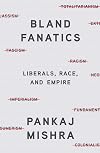
I loved this book. It covers the period of history that I am most interested in. In particular authors analysis of the first world war was my favorite part. Thinking about it as the machinations of colonialism turned inward add a whole new layer to the story of the conflict. The book offers critical snapshots of history in the building western hegemony. The sections examining the works of today's icons of the political right like Jordon Petersen are satisfying and well argued. The author's show more critical analysis is broad across the global political spectrum and anyone wanting a greater understanding of the challenges facing the modern world would benefit from reading this. show less

This is a book about a young Indian, Samar, who moves to Benares after a life spent in small towns. Quite naive and inexperienced, in Benares he meets people - Indian and Western - whose backgrounds and experiences are alien to him. He is drifting through life, with no clear drive or direction, often dislocated from his surroundings - and his encounters with these new people exacerbate these tendencies in him.
The book touches on several themes. One is about detachment - from life, emotions, show more friends, family - and its opposite, human connections (and love). Do human connections just lock us into a world of illusion, which we are unable to give up? or is detachment simply a sterile refusal to engage with the world and with other people?
Another is about choice. Samar is astounded by the way that the Europeans and Americans talk about their lives - the choices that they feel open to them - choosing to live in another country, choosing to convert to another religion, choosing what their life will be to fit their self-image. Ultimately the book concludes that the Westerners are privileged, more than anything else, because they have these choices - and their impact on the people they meet in India is compounded by their inability to understand that other people don't have these choices.
Another, minor, theme is about misunderstandings, particularly between cultures: the tendency to exoticise other cultures, and the way it feels to be the subject of this, is brilliantly highlighted in a conversation between an American and a European, where the American enthuses about the lack of inhibitions in European fiction and films - and the Frenchwoman responds rather tetchily that she's missing the point. At the same time, Mishra suggests that human nature is not all that different - comparing the lives of young men moving to the big city of Benares to the characters in Flaubert's Sentimental Education - "the small, unnoticed tragedies of thwarted hopes and ideals". (I appreciated the way that the foreigners were portrayed. The book highlights the ironies of their life in India, but does so - unusually for the subject - without any sneering. The contradictions are inherent in their situation rather than arising from any lack of good will on their part.)
There were a lot of things I really liked about this book. Firstly, the descriptions of India are simple, but very evocative - whether Mishra is talking about the cities, the countryside or the mountains. Try this description of a rickshaw ride in the rain: "The rain flowed down the windscreen, which the driver kept wiping with a rag that lay on the dashboard. Gleamingly vivid for one moment, the streets dissolved into smudgy fluorescent colours the next. Passing scooters and autorickshaws kept spraying thick jets of muddy water from the waterlogged road into the back seat". The descriptions, and Samar's drifting, introspective nature, make this a book that you need to read slowly and savour. I did have one problem with it, though, which is that there were a lot of incidents which seemed as if they ought to be significant, and yet I couldn't figure out what that significance was. Take the title, for example - which of the characters are the romantics?
Still, I would certainly like to read the book again, and maybe next time I will have more answers. show less
The book touches on several themes. One is about detachment - from life, emotions, show more friends, family - and its opposite, human connections (and love). Do human connections just lock us into a world of illusion, which we are unable to give up? or is detachment simply a sterile refusal to engage with the world and with other people?
Another is about choice. Samar is astounded by the way that the Europeans and Americans talk about their lives - the choices that they feel open to them - choosing to live in another country, choosing to convert to another religion, choosing what their life will be to fit their self-image. Ultimately the book concludes that the Westerners are privileged, more than anything else, because they have these choices - and their impact on the people they meet in India is compounded by their inability to understand that other people don't have these choices.
Another, minor, theme is about misunderstandings, particularly between cultures: the tendency to exoticise other cultures, and the way it feels to be the subject of this, is brilliantly highlighted in a conversation between an American and a European, where the American enthuses about the lack of inhibitions in European fiction and films - and the Frenchwoman responds rather tetchily that she's missing the point. At the same time, Mishra suggests that human nature is not all that different - comparing the lives of young men moving to the big city of Benares to the characters in Flaubert's Sentimental Education - "the small, unnoticed tragedies of thwarted hopes and ideals". (I appreciated the way that the foreigners were portrayed. The book highlights the ironies of their life in India, but does so - unusually for the subject - without any sneering. The contradictions are inherent in their situation rather than arising from any lack of good will on their part.)
There were a lot of things I really liked about this book. Firstly, the descriptions of India are simple, but very evocative - whether Mishra is talking about the cities, the countryside or the mountains. Try this description of a rickshaw ride in the rain: "The rain flowed down the windscreen, which the driver kept wiping with a rag that lay on the dashboard. Gleamingly vivid for one moment, the streets dissolved into smudgy fluorescent colours the next. Passing scooters and autorickshaws kept spraying thick jets of muddy water from the waterlogged road into the back seat". The descriptions, and Samar's drifting, introspective nature, make this a book that you need to read slowly and savour. I did have one problem with it, though, which is that there were a lot of incidents which seemed as if they ought to be significant, and yet I couldn't figure out what that significance was. Take the title, for example - which of the characters are the romantics?
Still, I would certainly like to read the book again, and maybe next time I will have more answers. show less
Lists
Awards


You May Also Like


Associated Authors
Statistics
- Works
- 34
- Also by
- 13
- Members
- 3,129
- Popularity
- #8,164
- Rating
- 3.8
- Reviews
- 77
- ISBNs
- 165
- Languages
- 12
- Favorited
- 3