
Suketu Mehta
Author of Maximum City: Bombay Lost and Found
About the Author
Image credit: Author Suketu Mehta at the 2019 Texas Book Festival in Austin, Texas, United States. By Larry D. Moore, CC BY-SA 4.0, https://commons.wikimedia.org/w/index.php?curid=83428335
Works by Suketu Mehta
Associated Works
The Condé Nast Traveler Book of Unforgettable Journeys: Great Writers on Great Places (2007) — Contributor — 280 copies, 5 reviews
India: Public Places, Private Spaces: Contemporary Photography and Video Art (2008) — Foreword — 18 copies
Tagged
Common Knowledge
- Birthdate
- 1963
- Gender
- male
- Education
- New York University
University of Iowa Writers' Workshop - Occupations
- journalist
university professor - Organizations
- New York University
- Awards and honors
- Whiting Writers' Award, 1997
finalist, 2005 Pulitzer Prize - Agent
- Suzanne Gluck (William Morris Agency)
- Nationality
- India
- Birthplace
- Kolkata, India
- Places of residence
- Kolkata, India
Mumbai, India
New York, New York, USA - Associated Place (for map)
- India
Members
Reviews
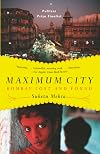
This is a masterful book that depicts the vibrancy of Bombay. Using a select few as foils, Mehta is able to describe the multitudes. From an incorruptible cop to gangsters, a bar dancer to a monk, a Bollywood producer to a villager come to make his fortune, Mehta leads us through unique lives and is thus able to describe Bombay's social fabric, industries, surrounding villages, dynamics. Mehta's curiosity is an inspiration as we see the world through his eyes as he, himself, comes to terms show more with being a dual national. It's a long but rewarding read. show less
Although at times this fascinating book borders on an elegy for Bombay, Suketu Mehta has written an incredible celebration of the city and its citizens. Beginning with the immigrant's story that seems to have become requisite of South Asian literature published in the West, Mehta discusses his upbringing in New York. This sets the stage for a central question in the book, "Can we go home again?" Bringing his family to Bombay provides formidable
challenges as Mehta struggles to makes sense of show more modern Bombay. As he begins to explore the city he introduces several individuals whose stories exemplify the city.
Dividing his book into three parts, 'Power," "Pleasure," and "Passages," Mehta interviews and presents a variety of stunning individuals and their stories. I found his experiences with Bombay's hitmen and underworld most interesting, but he also explores the lives of police officers waging battle against crime, the producers and directors of the film industry, a bar girl, a homeless poet, people struggling in the slums, and a man who renounces his wealth to become a wandering pilgrim. What becomes apparent is that Bombay is a city of dreams on steroids. Reading about the struggles and hopes of its inhabitants will resound with the reader and provide food for thought. If you are interested in India or want a better understanding of Bombay this book is excellent. show less
challenges as Mehta struggles to makes sense of show more modern Bombay. As he begins to explore the city he introduces several individuals whose stories exemplify the city.
Dividing his book into three parts, 'Power," "Pleasure," and "Passages," Mehta interviews and presents a variety of stunning individuals and their stories. I found his experiences with Bombay's hitmen and underworld most interesting, but he also explores the lives of police officers waging battle against crime, the producers and directors of the film industry, a bar girl, a homeless poet, people struggling in the slums, and a man who renounces his wealth to become a wandering pilgrim. What becomes apparent is that Bombay is a city of dreams on steroids. Reading about the struggles and hopes of its inhabitants will resound with the reader and provide food for thought. If you are interested in India or want a better understanding of Bombay this book is excellent. show less
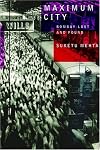
Maximum City (2004; Pulitzer Prize finalist) is a remarkable book, I was hooked from the start and completely transported to another world. Bombay is the largest city on Earth and in parts the most densely populated with certain square miles containing over 1 million people. It is the "City of No" in which resources are tight and daily basic existence is a struggle for millions. Suketu Mehta grew up in Bombay and moved to New York City when he was 15 - this book is about his return to city show more of birth as a young adult where he spent 2.5 years as a journalist attached to various people learning about their lives. He focuses on those living beyond the norm in the extreme, on the edge of life and death and freedom: gangsters, prostitutes, movie stars, directors, runaway teenage poets, Jainism. In this way the vibrancy and immediacy of the "Maximum" city is imparted. The writing and Mehta's insights are remarkable, he is something of an artistic genius for his ability to give a sense of who a person is and what their life is like while keeping perspective on the big picture. Although I read this slowly taking probably close to 30 hours to absorb it over a few week period, I was sorry to see it end - it could have gone on forever, the stories of Bombay are unlimited.
--Review by Stephen Balbach, via CoolReading (c) 2008 cc-by-nd show less
--Review by Stephen Balbach, via CoolReading (c) 2008 cc-by-nd show less
Circa 1992. It was a regular school day on a lovely December morning(winters are warm not cold in Bombay).With just an hour left to mid-morning recess, there was a sudden flurry of anxious announcements calling certain students to report immediately with their belongings at the Principal’s office. After being little nosy about the happenings I go back to my daydreaming. Suddenly, I see my mother hurriedly demanding that I go and collect my younger sister from her classroom. As I walk show more through the school compound frantic parents rush in and out of the school premises with their children. As we walk towards the car I see my father tensed and horrified to some extent. He had just escaped death(which we knew later that evening. Four men had hurled bombs in front of him at a nearby housing development while my father was driving through traffic). A riot had broken in the streets nearby as we frantically rushed home, I could see shutters closing at the speed of light, people scattering, some flinging acid bulbs and destruction of harmless developments. That was the day the Hindu-Muslim riots let a demon loose for which innocents had to pay with their humble lives in the coming horrendous months. I still remember those days vividly for I have been a front row spectator to the bloodshed occurred in the name of religion ignited by few political rivals. I lived among trepidations that lasted for years to come by. Lost people I knew and religion once again became a crucial factor in our mundane lives. The citizens of Bombay (I resist from calling it Mumbai, always) bravely faced those murky days, which I witnessed closely with resilience and banishing all prejudices imposed by political cults. Over decades the city has seen its share of political violence and inter-religion hatred, but its people have always made it through with smiling faces.
Thus, when an individual who summons his exploration of a nostalgic hometown proclaiming that he has seen enough murderers and questioned their virtues, it irks me.I am not denying factual comprehensions of this book, as it would be utterly preposterous to overlook the shame that Bombay once faced or has not being able to strike an equilibrium in honored survival, however I do question the validity of his sentiments to a place he calls “Maximum City” where he once unreservedly wandered as a kid. Mehta says he left the city in 1977 only to be back after 21years to find him in a state of utter shock. There is no falsehood, no dramatic sequences to define the underbelly of my home city, nevertheless I get annoyed each time I open the pages and read those words. Rarely a book touches me on a personal note, but these words dishearten me as they are negative of a place and its people who strive hard for a living. Fair enough, there are vast discrepancies in the standard of living. There are some who die homeless in scorching heat whereas others never travel without an air-conditioned comfort. There are some who demand beluga caviar on toast for tea –time and indulge in La Prairie Cellular serums while others barely make it through the day without a proper meal. It is extremely difficult to rationalize these disparities that hit you in the face in the most mysterious ways. But, these do not define all. Why wasn’t there a prose about people striving everyday braving obstacles with dignified audacity to make a better living. About individuals determined to make a dignified and prosperous future come what may. People amalgamating into one joyous mass rejoicing each cultural festival with the same magnanimous excitement banishing all ethnic prejudices.
The chapters on “Bollywood” signify braggart purposes. It is a film industry for crying out loud; an entertainment business where almost all actors are purely performers and not artistic geniuses that venerates the true meaning of art. Nothing can be gained from it rather that a minority percentage of artistes that depart frothy amusement to make assiduous lives cheerful. Most art films (movies depicting social causes and instabilities) do not fare well with common psyche. This very attitude shows the annoyance of a mind resisting it to shun “moralistic virtues” performed by artistes that have been rehearsed to achieve precision. Is it disheartening? Not really. When it comes to choosing authenticity over illusionary realism, the latter is always preferred.
One would refute my caustic words claiming that with my privileged lifestyle I must be the last person to comment on the imbalanced financial and educational status of this city. I have never lived without food, shelter or money. Then how would I know the depth of a suffering. One does not have to be poor to know what poverty is. One does not have to be fraudulent to know what corruption is. I was born in Bombay, schooled here and I presently live in this city all hale and hearty. Unlike the author, I have been away from Bombay for a span of 9 years, while I was studying in the US. But, that does not give me the right to condemn the city mechanics or garner negativity. As you cannot expect a child to stay a child forever, you cannot anticipate a burgeoning city to stay in its purest unscathed form. From what I observed, the author seems perplexed with his distinctiveness. He tried finding a sense of belonging in New York stressed through the binding stereotypes only to come back to the place of his origin and see it modified into a strange land that once again botched a sense of belonging.
Bombay will always be my home come what may. I have traveled around many superior worldly cities, yet the imminent landing announcement at the Bombay airport somehow makes me warmly smile every freaking time. The city is heavily crowded, poverty and richness juxtaposes every road that spirals into politically corrupt governing display of unreliable loyalties and prone to religious debates. But, this does not define its landscapes, its populace. It is a city where dreams are built; life is raw imparting valuable teachings of resilient determination, where people smile even in the most tedious times, ethnicities are celebrated with joyfulness and life is seen at it nastiest and its finest. It is a place where I grew up and took long walks with my grandfather relishing every aspect of this marvelous city. Bombay is not a place full of murderers or politically agitated goons, it is haven of magnificent, soulful people who fight all odds and nurture a ravishing tomorrow. Now, this is what I would term as “Maximum City”.
Lastly, one question that troubles me is why only those who bring together pessimistic opinions are the ones who have stayed away from the core of Bombay nudging stereotypes in a foreign land?
Praj, why after such scathing opinion would you bestow a 3-star rating on this book? Is this you being diplomatic or commiserating the author’s hard slog? Ah, I get it. This book makes you defensive about your home city and makes you affectionate for something you disregarded that this book interleaves in you. show less
Thus, when an individual who summons his exploration of a nostalgic hometown proclaiming that he has seen enough murderers and questioned their virtues, it irks me.I am not denying factual comprehensions of this book, as it would be utterly preposterous to overlook the shame that Bombay once faced or has not being able to strike an equilibrium in honored survival, however I do question the validity of his sentiments to a place he calls “Maximum City” where he once unreservedly wandered as a kid. Mehta says he left the city in 1977 only to be back after 21years to find him in a state of utter shock. There is no falsehood, no dramatic sequences to define the underbelly of my home city, nevertheless I get annoyed each time I open the pages and read those words. Rarely a book touches me on a personal note, but these words dishearten me as they are negative of a place and its people who strive hard for a living. Fair enough, there are vast discrepancies in the standard of living. There are some who die homeless in scorching heat whereas others never travel without an air-conditioned comfort. There are some who demand beluga caviar on toast for tea –time and indulge in La Prairie Cellular serums while others barely make it through the day without a proper meal. It is extremely difficult to rationalize these disparities that hit you in the face in the most mysterious ways. But, these do not define all. Why wasn’t there a prose about people striving everyday braving obstacles with dignified audacity to make a better living. About individuals determined to make a dignified and prosperous future come what may. People amalgamating into one joyous mass rejoicing each cultural festival with the same magnanimous excitement banishing all ethnic prejudices.
The chapters on “Bollywood” signify braggart purposes. It is a film industry for crying out loud; an entertainment business where almost all actors are purely performers and not artistic geniuses that venerates the true meaning of art. Nothing can be gained from it rather that a minority percentage of artistes that depart frothy amusement to make assiduous lives cheerful. Most art films (movies depicting social causes and instabilities) do not fare well with common psyche. This very attitude shows the annoyance of a mind resisting it to shun “moralistic virtues” performed by artistes that have been rehearsed to achieve precision. Is it disheartening? Not really. When it comes to choosing authenticity over illusionary realism, the latter is always preferred.
One would refute my caustic words claiming that with my privileged lifestyle I must be the last person to comment on the imbalanced financial and educational status of this city. I have never lived without food, shelter or money. Then how would I know the depth of a suffering. One does not have to be poor to know what poverty is. One does not have to be fraudulent to know what corruption is. I was born in Bombay, schooled here and I presently live in this city all hale and hearty. Unlike the author, I have been away from Bombay for a span of 9 years, while I was studying in the US. But, that does not give me the right to condemn the city mechanics or garner negativity. As you cannot expect a child to stay a child forever, you cannot anticipate a burgeoning city to stay in its purest unscathed form. From what I observed, the author seems perplexed with his distinctiveness. He tried finding a sense of belonging in New York stressed through the binding stereotypes only to come back to the place of his origin and see it modified into a strange land that once again botched a sense of belonging.
Bombay will always be my home come what may. I have traveled around many superior worldly cities, yet the imminent landing announcement at the Bombay airport somehow makes me warmly smile every freaking time. The city is heavily crowded, poverty and richness juxtaposes every road that spirals into politically corrupt governing display of unreliable loyalties and prone to religious debates. But, this does not define its landscapes, its populace. It is a city where dreams are built; life is raw imparting valuable teachings of resilient determination, where people smile even in the most tedious times, ethnicities are celebrated with joyfulness and life is seen at it nastiest and its finest. It is a place where I grew up and took long walks with my grandfather relishing every aspect of this marvelous city. Bombay is not a place full of murderers or politically agitated goons, it is haven of magnificent, soulful people who fight all odds and nurture a ravishing tomorrow. Now, this is what I would term as “Maximum City”.
Lastly, one question that troubles me is why only those who bring together pessimistic opinions are the ones who have stayed away from the core of Bombay nudging stereotypes in a foreign land?
Praj, why after such scathing opinion would you bestow a 3-star rating on this book? Is this you being diplomatic or commiserating the author’s hard slog? Ah, I get it. This book makes you defensive about your home city and makes you affectionate for something you disregarded that this book interleaves in you. show less
Lists
Awards


You May Also Like


Associated Authors
Statistics
- Works
- 9
- Also by
- 9
- Members
- 1,882
- Popularity
- #13,674
- Rating
- 3.8
- Reviews
- 18
- ISBNs
- 46
- Languages
- 10
