
Laila Lalami
Author of The Moor's Account
About the Author
Laila Lalami was born and raised in Morocco. She is the author of the short story collection Hope and Other Dangerous Pursuits and the novels Secret Son and The Moor's Account. Her essays and opinion pieces have appeared in several publications including the Los Angeles Times, The Washington Post, show more The Nation, The Guardian, and The New York Times. She is an associate professor of creative writing at the University of California at Riverside. (Bowker Author Biography) show less
Image credit: Author Laila Lalami at the 2015 Texas Book Festival. By Larry D. Moore, CC BY-SA 4.0, https://commons.wikimedia.org/w/index.php?curid=44626510
Works by Laila Lalami
Associated Works
The Decameron Project: 29 New Stories from the Pandemic (2020) — Contributor — 161 copies, 5 reviews
Dinarzad's Children: An Anthology of Contemporary Arab American Fiction (2004) — Contributor, some editions — 27 copies
Jungfrau and other short stories: The Caine Prize for African Writing 7th Annual Collection (2007) — Contributor — 19 copies
Tagged
Common Knowledge
- Birthdate
- 1968
- Gender
- female
- Education
- Université Mohammed V, Rabat, Morocco
University College London
University of Southern California - Occupations
- essayist
author
Associate Professor of Creative Writing - Organizations
- University of California, Riverside
- Awards and honors
- Fulbright Fellowship
British Council fellowship - Nationality
- Morocco
USA - Birthplace
- Rabat, Morocco
- Places of residence
- Portland, Oregon, USA
- Associated Place (for map)
- Portland, Oregon, USA
Members
Reviews

"Love is powerful. Love is honest. It is because I love America that I cannot be quiet about its faults. The price of my belonging cannot be my silence."
Organized around various topics related to citizenship, Laila Lalami's essays about belonging, both as a new citizen (she is originally from Morocco but became a US citizen as an adult) and a native born one, are illuminating and thought-provoking. I wish I had written up my thoughts sooner after finishing the book because it deserves a show more thoughtful response, and I fear I won't do it justice. It is a timely read, though it was published at the end of the first Trump administration, but like so many books of this sort, it likely won't be read by the people who need to hear its messages most. The final chapter is titled "Do Not Despair of This Country," and every day I try to take this exhortation to heart, but it has become increasingly difficult. She writes:
"Despair is seductive. It takes no effort and gives a way out. It says, Why bother. Look away, there's nothing you can do. Worry about yourself, forget everyone else. Sometimes, despair swaddles itself in cleverness. Then it speaks as a cynic. What were you expecting, it asks with a bitter laugh. It was ever thus...Every once in a while, despair betrays itself as fear. You will lose the fight, it says. You will lose time, money, maybe even friends or family. But despair is never without consequence. It is a gift to the status quo."
And so I bridle when good people tune out, refuse to remain informed, and cease to speak up because "it won't make a difference." But if those of us who most understand the importance of the fight don't participate, what hope is there? If those of us who maybe have the least to lose don't fight for those who have the most to lose, how can we call ourselves principled and good people? Despair wins all too easily so much of the time, and that selfishness and its effects are felt not by the people giving in but by the people who can't afford to. Lalami's book is a call to action and filled me with a renewed sense of purpose, and I am grateful for it. On we fight.
4.5 stars show less
Organized around various topics related to citizenship, Laila Lalami's essays about belonging, both as a new citizen (she is originally from Morocco but became a US citizen as an adult) and a native born one, are illuminating and thought-provoking. I wish I had written up my thoughts sooner after finishing the book because it deserves a show more thoughtful response, and I fear I won't do it justice. It is a timely read, though it was published at the end of the first Trump administration, but like so many books of this sort, it likely won't be read by the people who need to hear its messages most. The final chapter is titled "Do Not Despair of This Country," and every day I try to take this exhortation to heart, but it has become increasingly difficult. She writes:
"Despair is seductive. It takes no effort and gives a way out. It says, Why bother. Look away, there's nothing you can do. Worry about yourself, forget everyone else. Sometimes, despair swaddles itself in cleverness. Then it speaks as a cynic. What were you expecting, it asks with a bitter laugh. It was ever thus...Every once in a while, despair betrays itself as fear. You will lose the fight, it says. You will lose time, money, maybe even friends or family. But despair is never without consequence. It is a gift to the status quo."
And so I bridle when good people tune out, refuse to remain informed, and cease to speak up because "it won't make a difference." But if those of us who most understand the importance of the fight don't participate, what hope is there? If those of us who maybe have the least to lose don't fight for those who have the most to lose, how can we call ourselves principled and good people? Despair wins all too easily so much of the time, and that selfishness and its effects are felt not by the people giving in but by the people who can't afford to. Lalami's book is a call to action and filled me with a renewed sense of purpose, and I am grateful for it. On we fight.
4.5 stars show less
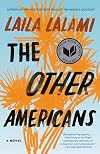
What's the term for a novel made up of chapters each told from a different character's point of view? Anyway, it's become so common that I figure there has to be a word for it, and Lalami's novel is a wonderful example of the genre. It tells the story of a Moroccan-American woman's coming to terms with her father's death, with her relationship to her Central Valley California home, family, and past, and with the assumptions about each of those that blind her to the reality the people in her show more life experience. Racism and anti-Muslim bias are themes, presented in ways that feel more authentic than the usual ripped from the headlines heavy-handedness. With all good fiction, it manages to transcend the things that make us different, to illuminate what's universal in lived experience. Well worth the read! show less

This is really very good. It starts with someone describing it's been 4 years since their father died. We then dive into the story, which is narrated by a series of people in short chapters, including the deceased man, Driss. He's an immigrant from Morocco, who moved to America to avoid the uprising when he was a philosophy student. He, his wife, Maryam, and elder daughter, Selma, moved to the US, ended up in the desert in California, opening a doughnut restaurant, then taking on a diner. We show more hear most from his younger daughter, Nora, who was close to her father, he supported her in her career as a musician (not being a doctor or lawyer that her mother wanted her to be).
Along the way we also hear from Jeremy, a school friend of Nora's who played in the school band with her and who is now a policeman, Coleman, the detective investigating the accident in which Driss died and Efrain, who witnessed the incident. In each case they are not a WASP person, they all have some degree of other, be it place of birth, cultural heritage or colour. It was interesting what motivated different people to action or inaction and it contrasted with the only 2 white voices, which we heard from very briefly.
It all works very well. The story is mostly linear, even the sections narrated by Driss and Maryam that refer back to past events fit into the story arc, with each section explaining or revealing something that has been reached in the chapters narrated by those dealing with the aftermath.
While there is an uncovering of the events leading up to Driss' death, the story itself also deals with how grief affects people differently. Nora has lost a beloved father and until that happens has been unable to see him as a human being, with his flaws. I felt this rang remarkably true, having experienced the same with my own father. She also has to renegotiate her relationships with her family, which also struck a chord in me. Each of the people involved has a different emotional response, and we see the different pressures of family, the expectations of each parent on the siblings and the result of those over a lifetime.
I felt that the different voices weren't sufficiently well differentiated, they didn't sound particularly different form each other in their use of language. I also found it difficult to keep track of time after the event, because the different voices moved forward at different speeds. Some just retold what we'd seen from another perspective.
This is worth a read. show less
Along the way we also hear from Jeremy, a school friend of Nora's who played in the school band with her and who is now a policeman, Coleman, the detective investigating the accident in which Driss died and Efrain, who witnessed the incident. In each case they are not a WASP person, they all have some degree of other, be it place of birth, cultural heritage or colour. It was interesting what motivated different people to action or inaction and it contrasted with the only 2 white voices, which we heard from very briefly.
It all works very well. The story is mostly linear, even the sections narrated by Driss and Maryam that refer back to past events fit into the story arc, with each section explaining or revealing something that has been reached in the chapters narrated by those dealing with the aftermath.
While there is an uncovering of the events leading up to Driss' death, the story itself also deals with how grief affects people differently. Nora has lost a beloved father and until that happens has been unable to see him as a human being, with his flaws. I felt this rang remarkably true, having experienced the same with my own father. She also has to renegotiate her relationships with her family, which also struck a chord in me. Each of the people involved has a different emotional response, and we see the different pressures of family, the expectations of each parent on the siblings and the result of those over a lifetime.
I felt that the different voices weren't sufficiently well differentiated, they didn't sound particularly different form each other in their use of language. I also found it difficult to keep track of time after the event, because the different voices moved forward at different speeds. Some just retold what we'd seen from another perspective.
This is worth a read. show less
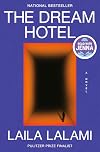
I really didn't _enjoy_ this book. It made my skin crawl in ways that comparable dystopian classics have not. I suppose because this world is so immediate and recognizable.
I felt dirty and grungy and run down just as Sara did during her detention. Just a remarkable work that was an uncomfortable read.
I felt dirty and grungy and run down just as Sara did during her detention. Just a remarkable work that was an uncomfortable read.
Lists
Awards


You May Also Like


Associated Authors
Statistics
- Works
- 7
- Also by
- 6
- Members
- 3,623
- Popularity
- #6,989
- Rating
- 3.8
- Reviews
- 194
- ISBNs
- 79
- Languages
- 6
- Favorited
- 2


