On This Page
Description
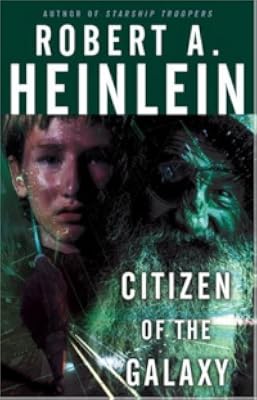
In a distant galaxy of colonized planets, the atrocity of slavery is alive and well. Young Thorby was just another bedraggled orphan boy sold at auction, but his new owner, Baslim, is not the disabled beggar he appears to be. Adopting Thorby as his son, Baslim fights relentlessly as an abolitionist spy. When the authorities close in on Baslim, Thorby must find his own way in a hostile galaxy. Joining with the Free Traders, a league of merchant princes, Thorby must find the courage to live by show more his wits and fight his way up from society's lowest rung. But Thorby's destiny will be forever changed when he discovers the truth about his own identity.Citizen of the Galaxy is a suspenseful tale of adventure, coming of age, and interstellar conflict by science fiction's Grand Master.
. show less
Tags
Recommendations




















Member Recommendations
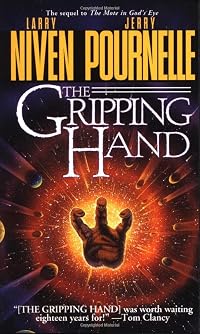
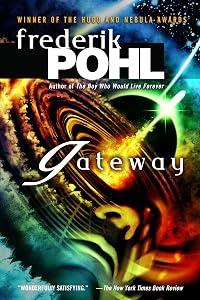
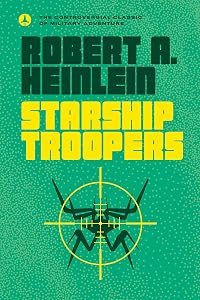
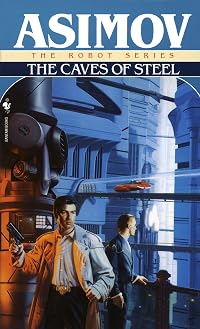
Gregorio_Roth Citizen of the Galaxy was recommended under the book KIM so it should be also with this...
20

Gregorio_Roth Citizen of the Galaxy was influenced by LORD JIM by Joseph Conrad
Member Reviews
Robert A. Heinlein's Citizen of the Galaxy is a great find for those who love classic science fiction with an enduring message. Published in 1957, Heinlein was already an established author, known for his keen observations on society and politics, often conveyed through the lens of speculative fiction. With Citizen of the Galaxy, Heinlein moves beyond Earth to explore themes of slavery, freedom, and social mobility on a galactic scale.
This novel is the second-to-last work in Heinlein's Juvenile series, a collection aimed at younger readers but equally captivating for adults. Alongside titles like Rocket Ship Galileo, Space Cadet, and Have Space Suit -- Will Travel, it offers a unique perspective on a future shaped by advanced technology show more and complex social norms. What sets Citizen of the Galaxy apart within this series is its heavier themes, including slavery, freedom, and societal customs, lending the work a level of gravitas not always present in the other juvenile works.
The story revolves around Thorby, a young slave who starts life in the worst conditions imaginable, only to be freed by an elderly beggar named Baslim. As Thorby navigates through a myriad of social settings—from slave markets to military vessels to aristocratic households—he offers readers a firsthand exploration of societal structures and what it means to belong. What sets this work apart is Heinlein's expertise in crafting compelling worlds; the Free Traders, the Hegemonic Guard, the planet Jubbul, all come to life in vivid detail. Heinlein doesn't disappoint when it comes to intricate world-building.
The narrative is engaging and quite forward-thinking, considering its publication date. The novel delves into complex issues that are still intensely relevant today. More importantly, the book adopts a remarkably modern perspective on these issues. For example, the story critiques the systemic issues that perpetuate social stratification, rather than blaming individuals for their circumstances. This line of thinking was not commonly found in mainstream literature from the 1950s, especially in science fiction aimed at younger readers. The book essentially encourages readers to question societal norms and structures, an approach that was ahead of its time and continues to be pertinent.
Key Themes and Useful Lessons (My Interpretation)
Interesting Quotations
On societal obligations:
This quote captures the essence of modern life, where the tug-of-war between responsibilities and personal desires often leaves little room for balance. Baslim's advice to Thorby is a timeless lesson on the importance of self-care and ensuring that you don't lose yourself while navigating life's numerous obligations.
On justice:
This quote underscores the idea that justice is best served when you focus on your own actions and ethics, rather than fixating on the behavior of others. By acting justly yourself, you set a standard, creating a ripple effect that can influence the broader social fabric.
On societal norms and customs:
This quote emphasizes the power and necessity of societal norms and customs, even when they may seem illogical at first glance.
On Freedom:
This succinct quote conveys the enduring and sometimes complicated relationship humans have with freedom. Once you've tasted freedom, relinquishing it becomes almost unthinkable, underlining its intrinsic value and the lengths people will go to preserve it.
In conclusion, Citizen of the Galaxy remains a compelling read, not just for its adventurous storyline but for its deep insights into societal constructs and the human condition. The narrative doesn't just entertain; it pushes boundaries and makes the reader think, which is why it's often described as "forward-thinking." If you're looking for a science fiction novel that gives you more than just laser beams and space battles, this Heinlein is a must-read. show less
This novel is the second-to-last work in Heinlein's Juvenile series, a collection aimed at younger readers but equally captivating for adults. Alongside titles like Rocket Ship Galileo, Space Cadet, and Have Space Suit -- Will Travel, it offers a unique perspective on a future shaped by advanced technology show more and complex social norms. What sets Citizen of the Galaxy apart within this series is its heavier themes, including slavery, freedom, and societal customs, lending the work a level of gravitas not always present in the other juvenile works.
The story revolves around Thorby, a young slave who starts life in the worst conditions imaginable, only to be freed by an elderly beggar named Baslim. As Thorby navigates through a myriad of social settings—from slave markets to military vessels to aristocratic households—he offers readers a firsthand exploration of societal structures and what it means to belong. What sets this work apart is Heinlein's expertise in crafting compelling worlds; the Free Traders, the Hegemonic Guard, the planet Jubbul, all come to life in vivid detail. Heinlein doesn't disappoint when it comes to intricate world-building.
The narrative is engaging and quite forward-thinking, considering its publication date. The novel delves into complex issues that are still intensely relevant today. More importantly, the book adopts a remarkably modern perspective on these issues. For example, the story critiques the systemic issues that perpetuate social stratification, rather than blaming individuals for their circumstances. This line of thinking was not commonly found in mainstream literature from the 1950s, especially in science fiction aimed at younger readers. The book essentially encourages readers to question societal norms and structures, an approach that was ahead of its time and continues to be pertinent.
Key Themes and Useful Lessons (My Interpretation)
-
Freedom comes with responsibility: Thorby's transition from a slave to a free citizen is not without its challenges. He learns that the freedom to make choices also entails a responsibility to make ethical decisions. This is an ageless lesson, applicable whether you're in the realm of social ethics or strategic planning in technology design.
-
Identity is fluid: One of the most striking aspects of the book is Thorby's journey through different identities. It raises the question—what really defines us? Is it our social status, our job, our race, or our choices? In the current era of hyper-connectivity and ever-changing roles, this theme is more relevant than ever.
-
The enduring value of mentorship: Baslim's role in shaping Thorby's moral compass underscores the lasting impact of good mentorship. Whether you're a young professional seeking guidance or a seasoned veteran imparting wisdom, the mentor-mentee relationship can be transformative.
Interesting Quotations
On societal obligations:
"I'm so busy doing what I must do that I don't have time for what I ought to do... and I never get a chance to do what I want to do!" "Son, that's universal. The way to keep that recipe from killing you is occasionally to do what you want to do anyhow."
This quote captures the essence of modern life, where the tug-of-war between responsibilities and personal desires often leaves little room for balance. Baslim's advice to Thorby is a timeless lesson on the importance of self-care and ensuring that you don't lose yourself while navigating life's numerous obligations.
On justice:
"The way to find justice is to deal fairly with other people and not worry about how they deal with you."
This quote underscores the idea that justice is best served when you focus on your own actions and ethics, rather than fixating on the behavior of others. By acting justly yourself, you set a standard, creating a ripple effect that can influence the broader social fabric.
On societal norms and customs:
"Customs tell a man who he is, where he belongs, what he must do. Better illogical customs than none; men cannot live together without them."
This quote emphasizes the power and necessity of societal norms and customs, even when they may seem illogical at first glance.
On Freedom:
“Freedom is a hard habit to break.”
This succinct quote conveys the enduring and sometimes complicated relationship humans have with freedom. Once you've tasted freedom, relinquishing it becomes almost unthinkable, underlining its intrinsic value and the lengths people will go to preserve it.
In conclusion, Citizen of the Galaxy remains a compelling read, not just for its adventurous storyline but for its deep insights into societal constructs and the human condition. The narrative doesn't just entertain; it pushes boundaries and makes the reader think, which is why it's often described as "forward-thinking." If you're looking for a science fiction novel that gives you more than just laser beams and space battles, this Heinlein is a must-read. show less
This is one of the books that's characterized as one of Heinlein's 'Juveniles' - intended for a younger audience. Maybe he intended that, I don't know, but it seems more of a publisher's or marketer's or seller's characterization than an apt description of the book.
The book follows Thorby, a boy slave who is bought by a man who turns out to be a spy. His new master gives him more and more freedom while educating him. Eventually, thorny is fully emancipated and ends up on a galaxy-wide quest to fulfill the man's last wishes, which turn out to be more about Thorby than the man himself.
The book takes on the issue of slavery, through an anthropological exegesis of the different intergalactic cultures Thorby is exposed to. There is never a show more moment that the writing seems targeted at a particular age group or reading comprehension. The writing is rich and provocative; the difficult concepts of identity and worth are addressed without pulling any punches.
Heinlein is a chameleon, dropping his science fiction into other genres seamlessly.
5 bones!!!!!
Highly Recommended! show less
The book follows Thorby, a boy slave who is bought by a man who turns out to be a spy. His new master gives him more and more freedom while educating him. Eventually, thorny is fully emancipated and ends up on a galaxy-wide quest to fulfill the man's last wishes, which turn out to be more about Thorby than the man himself.
The book takes on the issue of slavery, through an anthropological exegesis of the different intergalactic cultures Thorby is exposed to. There is never a show more moment that the writing seems targeted at a particular age group or reading comprehension. The writing is rich and provocative; the difficult concepts of identity and worth are addressed without pulling any punches.
Heinlein is a chameleon, dropping his science fiction into other genres seamlessly.
5 bones!!!!!
Highly Recommended! show less
For as long as he could remember, young Thorby had been a slave—until he lands on Jubbal, one of the Nine Worlds of the Sargon Empire, and is purchased by a beggar named Baslim. It is not long before Thorby realizes that Baslim is no simple mendicant, but a spy and one who despises the slave trade. Once Baslim educates Thorby in reading, writing, mathematics, and even a bit of espionage, he frees Thorby from slavery and adopts him as his son.
In the event of his death, Baslim commands Thorby to carry a special message to the captain of the first Free Trader vessel that landed on Jubbal. Baslim uses hypnosis to allow Thorby to memorize the message in an unfamiliar language.
After Baslim is finally arrested and executed by Sargon police, show more Thorby makes his way to the spaceport where he approaches Captain Krausa of the Sisu and delivers the message. As it turns out, the Free Traders owe a special debt to Baslim and as such, Krausa follows the old man’s instructions and adopts Thorby into his family. Thorby becomes a crewman aboard the Sisu—but only temporarily, for Baslim also wished to have the Free Trader captain turn over Thorby to a Hegemonic military vessel where he would have the opportunity to discover his true lineage. Baslim suspected that Thorby had been abducted from a Terran family.
When Thorby is finally reunited with his family on Earth, he learns that he is heir to a fortune… but not everyone has his best interests at heart. Worse, the company once owned by his parents might now be indirectly involved in the same detestable institution from which Baslim had liberated him.
Citizen of the Galaxy is one of Heinlein’s juvenile SF adventure novels, what we would today categorize as young adult. It is a delightful “rags to riches” tale that allows the reader to experience a wide range of lifestyles and family structures through Thorby’s eyes as he evolves from slave to adopted family member of Free Traders to an enlisted man aboard a military vessel and finally, the head of one of the wealthiest corporations on Earth. show less
In the event of his death, Baslim commands Thorby to carry a special message to the captain of the first Free Trader vessel that landed on Jubbal. Baslim uses hypnosis to allow Thorby to memorize the message in an unfamiliar language.
After Baslim is finally arrested and executed by Sargon police, show more Thorby makes his way to the spaceport where he approaches Captain Krausa of the Sisu and delivers the message. As it turns out, the Free Traders owe a special debt to Baslim and as such, Krausa follows the old man’s instructions and adopts Thorby into his family. Thorby becomes a crewman aboard the Sisu—but only temporarily, for Baslim also wished to have the Free Trader captain turn over Thorby to a Hegemonic military vessel where he would have the opportunity to discover his true lineage. Baslim suspected that Thorby had been abducted from a Terran family.
When Thorby is finally reunited with his family on Earth, he learns that he is heir to a fortune… but not everyone has his best interests at heart. Worse, the company once owned by his parents might now be indirectly involved in the same detestable institution from which Baslim had liberated him.
Citizen of the Galaxy is one of Heinlein’s juvenile SF adventure novels, what we would today categorize as young adult. It is a delightful “rags to riches” tale that allows the reader to experience a wide range of lifestyles and family structures through Thorby’s eyes as he evolves from slave to adopted family member of Free Traders to an enlisted man aboard a military vessel and finally, the head of one of the wealthiest corporations on Earth. show less
I have always had somewhat ambivalent feelings about Robert A. Heinlein – well, maybe not always: If I’m not mistaken I encountered him first when I was still a child, in German translation, and most likely abridged; those weren’t even paperbacks but the brochure format that was and I think still is popular in Germany for all kinds of pulp literature and which I used to devour by the dozens back in the day, and through all genres – Science Fiction, Romance, Crime, Western… I read them all.
Anyway – Heinlein. As I grew up, and moved from his juveniles to his later work, my youthful enthusiasm for novels like Have Spacesuit Will Travel began to wane somewhat. Seen with a more critical eye brought on with greater maturity (or so show more I hope), it becomes hard to overlook that many of his political views are not exactly enlightened, that there is some weird stuff going on with gender relations, and that there is overall way too much sermonising on whatever subject happened to catch Heinlein’s fancy at the moment – Stranger in a Strange Land, to cite but one example, is pretty much one long sermon from beginning to end.
On the other hand… there just is something about Heinlein that grips you and you won’t let go, that draws you in and keeps you reading and turning pages even as you groan at yet another sermon and roll your eyes at yet another awkward fornication scene. I’m still trying to figure out what constitutes that appeal for me, but I strongly suspect that it has do with his narrative voice. I don’t think anybody is going to accuse Heinlein of writing literary fiction, and yet I have only recently seen the prevalence of voice of plot singled out as the trait that seperates literary fiction from genre literature. Based on the writings of Heinlein and some others I tend to disagree with that assessment, because while his works are very much genre, there also is a dinstinct style to them, a certain tone to their narrative voice, a unique lilt to the rhythm of their prose that are unmistakeably his.
That tone seems to go best with first person narrative (as indeed most of his novels are), and maybe that is the reason why it did not appear very pronounced in Citizen of the Galaxy, as that novel is told entirely in the third person. Which would make for a weaker Heinlein novel, except that there is hardly any of his trademark sermonising either, and it being a juvenile, no sex at all. It’s almost like his good side and his bad side were somehow interdependent on each other, and you couldn’t have one without the other. And if you tone down on one, you’ll water down the other and end up with some kind of middle-of-the-road Heinlein, which is basically what Citizen of the Galaxy is – it is not his best, but not his worst either, in fact it probably would make a good introduction for people new to Heinlein to find out whether they can stomach him at all, or even for people who otherwise dislike his works.
It is an entertaining romp, even if there is not really much happening – it’s bascially a classical Bildungsroman, with the hero wandering around, seeing places and getting to know people, all of which makes him grow as a person and finally become fully himself. There is of course an SFnal element, in that that he also encounters a variety of different societies in space and on planets - and I think this is something that makes Citizen of the Galaxy stand out among other sci-fi novels of the period, in so far as back in the day (1957, to be precise) there was not that much Science Fiction around that placed its emphasis on anthropology and sociology rather than on the hard sciences.
And a final point in which I find this novel noteworthy is in clearing up Heinlein’s attitude towards women which is a persistently recurring debate. While none of them are primary characters, there are a lot of female secondary characters around – and not a single one of them is the simpering, helpless wifey sort that would conform to the period stereotype, but without exception they are all extremely intelligent and highly competent persons. I don’t think anybody who reads Citizen of the Galaxy with an open mind will in good conscience be able to call Heinlein a misogynist. However, while there is nothing wrong with his female characters per se, the way he depicts their role in future society and in relationships appears to me to be deeply problematic – it seems even in the future, women cannot hold a position of power by themselves, but need to be married to a powerful man to achieve anything, with the male being in public view and the female using their relationship to manipulate and pull strings in the background to exert any influence. That is a very 19th century attitude, and seems strangely anachronistic for a future society. But then, they still have slavery, too, and the struggle to abolish it is Citizen of the Galaxy’s main plot point… except that there is no Hegemonic Guard to fight for female emancipation. show less
Anyway – Heinlein. As I grew up, and moved from his juveniles to his later work, my youthful enthusiasm for novels like Have Spacesuit Will Travel began to wane somewhat. Seen with a more critical eye brought on with greater maturity (or so show more I hope), it becomes hard to overlook that many of his political views are not exactly enlightened, that there is some weird stuff going on with gender relations, and that there is overall way too much sermonising on whatever subject happened to catch Heinlein’s fancy at the moment – Stranger in a Strange Land, to cite but one example, is pretty much one long sermon from beginning to end.
On the other hand… there just is something about Heinlein that grips you and you won’t let go, that draws you in and keeps you reading and turning pages even as you groan at yet another sermon and roll your eyes at yet another awkward fornication scene. I’m still trying to figure out what constitutes that appeal for me, but I strongly suspect that it has do with his narrative voice. I don’t think anybody is going to accuse Heinlein of writing literary fiction, and yet I have only recently seen the prevalence of voice of plot singled out as the trait that seperates literary fiction from genre literature. Based on the writings of Heinlein and some others I tend to disagree with that assessment, because while his works are very much genre, there also is a dinstinct style to them, a certain tone to their narrative voice, a unique lilt to the rhythm of their prose that are unmistakeably his.
That tone seems to go best with first person narrative (as indeed most of his novels are), and maybe that is the reason why it did not appear very pronounced in Citizen of the Galaxy, as that novel is told entirely in the third person. Which would make for a weaker Heinlein novel, except that there is hardly any of his trademark sermonising either, and it being a juvenile, no sex at all. It’s almost like his good side and his bad side were somehow interdependent on each other, and you couldn’t have one without the other. And if you tone down on one, you’ll water down the other and end up with some kind of middle-of-the-road Heinlein, which is basically what Citizen of the Galaxy is – it is not his best, but not his worst either, in fact it probably would make a good introduction for people new to Heinlein to find out whether they can stomach him at all, or even for people who otherwise dislike his works.
It is an entertaining romp, even if there is not really much happening – it’s bascially a classical Bildungsroman, with the hero wandering around, seeing places and getting to know people, all of which makes him grow as a person and finally become fully himself. There is of course an SFnal element, in that that he also encounters a variety of different societies in space and on planets - and I think this is something that makes Citizen of the Galaxy stand out among other sci-fi novels of the period, in so far as back in the day (1957, to be precise) there was not that much Science Fiction around that placed its emphasis on anthropology and sociology rather than on the hard sciences.
And a final point in which I find this novel noteworthy is in clearing up Heinlein’s attitude towards women which is a persistently recurring debate. While none of them are primary characters, there are a lot of female secondary characters around – and not a single one of them is the simpering, helpless wifey sort that would conform to the period stereotype, but without exception they are all extremely intelligent and highly competent persons. I don’t think anybody who reads Citizen of the Galaxy with an open mind will in good conscience be able to call Heinlein a misogynist. However, while there is nothing wrong with his female characters per se, the way he depicts their role in future society and in relationships appears to me to be deeply problematic – it seems even in the future, women cannot hold a position of power by themselves, but need to be married to a powerful man to achieve anything, with the male being in public view and the female using their relationship to manipulate and pull strings in the background to exert any influence. That is a very 19th century attitude, and seems strangely anachronistic for a future society. But then, they still have slavery, too, and the struggle to abolish it is Citizen of the Galaxy’s main plot point… except that there is no Hegemonic Guard to fight for female emancipation. show less
People may think what they want about Robert Heinlein but man had a lot to say about the society and how people should act and behave.
Story starts on a feudal world called Sargon where young boy is given for sale on the slave market. Thus starts the story of Thorby, kid slave that went through unimaginable horrors until he was bought by Baslim the Beggar and given chance to live and prosper. By telling us the story of Thorby, Heinlein gives us story of growing up and how no matter where and when one starts the life journey if one wants to live righteous and good life there are no obstacles, there needs to be a will to live a good life, will to live and respect all around.
Thorby starts learning from the Baslim how to survive in the show more streets and [as time goes by] gets schooled in pretty advanced subjects by his benefactor (and later finds out his benefactor is much more than it meets the eye), learning about Sargonites and their culture, pushed to another more exotic environment after escaping with the help of so called Free Traders, star roamers, closely knit and isolated communities living on board vast trade ships, only to finally end his travels by reaching the greatest enigma of all, Earth, cradle of humanity. It is story of search for one's identity but also story of young person seeing and experiencing humanity in its worse (Sargonite slavers), best (Baslim, people helping him escape Sargon), isolated (Free Traders) and all in the between (Earth). Seeing and experiencing but never feeling resentment and hate toward individuals, toward some societies and their cruel cultures sure but never general populace. Can you imagine this today, in our times? I sure cant.
Author tells a wonderful story in which all people are people, maybe divergent from the mainstream humanity due to conditions in which they live and maybe living a cruel life of banditry - but people. People who have hopes, dreams not unlike every other person.
What one decides to do with one's life is what makes the difference, change can be done and needs to be done but must not be marred by hatred and barbarism. Again, something that is unthinkable in this day and time.
While we follow Thorby in his adventures we encounter various societies and how they are placed in relation to individual freedom. Some are outright class/caste society where there is no individual freedom for lower castes, some again are so isolated and family bound that they function perfectly but no-one is actually free [individually] because they need to follow certain rules, commands and taboos, and finally some are insidious, societies of free and equal but where we have those that are more equal than the others and where one is not exactly in power of his life but controlled from shadows, those true policy makers.
So we are given a story of a sound-minded and logical person, capable of change and seeking knowledge, who feels a lot but does not allow his feelings to sideline him. Some might call him that terrible world nowadays - stoic (oh my....). Again, in these times where one needs to feel, and feel to the extreme, pick sides, look at the others with nothing but disdain...... can you imagine this book was written at times where there was sanity? Those times are no nearer than Barsoom or Avalon of old these days.
Ending seems rushed a bit but sounds real so it did not ruin the experience for me.
Wonderful book, highly recommended to all fans of space adventure. show less
Story starts on a feudal world called Sargon where young boy is given for sale on the slave market. Thus starts the story of Thorby, kid slave that went through unimaginable horrors until he was bought by Baslim the Beggar and given chance to live and prosper. By telling us the story of Thorby, Heinlein gives us story of growing up and how no matter where and when one starts the life journey if one wants to live righteous and good life there are no obstacles, there needs to be a will to live a good life, will to live and respect all around.
Thorby starts learning from the Baslim how to survive in the show more streets and [as time goes by] gets schooled in pretty advanced subjects by his benefactor (and later finds out his benefactor is much more than it meets the eye), learning about Sargonites and their culture, pushed to another more exotic environment after escaping with the help of so called Free Traders, star roamers, closely knit and isolated communities living on board vast trade ships, only to finally end his travels by reaching the greatest enigma of all, Earth, cradle of humanity. It is story of search for one's identity but also story of young person seeing and experiencing humanity in its worse (Sargonite slavers), best (Baslim, people helping him escape Sargon), isolated (Free Traders) and all in the between (Earth). Seeing and experiencing but never feeling resentment and hate toward individuals, toward some societies and their cruel cultures sure but never general populace. Can you imagine this today, in our times? I sure cant.
Author tells a wonderful story in which all people are people, maybe divergent from the mainstream humanity due to conditions in which they live and maybe living a cruel life of banditry - but people. People who have hopes, dreams not unlike every other person.
What one decides to do with one's life is what makes the difference, change can be done and needs to be done but must not be marred by hatred and barbarism. Again, something that is unthinkable in this day and time.
While we follow Thorby in his adventures we encounter various societies and how they are placed in relation to individual freedom. Some are outright class/caste society where there is no individual freedom for lower castes, some again are so isolated and family bound that they function perfectly but no-one is actually free [individually] because they need to follow certain rules, commands and taboos, and finally some are insidious, societies of free and equal but where we have those that are more equal than the others and where one is not exactly in power of his life but controlled from shadows, those true policy makers.
So we are given a story of a sound-minded and logical person, capable of change and seeking knowledge, who feels a lot but does not allow his feelings to sideline him. Some might call him that terrible world nowadays - stoic (oh my....). Again, in these times where one needs to feel, and feel to the extreme, pick sides, look at the others with nothing but disdain...... can you imagine this book was written at times where there was sanity? Those times are no nearer than Barsoom or Avalon of old these days.
Ending seems rushed a bit but sounds real so it did not ruin the experience for me.
Wonderful book, highly recommended to all fans of space adventure. show less
Thoroughly meh mid-period Heinlein—published only a few years before Stranger in a Strange Land, probably his best book, and one that shares the theme of an orphan finding his place in the universe after wrestling with questions of freedom and morality. As with nearly all Heinlein from the 1950s on, there's a lot of reader-lecturing here, partly from wise older characters and partly from the omniscient narrator. Some of it is edifying, even if you don't agree; these days, you don't see much philosophical opinion about the inherent conflict between individual liberty and the good of society as a whole that doesn't come down squarely on one side or the other. On the other hand, there's the usual alarming Heinlein stuff carried over from show more his early-20th-century upbringing: in this case, his belief (referenced several times) that children learn better when they're slapped around by their teachers. Apparently, at the time of writing, Heinlein was reading in anthropology—the middle section of the book includes extended discussion of clans and moieties (arbitrary divisions of society to prevent inbreeding) in relation to the large closed-system pirate starship on which the hero lives for a while. There's even a social scientist based on Margaret Mead. Sadly, this section of the book ends abruptly by a deus ex machina plot development that neatly sets up the moral the author wanted to get across. If you're a Heinlein completist, you won't find Citizen a waste of time, but if you only read a few Heinlein books, you'll be better off with others. show less
This was one of my favorite Heinlein books when I read it more then 40 years ago. Would I still feel the same today? I really did not enjoy Have Spacesuit, Will Travel on a recent re-read. I found both plot and characters unbelievable and annoying. But I guess I had good taste back then because Citizen of the Galaxy, despite the many usual Heinlein twitches, holds up very well. Heinlein said there were just seven plots and this is one of his favorite: the man (boy in this case) who learns better. Thorby's tale begins as a slave who is bought by the beggar Baslim the Cripple on a backwater planet, Baslim and Thorby both turn out to be more than they appear but the revelations are delivered in measured doses. The focus is on Thorby's show more education, first as a beggar, then as a space traveling Free Trader, then as member of the space traveling Guard, and finally on Earth. Each culture is very different and Thorby has to learn fast. One of Heinlein's twitches is that there is always a character -- usually called Pappy -- who knows all and is ready to lecture at the drop of a hat with not a whit of self-doubt. That happens here three times (Pop, Father and Pappy), but Pop, i.e., Baslim, has much more balance as a character than usual, and in a nice indication of Thorby's growth, there is no Pappy in the fourth segment.The story here is mostly maturation against a space opera background, not SF speculation, but there's one scene where Thorby uses a computer to do graphical data visualization that seems very foresighted for 1957. Recommended for anyone wanting to read Heinlein at his near best. show less
Members
- Recently Added By
Lists

Best Science Fiction Novels
816 works; 430 members

Best Young Adult
413 works; 102 members

Favorite Coming of Age Novels.
164 works; 51 members

The 5 Parsec Shelf
50 works; 7 members

Best Children's Books You've Read
197 works; 75 members

Books Read in 2013
1,630 works; 51 members

Novels featuring Orphans
76 works; 10 members

Inheritance and Succession Literature
24 works; 5 members

Books Read in 2016
4,666 works; 197 members

1950s
340 works; 22 members

Books Read in 2022
5,226 works; 115 members

Books Read in 2017
4,249 works; 130 members

Books Read in 2023
5,638 works; 147 members

Books Read in 2024
4,727 works; 128 members

Books We Loved As Children
603 works; 253 members

Fêtes worse than death? — Village festivals in fiction
37 works; 7 members
Author Information

458+ Works 174,547 Members
Robert Anson Heinlein was born on July 7, 1907 in Butler, Mo. The son of Rex Ivar and Bam Lyle Heinlein, Robert Heinlein had two older brothers, one younger brother, and three younger sisters. Moving to Kansas City, Mo., at a young age, Heinlein graduated from Central High School in 1924 and attended one year of college at Kansas City Community show more College. Following in his older brother's footsteps, Heinlein entered the Navel Academy in 1925. After contracting pulmonary tuberculosis, of which he was later cured, Heinlein retired from the Navy and married Leslyn MacDonald. Heinlein was said to have held jobs in real estate and photography, before he began working as a staff writer for Upton Sinclair's EPIC News in 1938. Still needing money desperately, Heinlein entered a writing contest sponsored by the science fiction magazine Thrilling Wonder Stories. Heinlein wrote and submitted the story "Life-Line," which went on to win the contest. This guaranteed Heinlein a future in writing. Using his real name and the pen names Caleb Saunders, Anson MacDonald, Lyle Monroe, John Riverside, and Simon York, Heinlein wrote numerous novels including For Us the Living, Methuselah's Children, and Starship Troopers, which was adapted into a big-budget film for Tri-Star Pictures in 1997. The Science Fiction Writers of America named Heinlein its first Grand Master in 1974, presented 1975. Officers and past presidents of the Association select a living writer for lifetime achievement. Also, the Science Fiction and Fantasy Hall of Fame inducted Heinlein in 1998. Heinlein died in 1988 from emphysema and other related health problems. Heinlein's remains were scattered from the stern of a Navy warship off the coast of California. (Bowker Author Biography) show less
Some Editions
Awards and Honors
Series

Belongs to Publisher Series
Tascabili Fantascienza (20.54)
Work Relationships
Is contained in
Has the adaptation
Has as a study
Common Knowledge
- Canonical title*
- Cittadino della galassia
- Original title
- Citizen of the Galaxy
- Original publication date
- 1957
- People/Characters
- Thorby; Baslim
- Dedication
- To Fritz Leiber
- First words
- "Lot ninety-seven," the auctioneer announced. "A boy."
- Last words
- (Click to show. Warning: May contain spoilers.)"Goodnight, son," the old beggar whispered. "Good dreams . . . and good luck!"
- Publisher's editor*
- Editrice Nord S.r.l.
- Original language
- English
*Some information comes from Common Knowledge in other languages. Click "Edit" for more information.
Classifications
Statistics
- Members
- 3,364
- Popularity
- 5,039
- Reviews
- 72
- Rating
- (3.89)
- Languages
- 13 — Chinese, Czech, Dutch, English, Finnish, French, German, Hebrew, Hungarian, Italian, Russian, Spanish, Swedish
- Media
- Paper, Audiobook, Ebook
- ISBNs
- 49
- ASINs
- 40