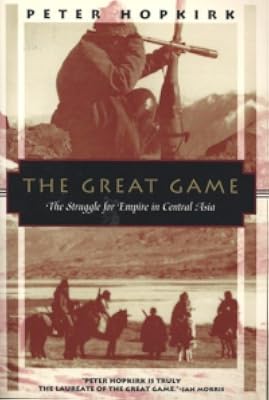
The Great Game: On Secret Service in High Asia
by Peter Hopkirk
On This Page
Description
The Great Game between Victorian Britain and Tsarist Russia was fought across desolate terrain from the Caucasus to China, over the lonely passes of the Parmirs and Karakorams, in the blazing Kerman and Helmund deserts, and through the caravan towns of the old Silk Road-both powers scrambling to control access to the riches of India and the East. When play first began, the frontiers of Russia and British India lay 2000 miles apart; by the end, this distance had shrunk to twenty miles at some show more points. Now, in the vacuum left by the disintegration of the Soviet Union, there is once again talk of Russian soldiers "dipping their toes in the Indian Ocean." The Washington Post has said that "every story Peter Hopkirk touches is totally engrossing." In this gripping narrative he recounts a breathtaking tale of espionage and treachery through the actual experiences of its colorful characters. Based on meticulous scholarship and on-the-spot research, this is the history at the core of today's geopolitics. show lessTags
Recommendations











Member Recommendations
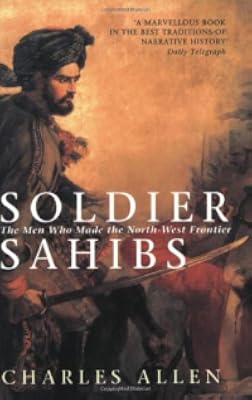
John_Vaughan While author Hopkirk offers the political context of the great game, Charles Allen describes those who played it.
Evan_Edlund Central Asia- exploration and conquest
Member Reviews
A terrific read. Highly recommended for anyone with an interest in British-Russian relations and intrigues in the 19th century, providing insight into the calculations (often wrong) by both parties. Whereas the Russians act based on sheer expansionist desire, the English do so out of a combination of paranoia and economic greed. This is a century-long tale of imperialism at its height. The author must have read dozens, if not hundreds, of firsthand accounts and books by various historians. The writing style is lively and doesn't get bogged down with unessential digressions into concurrent policy concerns by the two adversaries. There's no holding back on the accounts of medieval cruelty by the various Khans of Persia and Afghanistan, as show more well as that of roaming bandits. It all reads like a boy's adventure story for adults. What is most puzzling is why both Russia and England would continue in their military assaults despite devastating disasters and loss of life. show less
The original Cold War, this is a historical account of the game played Britain and Russia from the late 18th to the early 20th century, for supremacy of Central Asia. On the British side, at stake was the security of its source of wealth, India. On the Russian side, it was ostensibly new markets for its goods, but was actually a consolidation and expansion of empire.
It is an extraordinary tale of adventure, great daring, intrigue, and warfare. Needing to secure India from the Russian threat by surrounding itself with friendly neighbors, with Afghan kingdoms and tribes on the west, and on the north across the mountain passes, Sikh as well as other local chiefdoms, Britain decided to adopt a low-key forward policy. Written from the point show more of view of the British, Hopkirk introduces us to some very interesting individuals, exemplary in their bravery (and sometimes necessarily, bravado) who took up the challenge of the unexplored territory and of the unknown. We travel with these men, and with countless of their Indian subjects, across some of the most hostile environments in the world even in the coldest of winter – the vast expanse of the steppes, the deserts, the highest and practically impassable mountain peaks, home to warring and some of the most fearsome tribes of Central Asia. They map out regions and impenetrable mountain passes, identifying pockets of areas the enemy could use in a possible invasion. They strike up relations with local chiefs, buying their loyalties with expensive gifts, gold, and money, and promises of military support against their enemies, and against Russia. With these men, we are awed by the splendor of the ancient cities of what we know today as Afghanistan and Pakistan and Iran, cities along the ancient Silk Road such as Bokhara, Samarkand, glimpses of which we still see today (unfortunately not anymore of Kabul). Many of these men would lose their lives in heroic ways, and many bloody battles fought because of treachery mostly on the part of the local tribes (we have to keep in mind though that this is a one-sided assessment, as the records are mainly from the British side) who, aware of their strategic value to either parties, were not above playing off Russia and Britain against each other with their loyalties. We are also given a picture of the directions and the lapses in the imperialist policies advocated by Britain in this region.
Hopkirk writes in a very engaging way, and much happens that are stuff of imagination so that we almost forget that this is not a work of fiction. The Great Game “officially” ended a century ago, the main players never reached an actual war although they came dangerously close a few times. The Russian invasion of Afghanistan, however, many decades later in 1979, simply went to show that those in the British imperial government at the time of the Great Game were correct in their belief that one day the Russians would come (for another reason this time, of course, but the evidence is there that they still had an interest).
An interesting, highly readable book that helps us understand a bit of the history of the region which today holds the most intractable of military and political challenges. show less
It is an extraordinary tale of adventure, great daring, intrigue, and warfare. Needing to secure India from the Russian threat by surrounding itself with friendly neighbors, with Afghan kingdoms and tribes on the west, and on the north across the mountain passes, Sikh as well as other local chiefdoms, Britain decided to adopt a low-key forward policy. Written from the point show more of view of the British, Hopkirk introduces us to some very interesting individuals, exemplary in their bravery (and sometimes necessarily, bravado) who took up the challenge of the unexplored territory and of the unknown. We travel with these men, and with countless of their Indian subjects, across some of the most hostile environments in the world even in the coldest of winter – the vast expanse of the steppes, the deserts, the highest and practically impassable mountain peaks, home to warring and some of the most fearsome tribes of Central Asia. They map out regions and impenetrable mountain passes, identifying pockets of areas the enemy could use in a possible invasion. They strike up relations with local chiefs, buying their loyalties with expensive gifts, gold, and money, and promises of military support against their enemies, and against Russia. With these men, we are awed by the splendor of the ancient cities of what we know today as Afghanistan and Pakistan and Iran, cities along the ancient Silk Road such as Bokhara, Samarkand, glimpses of which we still see today (unfortunately not anymore of Kabul). Many of these men would lose their lives in heroic ways, and many bloody battles fought because of treachery mostly on the part of the local tribes (we have to keep in mind though that this is a one-sided assessment, as the records are mainly from the British side) who, aware of their strategic value to either parties, were not above playing off Russia and Britain against each other with their loyalties. We are also given a picture of the directions and the lapses in the imperialist policies advocated by Britain in this region.
Hopkirk writes in a very engaging way, and much happens that are stuff of imagination so that we almost forget that this is not a work of fiction. The Great Game “officially” ended a century ago, the main players never reached an actual war although they came dangerously close a few times. The Russian invasion of Afghanistan, however, many decades later in 1979, simply went to show that those in the British imperial government at the time of the Great Game were correct in their belief that one day the Russians would come (for another reason this time, of course, but the evidence is there that they still had an interest).
An interesting, highly readable book that helps us understand a bit of the history of the region which today holds the most intractable of military and political challenges. show less
A Ripping Yarn! With footnotes! I recommend this book to all adult survivors of Rudyard Kipling. The real story that fictional persons like Flashman palely imitate. this is the classical clash between the great land power, who had to add to her borders to feel safe, and the naval octopus, intent on maintaining its dividends. Geographical determinists like Mackinder are also dragged in, as well as games-playing theory. It is hard to put down...ah, where was I? Right...got to sign off on this review and do a re-read.
Although the expression was popularized by Kipling in Kim, it was actually coined by Captain Arthur Conolly – who ended up losing his own version, beheaded in 1842, with Colonel Charles Stoddart, in front of the palace of the Emir of Bokhara. A Russian official called it “the tournament of shadows”; later Soviet historians translated the English phrase as большая игра – “Great Game”. Peter Hopkirk’s book is a fascinating read, about a part of the world that has had little interest for Americans – until 2001/09/11. The book was written in the Soviet era (1990) but got a new forward in 2006; Hopkirk comments that his research was actually easier in the Soviet era because you only needed one visa while now you show more need one for Kazakhstan, Kyrgyzstan, Turkmenistan, Uzbekistan and Tajikistan.
The British wouldn’t have cared what the Tsars did if they hadn’t found themselves ruling India. Both England and its enemies considered India the keystone of the whole British Empire – remove it and the edifice would topple. (Interestingly enough, I’ve never read a dispassionate analysis of that – however, the important thing is that everybody believed it). Hopkirk doesn’t concern himself much with struggles among the French, British, Danes, Dutch and Portuguese within India before it settled as a English possession; instead focus on efforts to conquer or defend it afterward. Napoleon’s invasion of Egypt was intended to ultimately threaten India, and he gave some thought to other attempts after the Indian adventure failed – in alliance with Tsar Paul (1801) and Alexander I (1807). Paul actually sent a force toward India; it was recalled on his death, to the considerable relief of the participants. The later plan, with 50000 French troops marching through Persia to link up with a similar number of Alexander I’s Cossacks riding through Afghanistan never got beyond the armwaving stage.
Still, the British couldn’t help but notice that Russia kept getting closer and closer to India – despite repeated denials that they were doing so. The initial moves came in the Caucasus, where Circassia, Daghestan, Georgia, Azerbaijan, Erivan and Karabagh all rapidly or painfully fell to the Tsar. The British go involved on a “unofficial” level, with various adventurers showing up in the mountains to give advice to the tribes (at this time Constantinople was considered to be the Russian target, and the threat was not Cossacks riding into India but the Russian Black Sea fleet breaking out into the Mediterranean). Once the Caucasian tribes were “pacified” (which turned out to be less lasting than the Russians thought) the Tsar turned his attention to Central Asia, picking off the emirates of Khiva and Bokhara and the Turkmen fortress of Geok Tepe. In the meantime, British efforts alternated between a “forward” policy, which involved a military presence in Afghanistan, and “masterly inactivity”, which tried to keep Afghanistan neutral through bribes and manipulating whoever the ruler happened to be. In the meantime the Persians also got into the act, claiming and besieging (with Russian advisors and artillery) the Afghan city of Herat.
When the “Forward” school was in the ascendancy, British activity in Afghanistan resulted in the disastrous First Afghan War (1839-1842), and the nearly disastrous Second Afghan War (1878-1881). In the interim, the “masterly inactivity” proponents sent various British explorers/agents into Persia, Afghanistan, and Central Asia, sometimes to persuade various rulers to remain neutral and sometimes just to see what was going on. Sometimes these ended with a hero’s welcome in England and a book explaining how the protagonist had wandered around disguised as a Muslim holy man or an Armenian horse trader; sometimes they ended less felicitously (as it happened with Captain Conolly and Colonel Stoddart). The Russians, of course, had their own heroes doing their own heroic things; although Hopkirk tells their stories as far as possible, they get less page space than the British, due to the language difference and the reluctance of Soviet historians to make heroes out of people who worked for the Tsars.
As far as actual military conquest went, the Russians in Central Asia had an easier time of it than the British in Afghanistan; the terrain they had to deal with was barren and almost waterless but at least it was flat. The Russians also timed their moves to coincide with British setbacks and diversions elsewhere: the Afghan Wars, the Sepoy Mutiny, and the Mahdist Wars in Sudan all brought Russian pushes. The First Afghan War and the Sepoy Mutiny were especially beneficial to the Russians, as they could point to the defeat of British arms by natives (news of the First Afghan War reaching the Emir of Bokhara is what brought on the demise of the unfortunate Colonel Stoddart and Captain Conolly).
Although the Russians got as far as Merv, a town claimed by Afghanistan, they never pushed any farther in that direction, shifting their emphasis further east into Xinjiang, the Pamirs and the Hindu Kush, and stirring up trouble among tribal rulers on the border in Chitral and Hunza. The Wakhan Corridor, the “panhandle” of Afghanistan, was deliberately negotiated between Britain and Afghanistan to be a buffer between Indian and the Russian Empire; this was one of the few places where Russians and British actually confronted each other during the Great Game. In 1891 British explorer Frances Younghusband encountered a Russian Colonel Yanov inside what Younghusband thought was clearly Afghanistan. After some convivial discussion over diner, Yanov regretfully informed Younghusband that he was in Russian territory and would have to leave; in fact, he’d have to leave by the Chinese border, not the Indian one. Younghusband was more interested in information than confrontation and acquiesced; Yanov gave him a bear hug and thanked him for being so gentlemanly about it. The Russian Foreign Office later apologized for the incident, agreeing that Yanov had strayed into Afghan territory.
The end of the Great Game – at least for the 20th century – came with the Russian defeat in the Russo-Japanese war. Now it was the Russians that were made to look bad by losing to an Asian power. Plus, of course, now they were allied with the English. There were some desultory attempts by the Kaiser to interest the Russians into an alliance but they came to nothing.
The stories are fascinating; Hopkirk has some other works on Central Asia I’ll have to look into. As I side note I learned that “pundit” comes from the Sanskrit and originally meant “wise man”; during the Great Game it referred to Indians recruited by the British to go on surveying expeditions, often in hostile territory. They were outfitted with various “secret agent” gadgets – compasses hidden in walking sticks and chests with false bottoms to hide sextants. Hopkirk regrets that these men – some of whom lost their lives – have never had their stories told.
One thing Hopkirk doesn’t speculate about is if the fears of the British were justified. There was all sorts of talk among the Russophobes about “Cossacks watering their horses in the Indus” but it seems extremely unlikely that a Russian army would have any success in trying to cross Afghanistan – especially in the light of subsequent developments.
Good maps; photographs or other illustrations of the principal participants and locales. Extensively referenced although understandably somewhat short of things from the Russian side. show less
The British wouldn’t have cared what the Tsars did if they hadn’t found themselves ruling India. Both England and its enemies considered India the keystone of the whole British Empire – remove it and the edifice would topple. (Interestingly enough, I’ve never read a dispassionate analysis of that – however, the important thing is that everybody believed it). Hopkirk doesn’t concern himself much with struggles among the French, British, Danes, Dutch and Portuguese within India before it settled as a English possession; instead focus on efforts to conquer or defend it afterward. Napoleon’s invasion of Egypt was intended to ultimately threaten India, and he gave some thought to other attempts after the Indian adventure failed – in alliance with Tsar Paul (1801) and Alexander I (1807). Paul actually sent a force toward India; it was recalled on his death, to the considerable relief of the participants. The later plan, with 50000 French troops marching through Persia to link up with a similar number of Alexander I’s Cossacks riding through Afghanistan never got beyond the armwaving stage.
Still, the British couldn’t help but notice that Russia kept getting closer and closer to India – despite repeated denials that they were doing so. The initial moves came in the Caucasus, where Circassia, Daghestan, Georgia, Azerbaijan, Erivan and Karabagh all rapidly or painfully fell to the Tsar. The British go involved on a “unofficial” level, with various adventurers showing up in the mountains to give advice to the tribes (at this time Constantinople was considered to be the Russian target, and the threat was not Cossacks riding into India but the Russian Black Sea fleet breaking out into the Mediterranean). Once the Caucasian tribes were “pacified” (which turned out to be less lasting than the Russians thought) the Tsar turned his attention to Central Asia, picking off the emirates of Khiva and Bokhara and the Turkmen fortress of Geok Tepe. In the meantime, British efforts alternated between a “forward” policy, which involved a military presence in Afghanistan, and “masterly inactivity”, which tried to keep Afghanistan neutral through bribes and manipulating whoever the ruler happened to be. In the meantime the Persians also got into the act, claiming and besieging (with Russian advisors and artillery) the Afghan city of Herat.
When the “Forward” school was in the ascendancy, British activity in Afghanistan resulted in the disastrous First Afghan War (1839-1842), and the nearly disastrous Second Afghan War (1878-1881). In the interim, the “masterly inactivity” proponents sent various British explorers/agents into Persia, Afghanistan, and Central Asia, sometimes to persuade various rulers to remain neutral and sometimes just to see what was going on. Sometimes these ended with a hero’s welcome in England and a book explaining how the protagonist had wandered around disguised as a Muslim holy man or an Armenian horse trader; sometimes they ended less felicitously (as it happened with Captain Conolly and Colonel Stoddart). The Russians, of course, had their own heroes doing their own heroic things; although Hopkirk tells their stories as far as possible, they get less page space than the British, due to the language difference and the reluctance of Soviet historians to make heroes out of people who worked for the Tsars.
As far as actual military conquest went, the Russians in Central Asia had an easier time of it than the British in Afghanistan; the terrain they had to deal with was barren and almost waterless but at least it was flat. The Russians also timed their moves to coincide with British setbacks and diversions elsewhere: the Afghan Wars, the Sepoy Mutiny, and the Mahdist Wars in Sudan all brought Russian pushes. The First Afghan War and the Sepoy Mutiny were especially beneficial to the Russians, as they could point to the defeat of British arms by natives (news of the First Afghan War reaching the Emir of Bokhara is what brought on the demise of the unfortunate Colonel Stoddart and Captain Conolly).
Although the Russians got as far as Merv, a town claimed by Afghanistan, they never pushed any farther in that direction, shifting their emphasis further east into Xinjiang, the Pamirs and the Hindu Kush, and stirring up trouble among tribal rulers on the border in Chitral and Hunza. The Wakhan Corridor, the “panhandle” of Afghanistan, was deliberately negotiated between Britain and Afghanistan to be a buffer between Indian and the Russian Empire; this was one of the few places where Russians and British actually confronted each other during the Great Game. In 1891 British explorer Frances Younghusband encountered a Russian Colonel Yanov inside what Younghusband thought was clearly Afghanistan. After some convivial discussion over diner, Yanov regretfully informed Younghusband that he was in Russian territory and would have to leave; in fact, he’d have to leave by the Chinese border, not the Indian one. Younghusband was more interested in information than confrontation and acquiesced; Yanov gave him a bear hug and thanked him for being so gentlemanly about it. The Russian Foreign Office later apologized for the incident, agreeing that Yanov had strayed into Afghan territory.
The end of the Great Game – at least for the 20th century – came with the Russian defeat in the Russo-Japanese war. Now it was the Russians that were made to look bad by losing to an Asian power. Plus, of course, now they were allied with the English. There were some desultory attempts by the Kaiser to interest the Russians into an alliance but they came to nothing.
The stories are fascinating; Hopkirk has some other works on Central Asia I’ll have to look into. As I side note I learned that “pundit” comes from the Sanskrit and originally meant “wise man”; during the Great Game it referred to Indians recruited by the British to go on surveying expeditions, often in hostile territory. They were outfitted with various “secret agent” gadgets – compasses hidden in walking sticks and chests with false bottoms to hide sextants. Hopkirk regrets that these men – some of whom lost their lives – have never had their stories told.
One thing Hopkirk doesn’t speculate about is if the fears of the British were justified. There was all sorts of talk among the Russophobes about “Cossacks watering their horses in the Indus” but it seems extremely unlikely that a Russian army would have any success in trying to cross Afghanistan – especially in the light of subsequent developments.
Good maps; photographs or other illustrations of the principal participants and locales. Extensively referenced although understandably somewhat short of things from the Russian side. show less
This book should be required reading for all policy "wonks" who think that they can occupy, pacify or democratize Afghanistan. The tribesmen have traded their jezails for RPGs and IEDs, thus they are even more deadly.
Hopkirk documents in a lively readable fashion: the frustrations and debacles over several centuries that Great Britain and Russia experienced in sparring to extend their hegemony over this area of few resources and many tribes. He examines this history of ineptitude primarily through the writings of various forward and passively oriented, but colorful, adventurers that explore the land for the two protagonists. Many are still buried there along with thousands of Sepoys and Cossacks, that paid the heavy human cost, for the show more many failed attempts at imperial expansion. show less
Hopkirk documents in a lively readable fashion: the frustrations and debacles over several centuries that Great Britain and Russia experienced in sparring to extend their hegemony over this area of few resources and many tribes. He examines this history of ineptitude primarily through the writings of various forward and passively oriented, but colorful, adventurers that explore the land for the two protagonists. Many are still buried there along with thousands of Sepoys and Cossacks, that paid the heavy human cost, for the show more many failed attempts at imperial expansion. show less
What a game the Great Game was. The British Empire versus the Russian Empire, fought in one of the most remote regions on Earth. The prize was power over Central Asia, mixed with annoying the loser. Reading "The Great Game", it seems the Russians won, although they faced some terrible losses of their own.
With such a huge area and time to cover, the story needed an expert historian with a writing style that kept you turning the pages. Fortunately Peter Hopkirk filled both roles admirably and the 500-odd pages fairly raced by to its conclusion. Although I consider myself a geographical expert, it was lucky the book includes numerous maps as I regularly leafed back to them to workout where on earth was the desolate spot previously unknown show more to me that may well have sparked a nineteenth century war between Britain and Russia.
Highly recommended and I'm working my way through Hopkirk's other books related to the Great Game. show less
With such a huge area and time to cover, the story needed an expert historian with a writing style that kept you turning the pages. Fortunately Peter Hopkirk filled both roles admirably and the 500-odd pages fairly raced by to its conclusion. Although I consider myself a geographical expert, it was lucky the book includes numerous maps as I regularly leafed back to them to workout where on earth was the desolate spot previously unknown show more to me that may well have sparked a nineteenth century war between Britain and Russia.
Highly recommended and I'm working my way through Hopkirk's other books related to the Great Game. show less
One of the best, if not the best, history I've ever read. Detailed and engrossing - gentlemanly (most of the time) skulduggery on the roof of the world. A serious page turner, and not a short read either (500+ pages). Echos of the Great Game are still reverberating. If you want to understand the political history of the modern world, start here.
Members
- Recently Added By
Published Reviews
ThingScore 75
Hopkirk tells his story "through the individuals, on either side, who took part in the great imperial struggle, rather than through historical forces or geopolitics." This approach has the advantage of bringing to light many remarkable individuals obscured by the passage of years; it also has the disadvantage of leaving the reader somewhat uncomprehending about the deeper causes or show more consequences of the action-packed pages he's read. show less
added by TomVeal
Lists

Best British Empire History Books
39 works; 8 members

All Things Russia
459 works; 11 members

Folio Society
831 works; 53 members

Hindu Kush
5 works; 1 member
Author Information

9+ Works 4,437 Members
Peter Hopkirk has traveled widely over many years in Central Asia, Russia, China, India, Pakistan, and the Middle East as writer
Awards and Honors
Series
Belongs to Publisher Series
Work Relationships
Has the (non-series) sequel
Common Knowledge
- Canonical title
- The Great Game: On Secret Service in High Asia
- Original title
- The Great Game: On Secret Service in High Asia
- Alternate titles
- The Great Game: The Struggle for Empire in Central Asia
- Original publication date
- 1990-01
- People/Characters
- Francis Younghusband; General Aleksey Petrovich Yermolov; Muhammad Yaqub Beg, Khan of Kashgaria; General Sir Robert Thomas Wilson; Arthur Wellesley, 1st Duke of Wellington; Jan Prosper Witkiewicz (show all 97); Victoria, Queen of the United Kingdom; Arminius Vambery; David Urquhart; Khan Umra Khan Mast Khel of Jandul, Khan of Swat; George Trebeck; Aleksander Sergeyevich Griboyedov; Nikolai Grigorevich Stoletov; Charles Stoddart; Nasrullah Khan, Emir of Bukhara; General Mikhail Dmitrievich Skobelev; Shah Shujah Durrani; Sher Ali Khan, Emir of Afghanistan; George Hayward; Imam Shamyl; Captain William Henry Irvine Shakespear; Robert Gascoyne-Cecil, 3rd Marquess of Salisbury; Safdar Ali Khan, Mir of Hunza; Sir George Scott Robertson; Frederick Roberts, 1st Earl Roberts; Henry Creswicke Rawlinson; Maharaja Ranjit Singh; Sir Henry Pottinger; Eldred Pottinger; Sir George Pollock; Nikolay Fyodorovich Petrovsky; Peter the Great, Emperor of Russia; Vasily Alekseevich Perovsky; Paul I, Emperor of Russia; Ivan Fyodorovich Paskevich; Henry John Temple, 3rd Viscount Palmerston; Sir William Nott; Nicholas II, Emperor of Russia; Nicholas I, Emperor of Russia; Count Karl Robert Nesselrode; Major General Nikolay Muravyov-Amursky; William Moorcroft (i.e. the explorer); Mohan Lal Zutshi (Mohan Lal Kashmiri); Field Marshal Count Dmitry Alekseyevich Milyutin; Richard Bourke, 6th Earl of Mayo, Viceroy of India; Charles Thomas Marvin; Sir John Malcolm; Sir John McNeill; Sir William Hay Macnaghten; Major General Sir Charles Metcalfe MacGregor; Robert Bulwer-Lytton, 1st Earl of Lytton; Sir Peter Stark Lumsden; John Lawrence, 1st Baron Lawrence, Viceroy of India; General Pyotr Kotlyarevsky; Edward Frederick Knight; Sir John Macdonald Kinneir; Sir John Keane; Sir John William Kaye; Lieutenant General Konstantin Petrovich von Kaufmann; Kamran Shah , Padshah of Herat; Count Nikolay Pavlovich Ignatyev; Bronislav Grombchevsky; Charles George Gordon; Alexander Mikhailovich Gorchakov; William Ewart Gladstone; Sir Thomas Douglas Forsyth; William George Keith Elphinstone; Edward Law, 1st Earl of Ellenborough; Henry Marion Durand; Mortimer Durand; Algernon Durand; Lord Frederick Hamilton-Temple-Blackwood, 1st Marquess of Dufferin; Dost Mohammad Khan, Emir of Afghanistan; Benjamin Disraeli, 1st Earl of Beaconsfield; Sir George de Lacy Evans; Major Elliot D'Arcy Todd; Andrew Dalgleish; George Nathaniel Curzon; Arthur Conolly; Captain Charles Christie; General Mikhail Grigorievich Chernyayev; Sir Pierre Louis Napoleon Cavagnari; Catherine the Great; Sir Alexander Burnes; Fred Burnaby; Dr William Brydon; Abbas Mirza Qajar; Sir James Abbott; Abdur Rahman Khan, Emir of Afghanistan; Mohammad Akbar Khan, Emir of Afghanistan; Alexander I, Emperor of Russia; Alexander II, Emperor of Russia; Alexander III, Emperor of Russia; George Eden, 1st Earl of Auckland; Robert Napier, 1st Baron Napier of Magdala; Sir Charles Napier; Count Nikolai Karlovich Giers
- Important places
- Yarkant, Xinjiang Uyghur Autonomous Region, China; Kashgar, Xinjiang; Tbilisi, Georgia; Lhasa, Tibet; Tashkent, Uzbekistan; Tehran, Iran (show all 46); Sindh Province, Pakistan; Simla, Himachal Pradesh, India; Samarkand, Uzbekistan; St. Petersburg, Russia; Ladakh, India; Quetta, Pakistan; Turtkul, Uzbekistan; Beijing, China; Serhetabat, Turkmenistan; Orenburg, Russia; Nushki, Pakistan; Moscow, Russia; Merv, Turkmenistan; Ludhiana, Punjab, India; Leh, Jammu and Kashmir, India; Lahore, Punjab, Pakistan; Khyber Pass, Hindu Kush; Kokand, Uzbekistan; Khiva, Uzbekistan; Kerman, Iran; Kandahar, Afghanistan; Kabul, Afghanistan; Herat, Afghanistan; Jalalabad, Afghanistan; Gyantse, Tibet; Peshawar, Pakistan; Fort-Shevchenko, Kazakhstan; New Delhi, India; Dehra Dun, Uttarakhand, India; Chitral, Pakistan; Dagestan; Istanbul, Turkey; Circassia; Kolkata, India (Calcutta); Ashkhabad, Turkmenistan; Gorgan, Iran; Astrakhan, Russia; Balkh, Afghanistan; Bukhara, Uzbekistan; Mumbai, India
- Important events
- Younghusband Expedition to Lhasa (1903); First Anglo-Afghan War (1839 | 1842); Second Anglo-Afghan War (1878 | 1880); Qajar Siege of Herat (1838); British Conquest of Sindh (1843); First Anglo-Sikh War (1845 | 1846) (show all 31); Second Anglo-Sikh War (1848 | 1849); Crimean War (1853 | 1856); Indian Mutiny (1857-05 | 1858-06); Russian Conquest of Tashkent (1865); Russian Conquest of Samarkand (1868); Russian Conquest of the Khanate of Khiva (1873); Russian Conquest of the Khanate of Kokand (1875); Battle of Geok Tepe (1881); Russian Conquest of Merv (1884); Panjdeh Incident (1885); Construction of the Trans-Caspian railway (1879 | 1906); Hunza-Nagar Campaign (1891); Chitral Expedition (1895); Construction of the Trans-Aral Railway (1900 | 1906); Battle of Ghazni (1839); Battle of Gandamak (1842); Afghan Siege of the Sherpur Cantonment (1879); Battle of Maiwand (1880); Battle of Kandahar (1880); Siege of the British Residency in Kabul (1879); Russian-Circassian War (1763 | 1864); Russo-Japanese War (1904 | 1905); Russo-Turkish War (1877 | 1878); Great Game; Indian Rebellion of 1857
- First words
- On a June morning in 1842, in the Central Asia town of Bokhara, two ragged figures could be seen kneeling in the dust in the great square before the Emir's palace.
- Last words
- (Click to show. Warning: May contain spoilers.)Today they live on only in unread memoirs, the occasional place name, and in the yellowing intelligence reports of that long-forgotten adventure.
- Blurbers
- Fermor, Patrick Leigh
- Original language
- English
Classifications
Statistics
- Members
- 2,116
- Popularity
- 9,687
- Reviews
- 40
- Rating
- (4.20)
- Languages
- 7 — English, French, Italian, Farsi/Persian, Polish, Turkish, Chinese, traditional
- Media
- Paper, Audiobook, Ebook
- ISBNs
- 23
- ASINs
- 19