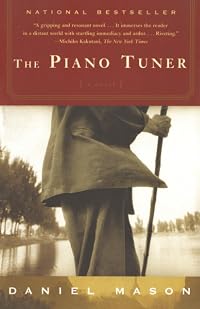
The Piano Tuner
by Daniel Mason
On This Page
Description
Fiction. Literature. Historical Fiction. HTML:An extraordinary first novel that tells the story of a British piano tuner sent deep into Burma in the nineteenth century.In October 1886, Edgar Drake receives a strange request from the British War Office: he must leave his wife and his quiet life in London to travel to the jungles of Burma, where a rare Erard grand piano is in need of repair. The piano belongs to an army surgeon-major whose unorthodox peacemaking methods—poetry, medicine, show more and now music—have brought a tentative quiet to the southern Shan States but have elicited questions from his superiors.
On his journey through Europe, the Red Sea, India, and into Burma, Edgar meets soldiers, mystics, bandits, and tale-spinners, as well as an enchanting woman as elusive as the surgeon-major. And at the doctor’s fort on a remote Burmese river, Edgar encounters a world more mysterious and dangerous than he ever could have imagined.
Sensuous, lyrical, rich with passion and adventure, this is a hypnotic tale of myth, romance, and self-discovery: an unforgettable novel. show less
Tags
Recommendations















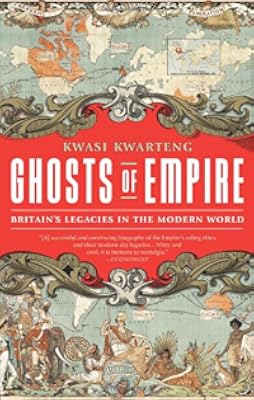
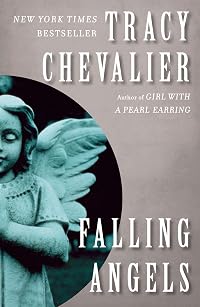
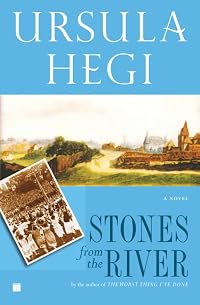
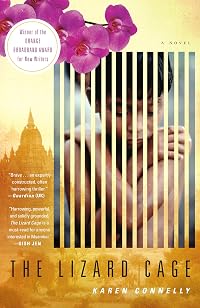
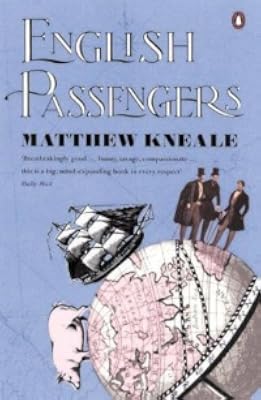
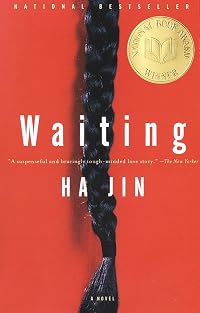

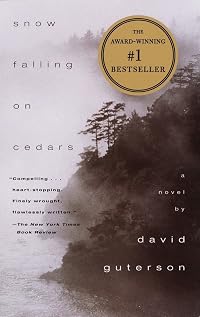
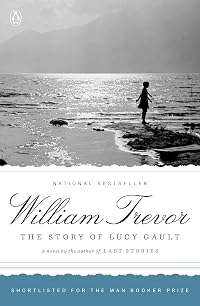







Member Recommendations
Member Reviews
The Piano Tuner- Mason
Audio performance by Simon Vance
4 stars
Music, to create harmony, must investigate discord. Plutarch
(Epigram at the beginning of the novel)
I hardly know what to think about this book, although I know I liked it.
The story builds slowly. It is an intense character study of the piano tuner, Edgar Drake, as he is pulled away from his securely routine London life. It is 1886, a time of British expansion into Burma. An eccentric army surgeon in an isolated outpost of the Burmese highlands has a piano in need of tuning. The unlikely Edgar Drake is tapped to perform this patriotic duty.
Mason pulls Edgar out of his narrow existence and exposes his character to other races and widely divergent ethnic art and music. His show more relationship to Surgeon-Major Anthony Carroll adds observational and scientific descriptions to Edgar's increasing infatuation with the exotic setting. Edgar’s internal meditations make up most of the philosophical dreamlike atmosphere of the book. It becomes more and more mysterious and surreal when Edgar finally reaches the remote Mai Lwin where he meets the Surgeon Major and finally tunes the incongruous piano.
In the end this was a melancholy story. The writing was wonderful. It made me think. I wanted to reread many of the passages over and over. There’s a message, of course.Edgar and his Surgeon Major are attempting to create peace among warring factions with modern medicine and soul stirring music. The British Army is interested in subduing and sublimating the indigenous population. It doesn’t end well. show less
Audio performance by Simon Vance
4 stars
Music, to create harmony, must investigate discord. Plutarch
(Epigram at the beginning of the novel)
I hardly know what to think about this book, although I know I liked it.
The story builds slowly. It is an intense character study of the piano tuner, Edgar Drake, as he is pulled away from his securely routine London life. It is 1886, a time of British expansion into Burma. An eccentric army surgeon in an isolated outpost of the Burmese highlands has a piano in need of tuning. The unlikely Edgar Drake is tapped to perform this patriotic duty.
Mason pulls Edgar out of his narrow existence and exposes his character to other races and widely divergent ethnic art and music. His show more relationship to Surgeon-Major Anthony Carroll adds observational and scientific descriptions to Edgar's increasing infatuation with the exotic setting. Edgar’s internal meditations make up most of the philosophical dreamlike atmosphere of the book. It becomes more and more mysterious and surreal when Edgar finally reaches the remote Mai Lwin where he meets the Surgeon Major and finally tunes the incongruous piano.
In the end this was a melancholy story. The writing was wonderful. It made me think. I wanted to reread many of the passages over and over. There’s a message, of course.
Published in 2002, The Piano Tuner is historical fiction that follows the 1886 journey of Edgar Drake, a London piano tuner, who is commissioned by the British War Office to travel to the remote village of Mae Lwin in Burma (now Myanmar) to tune a rare Erard piano belonging to eccentric British Army Surgeon-Major Anthony Carroll. Mason meticulously recreates the period, incorporating real historical events and figures. The book explores the complex relationship between the British Empire and the local populations, especially the tensions between colonial control and cultural (mis)understanding.
The novel criticizes British imperialism in Burma through Drake's evolving perspective. He begins as a reserved, methodical craftsman but show more gradually opens himself to new experiences, eventually becoming so enchanted with Burma's people, landscapes, and cultures that he finds it difficult to leave. Carroll uses Western music to connect with local people, believing it can transcend cultural differences and facilitate peace. It is particularly effective at portraying the military’s preference for the use of force versus Carroll’s desire for diplomatic persuasion.
Mason's prose is lyrical in its attention to sensory detail. His descriptions of Burma's landscapes, sounds, and cultures create a vivid, immersive reading experience. He integrates information that may not be well known (particularly in the western world) regarding the history and culture of the region, and especially the Shan resistance, without overwhelming the story. He also provides a glimpse into medical knowledge of the era and piano tuning techniques, which I found fascinating.
It is a “literary” historical fiction that is deliberate in its pacing and probably will not hold much appeal to those who want lots of action (until the ending, which provides plenty.) I really enjoy this type of slow-burn, and it seems appropriate to a story of cultural immersion. It will appeal to those who value ambiguous storylines, with plenty of room for an individual reader’s interpretation. show less
The novel criticizes British imperialism in Burma through Drake's evolving perspective. He begins as a reserved, methodical craftsman but show more gradually opens himself to new experiences, eventually becoming so enchanted with Burma's people, landscapes, and cultures that he finds it difficult to leave. Carroll uses Western music to connect with local people, believing it can transcend cultural differences and facilitate peace. It is particularly effective at portraying the military’s preference for the use of force versus Carroll’s desire for diplomatic persuasion.
Mason's prose is lyrical in its attention to sensory detail. His descriptions of Burma's landscapes, sounds, and cultures create a vivid, immersive reading experience. He integrates information that may not be well known (particularly in the western world) regarding the history and culture of the region, and especially the Shan resistance, without overwhelming the story. He also provides a glimpse into medical knowledge of the era and piano tuning techniques, which I found fascinating.
It is a “literary” historical fiction that is deliberate in its pacing and probably will not hold much appeal to those who want lots of action (until the ending, which provides plenty.) I really enjoy this type of slow-burn, and it seems appropriate to a story of cultural immersion. It will appeal to those who value ambiguous storylines, with plenty of room for an individual reader’s interpretation. show less
Edgar Drake, a reserved piano tuner from London, has been given a curious assignment by the British government. He has been hand picked to repair an ancient grand piano belonging to Surgeon-Major Anthony Carroll. Carroll, stationed in the jungles of Burma, refuses to work without the ancient piano in working order. As Edgar journeys to the Surgeon-Major he learns the man is polarizing. In some circles Carroll is a legend and is toasted as a hero; almost a god. While in other places Edgar Drake has been warned not to talk about the Surgeon-Major at all. Not one word. Everywhere Drake goes everyone knows Anthony Carroll for better or worse. [As an aside, there is a such a build-up in The Piano Tuner to meeting the man himself; it is 165 show more pages before Drake even arrives in Carroll's Mae Lwin village.]
The jungles of Burma are a far cry from the damp and stodgy London Drake is used to. Before he arrives in Mae Lwin to meet Carrol, he is taken on a tiger hunt. He sees the cruelty of the culture first hand. It was interesting to witness the personal transformation of this quiet Londoner. By the time he reaches Mae Lwin he has fallen in love. His quest doesn't seem to be about a piano anymore. show less
The jungles of Burma are a far cry from the damp and stodgy London Drake is used to. Before he arrives in Mae Lwin to meet Carrol, he is taken on a tiger hunt. He sees the cruelty of the culture first hand. It was interesting to witness the personal transformation of this quiet Londoner. By the time he reaches Mae Lwin he has fallen in love. His quest doesn't seem to be about a piano anymore. show less
Well, it's a debut novel by a very young writer (mid-20s), who was captivated by a dramatic and not well-known period of 19th-century South Asian history. He has assembled a story featuring the meek, middle-aged English piano tuner, Edgar Drake, who is abruptly sent to the jungles of Burma to tune the rare piano of a British military officer. Are you thinking [b: Heart of Darkness|4900|Heart of Darkness|Joseph Conrad|https://i.gr-assets.com/images/S/compressed.photo.goodreads.com/books/1392799983l/4900._SX50_.jpg|2877220] yet? Yeah, me too. The officer is allegedly an irreplaceable agent, assisting the British government in keeping the peace in the area and essential to the Empire's plans for dominating the region. Drake leaves behind show more his lovely wife and the dank, smoky, noisy, chilly conurbation of London and is transfixed and enchanted by the other worlds he passes through. Once in Burma, amid the riotous tropical foliage, dazzling flowers, flashing birds, delicate people (including a predictably inscrutable young Burmese woman), and the company of the stalwart, irresistible Lt-Colonel Carroll (a polymath who is an expert botanist and surgeon also endowed with impeccable musical and literary gifts), he never wants to leave. Drake takes a very long time to tune the piano, and falls under the commanding spell of Carroll, and the young lady. But things turn politically ugly in the region, and do not end well. In fact, they end so badly and unexpectedly, that the reader may find themselves thinking, "Wait? What? Where did that come from?" And be tempted to go back to see how they might have missed some important clues.
Except I didn't want to. Edgar is a pleasant chap. I liked him. I rather enjoyed some of the disquisitions on pianos, and music, on pharmacognosy. There are beautiful evocations of the place: humid, hot, atmospheric, mystical. However, Mason had not mastered history-writing. Especially early on, there are literally pages and pages of simulated military memos and letters, describing *at length* the political situation in the Burmese Shan states of the late 19th century. People repeatedly hand over letters to other people with instructions "Do not read until..." a situation requires explication. There are long conversations in which people explain things in detail to other people... the dreaded "infodump." I am going to assume that Mason chose to present dialog sometimes in standard "quotation-marks-new-line" format, and other times in a free-flowing, unpunctuated block of text. Jose Saramago does it too, and I can get with the flow, and that's just how Saramago does dialog, but Mason's strategy is unclear to me. He's not great with female characters: all two of them here are basically ciphers. (He's better in his later novel, [b: The Winter Soldier|37946436|The Winter Soldier|Daniel Mason|https://i.gr-assets.com/images/S/compressed.photo.goodreads.com/books/1521937956l/37946436._SY75_.jpg|59674256].) The complete upending of the plot at the end just felt confusing, including a weird dreamlike conversation with an unidentified "captain"... was any of it even real? Which parts? You got me. It's a bit of a mashup of Conrad, Homer's Odyssey, maybe a little Poe - as though he was trying a little too hard to cram in everything that fascinated him about the place and time, and just didn't quite know how to blend his ingredients yet.
Daniel Mason has turned around the more usual career path of fiction writers: most of us learn our craft turning out honed, compact short stories, which (if we're lucky) may get published in a collection, and *then* someone will look at our novel. Mason has done his novels first (this one in 2o02, [b: The Far Country|107318|The Far Country|Nevil Shute|https://i.gr-assets.com/images/S/compressed.photo.goodreads.com/books/1328010568l/107318._SY75_.jpg|1039505] in 2007, and The Winter Soldier in 2018), and most recently gifted us with a brilliant collection of short stories, [b: A Registry of My Passage Upon the Earth|52879778|A Registry of My Passage upon the Earth Stories|Daniel Mason|https://i.gr-assets.com/images/S/compressed.photo.goodreads.com/books/1568303602l/52879778._SX50_SY75_.jpg|73288635]. I loved every page of that last one, and gave it a 5-star review. So I will chalk the weaknesses of Piano Tuner up to youth and enthusiastic inexperience. Skip it and start with Winter Soldier.
juliestielstra.com show less
Except I didn't want to. Edgar is a pleasant chap. I liked him. I rather enjoyed some of the disquisitions on pianos, and music, on pharmacognosy. There are beautiful evocations of the place: humid, hot, atmospheric, mystical. However, Mason had not mastered history-writing. Especially early on, there are literally pages and pages of simulated military memos and letters, describing *at length* the political situation in the Burmese Shan states of the late 19th century. People repeatedly hand over letters to other people with instructions "Do not read until..." a situation requires explication. There are long conversations in which people explain things in detail to other people... the dreaded "infodump." I am going to assume that Mason chose to present dialog sometimes in standard "quotation-marks-new-line" format, and other times in a free-flowing, unpunctuated block of text. Jose Saramago does it too, and I can get with the flow, and that's just how Saramago does dialog, but Mason's strategy is unclear to me. He's not great with female characters: all two of them here are basically ciphers. (He's better in his later novel, [b: The Winter Soldier|37946436|The Winter Soldier|Daniel Mason|https://i.gr-assets.com/images/S/compressed.photo.goodreads.com/books/1521937956l/37946436._SY75_.jpg|59674256].) The complete upending of the plot at the end just felt confusing, including a weird dreamlike conversation with an unidentified "captain"... was any of it even real? Which parts? You got me. It's a bit of a mashup of Conrad, Homer's Odyssey, maybe a little Poe - as though he was trying a little too hard to cram in everything that fascinated him about the place and time, and just didn't quite know how to blend his ingredients yet.
Daniel Mason has turned around the more usual career path of fiction writers: most of us learn our craft turning out honed, compact short stories, which (if we're lucky) may get published in a collection, and *then* someone will look at our novel. Mason has done his novels first (this one in 2o02, [b: The Far Country|107318|The Far Country|Nevil Shute|https://i.gr-assets.com/images/S/compressed.photo.goodreads.com/books/1328010568l/107318._SY75_.jpg|1039505] in 2007, and The Winter Soldier in 2018), and most recently gifted us with a brilliant collection of short stories, [b: A Registry of My Passage Upon the Earth|52879778|A Registry of My Passage upon the Earth Stories|Daniel Mason|https://i.gr-assets.com/images/S/compressed.photo.goodreads.com/books/1568303602l/52879778._SX50_SY75_.jpg|73288635]. I loved every page of that last one, and gave it a 5-star review. So I will chalk the weaknesses of Piano Tuner up to youth and enthusiastic inexperience. Skip it and start with Winter Soldier.
juliestielstra.com show less
On a misty London afternoon in 1886, piano tuner Edgar Drake receives a strange request from the War Office: he must leave his wife, and his quiet life in London, to travel to the jungles of Burma to tune a rare Erard grand piano. The piano belongs to Surgeon-Major Anthony Carroll, an enigmatic British officer, whose success at making peace in the war-torn Shan States is legendary, but whose unorthodox methods have begun to attract suspicion. So begins the journey of the soft-spoken Edgar across Europe, the Red Sea, India, Burma, nd at last into the remote highlands of the Shan States. En route he is entranced by the Doctor's letters and by the shifting cast of tale-spinners, soldiers and thieves who cross his path. As his captivation show more grows, however, so do his questions: about the Doctor's true motives, about an enchanting and elusive woman who travels with him into the jungle, about why he came. And, ultimately, whether he will ever be able to return home unchanged to the woman who awaits him there... Sensuous and lyrical, rich with passion and adventure, The Piano Tuner is a hypnotic tale of myth, romance and self-discovery. It is an unforgettable and haunting novel.[return][return]Lovely languague, good story, ending so-so show less
I loved this book. I approached it without expectations and, maybe, because of it I was so nicely surprised by its poetic beauty. This is an amazing accomplishment for a first time author. Sometimes a book will come along in which we immerse ourselves so totally as to be taken away into its realm/time/space. I think I read fiction so eagerly in a constant search for this experience, because this feeling is as additive as it is evasive: that primal pleasure of reading.
This is a complex story. Edgar Drake, a middle-aged piano tuner is summoned to go to Colonial British Burma to work on a classic piano in a remote outpost.
…I have seen a world that is different, yet I have not began to understand it. Coming here has created a strange show more feeling of emptiness in me that I didn’t know I had, and I don’t know whether heading into the jungle will fill it, or tear it open further. He writes to his wife once he arrives in Mandalay and series of political events threaten to stop him from finalizing his journey.
That the exotic landscape and its dream like quality would affect Edgar Drake and send him into a journey of self-discovery is the obvious aspect of this story. But that the author manages so skillfully to woven historical and political fragments, music and art into the story’s background, and that the insidious nature of colonialism, with its cultural arrogance, is so well portrayed without becoming contrived; these are the great surprises of this book.
Reading other reviews of this book here on goodreads I became aware of the parallels between it and Joseph Conrad’s Heart of Darkness, which I have not yet read, but have now added to my wish list. I hope that it will also take me to that place of no-place that this book has taken me. show less
This is a complex story. Edgar Drake, a middle-aged piano tuner is summoned to go to Colonial British Burma to work on a classic piano in a remote outpost.
…I have seen a world that is different, yet I have not began to understand it. Coming here has created a strange show more feeling of emptiness in me that I didn’t know I had, and I don’t know whether heading into the jungle will fill it, or tear it open further. He writes to his wife once he arrives in Mandalay and series of political events threaten to stop him from finalizing his journey.
That the exotic landscape and its dream like quality would affect Edgar Drake and send him into a journey of self-discovery is the obvious aspect of this story. But that the author manages so skillfully to woven historical and political fragments, music and art into the story’s background, and that the insidious nature of colonialism, with its cultural arrogance, is so well portrayed without becoming contrived; these are the great surprises of this book.
Reading other reviews of this book here on goodreads I became aware of the parallels between it and Joseph Conrad’s Heart of Darkness, which I have not yet read, but have now added to my wish list. I hope that it will also take me to that place of no-place that this book has taken me. show less
DM writes so well! His depiction of place is stellar. I knew nothing about the historical context of this story and appreciated this way of expanding my knowledge of British colonialism. How I long for — in vain I’m sure — us humans to stop our cruelty towards and subjugation of each other. It becomes so easy for us when we label the targets of our animosity as “other” or “savage” or “primitive” or “terrorist” or whatever label allows us to distance ourselves enough to feel justified and morally righteous about our beliefs and actions. I feel sad and preoccupied with this story.
Members
- Recently Added By
Lists

Historical Fiction
889 works; 91 members

Best 21st Century Books (So Far)
670 works; 86 members

Asia
178 works; 7 members

A Novel Cure
742 works; 23 members
Author Information

8+ Works 6,987 Members
Awards and Honors
Series
Belongs to Publisher Series
Empúries Narrativa (207)
Common Knowledge
- Canonical title
- The Piano Tuner
- Original title
- The Piano Tuner
- Original publication date
- 2002
- People/Characters
- Edgar Drake
- Important places
- Burma (Myanmar)
- Epigraph*
- "Brothers," I said, "o you who have crossed
a hundred thousand dangers, reach the west
to this brief waking time that is left
unto your senses, you must not deny
experience of that which lies beyond
the sun, an... (show all)d all the world that is unpeopled."
Dante, Inferno, canto XXVI
Music, to create harmony, must investigate dischord.
Plutarch - Dedication
- For my grandmother, Halina
- First words
- In the fleeting seconds of final memory, the image that will become Burma is the sun and a woman's parasol.
- Last words
- (Click to show. Warning: May contain spoilers.)It was, however, terribly out of tune.
*Some information comes from Common Knowledge in other languages. Click "Edit" for more information.
Classifications
Statistics
- Members
- 3,176
- Popularity
- 5,461
- Reviews
- 90
- Rating
- (3.56)
- Languages
- 15 — Catalan, Chinese, Danish, Dutch, English, Finnish, French, German, Italian, Lithuanian, Norwegian (Bokmål), Polish, Portuguese, Spanish, Swedish
- Media
- Paper, Audiobook, Ebook
- ISBNs
- 59
- ASINs
- 17