
Harriet Doerr (1910–2002)
Author of Stones for Ibarra
About the Author
Harriet Doerr was born Harriet Green Huntington on April 8, 1910 in Pasadena, California. She attended Smith College from 1927-1928 and Stanford University from 1928-1930, but left college when she got married. She received a B.A. from Stanford University in 1977. She wrote her first novel, Stones show more for Ibarra, at the age of 73. It won the American Book Award for first fiction and was made into a television movie starring Glenn Close in 1988. Her other works include Consider This, Señora, and The Tiger in the Grass: Stories and Other Inventions. Her work also appeared in several anthologies and periodicals. She died on November 24, 2002 at the age of 92. (Bowker Author Biography) show less
Works by Harriet Doerr
Ibarran kivet 1 copy
Associated Works
Tagged
Common Knowledge
- Canonical name
- Doerr, Harriet
- Birthdate
- 1910-04-08
- Date of death
- 2002-11-24
- Gender
- female
- Education
- Stanford University (European History, 1977)
- Occupations
- writer
- Short biography
- Born and raised in California, Harriet Green Huntington attended Stanford University but left after her junior year to marry Albert Doerr. The couple moved to Mexico in the late 1950s. After her husband's death, Harriet Doerr returned to California and completed her BA degree at Stanford. She began writing and was soon publishing short stories.
Her first novel Stones for Ibarra, was published in 1984, when Ms. Doerr was 74 years old, and won the National Book Award for first work of fiction. Her works were heavily influenced by her years of living in Mexico. - Nationality
- USA
- Birthplace
- Pasadena, California, USA
- Places of residence
- Pasadena, California, USA
Mexico - Place of death
- Pasadena, California, USA
- Associated Place (for map)
- Pasadena, California, USA
Members
Reviews

Wait
I read this semi-autobiographical novel a few years after it was published in 1984 and was stunned by its breath-taking prose and sensitive fatality of the story. It was Doerr's first published work and received a National Book Award. She was 74 when it was published.
Since then, after only reading it the once, I've said countless times it was my all-time favorite book.
In the novel, two North Americans move to a small village in Mexico to re-open an abandoned copper mine. Six years show more later, Sara Everton's husband, Richard, dies of leukemia. The book is about those six years of living, of knowing, of waiting, and of Sara never reconciling that it would happen.
Now I finally read it again. I'm no longer in my early 30s. I'm in my mid 60s now. In those intervening decades, I've lost the people who were my roots, knew me best, and are my faithful shadows now. I never really believed they would die. Even today I still wish each would have waited longer, until I was ready. There are things I want to ask them. Things I want to tell them.
This time reading, the novel was just as lyrical, just as sensitive, just as breath-taking. This time, it was also newly crushing.
Doerr, herself, is dead now. She wrote only 3 books. I have one left to read, another novel, Consider This, Señora. What am I saving it for? No, what am I waiting for?
"What if he dies before I get back, before I can tell him? Tell him what? she asked herself. Tell him about the dog, the moon, the flowers, the lost streets of Viudas. Tell him that Dr. de le Luna is a specialist in his disease. Tell him to wait." show less
I read this semi-autobiographical novel a few years after it was published in 1984 and was stunned by its breath-taking prose and sensitive fatality of the story. It was Doerr's first published work and received a National Book Award. She was 74 when it was published.
Since then, after only reading it the once, I've said countless times it was my all-time favorite book.
In the novel, two North Americans move to a small village in Mexico to re-open an abandoned copper mine. Six years show more later, Sara Everton's husband, Richard, dies of leukemia. The book is about those six years of living, of knowing, of waiting, and of Sara never reconciling that it would happen.
Now I finally read it again. I'm no longer in my early 30s. I'm in my mid 60s now. In those intervening decades, I've lost the people who were my roots, knew me best, and are my faithful shadows now. I never really believed they would die. Even today I still wish each would have waited longer, until I was ready. There are things I want to ask them. Things I want to tell them.
This time reading, the novel was just as lyrical, just as sensitive, just as breath-taking. This time, it was also newly crushing.
Doerr, herself, is dead now. She wrote only 3 books. I have one left to read, another novel, Consider This, Señora. What am I saving it for? No, what am I waiting for?
"What if he dies before I get back, before I can tell him? Tell him what? she asked herself. Tell him about the dog, the moon, the flowers, the lost streets of Viudas. Tell him that Dr. de le Luna is a specialist in his disease. Tell him to wait." show less
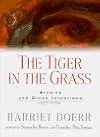
I'm already sad that I have only one more Doerr remaining to read. There are just three titles. I first fell in love with her writing in Stones for Ibarra which I've often said is my all time favorite book. Then came Consider This, Señora (the one remaining to read), and this title, the last book she would write.
Her very limited canon is because, in spite of having a very long life, dying at 92 years old, she only began writing when she was in her late sixties.
In her long life, she must show more have been collecting, savoring, and "taking heaven pictures" like a friend of mine once called moments captured on the film only in your mind. Doerr described her heaven pictures like this in a passage about a sunset after a day at the beach with her young children and young husband, "exerting the full force of my will" she would "hold up the sun, hold back the wave, long enough for me to paint and frame the low tide."
I forgive this collection of short stories -- some autobiographical, some not, some better than others, some out of step or odd to be included with the group -- because she knew she was aging, going blind, and must have known this would be her last collection.
But an uneven collection by Doerr is still something splendid! She can write like no other writer I've read. She indeed does paint and frame. It is immersive to read her, especially if you read her slow, like I did intentionally. Her use of language is as careful as the best poetry, is sparce and sharp. With one sentence and with one phrase in that sentence, you know the resentments, the laments, the long history of moments of happiness or unhappiness of a character. Doerr grants you room to think for yourself, to be still in a place you've never been, to grow to love people who you'll never meet or have never existed. In between her passages, you love your own life because it is yours.
I couldn't be happier this was the first book I selected for my 2024 reading adventures. show less
Her very limited canon is because, in spite of having a very long life, dying at 92 years old, she only began writing when she was in her late sixties.
In her long life, she must show more have been collecting, savoring, and "taking heaven pictures" like a friend of mine once called moments captured on the film only in your mind. Doerr described her heaven pictures like this in a passage about a sunset after a day at the beach with her young children and young husband, "exerting the full force of my will" she would "hold up the sun, hold back the wave, long enough for me to paint and frame the low tide."
I forgive this collection of short stories -- some autobiographical, some not, some better than others, some out of step or odd to be included with the group -- because she knew she was aging, going blind, and must have known this would be her last collection.
But an uneven collection by Doerr is still something splendid! She can write like no other writer I've read. She indeed does paint and frame. It is immersive to read her, especially if you read her slow, like I did intentionally. Her use of language is as careful as the best poetry, is sparce and sharp. With one sentence and with one phrase in that sentence, you know the resentments, the laments, the long history of moments of happiness or unhappiness of a character. Doerr grants you room to think for yourself, to be still in a place you've never been, to grow to love people who you'll never meet or have never existed. In between her passages, you love your own life because it is yours.
I couldn't be happier this was the first book I selected for my 2024 reading adventures. show less

Harriet Door captured the perfect balance of complexity and simplicity with her first novel, [Stones for Ibarra]. Her effortless and lyrical story cuts deep, matching the precarious landscape where her characters reside.
Richard and Sara Riverton abandon their comfortable life in San Franciso for an abandoned copper mine in the mountains of Mexico. Their American habits and beliefs don’t fit into the traditional, Catholic culture of Ibarra. But, largely because they have given the town an show more economic boost, they are cautiously adopted. Doerr recounts the Riverton’s six year stay in Ibarra, focusing largely on the town’s other eccentric inhabitants and the nature of life in the perilous desert mountain town.
Doerr’s connection to the people and land in such a forgotten and hard place is the real wonder of [Stones for Ibarra]. The description of the harsh, gritty land of Ibarra resonated for me, a desert dweller myself.
“…witness a recurring Mexican phenomenon: the abrupt appearance of human life in an empty landscape.”
“This air is affecting us all … everything is too intense, too quick, and too perilous.”
“(houses) dissolving with the rain and scattering with the rain.”
But what really captured me was Doerr’s simple writing. There is nothing expansive about Doerr’s prose, allowing its plainness to take root and flower. She infuses each of her characters and stories with such complexity with such spare language that you don’t notice you’re reading. It’s like a fireside chat with a lover about the day’s events.
Bottom Line: Plain and melodic story; a simple tale with its roots in a harsh landscape.
5 bones!!!!!
An All-Time Favorite show less
Richard and Sara Riverton abandon their comfortable life in San Franciso for an abandoned copper mine in the mountains of Mexico. Their American habits and beliefs don’t fit into the traditional, Catholic culture of Ibarra. But, largely because they have given the town an show more economic boost, they are cautiously adopted. Doerr recounts the Riverton’s six year stay in Ibarra, focusing largely on the town’s other eccentric inhabitants and the nature of life in the perilous desert mountain town.
Doerr’s connection to the people and land in such a forgotten and hard place is the real wonder of [Stones for Ibarra]. The description of the harsh, gritty land of Ibarra resonated for me, a desert dweller myself.
“…witness a recurring Mexican phenomenon: the abrupt appearance of human life in an empty landscape.”
“This air is affecting us all … everything is too intense, too quick, and too perilous.”
“(houses) dissolving with the rain and scattering with the rain.”
But what really captured me was Doerr’s simple writing. There is nothing expansive about Doerr’s prose, allowing its plainness to take root and flower. She infuses each of her characters and stories with such complexity with such spare language that you don’t notice you’re reading. It’s like a fireside chat with a lover about the day’s events.
Bottom Line: Plain and melodic story; a simple tale with its roots in a harsh landscape.
5 bones!!!!!
An All-Time Favorite show less
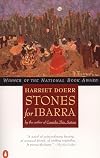
Harriet Doerr published her first novel, Stones for Ibarra, at the age of 73. An inspiring accomplishment. It also may help explain the charming, quiet quality of her storytelling. A young American couple, Richard and Sara Everton, decides in 1960 or so to move from California to a Mexican village and re-open the mining operation abandoned by the husband's family during the 1910 revolution. They mortgage their house, and cash in, leverage and borrow to the fullest extent, despite the fears show more of family and friends.
"Every day for a month Richard has reminded Sara, 'We mustn't expect too much.' And each time his wife has answered, 'No'. But the Evertons expect too much. They have experienced the terrible persuasion of a great-aunt's recollections and adopted them as their own. They have not considered that memories are like corks left out of bottles. They swell. They no longer fit." The grandfather's house is more rundown than they expect, the journey to find it tougher than anticipated. But they settle in quickly, and the villagers take to them. The Evertons bring jobs and respect, along with their peculiar American ways.
There's a beautiful passage in which the villagers finally find the word to describe the couple, mediodesorientado, or half-disoriented, like the joyful child who has been spun around many times and blindly strikes at the pinata, making everyone laugh.
As we learn early on, Richard has been diagnosed with a seemingly incurable disease, and may only have six years to live. The book affectionately describes their time together in Ibarra, much of it through the eyes of Sara, as she learns Spanish, becomes enmeshed in the community, and deals with her husband's condition. At the same time, he and the locals work to make the mine prosper and the community thrive. The villagers' stories supply many of the book's attractions: the priest who keeps being sent comically ill-suited assistants, the entrepreneur dedicated to setting up a taxi service between villages, the woman who helps at the house who is determined to repel sickness and bad luck through her folk knowledge, and many others.
The villagers try to help the Evertons with witchcraft and herbs, and stoically resist concepts of modern medicine. Staunchly Catholic, they, including the local priest, nonetheless accept the Evertons' agnosticism. The couple's kindness and friendliness, and positive effect on the community, outweigh their shortcomings. Sara learns lovely and increasingly creative stories from the nun teaching her Spanish, which she brings home to a disbelieving Richard. They light candles, sit by the fire, and share their day together. This is a graceful, charming book, about transplanted Americans and their effect on closely observed lives in a small Mexican village. show less
"Every day for a month Richard has reminded Sara, 'We mustn't expect too much.' And each time his wife has answered, 'No'. But the Evertons expect too much. They have experienced the terrible persuasion of a great-aunt's recollections and adopted them as their own. They have not considered that memories are like corks left out of bottles. They swell. They no longer fit." The grandfather's house is more rundown than they expect, the journey to find it tougher than anticipated. But they settle in quickly, and the villagers take to them. The Evertons bring jobs and respect, along with their peculiar American ways.
There's a beautiful passage in which the villagers finally find the word to describe the couple, mediodesorientado, or half-disoriented, like the joyful child who has been spun around many times and blindly strikes at the pinata, making everyone laugh.
As we learn early on, Richard has been diagnosed with a seemingly incurable disease, and may only have six years to live. The book affectionately describes their time together in Ibarra, much of it through the eyes of Sara, as she learns Spanish, becomes enmeshed in the community, and deals with her husband's condition. At the same time, he and the locals work to make the mine prosper and the community thrive. The villagers' stories supply many of the book's attractions: the priest who keeps being sent comically ill-suited assistants, the entrepreneur dedicated to setting up a taxi service between villages, the woman who helps at the house who is determined to repel sickness and bad luck through her folk knowledge, and many others.
The villagers try to help the Evertons with witchcraft and herbs, and stoically resist concepts of modern medicine. Staunchly Catholic, they, including the local priest, nonetheless accept the Evertons' agnosticism. The couple's kindness and friendliness, and positive effect on the community, outweigh their shortcomings. Sara learns lovely and increasingly creative stories from the nun teaching her Spanish, which she brings home to a disbelieving Richard. They light candles, sit by the fire, and share their day together. This is a graceful, charming book, about transplanted Americans and their effect on closely observed lives in a small Mexican village. show less
Lists
Awards


You May Also Like


Associated Authors
Statistics
- Works
- 7
- Also by
- 5
- Members
- 1,631
- Popularity
- #15,754
- Rating
- 4.0
- Reviews
- 27
- ISBNs
- 39
- Languages
- 4
- Favorited
- 8