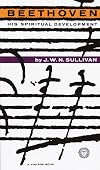
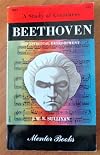
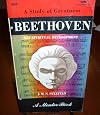
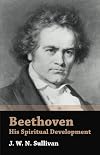
Beethoven: His Spiritual Development
by J. W. N. Sullivan
On This Page
Description
From the Author's Preface: "I believe that in his greatest music Beethoven was primarily concerned to express his personal vision of life. This vision was, of course, the product of his character and his experience. Beethoven the man and Beethoven the composer are not two unconnected entities, and the known history of the man may be used to throw light upon the character of his music." Clifton Fadiman has said of this classic study: "It is the most interesting book on music that I have ever show more read and it is not written for musical experts; rather for people like myself who like to listen to music but can boast no special knowledge of it. It deals not only with music, on which I do not speak with authority, but with human life in general, about which you and I speak with authority every day of our lives." show lessTags
Recommendations




























Member Reviews
Great men, especially creative artists whose work lives after them, engage people's imagination for centuries. Beethoven, as man and composer, has inspired innumerable books both by his contemporaries and later writers, and it is proof of his endlessly fascinating, controversial nature that they all throw a different light on some aspect of his life and work. Since J.W.N. Sullivan wrote his book in 1927, much new information about Beethoven, his character, his illnesses, and his relationships has come to light, but it is still a valid contribution to the literature on the composer. Sullivan's basic theory is that Beethoven's greatness lies in his extraordinary perceptions, his heightened experiences and "states of consciousness," and show more his ability to organize and synthesize these into a musical expression of a "view of life." He asserts that Beethoven's initial despairing, then defiant struggle against his suffering--especially his deafness and resulting isolation--gives his middle-period works their heroism, and that his ultimate acceptance of it as necessary to his creativity marks the peak of his "spirituality" and gives his latest works their unparalleled sublimity.
Like many biographies, the book reveals more about the author than the subject. Sullivan, who is not a musician, offers some interesting, if sometimes extravagantly extramusical, analyses of Beethoven's works (though elsewhere he decries injecting "meaning" into music). He sees Beethoven's late fugues as outbursts of "blind and desperate energy," another battle with hostile fate; many musicians see them as another battle with counterpoint. He also makes subjective, high-handed value judgments: he detests Wagner and dismisses Bach as too religious, while Haydn and Mozart are too shallow to equal Beethoven's struggle-generated "spirituality." The book also brings up questions about beauty and greatness in art, the relationship between moral character and genius, and the impact of a man's personal experiences upon his creativity--all age-old but forever timely. --Edith Eisler
Review
From the Author's Preface:
"I believe that in his greatest music Beethoven was primarily concerned to express his personal vision of life. This vision was, of course, the product of his character and his experience. Beethoven the man and Beethoven the composer are not two unconnected entities, and the known history of the man may be used to throw light upon the character of his music."
Clifton Fadiman has said of this classic study:
"It is the most interesting book on music that I have ever read... read more
Book Description
1927. The author discusses Beethoven solely through his music as a record of his spiritual development. The author believes Beethoven's greatest music was primarily an expression of his personal vision of life. This vision was the product of his character and experience. The text is divided into two sections: the Nature of Music, and Beethoven's Spiritual Development. show less
Like many biographies, the book reveals more about the author than the subject. Sullivan, who is not a musician, offers some interesting, if sometimes extravagantly extramusical, analyses of Beethoven's works (though elsewhere he decries injecting "meaning" into music). He sees Beethoven's late fugues as outbursts of "blind and desperate energy," another battle with hostile fate; many musicians see them as another battle with counterpoint. He also makes subjective, high-handed value judgments: he detests Wagner and dismisses Bach as too religious, while Haydn and Mozart are too shallow to equal Beethoven's struggle-generated "spirituality." The book also brings up questions about beauty and greatness in art, the relationship between moral character and genius, and the impact of a man's personal experiences upon his creativity--all age-old but forever timely. --Edith Eisler
Review
From the Author's Preface:
"I believe that in his greatest music Beethoven was primarily concerned to express his personal vision of life. This vision was, of course, the product of his character and his experience. Beethoven the man and Beethoven the composer are not two unconnected entities, and the known history of the man may be used to throw light upon the character of his music."
Clifton Fadiman has said of this classic study:
"It is the most interesting book on music that I have ever read... read more
Book Description
1927. The author discusses Beethoven solely through his music as a record of his spiritual development. The author believes Beethoven's greatest music was primarily an expression of his personal vision of life. This vision was the product of his character and experience. The text is divided into two sections: the Nature of Music, and Beethoven's Spiritual Development. show less
Ratings
Members
- Recently Added By
Author Information

26+ Works 551 Members
Series
Belongs to Publisher Series
Common Knowledge
- Original publication date
- 1927
- People/Characters
- Ludwig van Beethoven
Classifications
Statistics
- Members
- 265
- Popularity
- 121,921
- Reviews
- 1
- Rating
- (4.00)
- Languages
- English, Spanish
- Media
- Paper, Ebook
- ISBNs
- 12
- ASINs
- 18