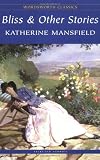
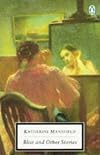
Bliss and Other Stories
by Katherine Mansfield
On This Page
Description
One of Katherine Mansfields finest short stories, Bliss, introduces us to Bertha, who experiences a sense of rapture as she reflects on her life. On her walk home one day, she is overwhelmed by a sense of bliss and contentment. However, her joy later turns to disappointment as she discovers her husband is having an affair with her new friend Pearl. Katherine Mansfield became well-known for her focus on psychological conflicts and complex characters; and Bliss displays these qualities show more brilliantly, exploring themes of marriage, adultery and duplicity. This set also contains five other short stories by Katherine Mansfield - Mr Reginald Peacock's Day, Pictures, The Little Governess, Feuille D'Album and A Dill Pickle. show lessTags
Recommendations





















Member Recommendations


Member Reviews
Bliss was Mansfield's second short story collection. The most conspicuous story in the book is not "Bliss", but "Prelude", a long piece about a middle-class New Zealand family, obviously modelled on Mansfield's own, moving to a new out-of-town house with a big garden. Apart from being rather longer than most, this has pretty much all the hallmarks of a Mansfield story. We are thrown in at the deep end without any explanation of who is who or what's happening, so that we have to work it out for ourselves from a series of little clues, and will make a few false assumptions before we get it all straight. Nothing obviously important happens, and the story stops as inexplicably as it started, with the lid of a jar falling off a table and not show more breaking. But in the meantime, we have somehow or other discovered a surprising amount about the members of the family and what is going on in their minds, information that would have made all their lives much easier if they had been able to express it and exchange it with each other. It's a story about things that mostly don't happen, connections that are not made, feelings that can't be shared. (An earlier version of this story was later published posthumously as "The Aloe".)
The title story, "Bliss", the one Virginia Woolf threw down with the expression "She's done for!" the first time she read it ("...the whole conception is poor, cheap, not the vision, however imperfect, of an interesting mind. She writes badly too."), is perhaps the most direct in the book - Bertha is a young housewife who's feeling inexplicably much happier than is justified by being about to host a dinner-party. She discovers over the tomato soup that she's fallen desperately and completely in love - without realising it - with one of her guests. They share a perfect moment together over the pear tree, then Mansfield disillusions her horribly, and brings the story to a rapid halt before we've quite decided in which way everything is going to continue badly - for continue badly it must.
The remaining stories in the collection all seem to touch on similar themes of people being stuck in situations where they are permanently at cross-purposes, doing some kind of slow, painful harm through their inability to be open and honest about something. Sometimes it's a marriage, sometimes employer and employee, sometimes a group of people trapped in the same social convention. The mood is steered by important little details of setting, speech, weather, plants (Mansfield always brings significant plants in somewhere), but there's always something nasty for us to discover about human nature, and it's usually something that we wouldn't have discovered without Mansfield to lead us to it. show less
The title story, "Bliss", the one Virginia Woolf threw down with the expression "She's done for!" the first time she read it ("...the whole conception is poor, cheap, not the vision, however imperfect, of an interesting mind. She writes badly too."), is perhaps the most direct in the book - Bertha is a young housewife who's feeling inexplicably much happier than is justified by being about to host a dinner-party. She discovers over the tomato soup that she's fallen desperately and completely in love - without realising it - with one of her guests. They share a perfect moment together over the pear tree, then Mansfield disillusions her horribly, and brings the story to a rapid halt before we've quite decided in which way everything is going to continue badly - for continue badly it must.
The remaining stories in the collection all seem to touch on similar themes of people being stuck in situations where they are permanently at cross-purposes, doing some kind of slow, painful harm through their inability to be open and honest about something. Sometimes it's a marriage, sometimes employer and employee, sometimes a group of people trapped in the same social convention. The mood is steered by important little details of setting, speech, weather, plants (Mansfield always brings significant plants in somewhere), but there's always something nasty for us to discover about human nature, and it's usually something that we wouldn't have discovered without Mansfield to lead us to it. show less
The opening story, about Lottie and Kezia and family, was a good introduction for me because the only Mansfield I'd read previously was "The Doll's House" in high school. She writes wonderfully character-focused stories, whether these are ordinary or extraordinary characters, children or adults, lovely characters or characters with some petty nasty flaw: they're all intensely real.
"Bliss" itself was wonderful -- the emotion in it, and the constraint around it, and then the ending... And "The Little Governess" who I just want to hug.
Some I had trouble following -- it didn't help that the NZETC epub tended to repeat chunks of pages and sometimes paragraphed strangely, but there were some stories (especially "The Escape") where the focus show more moved from one character to another just when I wasn't expecting it to; and then I just couldn't grasp the nub of "The Wind Blows". show less
"Bliss" itself was wonderful -- the emotion in it, and the constraint around it, and then the ending... And "The Little Governess" who I just want to hug.
Some I had trouble following -- it didn't help that the NZETC epub tended to repeat chunks of pages and sometimes paragraphed strangely, but there were some stories (especially "The Escape") where the focus show more moved from one character to another just when I wasn't expecting it to; and then I just couldn't grasp the nub of "The Wind Blows". show less
I firmly believe that Katherine Mansfield was truly a master of short fiction that I have yet to see matched. I was extremely excited to find this copy "in the wild" (a.k.a. used book store) as her work tends to go through phases of being hailed by authors followed by periods of virtual anonymity.
“What can you do if you are thirty and, turning the corner of your own street, you are overcome, suddenly, by a feeling of bliss - absolute bliss! - as though you’d suddenly swallowed a bright piece of that late afternoon sun and it burned in your bosom, sending out a little shower of sparks into every particle, into every finger and toe?...”
It sounds horribly twee, doesn’t it? Stick with it. What sounds too good to be true is bound to be so.
Bertha Young (nominative determinism in the surname?) comes home to prepare for a dinner party. The first hint of something less than perfect is, as often with Mansfield, indicated by clothes:
“Bertha threw off her coat; she could not bear the tight clasp of it another moment.”
She goes show more to the nursery, but the nurse scolds her for coming at the wrong moment. It’s her own baby!
“She was young. Harry and she were as much in love as ever, and they got on together splendidly and were really good pals. She had an adorable baby. They didn’t have to worry about money. They had this absolutely satisfactory house and garden. And friends - modern, thrilling friends, writers and painters and poets or people keen on social questions - just the kind of friends they wanted. And then there were books, and there was music, and she had found a wonderful little dressmaker, and they were going abroad in the summer, and their new cook made the most superb omelettes…”
Not quite bliss, then.
Back to dinner party prep. The guests include:
“A ‘find’ of Bertha’s called Pearl Fulton… Bertha had fallen in love with her, as she always did fall in love with beautiful women who had something strange about them.”
They gaze out to the garden:
“At the far end, against the wall, there was a tall, slender pear tree in fullest, richest bloom; it stood perfect, as though becalmed against the jade-green sky.”
The symbolism is explicit:
“She seemed to see on her eyelids the lovely pear tree with its wide open blossoms as a symbol of her own life.”
Image: “Blossoming Pear Tree” by Van Gogh (Source)
Pearl and a pear tree - nominative determinism again?
From comfortable contentment, Mansfield, as so often, takes the story in another direction.
More Mansfield
• The Garden Party. See my review HERE. It explores manners, class, and expectations, singed by death.
• The Daughters of the Late Colonel. See my review HERE. It explores manners, class, and expectations, singed by death.
• Miss Brill. See my review HERE. It’s a very short vignette of loneliness.
• You can read this story, and others, HERE.
Pram in the hall
This story has the line:
“‘This is a sad, sad fall!’ said Mug, pausing in front of Little B’s perambulator. ‘When the perambulator comes into the hall - ‘ and he waved the rest of the quotation away.”
The idea is invariably credited to Cyril Connolly, as: “There is no more sombre enemy of good art than the pram in the hall.” But he was born in 1903, and this story was published in 1920, and Mansfield suggests it was already a quotation. show less
It sounds horribly twee, doesn’t it? Stick with it. What sounds too good to be true is bound to be so.
Bertha Young (nominative determinism in the surname?) comes home to prepare for a dinner party. The first hint of something less than perfect is, as often with Mansfield, indicated by clothes:
“Bertha threw off her coat; she could not bear the tight clasp of it another moment.”
She goes show more to the nursery, but the nurse scolds her for coming at the wrong moment. It’s her own baby!
“She was young. Harry and she were as much in love as ever, and they got on together splendidly and were really good pals. She had an adorable baby. They didn’t have to worry about money. They had this absolutely satisfactory house and garden. And friends - modern, thrilling friends, writers and painters and poets or people keen on social questions - just the kind of friends they wanted. And then there were books, and there was music, and she had found a wonderful little dressmaker, and they were going abroad in the summer, and their new cook made the most superb omelettes…”
Not quite bliss, then.
Back to dinner party prep. The guests include:
“A ‘find’ of Bertha’s called Pearl Fulton… Bertha had fallen in love with her, as she always did fall in love with beautiful women who had something strange about them.”
They gaze out to the garden:
“At the far end, against the wall, there was a tall, slender pear tree in fullest, richest bloom; it stood perfect, as though becalmed against the jade-green sky.”
The symbolism is explicit:
“She seemed to see on her eyelids the lovely pear tree with its wide open blossoms as a symbol of her own life.”
Image: “Blossoming Pear Tree” by Van Gogh (Source)
Pearl and a pear tree - nominative determinism again?
From comfortable contentment, Mansfield, as so often, takes the story in another direction.
More Mansfield
• The Garden Party. See my review HERE. It explores manners, class, and expectations, singed by death.
• The Daughters of the Late Colonel. See my review HERE. It explores manners, class, and expectations, singed by death.
• Miss Brill. See my review HERE. It’s a very short vignette of loneliness.
• You can read this story, and others, HERE.
Pram in the hall
This story has the line:
“‘This is a sad, sad fall!’ said Mug, pausing in front of Little B’s perambulator. ‘When the perambulator comes into the hall - ‘ and he waved the rest of the quotation away.”
The idea is invariably credited to Cyril Connolly, as: “There is no more sombre enemy of good art than the pram in the hall.” But he was born in 1903, and this story was published in 1920, and Mansfield suggests it was already a quotation. show less
Doubtless the precursor to Modernism as we know it, Mansfield effortlessly melds the schizophrenia of the Gothic with the disjointed imagery and stream of consciousness description of Modernism. Mansfield endows her foils with hidden agendas and her narrators with an uncanny paranoia and fear of the unknown. Several of the stories herein feature children, but often presented starkly, as if through the lens of the governess or coquette. A few of the characters espouse lesbian and bi traits while simultaneously neutered and crushed under the cloister-like oppression of reality and the masculine dominated 19th Century repression. These stories are built not on plot or characterization, but instead on mood and the half-remembered feelings show more about seemingly inconsequential past events. show less
I loved these stories and characters, so much so that I wished there was a complete novel for each story.
This was particularly true of the first one, about the family moving to a new house. The people were all so richly portrayed and so interesting that I really wanted to know what happened next to all of them. I was quite startled when this story ended.
Each of the stories is really about quite simple situations that become completely fascinating through the skill of this writer.
This was particularly true of the first one, about the family moving to a new house. The people were all so richly portrayed and so interesting that I really wanted to know what happened next to all of them. I was quite startled when this story ended.
Each of the stories is really about quite simple situations that become completely fascinating through the skill of this writer.
4½ stars - I think I liked these stories even more than The Garden Party and Other Stories. Mansfield's use of color in her descriptions reminds me a bit of Willa Cather although her people are quite different. The title seems ironic since most of the stories described less than perfect relationships...
Members
- Recently Added By
Lists

Female Author
1,234 works; 67 members

Short Story Collections and Anthologies
261 works; 42 members

Favorite Books from the 1920s
33 works; 3 members

501 Must-Read Books
529 works; 72 members

Favourite Short Stories
153 works; 9 members
Reading LIst
648 works; 1 member
Talk Discussions
Past Discussions
75 Books Challenge for 2015 : ANZAC Author Reading Challenge 2015-Christina Stead (AUS) & Katherine Mansfield (NZ) (May) in 75 Books Challenge for 2015 (August 2015)
Author Information

386+ Works 8,730 Members
Katherine Mansfield was born Katherine Beauchamp in Wellington, New Zealand on October 14, 1888, the third daughter of a prominent banker. She attended the Wellington College for Girls before entering Queen's College in London in 1903. Her interest in the cello led to lessons at the Royal Academy of Music, where she became secretly engaged to a show more young prodigy named Arnold Trowell, who already had a successful concert career. Upon being summoned back to New Zealand by her father in 1906, she decided to abandon music in favor of writing. She soon had three stories published in a Melbourne monthly and gained her father's consent to return to England. Once there, she became depressed when she found that Trowell no longer loved her, and she rushed into a hasty marriage to a young musician, only to leave him a few days later. She had a miscarriage, which marked the beginning of her decline in health. After returning to England in 1910, Katherine Beauchamp published her work under the name Katherine Mansfield. A collection of her stories, "In a German Pension," was published in 1911. A year later, she met John Middleton Murry, who eventually became her second husband when she was finally able to secure a divorce. By the time of this marriage in 1918, Mansfield was found to have tuberculosis. Her ill health, combined with the death of her brother in World War I, turned the focus of her work inward and on her homeland. Her memoirs, collected in a book entitled "Bliss," secured her reputation as a writer, and she followed it up with the equally acclaimed "Garden Party and Other Stories." Her lyrical style and stream of consciousness method placed her along side James Joyce and Virginia Woolf for her strength of characterization and her subtlety of detail. Katherine Mansfield died on January 9, 1923 at the Gurdjieff Institute for the Harmonic Development of Man at Fontainebleau. (Bowker Author Biography) show less
Some Editions
Awards and Honors
Series
Belongs to Publisher Series
Work Relationships
Is contained in
Contains
Common Knowledge
- Canonical title
- Bliss and Other Stories
- Original title
- Bliss and other stories
- Original publication date
- 1921
- Important places
- New Zealand
- Epigraph
- '... but I tell you, my lord fool, out of this nettle danger, we pluck this flower, safety.'
- Dedication
- To John Middleton Murry
- First words
- There was not an inch of room for Lottie and Kezia in the buggy.
- Last words
- (Click to show. Warning: May contain spoilers.)The voices murmured, murmured. They were never still. But so great was his heavenly happiness as he stood there he wished he might live forever.
Classifications
Statistics
- Members
- 824
- Popularity
- 33,463
- Reviews
- 25
- Rating
- (3.93)
- Languages
- 11 — Catalan, Czech, Dutch, English, French, German, Italian, Polish, Portuguese, Spanish, Turkish
- Media
- Paper, Audiobook, Ebook
- ISBNs
- 82
- ASINs
- 26