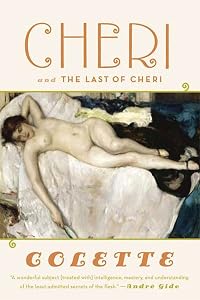
On This Page
Description
"An exquisite new translation of Colette's tragicomic masterpiece, a pair of novels exploring the relationship between an aging courtesan and a much younger man. Chéri and its sequel, The End of Chéri, mark Colette's finest achievements, in their brilliant, subtle, and frank investigations of love and power. Set in the Parisian demimonde in the last days of the Belle Époque, Chéri tells the story of Léa, a courtesan at the end of a successful career, and her lover, the beautiful but show more emotionally opaque Chéri. Chéri will soon enter into an arranged marriage, ending their six-year affair, which-they will each realize too late-has been the one real love of their lives. The End of Chéri picks up their story in the aftermath of the First World War; as a psychically wounded Chéri begins an inexorable descent, he finds he cannot return to the Léa he left"-- show lessTags
Recommendations





























Member Recommendations

Member Reviews
Colette is an unflinching author, both in being honest about the flaws of her characters, and in the sense of writing about taboo subjects, in this case, a young man’s affair with his mother’s friend, an aging courtesan. The liaison ends when he marries a woman closer to his own age, and as this happens after the first few chapters, most of Cheri and all of The Last of Cheri is about dealing with the destructive consequences.
These are not happy tales. The emotions you might imagine - jealousy, sadness, and obsession - are all here, and they feel real. There are memorable scenes, a couple of which I’ll mention (spoiler alert). In the first, Cheri finds himself bored with his new wife and ultimately returns to Lea for a night of show more passion, but in the morning light, as she’s planning to run away with him, he sees the signs of her aging, and leaves her for good. It’s a brutal end to the first book.
In the second, in The Last of Cheri, years later, as he finds himself listless and bored, his knowing mother quietly arranges for him to meet her again. How French, right? When he does, she’s with a friend, and as his inner emotions rage, they coolly size him up. “From the cold and calculating way she looked him over, Cheri might have been a piece of furniture”. Later “They went on to thrash out the question, weighing up, with a wealth of detail and point by point, every portion of the fore and hind quarters of this expensive animal.” And finally: “He remained where he was, all but snuffed out by the conversation of the two women who had been speaking of him in the past tense, as though he were dead.” Meanwhile Cheri is conflicted; while the memories for him have been at the top of his mind and his feelings for Lea are obviously unresolved, the woman he sees before him has aged considerably and become quite large, such that he keeps hoping the “real Lea” will emerge. It’s a brilliant, heartbreaking scene. Later he’s reduced to adoring her pictures and talking to a woman who can tell him stories from Lea’s past; while Lea has accepted her age and her fate, he has never gotten over her.
Throughout the books, the writing is lean, and provides a window into life in Paris before and after WWI. Colette herself was an interesting woman. She was a feminist, writing articles as a journalist that were “lucid and often scathing about the plight of women in brutal marriages and degrading jobs”, and yet also being a dancer on the stage “who was never averse to a skimpy costume”, and in her personal life having a weakness for bondage, so, as one of her friends put it, “Torn between the desires of her two contrary natures, to have a master and not to have one, she always opted for the first solution.”
“Preferring passion to goodness”, and in a case of life imitating art, she seduced her 16-year-old stepson at age 47 to begin a five-year-long affair with him. The young man apparently wanted Colette to write something more uplifting, about which Judith Thurman quips in her introduction “How exquisitely French: a pimply schoolboy who was honing his sexual technique on the body of his father’s wife objected to the absence of any moral feeling in her writing!” Later in life, as an old man, he would say of Colette that “she eagerly picked the fruits of the earth without discriminating those which were forbidden.” Indeed.
Quotes:
On love lost; her view:
“You see, Valerie, how foolish a man can look when reminded of a love which no longer exists? Silly boy, it doesn’t upset me in the least to think about it. I love my past. I love my present. I’m not ashamed of what I’ve had, and I’m not sad because I have it no longer.”
And:
“It serves me right. At my age, one can’t afford to keep a lover six years. Six years! He has ruined all that was left of me. Those six years might have given me two or three quite pleasant little happinesses, instead of one profound regret. A liaison of six years is like following your husband out to the colonies: when you get back again nobody recognizes you and you’ve forgotten how to dress.”
His view, regretting all those nights that could have been:
“The apparition of the large, flat, half-veiled moon among the scurrying vaporous clouds, which she seemed to be pursuing and tearing asunder, did not divert him from working out an arithmetical fantasy: he was computing – in years, months, hours and days – the amount of precious time that had been lost to him for ever.
‘Had I never let her go when I went to see her again that day before the war – then it would have meant three or four years to the good; hundreds and hundreds of days and nights gained and garnered for love.’ He did not fight shy of so big a word.
‘Hundreds of days – a lifetime – life itself. … He seized hold of his past, to squeeze out every remaining drop upon his empty, arid present; bringing back to life, and inventing where necessary, the princely days of his youth, his adolescence shaped and guided by a woman’s strong capable hands – loving hands, ever ready to chastise.”
On lust:
“When she saw him half-naked, she asked, with a note of sadness: ‘Do you really want to? … Do you? …’
He did not answer, carried away by the thought of his approaching pleasure and the consuming desire to take her again. She gave way and served her young lover like a good mistress, with devout solicitude. Nevertheless, she anticipated with a sort of terror the moment of her own undoing; she endured Cheri as she might a torture, warding him off with strengthless hands, and holding him fast between strong knees. Finally, she seized him by the arm, uttered a feeble cry and foundered in the deep abyss, whence love emerges pale and in silence, regretful of death.”
And this one, actually Cheri’s wife, who begins an affair of her own:
“Once again she fingered the lace round the neck of her bodice, inhaled the warmth and fragrance that rose up from between her breasts, and as she bent down her head she saw the precious twin pink and mauve discs through the material of her dress. She blushed with carnal pleasure, and dedicated the scent and the mauve shadows to the skillful, condescending, red-haired man whom she would be meeting again in an hour’s time.” show less
These are not happy tales. The emotions you might imagine - jealousy, sadness, and obsession - are all here, and they feel real. There are memorable scenes, a couple of which I’ll mention (spoiler alert). In the first, Cheri finds himself bored with his new wife and ultimately returns to Lea for a night of show more passion, but in the morning light, as she’s planning to run away with him, he sees the signs of her aging, and leaves her for good. It’s a brutal end to the first book.
In the second, in The Last of Cheri, years later, as he finds himself listless and bored, his knowing mother quietly arranges for him to meet her again. How French, right? When he does, she’s with a friend, and as his inner emotions rage, they coolly size him up. “From the cold and calculating way she looked him over, Cheri might have been a piece of furniture”. Later “They went on to thrash out the question, weighing up, with a wealth of detail and point by point, every portion of the fore and hind quarters of this expensive animal.” And finally: “He remained where he was, all but snuffed out by the conversation of the two women who had been speaking of him in the past tense, as though he were dead.” Meanwhile Cheri is conflicted; while the memories for him have been at the top of his mind and his feelings for Lea are obviously unresolved, the woman he sees before him has aged considerably and become quite large, such that he keeps hoping the “real Lea” will emerge. It’s a brilliant, heartbreaking scene. Later he’s reduced to adoring her pictures and talking to a woman who can tell him stories from Lea’s past; while Lea has accepted her age and her fate, he has never gotten over her.
Throughout the books, the writing is lean, and provides a window into life in Paris before and after WWI. Colette herself was an interesting woman. She was a feminist, writing articles as a journalist that were “lucid and often scathing about the plight of women in brutal marriages and degrading jobs”, and yet also being a dancer on the stage “who was never averse to a skimpy costume”, and in her personal life having a weakness for bondage, so, as one of her friends put it, “Torn between the desires of her two contrary natures, to have a master and not to have one, she always opted for the first solution.”
“Preferring passion to goodness”, and in a case of life imitating art, she seduced her 16-year-old stepson at age 47 to begin a five-year-long affair with him. The young man apparently wanted Colette to write something more uplifting, about which Judith Thurman quips in her introduction “How exquisitely French: a pimply schoolboy who was honing his sexual technique on the body of his father’s wife objected to the absence of any moral feeling in her writing!” Later in life, as an old man, he would say of Colette that “she eagerly picked the fruits of the earth without discriminating those which were forbidden.” Indeed.
Quotes:
On love lost; her view:
“You see, Valerie, how foolish a man can look when reminded of a love which no longer exists? Silly boy, it doesn’t upset me in the least to think about it. I love my past. I love my present. I’m not ashamed of what I’ve had, and I’m not sad because I have it no longer.”
And:
“It serves me right. At my age, one can’t afford to keep a lover six years. Six years! He has ruined all that was left of me. Those six years might have given me two or three quite pleasant little happinesses, instead of one profound regret. A liaison of six years is like following your husband out to the colonies: when you get back again nobody recognizes you and you’ve forgotten how to dress.”
His view, regretting all those nights that could have been:
“The apparition of the large, flat, half-veiled moon among the scurrying vaporous clouds, which she seemed to be pursuing and tearing asunder, did not divert him from working out an arithmetical fantasy: he was computing – in years, months, hours and days – the amount of precious time that had been lost to him for ever.
‘Had I never let her go when I went to see her again that day before the war – then it would have meant three or four years to the good; hundreds and hundreds of days and nights gained and garnered for love.’ He did not fight shy of so big a word.
‘Hundreds of days – a lifetime – life itself. … He seized hold of his past, to squeeze out every remaining drop upon his empty, arid present; bringing back to life, and inventing where necessary, the princely days of his youth, his adolescence shaped and guided by a woman’s strong capable hands – loving hands, ever ready to chastise.”
On lust:
“When she saw him half-naked, she asked, with a note of sadness: ‘Do you really want to? … Do you? …’
He did not answer, carried away by the thought of his approaching pleasure and the consuming desire to take her again. She gave way and served her young lover like a good mistress, with devout solicitude. Nevertheless, she anticipated with a sort of terror the moment of her own undoing; she endured Cheri as she might a torture, warding him off with strengthless hands, and holding him fast between strong knees. Finally, she seized him by the arm, uttered a feeble cry and foundered in the deep abyss, whence love emerges pale and in silence, regretful of death.”
And this one, actually Cheri’s wife, who begins an affair of her own:
“Once again she fingered the lace round the neck of her bodice, inhaled the warmth and fragrance that rose up from between her breasts, and as she bent down her head she saw the precious twin pink and mauve discs through the material of her dress. She blushed with carnal pleasure, and dedicated the scent and the mauve shadows to the skillful, condescending, red-haired man whom she would be meeting again in an hour’s time.” show less
I only read Cheri. It is the story of a woman and her younger paramour. She is approaching middle age and must relinquish her lover to his marriage. It is likely the last such relationship she will have, given her age. Separation is very painful for each of them. This is a very rich depiction of middle-age desire and its complications. I will probably return to the End of Cheri at a later date.
These two novellas were pure joy to read. Colette’s writing is intimate, sensual, absorbing, flowing. She creates spaces full with sensations, sketches of people, closely observes their faces, movements, emotions, moods. She tosses aside conventional mores - her women are courtesans, free to marry or not marry, they make and invest their own money, live their sexual lives as they want. An older woman can keep a beautiful boy as a lover; Colette is not afraid to write about men as sex objects, possessed by their women.
The two novels are separated by six years. Chéri describes the ending of the relationship between Léa, an older but still beautiful courtesan at the end of her sexual carreer, and Chéri, a young, supremely beautiful show more but shallow man. They have long lived and loved together, but Chéri must get on with his young life, and must marry. As they try to deal with the separation, they realize it meant more than they thought - but it was doomed as they were at different points in their lives and they must let go.
The Last of Chéri takes place after World War I. Chéri has been to the war, and is trying to fit in, live his married life, but is increasingly alienated from his wife, mother and the new, changed world. He is young, but a relic, more and more caught up in a past life that cannot be brought back. Léa has moved on - she abandoned herself to old age, corpulence, no more need for face powder, stays and hair dyes. She accepted the time of her life and set out to enjoy it. Chéri - he is younger. He is cursed.
The characters are pretty shallow and self-centered - but superbly observed and layered. Apart from Chéri, most significant characters are women, and mostly old women, as Chéri increasingly finds comfort in their company. The interactions, the dialogue are both petty and genius at the same time, the characters unfold through their words, expressions, movements. The atmosphere is decadent, feminine, sensual, and declining, showing a glory of a bygone era and beauty.
To be honest, the story does not really matter. I could just get lost in the writing. This was the most I enjoyed just prose flowing effortlessly, languishing, but never boring or difficult. I loved it, and will be reading more of her work. show less
The two novels are separated by six years. Chéri describes the ending of the relationship between Léa, an older but still beautiful courtesan at the end of her sexual carreer, and Chéri, a young, supremely beautiful show more but shallow man. They have long lived and loved together, but Chéri must get on with his young life, and must marry. As they try to deal with the separation, they realize it meant more than they thought - but it was doomed as they were at different points in their lives and they must let go.
The Last of Chéri takes place after World War I. Chéri has been to the war, and is trying to fit in, live his married life, but is increasingly alienated from his wife, mother and the new, changed world. He is young, but a relic, more and more caught up in a past life that cannot be brought back. Léa has moved on - she abandoned herself to old age, corpulence, no more need for face powder, stays and hair dyes. She accepted the time of her life and set out to enjoy it. Chéri - he is younger. He is cursed.
The characters are pretty shallow and self-centered - but superbly observed and layered. Apart from Chéri, most significant characters are women, and mostly old women, as Chéri increasingly finds comfort in their company. The interactions, the dialogue are both petty and genius at the same time, the characters unfold through their words, expressions, movements. The atmosphere is decadent, feminine, sensual, and declining, showing a glory of a bygone era and beauty.
To be honest, the story does not really matter. I could just get lost in the writing. This was the most I enjoyed just prose flowing effortlessly, languishing, but never boring or difficult. I loved it, and will be reading more of her work. show less
No shame in Decadence.
The next book on my shelf was Cheri and the last of Cheri which was translated from the French by Roger Senhouse in 1951. The two novelettes were originally published in 1920 and 1926 respectively by Colette. It is a simple story of a decadent lifestyle set either side of the first world war: a war that hardly intrudes on the lives of Cheri (real name Fred) and his lover Léa.
Cheri is16 years old when he is seduced by his mother's best friend Léa who is an ex courtesan; 43 years old and now wealthy in her own write. Cheri also is very rich and spends his days in luxurious living spending his money on motorcars, but keeping careful note of the money that he spends on his servants. We pick up the story six years show more later when Cheri's mother has found him a marriage partner. Edmée is a quiet sixteen year old girl from a wealthy family and Cheri is drifting towards his upcoming marriage. The story starts with a truculent Cheri just gotten out of Léa's bed and wanting to play with her pearls. They both realise that their relationship is coming to an end. Léa and Cheri are both obsessive about how they look, Cheri is described as a beautiful handsome youth and Léa is fighting a battle with her age. The weather in Paris is hot and their languorous lifestyle is brilliantly captured by Colette, the couple hardly ever seem to leave Léa's boudoir: their mornings are spent arguing, then kissing and making up. There are flashbacks of their six years together: a stay in Normandy when Léa tries to interest Cheri in boxing under the tutelage of Patron, and Cheri develops a body to go with his good looks. Cheri and Edmée are married, but after three months Cheri is still thinking about Léa and leaves home.
The last of Cheri picks up his story when he is 30 years old. He has fought in the war and is now back with Edmée, who has become a business woman and manager of a hospital. Cheri is still drifting through life, still thinking about Léa who has gone abroad, but is rumoured to be coming back to Paris. He is drifting inevitably to his own destruction, losing his good looks and not taking care of his health.
Colette captures the decadent lifestyle of a small circle of rich people living in luxury not far from the Bois de Boulogne. They seem unaffected by world events although the women are keenly interested in making money. Cheri survives in this hot-house lifestyle through his good looks and wealth, but his relationship with Léa has meant that while he has become skilled as a lover he has hardly grown up as a man. The champagne flows and the luxurious breakfasts and lunches keep on coming. Cheri says of his bride to be Edmée
Let her kiss the sacred ground that I tread on and thank her lucky stars for the privilege.
Léa thinks about old age:
She had a foretaste of the sinful pleasures of the old - little else than a concealed aggressiveness, daydreams of murder and the keen recurrent hope for catastrophes that will spare only one living creature and one corner of the globe.
The characters are not particularly nasty, but they are not very nice either and Colette does a good job in providing an interesting, well written, atmospheric story that holds the interest. Cheri is little more than a very rich and very spoilt brat, but we continue to follow his progress through a life that appears to be sliding away. The Last of Cheri is best read while suffering from eating or drinking too much, but don't leave it till the morning after. 4 stars. show less
The next book on my shelf was Cheri and the last of Cheri which was translated from the French by Roger Senhouse in 1951. The two novelettes were originally published in 1920 and 1926 respectively by Colette. It is a simple story of a decadent lifestyle set either side of the first world war: a war that hardly intrudes on the lives of Cheri (real name Fred) and his lover Léa.
Cheri is16 years old when he is seduced by his mother's best friend Léa who is an ex courtesan; 43 years old and now wealthy in her own write. Cheri also is very rich and spends his days in luxurious living spending his money on motorcars, but keeping careful note of the money that he spends on his servants. We pick up the story six years show more later when Cheri's mother has found him a marriage partner. Edmée is a quiet sixteen year old girl from a wealthy family and Cheri is drifting towards his upcoming marriage. The story starts with a truculent Cheri just gotten out of Léa's bed and wanting to play with her pearls. They both realise that their relationship is coming to an end. Léa and Cheri are both obsessive about how they look, Cheri is described as a beautiful handsome youth and Léa is fighting a battle with her age. The weather in Paris is hot and their languorous lifestyle is brilliantly captured by Colette, the couple hardly ever seem to leave Léa's boudoir: their mornings are spent arguing, then kissing and making up. There are flashbacks of their six years together: a stay in Normandy when Léa tries to interest Cheri in boxing under the tutelage of Patron, and Cheri develops a body to go with his good looks. Cheri and Edmée are married, but after three months Cheri is still thinking about Léa and leaves home.
The last of Cheri picks up his story when he is 30 years old. He has fought in the war and is now back with Edmée, who has become a business woman and manager of a hospital. Cheri is still drifting through life, still thinking about Léa who has gone abroad, but is rumoured to be coming back to Paris. He is drifting inevitably to his own destruction, losing his good looks and not taking care of his health.
Colette captures the decadent lifestyle of a small circle of rich people living in luxury not far from the Bois de Boulogne. They seem unaffected by world events although the women are keenly interested in making money. Cheri survives in this hot-house lifestyle through his good looks and wealth, but his relationship with Léa has meant that while he has become skilled as a lover he has hardly grown up as a man. The champagne flows and the luxurious breakfasts and lunches keep on coming. Cheri says of his bride to be Edmée
Let her kiss the sacred ground that I tread on and thank her lucky stars for the privilege.
Léa thinks about old age:
She had a foretaste of the sinful pleasures of the old - little else than a concealed aggressiveness, daydreams of murder and the keen recurrent hope for catastrophes that will spare only one living creature and one corner of the globe.
The characters are not particularly nasty, but they are not very nice either and Colette does a good job in providing an interesting, well written, atmospheric story that holds the interest. Cheri is little more than a very rich and very spoilt brat, but we continue to follow his progress through a life that appears to be sliding away. The Last of Cheri is best read while suffering from eating or drinking too much, but don't leave it till the morning after. 4 stars. show less
"She kept her birth date a secret; but she freely admitted, letting fall on Chéri a look of voluptuous condescension, that she was reaching the age where she was due some small pleasures. She loved order, beautiful linens, mature wines, well-thought-out meals."
From this moment, I was hooked. Having never actually read any of Collette's work before I did not know what to expect. What I found in these pages were attitudes and feelings that seemed to address the point I am at in my life. While I cannot directly identify with the actions of Lea in these novels, I can understand reaching a point where being somewhat settled in life is as comfortable as a large bed. In addition, I think that these two novels need to be read together as they show more definitely bookend the story of Cheri and Lea.
In the edition, that I read there was a prologue that debated the translations of this novel as completed by Roger Senhouse. I think there is potentially an argument to be made that a male translator may not be able to recreate the subtlety of a text written by a woman. I do wonder how this particular translation would compare to his and may take the time at some point to look into that.
In the meantime, I have found a new (to me) author and look forward to exploring more of her writing. The only thing that might be better is if I had continued to study French so that I would not have to rely on translations to read these texts. show less
From this moment, I was hooked. Having never actually read any of Collette's work before I did not know what to expect. What I found in these pages were attitudes and feelings that seemed to address the point I am at in my life. While I cannot directly identify with the actions of Lea in these novels, I can understand reaching a point where being somewhat settled in life is as comfortable as a large bed. In addition, I think that these two novels need to be read together as they show more definitely bookend the story of Cheri and Lea.
In the edition, that I read there was a prologue that debated the translations of this novel as completed by Roger Senhouse. I think there is potentially an argument to be made that a male translator may not be able to recreate the subtlety of a text written by a woman. I do wonder how this particular translation would compare to his and may take the time at some point to look into that.
In the meantime, I have found a new (to me) author and look forward to exploring more of her writing. The only thing that might be better is if I had continued to study French so that I would not have to rely on translations to read these texts. show less
I don’t discount the themes of Chéri and it’s sequel, the End of Chéri. They’re present and interesting: the role of women in post-war France as it interplays with the waywardness of young men sent to war during their formative years only to return to an interwar society that seems to not need them anymore.
Indeed, Chéri’s story is something worth probing on. He’s the plaything of a much older woman in a way that stunts his maturity and leaves him vapid and self obsessed. The constant talk of his looks by women much his senior fuels his Dorian Gray-esque obsession with beauty.
When he returns from war, it seems everyone has moved on from the vapid obsession with beauty to the vapid obsession with money and status. His show more former lover has grown old and out of shape and worst of all to Chéri she’s happy and unbothered by her transformation.
All of that is interesting, but it doesn’t really come together until the final fourth of the book(s). Before then it’s a slog through Parisian bourgeois predilections. It may be the translation but the writing was overly clunky. Colette is moving far too quickly through dialogue and internal monologues in a way that doesn’t lend itself to story or themes. It didn’t leave me with a feeling of free flowing consciousness moving between thoughts and words, instead I was left lost and struggling to connect with what was written on the page. show less
Indeed, Chéri’s story is something worth probing on. He’s the plaything of a much older woman in a way that stunts his maturity and leaves him vapid and self obsessed. The constant talk of his looks by women much his senior fuels his Dorian Gray-esque obsession with beauty.
When he returns from war, it seems everyone has moved on from the vapid obsession with beauty to the vapid obsession with money and status. His show more former lover has grown old and out of shape and worst of all to Chéri she’s happy and unbothered by her transformation.
All of that is interesting, but it doesn’t really come together until the final fourth of the book(s). Before then it’s a slog through Parisian bourgeois predilections. It may be the translation but the writing was overly clunky. Colette is moving far too quickly through dialogue and internal monologues in a way that doesn’t lend itself to story or themes. It didn’t leave me with a feeling of free flowing consciousness moving between thoughts and words, instead I was left lost and struggling to connect with what was written on the page. show less
What is it with me and anthologies all of the sudden? At least this is only two books. After the Philip K. Dick anthology I was struggling with feelings of degradation and oppression. I needed something that was the opposite of dystopian American sci-fi, and what better could I find on my shelves than classical French literature by a female author? Plus, it is on my TBR pile challenge list, so extra points!
I must admit my interest was piqued by watching previews for the movie version of Cheri (which I have not yet seen, but want to!) And that preview meant that I could hardly imagine any face but Michelle Pfeifer's for Lea, but what a perfect face to have in mind!
Alright, I really had all of these thoughts that I wanted to assemble show more about how many wildly glamorous or cutthroat books were written about courtesans before this book wrote about the lives of aging courtesans, and how they might fight to hold onto their power, or not, and how growing up amongst women who had experienced the world in that way would affect a young man. But after sitting with my journal, staring off into space for ages without those thoughts ever coming together, I finally decided to abandon them and move on.
Both books, Cheri and The Last of Cheri were beautifully written and thoroughly entrancing. After reading the first book entirely from the point of view of Lea, it was fascinating in the second to get into Cheri's head. Though I do still wish I could have ever understood what Cheri's wife was thinking.
All in all, a lovely summer read. show less
I must admit my interest was piqued by watching previews for the movie version of Cheri (which I have not yet seen, but want to!) And that preview meant that I could hardly imagine any face but Michelle Pfeifer's for Lea, but what a perfect face to have in mind!
Alright, I really had all of these thoughts that I wanted to assemble show more about how many wildly glamorous or cutthroat books were written about courtesans before this book wrote about the lives of aging courtesans, and how they might fight to hold onto their power, or not, and how growing up amongst women who had experienced the world in that way would affect a young man. But after sitting with my journal, staring off into space for ages without those thoughts ever coming together, I finally decided to abandon them and move on.
Both books, Cheri and The Last of Cheri were beautifully written and thoroughly entrancing. After reading the first book entirely from the point of view of Lea, it was fascinating in the second to get into Cheri's head. Though I do still wish I could have ever understood what Cheri's wife was thinking.
All in all, a lovely summer read. show less
Members
- Recently Added By
Lists

Best of French Literature
138 works; 26 members

Female Author
1,234 works; 67 members

501 Must-Read Books
529 works; 72 members

Favorite Literary Love Stories
182 works; 101 members

French Books
102 works; 15 members

Favourite Books
1,820 works; 309 members

Short and Sweet
246 works; 24 members

1920s
141 works; 6 members

Favorite World Literature in English Translation
22 works; 5 members

Books Set in France
13 works; 5 members
Love Triangles in Literature
108 works; 15 members

Authors from France
23 works; 2 members

Favorite Books in Translation
320 works; 133 members

Favorite French Fiction
223 works; 107 members

Best of World Literature
437 works; 52 members
Author Information

278+ Works 12,663 Members
Some Editions
Series

Belongs to Publisher Series
Work Relationships
Is contained in
Contains
Common Knowledge
- Canonical title
- Chéri and The Last of Chéri
- Original title
- Chéri suivi de La fin de Chéri
- Original publication date
- 1920 (Cheri) (Cheri); 1926 (The End of Cheri) (The End of Cheri)
- People/Characters
- Léa de Lonval; Fred "Chéri" Peloux; Madame Charlotte Peloux; Edmée Peloux; Pal
- Important places
- Paris, France; France
- First words
- "Give it to me, Lea, give me your pearl necklace!
Cheri closed the iron gate of the little garden behind him and sniffed the night air: "Ah! it's nice out here!"
Sidonie-Gabrielle Colette may be the most misunderstood of great writers. (Introduction)
"Lea! Let me have your pearl necklace! Can you hear me, Lea? Give me your string of pearls!" (Cheri)
Cheri shut the wrought iron gate of the front garden behind him and sniffed the night air. (The End of Cheri) - Last words
- (Click to show. Warning: May contain spoilers.)Lea let the curtain fall back into place; but already she had seen Cheri throw back his head, look up at the spring sky and the chestnut trees in flower, and fill his lungs with the fresh air, like a man escaping from prison.
(Click to show. Warning: May contain spoilers.)He knew nothing more, beyond the pressure of his forefinger on a little lever of tempered steel.
(Click to show. Warning: May contain spoilers.)Eprile inhabits her. (Introduction)
(Click to show. Warning: May contain spoilers.)But she still had time to see that Cheri was lifting his head up to the spring sky and the chestnut trees loaded with blossoms; and that, as he walked, he was filling his lungs with air like an escapee. (Cheri)
(Click to show. Warning: May contain spoilers.)So he did hurry, and emitted a few stifled groans of complaint over the task, because his right arm, crushed under his body, was bothering him, and he knew nothing more of life past a pressure of his index finger on a little protrusion of finely ridged steel. (The End of Cheri) - Blurbers
- White, Edmund; Carter, Angela; Stewart, Susan
- Original language
- French
- Disambiguation notice
- This edition contains both Cheri and its sequel, The Last of Cheri (not to be confused with Cheri). Do not add/combine with editions that exclude either one.
Classifications
- Genres
- General Fiction, Fiction and Literature, Romance
- DDC/MDS
- 843.912 — Literature & rhetoric French Literature French fiction 1900- 20th Century 1900-1945
- LCC
- PQ2605 .O28 .C513 — Language and Literature French, Italian, Spanish and Portuguese literatures French literature Modern literature 1900-1960
- BISAC
Statistics
- Members
- 1,138
- Popularity
- 22,272
- Reviews
- 18
- Rating
- (3.89)
- Languages
- 5 — Dutch, English, French, German, Italian
- Media
- Paper, Audiobook, Ebook
- ISBNs
- 27
- ASINs
- 24