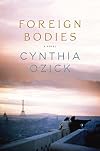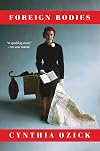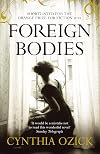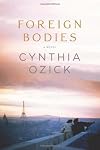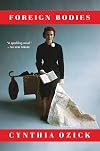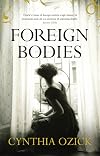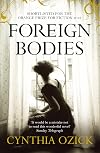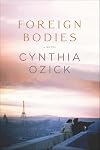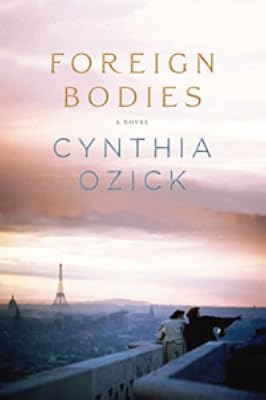
Foreign Bodies
by Cynthia Ozick
On This Page
Description
Presents a retelling of Henry James's "The Ambassadors" that follows the efforts of divorced schoolteacher Bea Nightingale to navigate a turbulent year spent with her estranged brother's family.Tags
Recommendations













Member Reviews
A good book, displaying all of Ozick's strengths: shimmering intelligence, crisp writing, humor, and a compassionate but clear eye. Somehow it seemed a little undone to me, perhaps due to having so many layers for a relatively brief book. But it is thought-provoking and very well-written. Perhaps better for fans of Ozick than newcomers.
The book is said to be a reversal of Henry James's "The Ambassadors," and there's a reverse look at "Jane Eyre" as well. The setting -- Paris, New York and Los Angeles in the early 1950s -- is beautifully conveyed. There is a sense of callousness and ferocity not only in Postwar Paris, teeming with exiles and survivors of the Holocaust, but in most of the male characters. Family relationships are a show more minefield. Wives, daughters, girlfriends are bullied, used, ignored or abandoned. To be a son is to strive to escape your father's failure, or, worse, success. There are no "nice" characters. But they are all memorable. show less
The book is said to be a reversal of Henry James's "The Ambassadors," and there's a reverse look at "Jane Eyre" as well. The setting -- Paris, New York and Los Angeles in the early 1950s -- is beautifully conveyed. There is a sense of callousness and ferocity not only in Postwar Paris, teeming with exiles and survivors of the Holocaust, but in most of the male characters. Family relationships are a show more minefield. Wives, daughters, girlfriends are bullied, used, ignored or abandoned. To be a son is to strive to escape your father's failure, or, worse, success. There are no "nice" characters. But they are all memorable. show less
I've never read anything by Cynthia Ozick beyond a short story or two, so I thought to remedy this with this book. Set during the 1952, Foreign Bodies is the story of Bea, whose life has been on hold since her husband left her years earlier. She goes on a trip to Europe and her brother orders her to find his son and to bring him home. She fails, but is now enmeshed in the life of her brother's family. Her brother is a blow-hard who has estranged every member of his family and it's not hard to see why, but those family members aren't very nice themselves and it's hard to see why Bea is willing to involve herself in all that drama. Bea, through all the family drama, wakes up and begins to take an active role in the lives of those around show more her, finding that while it's difficult to change one's own life, it's relatively easy to have an impact in the lives of others.
Oddly, while I liked none of the characters and disliked several of them, and wasn't gripped by the plot, I could not stop reading this book. It's written in an old-fashioned style, which suits it's post-war setting and has a fearsome momentum that left me turning pages, uncertain of what lay around the bend. show less
Oddly, while I liked none of the characters and disliked several of them, and wasn't gripped by the plot, I could not stop reading this book. It's written in an old-fashioned style, which suits it's post-war setting and has a fearsome momentum that left me turning pages, uncertain of what lay around the bend. show less
Set in 1952, Bea is an almost-50 year old, divorced high school English teacher. She gets sucked up into the drama of her estranged brother's messed up family, and this takes her away from her boring life in New York to both Bohemian Paris and a Beverly Hills mental institution. The story was interesting, if you can suspend disbelief and accept that she would allow her brother to bully her relentlessly. And Ozick is a fabulously gifted writer. I really enjoyed the first half of the book, but maybe it was my mood because the second half didn't do much for me. I think I was tired of the characters by then--none of them are particularly likeable.
The thing I really didn't like about the book was an undercurrent of nastyness. I'm not talking show more just "dark," because I like dark. There was something else unpleasant going on, and I wonder if Ozick is a bitter and angry woman. This is reflected in both the characters and her word choice. show less
The thing I really didn't like about the book was an undercurrent of nastyness. I'm not talking show more just "dark," because I like dark. There was something else unpleasant going on, and I wonder if Ozick is a bitter and angry woman. This is reflected in both the characters and her word choice. show less
Parts of this book are excellent. I gather it is a retelling of the plot of Henry James The Ambassadors though the sex of some of the characters is changed as are many situations. The best part is that it's set in the 1950's so benefited from the addition of Jewish WWII refugees - "those people" as they're frequently referred to. They seem to be pretty equally despised by Americans and the French, as if they are to blame for their situation. The man, a possible Vichy sympathizer, who sets up services to aid in their reunification with their families could have been a sympathetic character. However, there are few sympathetic characters in the story, none of them men, so it seems his desire to assist the refugees was that he wanted their show more influence out of France and into Jerusalem or anywhere else he could find for them to go. Bea the narrator and main character was quite a surprise, both to the reader and to herself. She interferes in ways she never would have dreamed of doing before the whole adventure began, she formed alliances she never would have considered and she gained respect where she never would have looked. Rich Jews and rich Christians were equally obnoxious, as were both children. In fact everyone in the book except Lilly the survivor was so extremely self centered it's amazing they ever left the house and their own company. More than once I found myself saying, "Huh!" It's an interesting book, but choppy. show less
Start with a recommendation from David Foster Wallace; add in a novel that got a lot to do with one of my five favorite novels (James' Ambassadors)... well, you'd think I'd love it. And yet, I conclude, meh.
First the fun stuff (fun, at least, for people like me): Ozick takes James' 'ficelle,' the character who exists only to let the plot carry on doing what it needs to do, and turns her into the main character. I always fall in love with James' ficelles (usually single/'oldmaid'30ish women who are smarter and kinder than anyone else in his novels), so I was immediately excited by this. Sadly, I am not in love with Bea. Anyway, Ozick then moves the plot of the Ambassadors to the fifties, and instead of Americans, makes it about Jewish show more Americans. I don't really care, although there are some possibly interesting bits about Jewish American young men falling in love with Jewish European displaced person middle aged women.
Now, the sillinesses: Americans in California are philistine idiots, even if they were once promising artists. Americans in Europe are post-romantic idiots, even if they were once promising scientists. Americans in New York, though, are all tremendously sensible. Even Europeans in New York are tremendously sensible. And this isn't just a 'New Yorkers know better' thing. The characters who stop by in New York become sensible for just as long as they're in New York. Suffice to say, as an Australian who has lived or presently lives in Chicago, Los Angeles and Philadelphia, I find this sort of thing pretty irritating. I've never felt more insane and silly than the few days I've spent in New York. The literary disease of making everyone except the utterly, utterly stupid philistines consumers of great literature (including one character who's related to Proust) is in full flow.
Other than these points, it's meticulously, perfectly crafted, and has absolutely no emotional or intellectual interest or weight whatsoever. I imagine that Jewish Americans who live in New York will be very flattered. Otherwise you might want to stick to, say, The Ambassadors. show less
First the fun stuff (fun, at least, for people like me): Ozick takes James' 'ficelle,' the character who exists only to let the plot carry on doing what it needs to do, and turns her into the main character. I always fall in love with James' ficelles (usually single/'oldmaid'30ish women who are smarter and kinder than anyone else in his novels), so I was immediately excited by this. Sadly, I am not in love with Bea. Anyway, Ozick then moves the plot of the Ambassadors to the fifties, and instead of Americans, makes it about Jewish show more Americans. I don't really care, although there are some possibly interesting bits about Jewish American young men falling in love with Jewish European displaced person middle aged women.
Now, the sillinesses: Americans in California are philistine idiots, even if they were once promising artists. Americans in Europe are post-romantic idiots, even if they were once promising scientists. Americans in New York, though, are all tremendously sensible. Even Europeans in New York are tremendously sensible. And this isn't just a 'New Yorkers know better' thing. The characters who stop by in New York become sensible for just as long as they're in New York. Suffice to say, as an Australian who has lived or presently lives in Chicago, Los Angeles and Philadelphia, I find this sort of thing pretty irritating. I've never felt more insane and silly than the few days I've spent in New York. The literary disease of making everyone except the utterly, utterly stupid philistines consumers of great literature (including one character who's related to Proust) is in full flow.
Other than these points, it's meticulously, perfectly crafted, and has absolutely no emotional or intellectual interest or weight whatsoever. I imagine that Jewish Americans who live in New York will be very flattered. Otherwise you might want to stick to, say, The Ambassadors. show less
Ozick is a wonderful, lyrical writer, and I've greatly enjoyed some of her other books. But this one, though it was a vivid study of place, didn't make me love it. I couldn't connect with the characters; while I don't expect to necessarily like whoever I'm reading about (though it's always excellent when I care about them despite their massive flaws), I need to care about the consequences of what they are doing. And nothing in this book made me commit that much. Granted, I have not read the Ambassadors and that may be why.
One-sentence summary: Bea Nightingale, school teacher, becomes embroiled in lives of her niece, nephew, and brother when she's asked to fetch said nephew from Paris.
Did... I hate every character in this book and yet, still care about what happened?: YES. It's a little freaky, actually, how Ozick did that.
Did... I read this book in about 1.5 days?: YES, both because the pacing is pretty snappy and because it's a brief 272 pages!
Did... I want to move to Paris after reading this?: YES, although that's usually my default response.
Review: I've never ready Henry James' The Ambassadors, so I was a little apprehensive that Foreign Bodies would just go over my head. (I wiki'd James' book to find out the gist of the plot.) While the premise of show more Foreign Bodies is vaguely similar to The Ambassadors (a teacher sets out to retrieve wayward pupil from Paris), I don't think one needs to have read the latter to enjoy the former.
Rather than Henry James, I was strongly reminded of the books from the era Foreign Bodies is set, particularly Lawrence Durrell's Alexandria Quartet. Ozick's prose varies from concrete and certain to ethereal and scattered. The characters are all vaguely amoral and unappealing. The prose hardly plumbs anyone's motivation, not even Bea Nightingale, the heroine, which is my only complaint. Even though we're in Bea's head, swimming in her thoughts, something about the prose keeps the reader at arm's length; when the big a-ha moment came, I hardly felt the impact. show less
Did... I hate every character in this book and yet, still care about what happened?: YES. It's a little freaky, actually, how Ozick did that.
Did... I read this book in about 1.5 days?: YES, both because the pacing is pretty snappy and because it's a brief 272 pages!
Did... I want to move to Paris after reading this?: YES, although that's usually my default response.
Review: I've never ready Henry James' The Ambassadors, so I was a little apprehensive that Foreign Bodies would just go over my head. (I wiki'd James' book to find out the gist of the plot.) While the premise of show more Foreign Bodies is vaguely similar to The Ambassadors (a teacher sets out to retrieve wayward pupil from Paris), I don't think one needs to have read the latter to enjoy the former.
Rather than Henry James, I was strongly reminded of the books from the era Foreign Bodies is set, particularly Lawrence Durrell's Alexandria Quartet. Ozick's prose varies from concrete and certain to ethereal and scattered. The characters are all vaguely amoral and unappealing. The prose hardly plumbs anyone's motivation, not even Bea Nightingale, the heroine, which is my only complaint. Even though we're in Bea's head, swimming in her thoughts, something about the prose keeps the reader at arm's length; when the big a-ha moment came, I hardly felt the impact. show less
Members
- Recently Added By
Published Reviews
ThingScore 81
In Foreign Bodies, Ozick has taken the framework of James's plot and turned it into a scaffold to support her perennial subject – the fate of the 20th-century Jew. The novel she has produced extends the reach of James's novel geographically and emotionally – and moves beyond homage into the realm of independent creation. It turns out that the road to perdition is a fruitful one.
added by souloftherose
Instead of an hourglass, Ozick has given us, to use James's own term, “a loose, baggy monster” accommodating, among other things, Yiddish folk tales, a series of letters, zigzags in time and space and digressions on the advent of television in America and the nature of a scherzo.
As for language, in place of James's filigree of circumvolution and ambiguity, we get overt statement and oodles show more of over-the-top-and-down-in-the-ditch prose... It's as if Ozick has seized the exquisitely written chamber music of James's masterpiece and arranged it for brass band; while there are passages as good as Gershwin's An American in Paris – many graced by marvellous images – there are frequent false notes, too....For a consummate celebration of Paris and for a profound exploration of the tragic disjunction between what we wish to be true and what we can't escape knowing to be real, read The Ambassadors. But for an evocation of unspeakable loss and unfathomable love rooted in the nightmare of a history James couldn't begin to imagine, you couldn't do better than Foreign Bodies. show less
As for language, in place of James's filigree of circumvolution and ambiguity, we get overt statement and oodles show more of over-the-top-and-down-in-the-ditch prose... It's as if Ozick has seized the exquisitely written chamber music of James's masterpiece and arranged it for brass band; while there are passages as good as Gershwin's An American in Paris – many graced by marvellous images – there are frequent false notes, too....For a consummate celebration of Paris and for a profound exploration of the tragic disjunction between what we wish to be true and what we can't escape knowing to be real, read The Ambassadors. But for an evocation of unspeakable loss and unfathomable love rooted in the nightmare of a history James couldn't begin to imagine, you couldn't do better than Foreign Bodies. show less
added by vancouverdeb
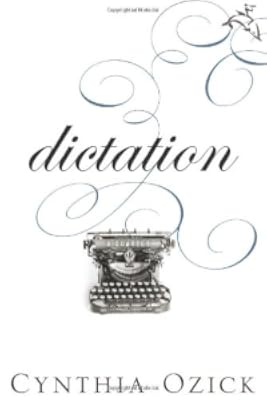
Yet, unlike "Heir to the Glimmering World" or "Dictation," "Foreign Bodies" never seems to come to fruition. Partly, that's due to the nature of its construction — even though you don't need to have read "The Ambassadors" to understand it; there are no overt references to the novel, other than a few puns and one-liners, a comment about "all this ambassadorial traffic" in an early piece of show more dialogue, or a recollection of Bea's father reading "George Meredith and Henry James." show less
added by vancouverdeb
Lists

Favourite books from the 2012 Orange Prize for fiction longlist
20 works; 15 members
Author Information

51+ Works 6,079 Members
Writer Cynthia Ozick was born on April 17, 1928. She grew up in the Bronx and attended New York University, where she earned a B. A., and The Ohio State University, where she completed her master's degree in English literature with a specific focus on Henry James's works. Ozick wrote the novel Trust, and the short stories "The Sense of Europe", show more which was published in Prairie Schooner, and "The Shawl", which was included in The World of the Short Story. Her work has also appeared in The New Yorker, Harper's, Partisan Review, and Esquire. Ozick has received a Guggenheim Fellowship and a Harold Straus Living Award from the American Academy and National Institute of Arts and Letters. Three of her stories won first prize in the O. Henry competition. In 1986, she was selected as the first winner of the Rea Award for the Short Story. In 2000, she won the National Book Critics Circle Award for Quarrel & Quandary. Her novel Heir to the Glimmering World (2004) won high literary praise. Ozick was on the shortlist for the 2005 Man Booker International Prize, and in 2008 she was awarded the PEN/Nabokov Award and the PEN/Malamud Award, which was established by Bernard Malamud¿s family to honor excellence in the art of the short story. Her novel Foreign Bodies was shortlisted for the Orange Prize (2012). (Bowker Author Biography) show less
Some Editions
Awards and Honors
Awards
Distinctions
Notable Lists
Work Relationships
Was inspired by
Common Knowledge
- Canonical title
- Foreign Bodies
- Original publication date
- 2010
- People/Characters
- Henry James
- Important places
- Paris, France
- Epigraph
- But there are two quite distinct things – given the wonderful place he’s in – that may have happened to him. One is that he may have got butalized. The other is that he may have got refined.
-HENRY JAMES The... (show all) Ambassadors - First words
- July 23, 1952
Dear Marvin,
Well I’m back. London was all right, Paris was terrible, and I never made it down to Rome. - Last words
- (Click to show. Warning: May contain spoilers.)Even so, in the long, long war with Leo, wasn't it Bea who'd won?
Classifications
Statistics
- Members
- 476
- Popularity
- 63,633
- Reviews
- 24
- Rating
- (3.39)
- Languages
- 5 — English, French, German, Portuguese, Spanish
- Media
- Paper, Audiobook, Ebook
- ISBNs
- 22
- ASINs
- 7