
Georgina Harding
Author of Painter of Silence
About the Author
Works by Georgina Harding
Associated Works
Working Women: An Appealing Look at the Appalling Uses and Abuses of the Feminine Form (1984) — Editor, some editions — 45 copies
Tagged
Common Knowledge
- Canonical name
- Harding, Georgina
- Birthdate
- 1955
- Gender
- female
- Occupations
- novelist
travel writer - Short biography
- From Bloomsbury Publishing: Georgina Harding is the author of three novels: The Solitude of Thomas Cave, The Spy Game and, most recently, Painter of Silence, which was shortlisted for the Orange Prize for Fiction 2012. Her first book was a word of non-fiction, In Another Europe, recording a journey she made across Romania in 1988 during the worst times of the Ceausescu regime. It was followed by Tranquebar: A Season in South India, which documented the lives of the people in a small fishing village on the Coromandel coast. Georgina Harding lives in London and on a farm in the Stour Valley, Essex.
- Nationality
- UK
- Birthplace
- Shrewsbury, Shropshire, England, UK
- Places of residence
- Stour Valley, Essex, UK
London, England, UK - Associated Place (for map)
- England, UK
Members
Reviews
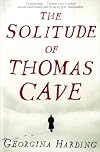
Set in the 17th Century, Thomas Cave is a quiet whaler who agrees to a wager, overwintering alone in the harsh Arctic wilderness with only the basic shelter, food and provisions. His fellow seafarers have little hope for his survival, yet he is determined to remain behind. Relying on his own determination and skill to survive the bitter conditions, Cave finds himself in a physical and psychological struggle, not only against the environment, but also his reasons for accepting the ordeal.
With show more almost painfully beautiful prose and evocative imagery of the stark landscape of the Arctic, Harding has not only created a situation that feels utterly believable, but a powerful and engaging struggle that alludes to man's tremendous impact on the environment around us. A short read, this book is best digested slowly, allowing the true beauty of the prose to sweep over you. Don't rush it!
I have always been fascinated with man's desire for solitude, self-discovery and need to understand what it really means to experience the wild. Books that delve into this are great sources of contemplation for me, with other examples being the heartbreaking "Into the Wild" by Jon Krakauer and gorgeous "The Snow Leopard" by Peter Matthiesen. I will be the first to admit that the title and cover (of both hard-and paperback) caused me to pick up this title in the first place, but the book had a far greater impact on me that I would have expected. I was actually unable to read anything for several days afterwards, with my thoughts constantly being drawn back to Thomas Cave. A breath of fresh air. show less
With show more almost painfully beautiful prose and evocative imagery of the stark landscape of the Arctic, Harding has not only created a situation that feels utterly believable, but a powerful and engaging struggle that alludes to man's tremendous impact on the environment around us. A short read, this book is best digested slowly, allowing the true beauty of the prose to sweep over you. Don't rush it!
I have always been fascinated with man's desire for solitude, self-discovery and need to understand what it really means to experience the wild. Books that delve into this are great sources of contemplation for me, with other examples being the heartbreaking "Into the Wild" by Jon Krakauer and gorgeous "The Snow Leopard" by Peter Matthiesen. I will be the first to admit that the title and cover (of both hard-and paperback) caused me to pick up this title in the first place, but the book had a far greater impact on me that I would have expected. I was actually unable to read anything for several days afterwards, with my thoughts constantly being drawn back to Thomas Cave. A breath of fresh air. show less

Arctic whaler Thomas Cave, took up a wager to spend the winter of 1616 alone at the whaling station. He was given generous provisions that would last until the following summer when the appropriately named ship Heartsease would return. Darkness and solitude played with Cave's mind bringing visions of his wife and child who both died at the birth, explaining the heartache that moved him to take on this self-induced penance. Harding's writing is poetic and sonorous, recreating 17th century show more style. Descriptions of the gory whaling compares starkly with the pristine icy wilderness coinciding with a revelation of sorts to Cave who recognizes the repellent nature of the work. In beautiful prose, Harding has created a moody, thought-provoking story with foreshadowing of modern ecological danger. show less
Although still in his mid-twenties, Jonathan has already received acclaim as a photographer in Vietnam War. Having grown disillusioned with this calling, he spends some time as a language teacher in Tokyo, and then returns to the farm in Norfolk where he grew up. His father died, allegedly in a “shooting accident” when Jonny was just seven, but his mother Claire still lives there, together with his elder brother Richard, who now runs the farm. Jonny is soon joined by Kimiko, his Japanese show more girlfriend, who has heard much about her partner’s past and his childhood home and now has the chance to experience them for herself:
She had asked him to tell her about his home, many times. She wanted to know so that she could know him better, so that she had some world to fit him into, that he came from, so that he had some dimension deeper than being just an Englishman who had come to Japan…
The couple decide to stay on to help with the harvest, before resuming their travels. But rain delays the job and a brief English holiday becomes, for Kumiko, a summer among a family with its fair share of secrets, a family haunted by its past.
Although recounted in the third person, the novel’s point of view keeps changing throughout, presenting us with the different perspectives of the four main characters. It starts and ends in Kumiko’s voice and yet her character is – ironically, and deliberately – the one which remains most mysterious, the one which we least get to know on a personal level. For the other characters including, one suspects, Jonathan himself, Kumiko remains “the Japanese girl”, an outsider, a glitch in an otherwise English pastoral. But, precisely because of her “foreignness” Kumiko becomes a catalyst for the family, leading them to face an uncomfortable past. The secrets which Charlie, Jonny's father, took to the grave, remain something of a mystery - that part of the story is recounted in Harding's Land of the Living (to which Harvest is a sequel, albeit a "free-standing one").
This novel is a little gem which I enjoyed at so many different levels. Jonathan is a photographer and, appropriately, the descriptions have a strong “visual” element, occasionally vibrant with yellows and golds, at other times “grey and brown and ochre… black even”. Nature is not only vividly portrayed but, as in a Hardy novel, it becomes almost a character in itself, a timeless backdrop to the family drama which plays out in the novel.
I loved the tone of the novel: melancholy, wistful and poignant. Harding subtly conveys the complicated psychological strands which link the characters, particularly Claire’s fraught relationship with her late husband and the underlying rivalry between the brothers whose life-story is indelibly marked by the tragic death of their father. The title of the novel is not just a reference to the literal “harvest”, in which Jonny and Kumiko participate, but becomes a metaphorical one, as the family reaps the seeds sown in its past.
Understated, yet complex and satisfying, Georgina Harding’s “Harvest” is a novel to watch (and read) in 2021.
https://endsoftheword.blogspot.com/2020/09/Harvest-by-Georgina-Harding.html show less
She had asked him to tell her about his home, many times. She wanted to know so that she could know him better, so that she had some world to fit him into, that he came from, so that he had some dimension deeper than being just an Englishman who had come to Japan…
The couple decide to stay on to help with the harvest, before resuming their travels. But rain delays the job and a brief English holiday becomes, for Kumiko, a summer among a family with its fair share of secrets, a family haunted by its past.
Although recounted in the third person, the novel’s point of view keeps changing throughout, presenting us with the different perspectives of the four main characters. It starts and ends in Kumiko’s voice and yet her character is – ironically, and deliberately – the one which remains most mysterious, the one which we least get to know on a personal level. For the other characters including, one suspects, Jonathan himself, Kumiko remains “the Japanese girl”, an outsider, a glitch in an otherwise English pastoral. But, precisely because of her “foreignness” Kumiko becomes a catalyst for the family, leading them to face an uncomfortable past. The secrets which Charlie, Jonny's father, took to the grave, remain something of a mystery - that part of the story is recounted in Harding's Land of the Living (to which Harvest is a sequel, albeit a "free-standing one").
This novel is a little gem which I enjoyed at so many different levels. Jonathan is a photographer and, appropriately, the descriptions have a strong “visual” element, occasionally vibrant with yellows and golds, at other times “grey and brown and ochre… black even”. Nature is not only vividly portrayed but, as in a Hardy novel, it becomes almost a character in itself, a timeless backdrop to the family drama which plays out in the novel.
I loved the tone of the novel: melancholy, wistful and poignant. Harding subtly conveys the complicated psychological strands which link the characters, particularly Claire’s fraught relationship with her late husband and the underlying rivalry between the brothers whose life-story is indelibly marked by the tragic death of their father. The title of the novel is not just a reference to the literal “harvest”, in which Jonny and Kumiko participate, but becomes a metaphorical one, as the family reaps the seeds sown in its past.
Understated, yet complex and satisfying, Georgina Harding’s “Harvest” is a novel to watch (and read) in 2021.
https://endsoftheword.blogspot.com/2020/09/Harvest-by-Georgina-Harding.html show less
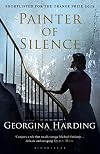
I found her prose almost painterly, appropriately, in this well written book.
The story moves backwards and forwards in time, with a general forward momentum, covering the relationship between the two protagonists, Elisabeta (Safta) from a wealthy, landowning family and Augustin (Tinu) the deaf-mute (autistic as well?) illegitimate son of her family's cook before and after WWII and some of how they actually experienced it and the advent of Communism. Tinu communicates through his drawings, if show more at all, makes poor eye contact and is easily overwhelmed, leaving him open to misunderstanding, bullying and abuse. show less
The story moves backwards and forwards in time, with a general forward momentum, covering the relationship between the two protagonists, Elisabeta (Safta) from a wealthy, landowning family and Augustin (Tinu) the deaf-mute (autistic as well?) illegitimate son of her family's cook before and after WWII and some of how they actually experienced it and the advent of Communism. Tinu communicates through his drawings, if show more at all, makes poor eye contact and is easily overwhelmed, leaving him open to misunderstanding, bullying and abuse. show less
Lists
Awards


You May Also Like


Associated Authors
Statistics
- Works
- 8
- Also by
- 1
- Members
- 754
- Popularity
- #33,728
- Rating
- 3.5
- Reviews
- 48
- ISBNs
- 67
- Languages
- 4