Where Children Sleep
by James Mollison
On This Page
Description
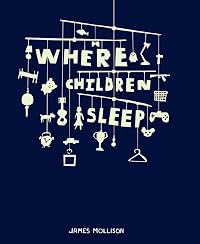
"... Photographs of children's bedrooms around the world, from sixteen countries including the USA, Mexico, Brazil, the UK, Italy, Kenya, Senegal, Japan, China, and Nepal, each shown with a portrait of the child whose bedroom is featured and with a short story text about their life"--From publisher description.Tags
Recommendations








Member Recommendations
Member Reviews
This is a very sobering view on families and how people live all around the world. I knew that there were poor children around the world, and that not every child is as privileged as an American child usually is, but the variety in images in here is still very eye-opening. There are some things you might expect to see, and others... not so much. The amount of disparity in some of the images is crushing at times. The author has chosen an effective medium to convey the story of children around the world. Highly recommended.
I wanted to like this book a lot more than I did. Certainly the photographs were good, showing the children and their bedrooms (or what passed for their bedrooms) and describing their lives in short but emotional vignettes. Many of the stories were sad, and I'm not just talking about the children who lived in poverty either. One child, an American only four or five, was shown wearing heavy makeup and dressed in clothes better suited for a woman in her twenties. Her biography explained that she participated in beauty pageants and had won a lot of trophies, and almost all her spare time was spent preparing for one pageant or another. It sounds like she never has time to just be a kid. A fourteen-year-old girl from a shantytown in Brazil show more was pregnant (out of wedlock, for what's it worth) for the third time; her previous two babies had died.
However, the diversity in the book was lacking. There were I think twelve American children featured. Mostly they were from families that were at least middle-class if not very wealthy, and all but four came from the New York City metro area. The whole of Africa had only four children, and Europe only five, three of them from Italy and two from the UK. South America had seven, six of them from Brazil. The tiny country of Nepal had eight children featured. Of Canada, Central America, the Caribbean, the South Pacific and Australia, there were no kids featured at all. I don't know if this was the author/photographer's fault or not -- perhaps there were budget or travel constraints -- but the lopsidedness was a definite drawback.
Several of the children who were featured also had lives that were quite unusual for the country they represented. For instance, the youngest geisha in all of Japan got a page, as well a ten-year-old champion sumo wrestler from Tokyo. In fact there are hardly any geisha at all in Japan anymore, and using a geisha in full regalia and a beachball-shaped sumo wrestler as two of the four Japanese kids seems to be catering to stereotypes. (And speaking of fat kids, in America they also had a boy who was very overweight and living at a boarding school for obese children -- the only one of its kind in the country.)
The commentary to the photographs also occasionally seemed to pass judgment on the children, or more so their families. With one quite obese six-year-old (not the boarding school student previously mentioned), the author makes a point of saying the boy visits McDonald's often and there are four televisions in his apartment and he learned how to use the PlayStation by age three. There's an Italian teenager who, it says, doesn't have to do any chores at all because his mother does everything for him, and plans to marry his girlfriend "who -- he expects -- will take over the job of looking after him."
I'd still say the book was worth reading/looking at. I just wish they had covered more countries and more children. show less
However, the diversity in the book was lacking. There were I think twelve American children featured. Mostly they were from families that were at least middle-class if not very wealthy, and all but four came from the New York City metro area. The whole of Africa had only four children, and Europe only five, three of them from Italy and two from the UK. South America had seven, six of them from Brazil. The tiny country of Nepal had eight children featured. Of Canada, Central America, the Caribbean, the South Pacific and Australia, there were no kids featured at all. I don't know if this was the author/photographer's fault or not -- perhaps there were budget or travel constraints -- but the lopsidedness was a definite drawback.
Several of the children who were featured also had lives that were quite unusual for the country they represented. For instance, the youngest geisha in all of Japan got a page, as well a ten-year-old champion sumo wrestler from Tokyo. In fact there are hardly any geisha at all in Japan anymore, and using a geisha in full regalia and a beachball-shaped sumo wrestler as two of the four Japanese kids seems to be catering to stereotypes. (And speaking of fat kids, in America they also had a boy who was very overweight and living at a boarding school for obese children -- the only one of its kind in the country.)
The commentary to the photographs also occasionally seemed to pass judgment on the children, or more so their families. With one quite obese six-year-old (not the boarding school student previously mentioned), the author makes a point of saying the boy visits McDonald's often and there are four televisions in his apartment and he learned how to use the PlayStation by age three. There's an Italian teenager who, it says, doesn't have to do any chores at all because his mother does everything for him, and plans to marry his girlfriend "who -- he expects -- will take over the job of looking after him."
I'd still say the book was worth reading/looking at. I just wish they had covered more countries and more children. show less
A stark visual essay of a wide-ranging sample of children from the 4-year-old Thai orphan, to the 8-year-old sports-crazed uniformed boy from New Jersey, to the 17-year-old Brazilian gang member who lives in a favela near the airport in Rio de Janeiro.
Supported by Fabrica, "Benetton's communication research center," the images and text are spare and severe, not unlike the company's ads from the 1980s. While the book is informative, much like the d'Alusio and Menzel books like "What We Eat," this work feels more overtly political.
I'm curious to read what students take from it. There is much struggle, with the very young working in a quarry or trash-picking all day, but there is also pride in these faces, regardless of where they sleep.
Supported by Fabrica, "Benetton's communication research center," the images and text are spare and severe, not unlike the company's ads from the 1980s. While the book is informative, much like the d'Alusio and Menzel books like "What We Eat," this work feels more overtly political.
I'm curious to read what students take from it. There is much struggle, with the very young working in a quarry or trash-picking all day, but there is also pride in these faces, regardless of where they sleep.
This is a book that should be read by EVERY man woman and child. For people like me who live in a Western developed country, it made me appreciate how very well off I am, and I'm not wealthy be any means. The book is amazing and so well photographed, with text that is short and to the point, showing children from all over the globe, from all types of cultures and all social levels. You will have your eyes opened, and I challenge anyone who reads this book from cover to cover, to finish it and not be moved and changed by what you see and read.
A stark visual essay of a wide-ranging sample of children from the 4-year-old Thai orphan, to the 8-year-old sports-crazed uniformed boy from New Jersey, to the 17-year-old Brazilian gang member who lives in a favela near the airport in Rio de Janeiro.
Supported by Fabrica, "Benetton's communication research center," the images and text are spare and severe, not unlike the company's ads from the 1980s. While the book is informative, much like the d'Alusio and Menzel books like "What We Eat," this work feels more overtly political.
I'm curious to read what students take from it. There is much struggle, with the very young working in a quarry or trash-picking all day, but there is also pride in these faces, regardless of where they sleep.
Supported by Fabrica, "Benetton's communication research center," the images and text are spare and severe, not unlike the company's ads from the 1980s. While the book is informative, much like the d'Alusio and Menzel books like "What We Eat," this work feels more overtly political.
I'm curious to read what students take from it. There is much struggle, with the very young working in a quarry or trash-picking all day, but there is also pride in these faces, regardless of where they sleep.
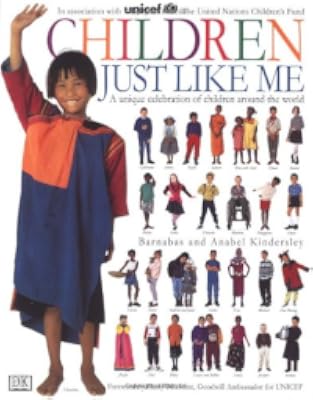
Read this today. Thought provoking, discussion-inducing, and a way to think about one's place in the world. It's sort of the polar opposite of "Children Just Like Me" in that stark economic and social realities are laid out for kids to think about.
Libro de fotografías de dormitorios de niños de diferentes paises-culturas.
Apr 4, 2014Spanish
Members
- Recently Added By
Lists

Geography Through Photography for Kids
55 works; 1 member
Author Information

4 Works 203 Members
Common Knowledge
- Canonical title
- Where Children Sleep
Classifications
Statistics
- Members
- 122
- Popularity
- 267,097
- Reviews
- 7
- Rating
- (4.69)
- Languages
- English
- Media
- Paper
- ISBNs
- 2
- ASINs
- 2