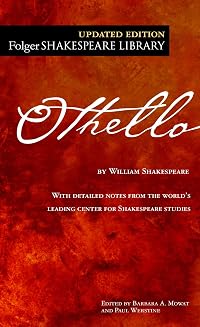
Othello
by William Shakespeare
On This Page
Description
Believed to have been written in 1603, Shakespeare's Othello is a tragedy that puts the playwright's prodigious creative gifts on full display. Based loosely on a Renaissance-era Italian tale, Othello follows the stormy relationship of the Moorish general Othello and his lovely wife Desdemona. Addressing timeless themes of love and betrayal, as well as surprisingly contemporary concepts such as race-based stereotypes, Othello is a satisfying read for modern-day fans of the Bard..
Tags
Recommendations

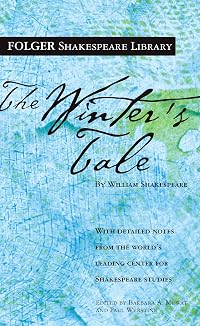
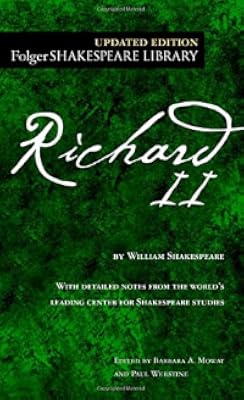

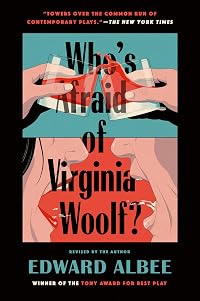
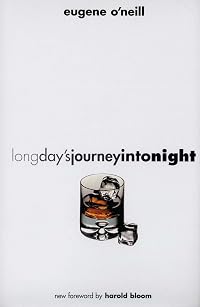

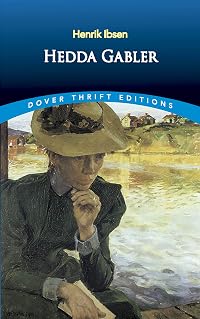
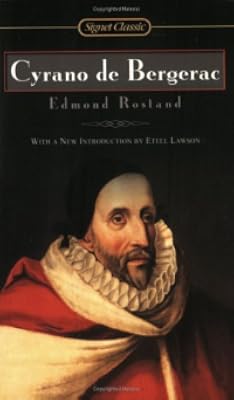
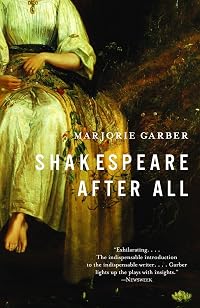
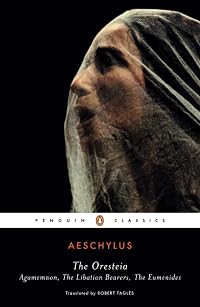


Member Recommendations

Member Reviews
Othello, a moor from Africa, is a well-loved and respected Venetian nobleman. After the beautiful Desdemona falls in love with him, the two wed in secret. Their blissful existence is thrown into chaos as Iago, Othello's personal attendant, begins to plant doubts of Desdemona’s faithfulness in Othello’s mind.
Iago is one of the most conniving and depraved characters I’ve ever read. His cold calculating nature is sociopathic. He feels that Othello has slighted him and sets his mind to destroying his life. He moves each pawn to further his plan, all the while maintaining his alleged devotion to Othello and poisoning his thoughts with rumors of jealousy. He does it in such a calm, unbothered way that it’s all the more disturbing. show more
The worst part of the whole things is that Othello is in the thralls of newly-wedded happiness. He and his wife Desdemona are so incredibly in love and then he acts as the tool for his own destruction. He is manipulated by someone else, but no one truly forces his hand. He allows himself to be persuaded to believe that worst about his wife and causes his own downfall by his lack of faith and trust.
I loved the character of Emilia. She’s Iago’s wife, but she’s also Desdemona’s hand maid. She asks as a conscience for the players, holding them accountable when they have committed a wrong. She stands up for her lady’s honor when others doubt it.
Othello pulls no punches when it comes to the issues it touches on. It deals with marital abuse, racism, trust, jealousy and more. It gives readers a lot to chew on and would be a great book to discuss. I’ve never seen this one performed live, but I’m sure it would be incredibly powerful. show less
Iago is one of the most conniving and depraved characters I’ve ever read. His cold calculating nature is sociopathic. He feels that Othello has slighted him and sets his mind to destroying his life. He moves each pawn to further his plan, all the while maintaining his alleged devotion to Othello and poisoning his thoughts with rumors of jealousy. He does it in such a calm, unbothered way that it’s all the more disturbing. show more
The worst part of the whole things is that Othello is in the thralls of newly-wedded happiness. He and his wife Desdemona are so incredibly in love and then he acts as the tool for his own destruction. He is manipulated by someone else, but no one truly forces his hand. He allows himself to be persuaded to believe that worst about his wife and causes his own downfall by his lack of faith and trust.
I loved the character of Emilia. She’s Iago’s wife, but she’s also Desdemona’s hand maid. She asks as a conscience for the players, holding them accountable when they have committed a wrong. She stands up for her lady’s honor when others doubt it.
Othello pulls no punches when it comes to the issues it touches on. It deals with marital abuse, racism, trust, jealousy and more. It gives readers a lot to chew on and would be a great book to discuss. I’ve never seen this one performed live, but I’m sure it would be incredibly powerful. show less
Iago has to be one of the nastiest villains in all of literature. Good, old, Honest Iago. In a matter of hours, he takes a happily married man and a successful general and turns him into a jealous, vengeful caricature of his former self. Iago uses innuendo to sow the seeds of distrust, then sits back to watch what he's set in motion. When it looks like things are straying off course, a gentle nudge from Iago keeps things moving in the direction he's set. I'd love to believe that people like Iago exist only in fiction, but I fear that there are too many Iagos in the halls of power, intent on corrupting any whose nature is too trusting.
I hate reviewing Shakespeare (as if I were qualified to criticize The Bard), but I have finished a third reading of Othello and no one gives us more to ponder and dissect than he does. I never read Shakespeare without saying to myself, “now how did I not see that before?”
This is obviously a story concerned with race. Othello is a Moor and as such the only black man present in the play and a representative of the unusual and unknown to his contemporaries. His marriage to Desdemona is spoken of as being “against nature” many times throughout the play and even Othello himself wonders at Desdemona’s willingness to go contrary to “nature.” The reason for his opposition to the marriage, as stated by her father, is:
and she, in show more spite of nature,
Of years, of country, credit, every thing,
To fall in love with what she feared to look on!
It is a judgment maim’d and most imperfect
That will confess perfection so could err
Against all rules of nature,...
While Othello is able to restrict himself to being a general and a statesman, he flourishes and prospers; it is only when he steps beyond the bounds and marries outside his race that chaos ensues and he is unable to think clearly. He is lead by the nose by an obviously inferior man in Iago, a man who could have never persuaded him against his own knowledge or instinct in choosing a battlefield or conducting a naval maneuver.
I found myself wondering if this had very little to do with Othello’s color and taking this one step further and wondering if it was not meant to be a commentary on class views and restrictions at large. The perils of stepping outside one’s class, outside one’s station, outside the duties to which one was born, could be extreme in this time. Desdemona twarts her father and society in general in her marriage. She rejects suitors who would have been more appropriate in terms of money and position for love of this man. The result is catastrophic--her death, the death of her father, the destruction of Othello. These are not star-crossed lovers, the fates do not destroy them, they destroy themselves. They choose.
As villians go, Iago is one of Shakespeare’s worst. Like MacBeth he is driven by ambition and envy; unlike MacBeth he attacks the weakest and most innocent and feels no tinge of remorse. This is betrayal, but the battle here is clearly between good and evil themselves.
So will I turn her virtue into pitch,
And out of her own goodness make the net
That shall enmesh them all.
His misogyny is evident in his own words to both his wife and Desdemona, and destroying her, along with Othello, is no doubt a bonus for him. He is a written warning to suspect the sycophant and avoid the malicious gossip. And, yet, as so often he does, Shakespeare puts words of insight and wisdom into his mouth.
O, beware, my lord, of jealousy;
It is the green-eyed monster which doth mock
The meat it feeds on: that cuckold lives in bliss
But, O, what damned minutes tells he o’er
Who dotes, yet doubts, suspects yet strongly loves!
One wonders why everything else Iago says is gold to Othello’s ears, but this piece of advice he allows to sweep over him and die, just as Iago intends.
Again, it is Iago who says:
Who steals my purse steals trash; ‘tis something, nothing;
Twas mine, ‘tis his, and has been slave to thousands;
But he that filches from me my good name
Robs me of that which not enriches him
And makes me poor indeed.
Of course, Iago knows, for it is Othello’s good name that he is intent upon stealing, and he succeeds in doing so. In the process, he brings destruction upon himself, just as he predicts, for his efforts, rather than enriching him, cost him all.
It is difficult sometimes to put oneself into the Elizabethan audience and not bring modern day sensibilities to the reading. There was no prejudice against Othello, per se. He was esteemed and recognized for his prowess and intelligence; he was valued as a leader, and the Duke is quick to say his own daughter might have been drawn to Othello’s story and to love him. He is never vilified, as Sherlock is in The Merchant of Venice, for being of a lesser ethnic group. What happens to him is a kind of madness. It is a perception of social order being broken that causes the strife. Nature does not intend the match and nature cannot be defied. While few of us would agree with the premise that this marriage was unnatural in any way, it would have been accepted as such by the Elizabethans--not as wrong but as too unorthodox. Perhaps, in a broader sense, it is a tale about wanting what one should not have and losing everything in an effort to attain and hold it. show less
This is obviously a story concerned with race. Othello is a Moor and as such the only black man present in the play and a representative of the unusual and unknown to his contemporaries. His marriage to Desdemona is spoken of as being “against nature” many times throughout the play and even Othello himself wonders at Desdemona’s willingness to go contrary to “nature.” The reason for his opposition to the marriage, as stated by her father, is:
and she, in show more spite of nature,
Of years, of country, credit, every thing,
To fall in love with what she feared to look on!
It is a judgment maim’d and most imperfect
That will confess perfection so could err
Against all rules of nature,...
While Othello is able to restrict himself to being a general and a statesman, he flourishes and prospers; it is only when he steps beyond the bounds and marries outside his race that chaos ensues and he is unable to think clearly. He is lead by the nose by an obviously inferior man in Iago, a man who could have never persuaded him against his own knowledge or instinct in choosing a battlefield or conducting a naval maneuver.
I found myself wondering if this had very little to do with Othello’s color and taking this one step further and wondering if it was not meant to be a commentary on class views and restrictions at large. The perils of stepping outside one’s class, outside one’s station, outside the duties to which one was born, could be extreme in this time. Desdemona twarts her father and society in general in her marriage. She rejects suitors who would have been more appropriate in terms of money and position for love of this man. The result is catastrophic--her death, the death of her father, the destruction of Othello. These are not star-crossed lovers, the fates do not destroy them, they destroy themselves. They choose.
As villians go, Iago is one of Shakespeare’s worst. Like MacBeth he is driven by ambition and envy; unlike MacBeth he attacks the weakest and most innocent and feels no tinge of remorse. This is betrayal, but the battle here is clearly between good and evil themselves.
So will I turn her virtue into pitch,
And out of her own goodness make the net
That shall enmesh them all.
His misogyny is evident in his own words to both his wife and Desdemona, and destroying her, along with Othello, is no doubt a bonus for him. He is a written warning to suspect the sycophant and avoid the malicious gossip. And, yet, as so often he does, Shakespeare puts words of insight and wisdom into his mouth.
O, beware, my lord, of jealousy;
It is the green-eyed monster which doth mock
The meat it feeds on: that cuckold lives in bliss
But, O, what damned minutes tells he o’er
Who dotes, yet doubts, suspects yet strongly loves!
One wonders why everything else Iago says is gold to Othello’s ears, but this piece of advice he allows to sweep over him and die, just as Iago intends.
Again, it is Iago who says:
Who steals my purse steals trash; ‘tis something, nothing;
Twas mine, ‘tis his, and has been slave to thousands;
But he that filches from me my good name
Robs me of that which not enriches him
And makes me poor indeed.
Of course, Iago knows, for it is Othello’s good name that he is intent upon stealing, and he succeeds in doing so. In the process, he brings destruction upon himself, just as he predicts, for his efforts, rather than enriching him, cost him all.
It is difficult sometimes to put oneself into the Elizabethan audience and not bring modern day sensibilities to the reading. There was no prejudice against Othello, per se. He was esteemed and recognized for his prowess and intelligence; he was valued as a leader, and the Duke is quick to say his own daughter might have been drawn to Othello’s story and to love him. He is never vilified, as Sherlock is in The Merchant of Venice, for being of a lesser ethnic group. What happens to him is a kind of madness. It is a perception of social order being broken that causes the strife. Nature does not intend the match and nature cannot be defied. While few of us would agree with the premise that this marriage was unnatural in any way, it would have been accepted as such by the Elizabethans--not as wrong but as too unorthodox. Perhaps, in a broader sense, it is a tale about wanting what one should not have and losing everything in an effort to attain and hold it. show less
Though I knew the names Othello, Roderigo, Cassio, Desdemona, and, of course, Iago, I realized very early on that I had absolutely no knowledge of Othello whatsoever, which I found weird. I normally have at least a basic sense of the plot.
Not this time. And that was a good thing. This one was a fun one to come in cold on.
And oh, what a story. Iago feels like the original scheming bastard, and all I could think of was Kevin Spacey's Frank Underwood character in House of Cards. Iago is almost gleefully sociopathic in his unrelenting need to manipulate everyone.
While this is a straightforward plot, it was a lot of fun, and carried a fair amount of suspense throughout, especially around that damned handkerchief.
Really liked this one. show more Probably because I know and loathe a few Iagos of my own. show less
Not this time. And that was a good thing. This one was a fun one to come in cold on.
And oh, what a story. Iago feels like the original scheming bastard, and all I could think of was Kevin Spacey's Frank Underwood character in House of Cards. Iago is almost gleefully sociopathic in his unrelenting need to manipulate everyone.
While this is a straightforward plot, it was a lot of fun, and carried a fair amount of suspense throughout, especially around that damned handkerchief.
Really liked this one. show more Probably because I know and loathe a few Iagos of my own. show less
Another great tragedy from the Bard, part of a streak of stunning drama from his later years. It is very easy to follow – especially compared to my last Shakespeare experience, King Lear – with a very focused and contained plot. Iago is one of Shakespeare's straightest villains (as opposed to an anti-hero), and his presence dominates the play much more than the titular Othello. I was not often convinced of the affection between Othello and Desdemona – we never see the two of them together for any length of time, baring their souls in embrace as we do for, say, Romeo and Juliet – but Othello's jealousy ("the green-eyed monster" (pg. 82)) is extremely vivid and white-hot.
A lot is made nowadays of the inter-racial romance between show more the black Moor, Othello, and Desdemona, the fair noblewoman with skin like alabaster (pg. 121), but this is in truth only a small part of the play. It is an interesting part, especially for our modern politically-correct culture and its obsession with race relations, but Iago's distaste of Othello can just as easily be put down to Machiavellian manoeuvring as much as racism. The play Othello resolves itself in classic vengeance plotting and anguished love: it is cold, green jealousy that drives the play, not black and white.
Indeed, the play seemed more modern to me not for the racial stuff but because a lot of the harm caused in the play – from all major characters, but particularly Iago – comes from defamation. (Ironically, it is the slanderous Iago who says: "Who steals my purse, steals trash… But he that filches from me my good name/Robs me of that which not enriches him/And makes me poor indeed." (pg. 82)). In our shout-down, zero-sum, Twitter-mob society, it is the slurs and tunnel-vision and emotionally-charged misunderstandings of Othello which resonate with me. But regardless of what stands out for you, Shakespeare once again leaves a great wealth of things for us to unpick. show less
A lot is made nowadays of the inter-racial romance between show more the black Moor, Othello, and Desdemona, the fair noblewoman with skin like alabaster (pg. 121), but this is in truth only a small part of the play. It is an interesting part, especially for our modern politically-correct culture and its obsession with race relations, but Iago's distaste of Othello can just as easily be put down to Machiavellian manoeuvring as much as racism. The play Othello resolves itself in classic vengeance plotting and anguished love: it is cold, green jealousy that drives the play, not black and white.
Indeed, the play seemed more modern to me not for the racial stuff but because a lot of the harm caused in the play – from all major characters, but particularly Iago – comes from defamation. (Ironically, it is the slanderous Iago who says: "Who steals my purse, steals trash… But he that filches from me my good name/Robs me of that which not enriches him/And makes me poor indeed." (pg. 82)). In our shout-down, zero-sum, Twitter-mob society, it is the slurs and tunnel-vision and emotionally-charged misunderstandings of Othello which resonate with me. But regardless of what stands out for you, Shakespeare once again leaves a great wealth of things for us to unpick. show less
Othello is obviously a masterpiece describing humanity and captivating to the attention. But I didn't really *like* it. It made me profoundly uncomfortable. The racism is awful, as is Iago's betrayal of Othello and, really, society. It's worth a read, and the Yale version I read had copious footnotes to help the reader "get" the Shakespearean wording.
I read this seminal tragedy for the first time in anticipation of seeing it next week at The Globe. I'm ashamed to say I have read comparatively little Shakespeare and this is only the sixth complete play I have read. It remains a classic exposition of values of racism, revenge, jealousy and repentance. There are comparatively few characters, which makes it easy to focus on the main four or five and really get under the skin of their motivations.
Members
- Recently Added By
Lists

Favorite Shakespeare plays?
37 works; 45 members

Essential/Recognized Stage Plays
115 works; 4 members
The Great Courses: Shakespeare's Tragedies
35 works; 1 member
Stage Plays/Screenplays/Dialogues/Anything Dialogue-Storytelling Related
81 works; 2 members
r/acting on Reddit - Essential Plays
44 works; 2 members

Books Read in 2004
212 works; 7 members

Books Mentioned in The Wedding Planner's Daughter series
107 works; 2 members

My Favourite Books
86 works; 4 members

Rory Gilmore Book Club
193 works; 5 members

the preppy handbook
36 works; 1 member

My 100 Favorite Books of All Time
57 works; 2 members

Fake Top 100 Fiction
81 works; 4 members
1:28 p.m.'s 350 Stage Plays Challenge
94 works; 3 members

Greatest Books, allegedly
484 works; 9 members

AP Lit
363 works; 6 members

Mustich's 1000 Books to Read Before You Die: A Life Changing List
1,001 works; 20 members

Books with a Character's Name as the Title
130 works; 10 members

End of Your Life Book Club
134 works; 4 members

Books Read in 2009
464 works; 11 members

Western Canon
24 works; 1 member

Book Titles Mentioned In Newberry Medal And Honor Books
884 works; 3 members

Books Read In 2009
43 works; 1 member
Books We Love to Reread
695 works; 298 members
'Books You Can't Live Without: The Top 100', The Guardian, 2007
156 works; 7 members
Recommended Reading : 600 Classics Reviewed, Editors of Salem Press, 2015
634 works; 6 members

The 150 Greatest Novels of All Time
150 works; 6 members
My Play Collection
769 works; 3 members
Physical TBR List
68 works; 1 member

The Complete Rory Gilmore Reading List
506 works; 5 members

Books Read in 2025
4,128 works; 98 members
School Made Us Read It
380 works; 196 members

Take Four Books
130 works; 1 member
Books available on Open Library
171 works; 4 members

Books About Murder
313 works; 7 members

Unread books
1,063 works; 87 members

University literature
145 works; 5 members
Plays I Like
230 works; 31 members

17th Century
14 works; 6 members

Books You Read During High School (For School)
301 works; 53 members
Folio Society
831 works; 53 members

Best Revenge Stories
69 works; 9 members

Books Set in Italy
167 works; 19 members
The 100 Best Books of All Time by Norwegian Book Club (World Library)
104 works; 23 members
Newsweek's Top 100 Books: The Meta-List
100 works; 18 members
The Top Ten: Writers Pick Their Favorite Books
240 works; 32 members

Great Books Favorites
71 works; 6 members

Ambleside Books
459 works; 18 members

100 Books to Read in a Lifetime (That Are Older Than 200 Years)
415 works; 174 members
1001 Books You Must Read Before You Die
1,448 works; 1,136 members

Books Featured on Gilmore Girls
307 works; 21 members

GreatBooks Worldview Academy Lists
133 works; 4 members

Top Five Books of 2017
757 works; 230 members

Literary Works Read in College
316 works; 15 members
100 World Classics
99 works; 15 members

Read
293 works; 4 members
Blue Pyramid 1,276 Best Books of All Time
1,248 works; 32 members

Literature About Adultery
69 works; 10 members

Best Antiheroes and Antiheroines
119 works; 7 members
Early Modern (Shakesperean)
64 works; 2 members

Books I've read
87 works; 2 members

Western World's Greatest Books - Project Gutenberg
295 works; 15 members
Racism and Race Relations in Literature
48 works; 9 members
Favourite Books
1,820 works; 316 members

Books Read in 2016
4,666 works; 199 members

Authors from England
147 works; 4 members

Alphabetical Books
211 works; 3 members
English Literature Class
25 works; 1 member
Talk Discussions
Past Discussions
Views on "Othello" in Edward De Vere and The Shakespeare Authorship Mystery (May 2021)
Shakespeare's Othello in BBC Radio 4 Listeners (February 2010)
Author Information

6,178+ Works 444,142 Members
William Shakespeare, 1564 - 1616 Although there are many myths and mysteries surrounding William Shakespeare, a great deal is actually known about his life. He was born in Stratford-Upon-Avon, son of John Shakespeare, a prosperous merchant and local politician and Mary Arden, who had the wealth to send their oldest son to Stratford Grammar School. show more At 18, Shakespeare married Anne Hathaway, the 27-year-old daughter of a local farmer, and they had their first daughter six months later. He probably developed an interest in theatre by watching plays performed by traveling players in Stratford while still in his youth. Some time before 1592, he left his family to take up residence in London, where he began acting and writing plays and poetry. By 1594 Shakespeare had become a member and part owner of an acting company called The Lord Chamberlain's Men, where he soon became the company's principal playwright. His plays enjoyed great popularity and high critical acclaim in the newly built Globe Theatre. It was through his popularity that the troupe gained the attention of the new king, James I, who appointed them the King's Players in 1603. Before retiring to Stratford in 1613, after the Globe burned down, he wrote more than three dozen plays (that we are sure of) and more than 150 sonnets. He was celebrated by Ben Jonson, one of the leading playwrights of the day, as a writer who would be "not for an age, but for all time," a prediction that has proved to be true. Today, Shakespeare towers over all other English writers and has few rivals in any language. His genius and creativity continue to astound scholars, and his plays continue to delight audiences. Many have served as the basis for operas, ballets, musical compositions, and films. While Jonson and other writers labored over their plays, Shakespeare seems to have had the ability to turn out work of exceptionally high caliber at an amazing speed. At the height of his career, he wrote an average of two plays a year as well as dozens of poems, songs, and possibly even verses for tombstones and heraldic shields, all while he continued to act in the plays performed by the Lord Chamberlain's Men. This staggering output is even more impressive when one considers its variety. Except for the English history plays, he never wrote the same kind of play twice. He seems to have had a good deal of fun in trying his hand at every kind of play. Shakespeare wrote 154 sonnets, all published on 1609, most of which were dedicated to his patron Henry Wriothsley, The Earl of Southhampton. He also wrote 13 comedies, 13 histories, 6 tragedies, and 4 tragecomedies. He died at Stratford-upon-Avon April 23, 1616, and was buried two days later on the grounds of Holy Trinity Church in Stratford. His cause of death was unknown, but it is surmised that he knew he was dying. (Bowker Author Biography) show less
Some Editions
Awards and Honors
Awards
Distinctions
Notable Lists
Series
Belongs to Publisher Series
William Shakespeare, Theatralische Werke in 21 Einzelbänden, übersetzt von Christoph Martin Wieland (18)
New Penguin Shakespeare (NS7)
Signet Classic Shakespeare (CD162)
Reclam Fremdsprachentexte (19882)
Penguin Shakespeare (B16)
The Yale Shakespeare (29)
The Pocket Library (PL-61)
Crisol (394)
Literaire pocketserie (100)
Little Blue Books (252)
Signet Classics (CD162)
Work Relationships
Is contained in
The complete works of William Shakespeare : reprinted from the First Folio (volume 12 of 13) by William Shakespeare
The Annotated Shakespeare: The Comedies, Histories, Sonnets and Other Poems, Tragedies and Romances Complete by William Shakespeare (indirect)
Shakespeares Dramatische Werke Vierter Band / Meyers Klassiker (Romeo / Hamlet / Othello) by William Shakespeare
Contains
Is retold in
Has the adaptation
Is abridged in
Was inspired by
Inspired
Iago by David Snodin
Shakespeare Overtures: The Tempest - Othello - Macbeth - Romeo and Juliet / Elegie for Orchestra, WoO 48 / Fest-Ouvertüre, Op. 117 [sound recording] by Joseph Joachim Raff
Has as a study
Has as a supplement
Has as a commentary on the text
Has as a student's study guide
Has as a teacher's guide
Common Knowledge
- Canonical title
- Othello
- Original title
- The Tragedy of Othello, the Moor of Venice
- Alternate titles*
- Otel·lo, el moro de Venècia
- Original publication date
- 1622 (Quarto) (Quarto); 1621; 1623 (Folio) (Folio)
- People/Characters
- Othello; Desdemona; Iago; Emilia; Duke of Venice; Brabantio (show all 13); Gratiano; Lodovico; Cassio; Montano; Roderigo; Bianca; The Clown
- Important places
- Venice, Veneto, Italy; Veneto, Italy; Italy; Cyprus; Albion
- Related movies
- O (2001 | IMDb); Othello (1995 | IMDb); Othello (2001 | IMDb); The Tragedy of Othello: The Moor of Venice (1952 | IMDb); All Night Long (1962 | IMDb); Othello (1965 | IMDb) (show all 11); Catch My Soul (1974 | IMDb); Othello, el comando negro (1982 | IMDb); Kaliyattam (1997 | IMDb); Omkara (2006 | IMDb); Otello (1986 | IMDb)
- First words
- Never tell me; I take it much unkindly
That thou, Iago, who hast had my purse
As if the strings were thine, shouldst know of this. - Quotations
- Trifles light as air
Are to the jealous confirmations strong
As proofs of holy writ;
O, beware, my lord, of jealousy!
It is the green-eyed monster, which doth mock
The meat it feeds on. That cuckold lives in bliss
Who, certain of his fate, loves not his wronger;
But O, what damned minutes tells he... (show all) o'er
Who dotes, yet doubts, suspects, yet strongly loves!
Not poppy, nor mandragora,
Nor all the drowsy syrups of the world,
Shall ever medicine thee to that sweet sleep
Which thou owedst yesterday.
Reputation
is an idle and most false imposition; oft got without merit
and lost without deserving.
Good name in man and woman, dear my lord,
Is the immediate jewel of their souls.
Who steals my purse steals trash; 'tis something, nothing;
'Twas mine, 'tis his, and has been slave to thousands;
But he that filche... (show all)s from me my good name
Robs me of that which not enriches him
And makes me poor indeed.
Iago: There are many events in the womb of time which will be delivered. (Act 1, Scene 3)
I will wear my heart upon my sleeve
For daws to peck at.
He that is robb'd, not wanting what is stolen,
Let him not know 't, and he's not robb'd at all.
Speak to me as to thy thinkings,
As thou dost ruminate, and give thy worst of thoughts ,
The worst of words. - Last words
- (Click to show. Warning: May contain spoilers.)Myself will straight aboard: and to the state
This heavy act with heavy heart relate. - Publisher's editor
- Harrison, G. B. (Penguin Popular Classics); Muir, Kenneth (New Penguin Shakespeare)
- Original language
- English
- Disambiguation notice
- This work is for the complete Othello only. Do not combine abridgements, adaptations (graphic or otherwise), modernizations and simplifications (such as "Shakespeare Made Easy"), Cliffs Notes or similar study guides, o... (show all)r videorecordings of performances with this work. Please separate any that you find here.
As should go without saying, please also do not combine this with any other play or combination of plays, or any of its many adaptations (audio, video, reworking, etc.).
The "Timeless Shakespeare" editions are simplifications, not the original text of the plays. Do not combine.
Norton Critical Editions contain a sigificant amount of commentary and additional material along with the core text, thus, they are considered separate works. Please do not combine with the play.
*Some information comes from Common Knowledge in other languages. Click "Edit" for more information.
Classifications
Statistics
- Members
- 19,522
- Popularity
- 307
- Reviews
- 151
- Rating
- (3.96)
- Languages
- 29 — Arabic, Catalan, Chinese, Czech, Danish, Dutch, English, Esperanto, Finnish, French, German, Greek, Hebrew, Hungarian, Italian, Japanese, Malayalam, Malay, Multiple languages, Nepali, Norwegian (Nynorsk), Norwegian (Bokmål), Polish, Russian, Serbian, Spanish, Swedish, Turkish, Portuguese (Portugal)
- Media
- Paper, Audiobook, Ebook
- ISBNs
- 854
- UPCs
- 18
- ASINs
- 319