
Burton Raffel (1928–2015)
Author of How to Read a Poem
About the Author
Image credit: http://burtonraffel.blogspot.com/
Works by Burton Raffel
Pure Pagan: Seven Centuries of Greek Poems and Fragments (2004) — Translator — 107 copies, 2 reviews
The Signet Classic Book of Contemporary American Short Stories (1985) — Editor — 47 copies, 1 review
Associated Works
Beowulf (0975) — Translation and Introduction, some editions; Translator, some editions; Introduction, some editions — 29,383 copies, 363 reviews
The Canterbury Tales (1380) — Translator, some editions; Translator, some editions — 25,075 copies, 185 reviews
The Annotated Milton: Complete English Poems (Bantam Classic) (1999) — Editor — 238 copies, 3 reviews
Voice Of Night: Complete Poetry and Prise of Chairil Anwar (Ohio RIS Southeast Asia Series) (1993) — Translator, some editions — 6 copies
Tagged
Common Knowledge
- Birthdate
- 1928-04-27
- Date of death
- 2015-09-29
- Gender
- male
- Education
- Brooklyn College
Ohio State University
Yale Law School - Occupations
- translator
poet
teacher - Organizations
- University of Louisiana, Lafayette
- Nationality
- USA
- Places of residence
- Louisiana, USA
Makassar, Indonesia - Associated Place (for map)
- USA
Members
Reviews
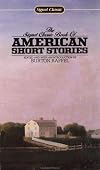
This collection of short stories begins early in the history of the US and moves forward from there, with one entry per writer featured. Brief biographies of each writer were also included before the stories. For me, this had the effect of placing the stories in their proper historical context and creating a sense of forward motion as I moved through the collection. I felt as if I was getting a sampling of many different writers (some I'd heard of, some I hadn't, some I'd read works of show more before and others I hadn't) and gaining a stronger sense of how US culture and the short story as a form have evolved over time.
I think this did a lot to help with the fact that many of the stories obviously include the types of attitudes a modern reader would no longer approve of, especially as someone living in the US who has a sense of how things have progressed since the final story featured and has a hope that we will continue to do so. Maybe I'll even have some small part in shaping that. A writer can dream!
That being said, there were some stories that were surprisingly refreshing, particularly from the earlier female authors. I found myself wondering why I never had heard about them before and in some cases wanting to read more of their works. Perhaps I will at some point.
No rating given here because some of the stories I loved (The Yellow Wallpaper will always be one of my favorites) while others I certainly didn't (skip the Hemingway story if it's going to be triggering for you). I think that's always going to be the case with a collection like this. Different people have different tastes, but I think the collection as a whole achieved its goal in providing the reader a wide and varied selection. show less
I think this did a lot to help with the fact that many of the stories obviously include the types of attitudes a modern reader would no longer approve of, especially as someone living in the US who has a sense of how things have progressed since the final story featured and has a hope that we will continue to do so. Maybe I'll even have some small part in shaping that. A writer can dream!
That being said, there were some stories that were surprisingly refreshing, particularly from the earlier female authors. I found myself wondering why I never had heard about them before and in some cases wanting to read more of their works. Perhaps I will at some point.
No rating given here because some of the stories I loved (The Yellow Wallpaper will always be one of my favorites) while others I certainly didn't (skip the Hemingway story if it's going to be triggering for you). I think that's always going to be the case with a collection like this. Different people have different tastes, but I think the collection as a whole achieved its goal in providing the reader a wide and varied selection. show less
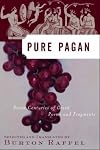
One of my favorite poet-translators, Burton Raffel, translated these Greek lyrics. Through their poetry, the poets in this anthology offer a window into ancient Greek culture. Among them are the very obscure to the somewhat less obscure, with a few familiar names like Plato. There are poems and fragments of poems for everyone's taste. Reading them, I enjoyed making connections with my own life and our twenty-first century culture. Seeing how these ancient poets influenced some of our show more greatest contemporary poets was also fascinating.
"Pure Pagan" is celebrated for its role in bringing obscure Greek poetry to light, offering readers a glimpse into the diverse voices of ancient Greece. I appreciate Raffel's modern interpretation. Because of its wide range of selection and lively, if occasionally contentious, translation style, it is a great addition for anyone interested in ancient poetry. Overall, it is a beautiful selection of poetry.
If you're interested in exploring ancient Greek poetry through a contemporary lens, this book might serve as an engaging introduction or a complementary read to more traditional translations. However, for those seeking a translation closer to the original rhythm and tone, opinions suggest looking at other translators' works as well. show less
"Pure Pagan" is celebrated for its role in bringing obscure Greek poetry to light, offering readers a glimpse into the diverse voices of ancient Greece. I appreciate Raffel's modern interpretation. Because of its wide range of selection and lively, if occasionally contentious, translation style, it is a great addition for anyone interested in ancient poetry. Overall, it is a beautiful selection of poetry.
If you're interested in exploring ancient Greek poetry through a contemporary lens, this book might serve as an engaging introduction or a complementary read to more traditional translations. However, for those seeking a translation closer to the original rhythm and tone, opinions suggest looking at other translators' works as well. show less
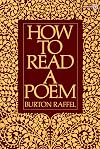
I always thought I didn't like poetry until I read Edna St. Vincent Millay's Renascence. After that, I picked this book up at a bargain sale. Rather than a chronological progression of poems, each chapter takes a different aspect of a poem, such as imagery or rhythm, and explains them in detail, using poems as an illustration. Of course it's a little bit like reading a text book at times, but I think it greatly increased my ability to appreciate poetry in general.
This is a straightforward introduction to the art of poetry. Burton Raffel, a noted poet and translator, discusses the meaning, structure, and techniques of poetry. The generous use of examples from the best of poetry is used to demonstrate the specifics of poetics.
Lists
Ambleside Year 7 (1)
You May Also Like


Associated Authors
Statistics
- Works
- 34
- Also by
- 28
- Members
- 835
- Popularity
- #30,604
- Rating
- 3.9
- Reviews
- 9
- ISBNs
- 43
- Favorited
- 2