

Gilbert Highet (1906–1978)
Author of The Classical Tradition : Greek and Roman Influences on Western Literature
About the Author
Image credit: Courtesy of the NYPL Digital Gallery (image use requires permission from the New York Public Library)
Works by Gilbert Highet
The Classical Tradition : Greek and Roman Influences on Western Literature (1949) 436 copies, 6 reviews
The old gentleman 4 copies
The mind of man 2 copies
The Odyssey 2 copies
Η κλασική παράδοση 1 copy
Rare Gilbert Highet / The Immortal Profession 1976 - NY: Weybright and Talley, 1976 [Hardcover] Highet, Gilbert (1976) 1 copy
"Juvenalʻs Bookcase" 1 copy
The anatomy of satire 1 copy
Associated Works
Paideia: The Ideals of Greek Culture: Volume I: Archaic Greece: The Mind of Athens (1939) — Translator, some editions — 390 copies, 2 reviews
Paideia: The Ideals of Greek Culture Volume II: In Search of the Divine Center (1943) — Translator, some editions — 241 copies, 2 reviews
Paideia: The Ideals of Greek Culture Volume III: The Conflict of Cultural Ideals in the Age of Plato (1944) — Translator, some editions — 229 copies, 2 reviews
Gentlemen, Scholars and Scoundrels: A Treasury of the Best of Harper's Magazine from 1850 to the Present (1972) — Contributor — 62 copies
Tagged
Common Knowledge
- Legal name
- Highet, Gilbert Arthur
- Birthdate
- 1906-06-22
- Date of death
- 1978-01-20
- Gender
- male
- Education
- University of Oxford (BA|1932|MA|1936 - Balliol College)
University of Glasgow (MA|1928) - Occupations
- professor
radio host
literary critic
translator - Organizations
- Oxford University (St. John's College)
Columbia University
British Army (WWII)
Book-of-the-Month Club
Horizon (US magazine)
Harper's Magazine - Awards and honors
- Royal Society of Literature (Fellow, 1959)
- Relationships
- MacInnes, Helen (wife)
- Short biography
- Gilbert Highet was a Scottish-American classics professor, writer, intellectual, literary critic and historian. He met his wife, the spy novelist Helen MacInnes, while they were fellow students at the University of Glasgow, and they were married in 1932. In 1937 he was appointed to the chair of Latin and Greek at Columbia University and they moved to New York. He stayed at Columbia until 1971, except for British Army service in World War II. He became a naturalized USA citizen in 1951. Besides teaching, Highet also was a prolific author of books and essays, hosted a radio program, acted as a judge for the Book-of-the-Month Club, and served on the editorial board of Horizon magazine.
- Cause of death
- cancer
- Nationality
- UK (birth)
USA (naturalized 1951) - Birthplace
- Glasgow, Lanarkshire, Scotland
- Places of residence
- New York, New York, USA
East Hampton, Long Island, New York, USA - Place of death
- New York, New York, USA
- Map Location
- USA
Members
Reviews
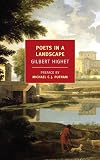
A very pleasant read, with much unintended comedy. First the good: Highet writes well, and gives you just enough information so that you want to read more of, or just read, the poets he discusses here: Catullus, Virgil, Propertius, Horace, Tibullus, Ovid, and Juvenal. He also makes me want to go back to Rome. His biographies of the poets are charming, in the patrician, pre-criticism manner; his discussions of the poetry are intriguing, particularly when he focuses closely (as in the Horace show more chapter); and even the landscape writing, which generally bores me silly, had just enough people in it for me to care. He even has the occasional, pithy, perfect phrase, as when he suggests that reading Tibullus is like "watching Thomas Gray trying to write Baudelaire's 'Flowers of Evil.'" As that phrase suggests, Highet's learning is *broad*, and he puts it to good use.
The unintended comedy just comes from reading a book written as popularization of Latin poetry in the 'fifties. There is much demonization of Caesar and praise of the noble, upright, virtuous republicans who preceded him. There is very little reference to the disasters and crises that led to Caesar getting his imperial diadem, nor to the fact that the Republic looked nothing like, e.g., the America from which Highest was writing. There were slaves, there were very few citizens etc etc... For want of a better term, I think of this as his liberal conservatism, which also creeps into the sections on the poets: Ovid is a dirty-minded little bugger, nobody should use nasty words in their poems and so on. How, exactly, Highest managed to write a book on Juvenal is beyond me.
The typical biases of a classicist are on display, too: you'd be forgiven for thinking that between the death of Juvenal and the birth of Shakespeare nothing important happened, moreover, that nothing *good* happened. That was the Dark Ages, you see. Thank goodness the Renaissance was born from the head of [insert your hero here], with no input from the centuries preceding it.
And then, what had initially looked like bad scholarship (which it is) eventually came to seem like something else: cold war rhetoric. I doubt Highet intended it, or that he was even conscious of it, but reading this book today, it's fairly obvious: the Roman Republic is the good American Republic; the Roman Empire is the USSR.
If you can extricate the good from the school-marmish silliness, the tiresome acceptance of Renaissance pieties, and the self-righteous Republicanism, this is very enjoyable. But I do worry that people will read this book, and believe what he's saying, rather than reading it for enjoyment, with a skeptical eye. show less
The unintended comedy just comes from reading a book written as popularization of Latin poetry in the 'fifties. There is much demonization of Caesar and praise of the noble, upright, virtuous republicans who preceded him. There is very little reference to the disasters and crises that led to Caesar getting his imperial diadem, nor to the fact that the Republic looked nothing like, e.g., the America from which Highest was writing. There were slaves, there were very few citizens etc etc... For want of a better term, I think of this as his liberal conservatism, which also creeps into the sections on the poets: Ovid is a dirty-minded little bugger, nobody should use nasty words in their poems and so on. How, exactly, Highest managed to write a book on Juvenal is beyond me.
The typical biases of a classicist are on display, too: you'd be forgiven for thinking that between the death of Juvenal and the birth of Shakespeare nothing important happened, moreover, that nothing *good* happened. That was the Dark Ages, you see. Thank goodness the Renaissance was born from the head of [insert your hero here], with no input from the centuries preceding it.
And then, what had initially looked like bad scholarship (which it is) eventually came to seem like something else: cold war rhetoric. I doubt Highet intended it, or that he was even conscious of it, but reading this book today, it's fairly obvious: the Roman Republic is the good American Republic; the Roman Empire is the USSR.
If you can extricate the good from the school-marmish silliness, the tiresome acceptance of Renaissance pieties, and the self-righteous Republicanism, this is very enjoyable. But I do worry that people will read this book, and believe what he's saying, rather than reading it for enjoyment, with a skeptical eye. show less
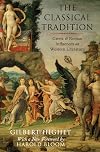

Poets in a Landscape, originally published in 1957 and newly reprinted this year, is Highet’s idiosyncratic account of traveling through Italy, visiting the towns and villages that were home to the great Latin poets—Catullus, Virgil, Horace, Ovid and Juvenal, among others. It is not like the self-indulgent travel accounts so popular these days, with their endless recitations of meals consumed in small trattorias and wines drunk in olive grove picnics. In fact the personal pronoun “I” show more almost never appears in the book. And “we” is equally rare—uttered only when Highet and his wife (the espionage writer Helen MacInnes, although he never introduces her) stop to knock on the door of some ancient villa reputed to belong to the poet Horace, or introduce themselves to the caretaker of his newly-excavated country house. There is no food, except what Virgil happens to mention when he talks about farming, and no wine, except what Horace writes about drinking at his Sabine farm. (Although to be fair there is quite a lot of that.) The tone reminds me, instead, of D.H. Lawrence’s Twilight in Italy, or Etruscan Places. Highet, like Lawrence, has his eyes set on more eternal things than the smug satisfaction that comes from a good supper in a strange town.
It was a mad enterprise, to go looking for an Italy that was last seen more than two thousand years ago. But Gilbert Highet, who, as he writes, had spent his life “on the study and interpretation of Roman and Greek history, philosophy, literature, and art”—his reputation as a classical scholar and beloved teacher at Columbia University was already well established—was certain it was there, still showing through the cracks, as it were, of the overlaid presences of Renaissance architecture and Baroque pomp.
He found what he was looking for. “. . . although I knew that much of the Greco-Roman world survived in Italy,” he writes, “still it was a tremendous surprise for me to discover the nature of that survival, and to experience its intensity.” That intensity he speaks of is infused throughout the book, stripping away the modernities of the landscape (meaning, anything dating later than about 100 AD) to show the vistas that would have held the gaze of his ancient poets...full review show less
It was a mad enterprise, to go looking for an Italy that was last seen more than two thousand years ago. But Gilbert Highet, who, as he writes, had spent his life “on the study and interpretation of Roman and Greek history, philosophy, literature, and art”—his reputation as a classical scholar and beloved teacher at Columbia University was already well established—was certain it was there, still showing through the cracks, as it were, of the overlaid presences of Renaissance architecture and Baroque pomp.
He found what he was looking for. “. . . although I knew that much of the Greco-Roman world survived in Italy,” he writes, “still it was a tremendous surprise for me to discover the nature of that survival, and to experience its intensity.” That intensity he speaks of is infused throughout the book, stripping away the modernities of the landscape (meaning, anything dating later than about 100 AD) to show the vistas that would have held the gaze of his ancient poets...full review show less
You will have to stop reacting to some archaic social values of the author to start appreciating and learning from the text. The juxtaposition is all to clear: barbaric societies, barbaric tongues of Europe receiving the light of civilization (which is not wealth but thought) and some grammatic goodness from the Greeks through Romans, enriched and transformed by the latter. There is some sympathetic treatment of women, but generally education is reserved for boys. There are some reservations show more and empathy, but homosexuality is perversion etc. In 1949 (or earlier?) some nationalistic tendencies seem to be still in vogue; for example, the author does not let Germans off the hook, although there is a clear disclaimer in the end, renouncing all characterization through national identity. The sheer number of artists "produced" by their era, country, society as well as periods and communities "not capable of producing any" etc. is extremely annoying, but all this may be taken just for a manner of speaking. It is fine to treat artists, even the greatest ones, as humans with all the corresponding faults, whims and the like; but sometimes the approach seems to be somewhat excessively judgemental and ad hominem (while, to be sure, still somehow always manages to remain respectful and probably fair).
Nevertheless it's a great book with a huge scope and a staggeringly rich source of information. GH is very particular about clear writing uncluttered by footnotes and scientific layering as well as uncontaminated by professional jargon. In short, here is stimulating, edifying, but enjoyable and very accessible reading. Sometimes the author is even drawn into the poetic realms - which is probably inevitable giving the subject matter - and soars among lofty metaphors and thrilling dramatic allegories.
Especially gratifying is the treatment of the most modern literature at the time; there is still some bafflement in GH's analysis of "Ulysses", delightful respectfulness and light polemic with the living T.S.Eliot and some more such stuff.
A highly recommended slow and/or occasional reading (does anyone do that any more?), but be warned: this will leave your reading list bloated and sore. show less
Nevertheless it's a great book with a huge scope and a staggeringly rich source of information. GH is very particular about clear writing uncluttered by footnotes and scientific layering as well as uncontaminated by professional jargon. In short, here is stimulating, edifying, but enjoyable and very accessible reading. Sometimes the author is even drawn into the poetic realms - which is probably inevitable giving the subject matter - and soars among lofty metaphors and thrilling dramatic allegories.
Especially gratifying is the treatment of the most modern literature at the time; there is still some bafflement in GH's analysis of "Ulysses", delightful respectfulness and light polemic with the living T.S.Eliot and some more such stuff.
A highly recommended slow and/or occasional reading (does anyone do that any more?), but be warned: this will leave your reading list bloated and sore. show less
Lists
Awards


You May Also Like


Associated Authors
Statistics
- Works
- 28
- Also by
- 15
- Members
- 1,724
- Popularity
- #14,909
- Rating
- 4.1
- Reviews
- 18
- ISBNs
- 45
- Languages
- 2
- Favorited
- 7