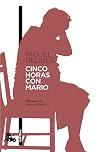
Five Hours With Mario
by Miguel Delibes
On This Page
Description
Carmen sits alone with her late husband, Mario, for the last time and looks back on their marriage and years together.Tags
Recommendations















Member Reviews
Set in Spain towards the end of the Franco dictatorship the story begins as Mario has just died of a heart attack (March 24, 1966--age 49) and people have been coming to his home to offer condolences to his widow Carmen. At the end of the night when the guests have all left Carmen decides to stay up all night with the deceased--to argue with the body of her dead husband in exasperated tones as Mario in her eyes has been a failure--has sold himself short by not taking advantage of opportunities that have come his way during his lifetime, by maintaining friendships with the wrong people, by being politically active against the Franco dictatorship, by not automatically hating prostestants and foreigners and for never having owned a car show more besides which Mario (a teacher) has written a numbers of novels that have gone nowhere because they tend to be critical of the regime and bad things tend to happen in them. Carmen--to use a couple lines from the book blurb--thinks 'the civil war years were the best of her life, with "everybody sort of on vacation, the streets full of boys, and all that commotion." She scoffs at a university education for her own daughter believing that attending college "isn't feminine." Carmen in other words knows her place in a stifling bourgeois society and is something of a bigot. As a simple outline this isn't bad but for all that Delibes isn't just content to use Carmen as an example of the hypocritical society she springs from--he is very much intent on showing her in a sympathetic light--she is very human and reflective of humanity as a whole. Mario's death to her is a blow--and she suffers from her own guilt about her own life which she can barely admit to herself but finally does in the books' final pages. A very moving and fluid book with touches of comedy. Delibes is a fine writer with an acute social sense. This is an excellent work at least in my opinion. show less
Ya había leído a Delibes hace unos años. Su famosa y aclamada obra 'Los Santos inocentes', adaptada al cine, forma parte de la cultura popular de nuestro país. Lo cierto es que no conseguí simpatizar demasiado con esta obra, aunque me gustó haber podido conocer más sobre sus personajes que son, cuánto menos, emblemáticos.
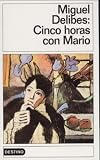
Una compañera me dejó una edición de 'Cinco horas con Mario' antigua y hermosa, lo que me animó a darle una segunda oportunidad al escritor. Lo cierto es que esta novela me gustó muchísimo más que la anterior, tal vez porque logré sentirme más cerca del estilo narrativo empleado aquí, el viaje interior de Carmen (un complejo entramado de sentimientos, recuerdos, reproches...) y un reflejo fiel de show more varios matices de la sociedad de aquel entonces. Esto último es muy interesante, sobre todo visto desde la visión de una mujer que habla con franqueza (teniendo en cuenta que le habla al ataúd de su marido) y sin tapujos: critica las ideologías políticas de su marido, hace referencias constantes a la religión. a la vida en el pueblo, las apariencias, la necesidad, el reflejo de una población sin inquietudes ni estudios.
La literatura imita la lengua oral, tal y como ocurre en 'Los Santos inocentes'. Y dado que el narrador es, durante la mayor parte de la novela, Carmen, esta lengua es simple, a veces torpe y poco condecorada. Su lectura es, por lo tanto, amena en este sentido, aunque podría resultar tediosa por la repetición y la poca pausa que otorga la forma en la que se narra.
Creo que es una obra literaria que cualquiera debería leer. La originalidad del modo y la sinceridad que se refleja, sin miedo, en sus palabras, hacen de este libro un clásico imprescindible de nuestra literatura. show less
Una compañera me dejó una edición de 'Cinco horas con Mario' antigua y hermosa, lo que me animó a darle una segunda oportunidad al escritor. Lo cierto es que esta novela me gustó muchísimo más que la anterior, tal vez porque logré sentirme más cerca del estilo narrativo empleado aquí, el viaje interior de Carmen (un complejo entramado de sentimientos, recuerdos, reproches...) y un reflejo fiel de show more varios matices de la sociedad de aquel entonces. Esto último es muy interesante, sobre todo visto desde la visión de una mujer que habla con franqueza (teniendo en cuenta que le habla al ataúd de su marido) y sin tapujos: critica las ideologías políticas de su marido, hace referencias constantes a la religión. a la vida en el pueblo, las apariencias, la necesidad, el reflejo de una población sin inquietudes ni estudios.
La literatura imita la lengua oral, tal y como ocurre en 'Los Santos inocentes'. Y dado que el narrador es, durante la mayor parte de la novela, Carmen, esta lengua es simple, a veces torpe y poco condecorada. Su lectura es, por lo tanto, amena en este sentido, aunque podría resultar tediosa por la repetición y la poca pausa que otorga la forma en la que se narra.
Creo que es una obra literaria que cualquiera debería leer. La originalidad del modo y la sinceridad que se refleja, sin miedo, en sus palabras, hacen de este libro un clásico imprescindible de nuestra literatura. show less
Madrid in the sixties. A woman loses absolutely unexpected her husband. In the long leave with the corpse in front of her the night before the funeral, she recalls the trajectory of their collective life, marked by the absence of communication and the conditions of Franco’s dictatorship.
Drama y monólogo llevado al teatro
04-DEL-CIN
8475304842
Members
- Recently Added By
Lists

Las 100 Mejores Novelas en Castellano del Siglo XX
105 works; 13 members

Top Five Books of 2017
757 works; 231 members

Books Read in 2018
4,360 works; 110 members

España en cien libros
100 works; 1 member
Author Information

140+ Works 6,671 Members
Miguel Delibes was born in Valladolid, Spain on October 17, 1920. During the Spanish civil war, he served in the navy. In 1941, he worked as a cartoonist for Valladolid's main paper, El Norte de Castilla (The North of Castile). A year later, he wrote his first article and by 1944 was a reporter. He became editor of El Norte de Castilla in 1958, show more but was forced to resign in 1963. His first novel, La Sombra del Ciprés es Alargada (The Cypress Casts a Long Shadow), won the Nadal prize in 1948. His other works include Aún es de Día (It's Still Light), Las Ratas (The Rats), Cinco Horas con Mario (Five Hours with Mario), Los Santos Inocentes (The Holy Innocents), La Tierra Herida (The Wounded Earth), and El Hereje (The Heretic). He won numerous awards including the National Literature prize in 1955 and 1999, the Príncipe de Asturias in 1982, and the Cervantes Prize in 1994. He died on March 12, 2010 at the age of 89. (Bowker Author Biography) show less
Awards and Honors
Series
Belongs to Publisher Series
Common Knowledge
- Canonical title
- Five Hours With Mario
- Original title
- Cinco horas con Mario
- Original publication date
- 1966
- First words*
- GEDENK IN UW GEBEDEN
DE ZIEL VAN
Don Mario Díez Collado,
die gesterkt door de Heilige Sacramenten
overleden is op 24 maart 1966
in de leeftijd van 49 jaar
R.I.P.
*Some information comes from Common Knowledge in other languages. Click "Edit" for more information.
Classifications
Statistics
- Members
- 695
- Popularity
- 41,123
- Reviews
- 25
- Rating
- (3.66)
- Languages
- 8 — Dutch, English, French, Italian, Norwegian (Bokmål), Norwegian, Spanish, Swedish
- Media
- Paper, Audiobook, Ebook
- ISBNs
- 34
- ASINs
- 14