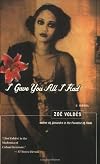
I Gave You All I Had
by Zoé Valdés
On This Page
Description
A novel on Cuba featuring Juan and Cuca. He teaches her to kiss, then leaves her when she refuses sex. Eight years later he scores, but has to flee the revolution for Miami, leaving her pregnant. He returns 36 years later, a mobster with a face-lift. She is toothless, but passion wins out. Then he goes to jail.Tags
Recommendations























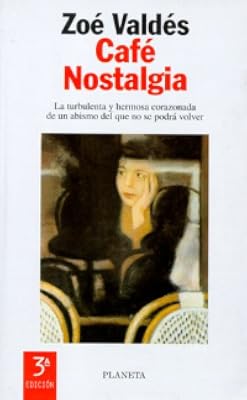
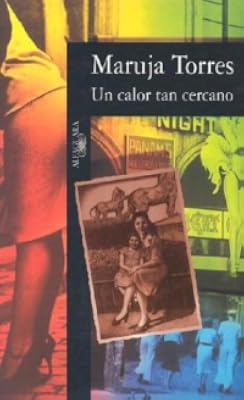
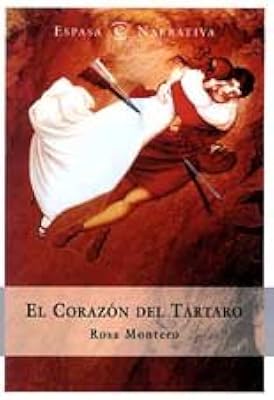
Member Recommendations
Member Reviews
I had to grit my teeth to get through this book, which was the next one from the shelves of my local library. There were many things about it which I did not like and yet is held a fascination for me and that fascination was the immersion in downtown Havana Cuba. Zoé Valdes is a Cuban author living in self exile in Paris since 1995. She was born in Havana in 1959 the year when the corrupt Baptista regime was overthrown and Fidel Castro established his communist government. Her family would therefore have been used to the cultural norms of the old regime. Her novel tells the story of Cuca Perez who was in her late teens living in Havana at the time of the communist insurrection and I was surprised how the perspective of the book was show more towards the right. So extreme in fact that the author cannot bring herself to name Castro; she calls him Taille Extra (french translation).
Cuca Perez lives with an aunt in a rumbustious household that also contains two slightly older girls who get by living off the men and women that they pick up in the club scene in Havana. Cuca shares a room with these two and has to spend many nights out on the landing while they entertain their clients. Most nights they are taken downtown by Ivo, who runs a car and they take Cuca with them to introduce her to the nightlife. Cuca meets Ouane who teaches her how to dance and takes her virginity. He has money, but he appears and disappears blaming his business interests, Cuca is head over heels in love with him. She becomes pregnant and one night he visits her at home and gives her a dollar bill, which he says she must guard with her life as he has to go away for some time. Thirty six years later Cuca is still dreaming of L'Ouane, she like many poor people in Havana is scraping by trying to feed herself, always glancing round in case she see's L'Ouane and one day she does see him. He is anxious to see her and wants to meet his daughter, now of course a grown up woman working as a journalist. He also is desperate to trace that dollar bill that he left with Cuca.
The story is an interesting one covering the political divide that happened in Cuba during the late 1950's and which led to a change in life style's when the Cuban regime was ostracised by the West. The embargo placed on it by the USA and the regimes dependence on Russian support led to difficult times for a population stuck on "prison island" (Zoe Valdez). Cuca unwittingly becomes peripherally involved in the politics through her connection with L'Ouane. There is a marked contrast to life in old Havana when it was full of American tourists and the clubs and bars were doing tremendous business, to the desperate struggle for existence under the communist regime. Valdez has a love for the old Havana and her passion for the city pours out of these pages. She combines the sights with the sounds of Cuban popular music, frequently quoting from popular songs and popular works of art. The dance and rhythm of the city make this novel come alive at times.
However apart from the right wing perspective which does not sit well with me, there are other difficulties. The novel sprawls and if this was meant to portray life in Havana, then it is a fine artistic achievement, but I doubt this very much. Apart from the popular culture, which is all pervading there are also recipes, idle thoughts of the characters and reflections that seem to come from elsewhere. The novel dwells on the filth and degradation of the city and at times on the sexual predilections of the characters. It does seem at times to wallow in its own disgust. However in my opinion its worst fault is a continual conversation with the would be reader. I never though I would find a novelist who would "get in my face" so much, even offering to rewrite the ending if it was not to my taste.
The novel was originally written in Spanish (Te Di La Vida Entera) and translated into french by Liliane Hasson and could not have been an easy task as she must have run out of words or phrases describing male and female sexual parts. Just taking the next book along the shelf as a way of selecting a library book is obviously going to throw up some curve balls and I haven't found one yet that was a waste of time. This one perhaps took up too much of my time, but it did lead me to refresh myself on Cuban history and learn a little about Cuban popular culture. 3 stars. show less
Cuca Perez lives with an aunt in a rumbustious household that also contains two slightly older girls who get by living off the men and women that they pick up in the club scene in Havana. Cuca shares a room with these two and has to spend many nights out on the landing while they entertain their clients. Most nights they are taken downtown by Ivo, who runs a car and they take Cuca with them to introduce her to the nightlife. Cuca meets Ouane who teaches her how to dance and takes her virginity. He has money, but he appears and disappears blaming his business interests, Cuca is head over heels in love with him. She becomes pregnant and one night he visits her at home and gives her a dollar bill, which he says she must guard with her life as he has to go away for some time. Thirty six years later Cuca is still dreaming of L'Ouane, she like many poor people in Havana is scraping by trying to feed herself, always glancing round in case she see's L'Ouane and one day she does see him. He is anxious to see her and wants to meet his daughter, now of course a grown up woman working as a journalist. He also is desperate to trace that dollar bill that he left with Cuca.
The story is an interesting one covering the political divide that happened in Cuba during the late 1950's and which led to a change in life style's when the Cuban regime was ostracised by the West. The embargo placed on it by the USA and the regimes dependence on Russian support led to difficult times for a population stuck on "prison island" (Zoe Valdez). Cuca unwittingly becomes peripherally involved in the politics through her connection with L'Ouane. There is a marked contrast to life in old Havana when it was full of American tourists and the clubs and bars were doing tremendous business, to the desperate struggle for existence under the communist regime. Valdez has a love for the old Havana and her passion for the city pours out of these pages. She combines the sights with the sounds of Cuban popular music, frequently quoting from popular songs and popular works of art. The dance and rhythm of the city make this novel come alive at times.
However apart from the right wing perspective which does not sit well with me, there are other difficulties. The novel sprawls and if this was meant to portray life in Havana, then it is a fine artistic achievement, but I doubt this very much. Apart from the popular culture, which is all pervading there are also recipes, idle thoughts of the characters and reflections that seem to come from elsewhere. The novel dwells on the filth and degradation of the city and at times on the sexual predilections of the characters. It does seem at times to wallow in its own disgust. However in my opinion its worst fault is a continual conversation with the would be reader. I never though I would find a novelist who would "get in my face" so much, even offering to rewrite the ending if it was not to my taste.
The novel was originally written in Spanish (Te Di La Vida Entera) and translated into french by Liliane Hasson and could not have been an easy task as she must have run out of words or phrases describing male and female sexual parts. Just taking the next book along the shelf as a way of selecting a library book is obviously going to throw up some curve balls and I haven't found one yet that was a waste of time. This one perhaps took up too much of my time, but it did lead me to refresh myself on Cuban history and learn a little about Cuban popular culture. 3 stars. show less
Cuca Martinez is a naive and young teenage girl, who landed to Havana fresh out from the countryside where she grew up. She will work as a maid, meet a wild array of people, discover a city before the Revolution: hustling, in full cultural and intellectual swing, dancing, partying. She will, above all, meet the man of her life, a member of the mafia (no less) who will get her pregnant and then bugger off, only to resurface once in a decade. There goes for the story line, then, a cheesy plot which, to me personally, is quite frankly uninteresting by itself. What about the rest, then (context, characters, writing style...)?
Well, the writing is very simple. Zoé Valdés does try to be creative (she is frivolous to the point of directly show more addressing the reader and her characters) but it falls flat. She loses the plot mid-way, and the last chapters are in fact going so completely pear shape that, it makes their reading annoying. She tries too hard, and it turns ridiculous...
The only thing that could be interesting are her criticisms of Fidel Castro's regime (which she nicknames 'XXL'...), and, yet, even with that, she falls into the easy and expected.
I just didn't understand the hype. show less
Well, the writing is very simple. Zoé Valdés does try to be creative (she is frivolous to the point of directly show more addressing the reader and her characters) but it falls flat. She loses the plot mid-way, and the last chapters are in fact going so completely pear shape that, it makes their reading annoying. She tries too hard, and it turns ridiculous...
The only thing that could be interesting are her criticisms of Fidel Castro's regime (which she nicknames 'XXL'...), and, yet, even with that, she falls into the easy and expected.
I just didn't understand the hype. show less
9788408035510
8439567324
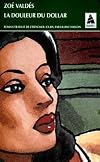
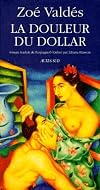
> Pour Cuqua, dite "la môme", petite Cubaine surprenante par sa candeur et sa générosité, la vie est sacrifice. Son premier dévouement, elle le dédie à "Ouane", celui qui l'embrassa un soir de fête. Pour cet amour unique, elle entre en religion, allant jusqu'à se mutiler – elle s'arrachera les dents – pour ne plus plaire aux autres. Cuqua ne cessera plus, pendant 30 ans, de guetter le retour de ce trafiquant mafieux anti-révolutionnaire. De même, l'amour qu'elle porte à sa fille est enraciné dans une profonde abnégation. Mais loin de prendre toute la mesure de ce sacrifice, par désir d'indépendance et par fierté, sa fille la repousse. Seuls ses amis, fidèles, originaux, perçoivent en Cuqua cette "femme show more célibataire habitant sur une île musicale et prétentieuse, plus seule qu'un solo, et mille fois plus pauvre que Cendrillon". Enfin, le dernier renoncement de Cuqua demeure celui dont souffrent tous les Cubains. Zoé Valdès dénonce sans complaisance le combat pour la vie dans un Cuba exsangue. Elle avoue ici toute son aigreur, et l'on perçoit sa haine de ce régime castriste, qui méprise les droits de son peuple et qui a trahi ce fol espoir d'un monde meilleur.
--Lenaïc Gravis & Jocelyn Blériot, Amazon.fr
> Une femme attend son amoureux, l'homme qui va et vient dans sa vie, sur fond de Cuba révolutionnaire. Dans les années cinquante, Cuca quitte son trou perdu natal pour partir à la Havane. Elle trime le jour, mais se perd la nuit dans les lumières de la ville. Au music-hall, elle danse et pleure sur les chansons de Piaf. C'est là qu'elle rencontre celui qui sera son unique amour et dont elle aura une fille, l'année de la révolution. Mais son homme s'enfuit à Miami et la vie de Cuca s'égrène, année après année, dans la pauvreté croissante de Cuba. Une vie qu'elle supporte grâce au souvenir, avec fierté et humour lorsque, soudain, son amour réapparaît...
Valdès écrit comme Cuca vit : avec humour et rapidité. On a rarement lu un ouvrage qui parle avec autant d'ironie de sexualité et de politique. Dans une langue métaphorique et pleine d'humour, Zoé Valdès suggère la chaleur, la vie sauvage et l'atmosphère magique-réaliste de la Havane.
--Annette Lonchampt, Urbuz.com show less
--Lenaïc Gravis & Jocelyn Blériot, Amazon.fr
> Une femme attend son amoureux, l'homme qui va et vient dans sa vie, sur fond de Cuba révolutionnaire. Dans les années cinquante, Cuca quitte son trou perdu natal pour partir à la Havane. Elle trime le jour, mais se perd la nuit dans les lumières de la ville. Au music-hall, elle danse et pleure sur les chansons de Piaf. C'est là qu'elle rencontre celui qui sera son unique amour et dont elle aura une fille, l'année de la révolution. Mais son homme s'enfuit à Miami et la vie de Cuca s'égrène, année après année, dans la pauvreté croissante de Cuba. Une vie qu'elle supporte grâce au souvenir, avec fierté et humour lorsque, soudain, son amour réapparaît...
Valdès écrit comme Cuca vit : avec humour et rapidité. On a rarement lu un ouvrage qui parle avec autant d'ironie de sexualité et de politique. Dans une langue métaphorique et pleine d'humour, Zoé Valdès suggère la chaleur, la vie sauvage et l'atmosphère magique-réaliste de la Havane.
--Annette Lonchampt, Urbuz.com show less
Jan 30, 2019 (Edited)French
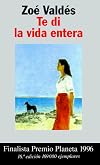
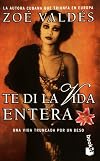
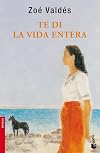
Una novela rebosante de humor ácido y erotismo, que retrata sesenta años de la vida de una mujer cubana. Una magnífica novela sobre el deseo, la esperanza y el desencanto. Te di la vida entera es la historia de Cuca, Cu-quita, la Niña Cuca -como todo el mundo la llama-, que con poco más de dieciséis años llega a La Habana prerrevolucionaria. Allí, con la complicidad de dos vo-luptuosas mujeres con las que entablará una estrecha amistad, conocerá el sabor y el ritmo de la noche habanera. Después de un baile enloquecido y un largo y apasionado beso, la Niña Cuca cae perdidamente enamorada de un hombre que desaparece sin dejar rastro. Pero ella sabe mantenerse fiel a su promesa, y ocho años más tarde, cuando por fin se show more reencuentran, inician una desenfrenada historia de amor. Pero la felicidad abandona pronto a Cuca, una mujer a quien la vida le cambia cada vez que escucha un bolero. De nuevo sola, durante los primeros años de la Revolución Cuca se dedica en cuerpo y alma a sacar adelante a su hija y a esperar el regreso de su amante. A medida que se van imponiendo la degradación, el desabastecimiento y la miseria, su ilusión irá menguando para convertirse en absurdo. Al ritmo de la música cubana, el lector recorrerá los excesos y el envilecimiento de la vida antes y después de la Revolución. Te di la vida entera es una novela rebosante de humor ácido y erotismo que retrata sesenta años de la vida de una mujer cubana. Con mucho desparpajo y haciendo gala de un impresionante dominio del lenguaje, Zoé Valdés ha escrito una magnífica novela sobre el deseo, la esperanza y el desencanto. Esta novela ha quedado finalista del Premio Planeta 1996.
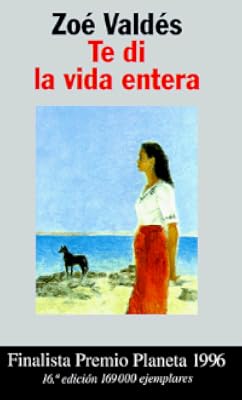
Finalista Premio Planeta de Novela 1996 show less
Finalista Premio Planeta de Novela 1996 show less
Mar 8, 2022Spanish
Members
- Recently Added By
Author Information

60+ Works 1,361 Members
Awards and Honors
Awards
Series
Belongs to Publisher Series
Common Knowledge
- Canonical title
- I Gave You All I Had
- Original title
- Te di la vida entera
- Original publication date
- 1996 (1ere édition originale l Espagne) (1ere édition originale l Espagne)
- Epigraph*
- Si à la fin je devais écrire
ce qu'a été mon univers,
si à la fin je devais signaler
les jours les plus profonds,
c'est sur toi que j'écrirais
le plus, en compensation,
car tu es amour, joie, illus... (show all)ions,
sentiment et chimère.
Chanson de Juan Arrondo,
interprétée par Clara et Marion. - Dedication*
- A maman
*Some information comes from Common Knowledge in other languages. Click "Edit" for more information.
Classifications
- Genres
- Fiction and Literature, General Fiction
- DDC/MDS
- 863.64 — Literature & rhetoric Spanish Literature Spanish fiction 20th Century 1945-2000
- LCC
- PQ7390 .V342 .T313 — Language and Literature French, Italian, Spanish and Portuguese literatures Spanish literature Provincial, local, colonial, etc. Spanish America
- BISAC
Statistics
- Members
- 304
- Popularity
- 105,678
- Reviews
- 12
- Rating
- (3.48)
- Languages
- 9 — Dutch, English, Finnish, French, German, Italian, Russian, Spanish, Swedish
- Media
- Paper, Ebook
- ISBNs
- 30
- ASINs
- 4