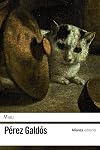
Miau
by Benito Pérez-Galdós
On This Page
Description
Benito Perez Galdos' finely-crafted novel, Meow, is a tragi-comedy. It is the story of a middle-aged, middle class middle-manager who does not know how to pull the strings that could get him reinstated to his job in the Spain's civil service, from which he has been laid off with only two months to go for him to be eligible for his pension, and save his family from certain poverty. Villaamil is obsessed with the work he used to do and needs still to be doing, not only because his family show more acutely needs his pension but also because he is particularly good at what he does: but he is only rebuffed and ridiculed. Obsessively, compulsively, he returns to his former workplace; buttonholes men whose careers he had once jumpstarted but whose gratitude he does not seem to have retained; is mocked and rejected time and again. Ridicule - and its necessary obverse, egotism - is a central theme to a number of sub-plots concerning the complex intra-familial relationships of various members of the Villaamil family: the ridicule itself functioning as a mask for feelings of insecurity and inferiority. Three subordinate characters introduce the reader to the"meow" motif in its first, ironic incarnation: the women in the Villaamil household whose comical facial resemblance to a cat inspired their nickname. But the epithet is later appropriated by Ramon himself when he makes of its letters a series of progressively darker acronyms that express his growing desperation and alienation. Galdos'indictment of human frailty, sometimes judgmental, sometimes compassionate, is acutely, psychologically penetrating; and thus his characters are splendidly realized, rounded and recognizable in the modern world. show lessTags
Recommendations




















Member Reviews
The Villaamil family in 1800s Madrid are a lively, eccentric bunch. Don Ramon, a currently unemployed but long-time government bureaucrat needs just two months more work to collect his pension but seems to have been frozen out.
His young grandson, Luis, has conversations with God and wants to be a priest. Luis' father is a malign and troublesome presence in the family.
Don Ramon's frivolous spendthrift wife and their daughters, known as the Miaows due to their resemblance to cats, devote themselves to attending the opera and trying to be fashionable while broke.
Don Ramon sinks into despair as Luis recounts his talks with God that seem to confirm no relief from the current trouble and poverty in sight for the family. He then takes matters show more into his own hands with uncharacteristic decisive action. show less
His young grandson, Luis, has conversations with God and wants to be a priest. Luis' father is a malign and troublesome presence in the family.
Don Ramon's frivolous spendthrift wife and their daughters, known as the Miaows due to their resemblance to cats, devote themselves to attending the opera and trying to be fashionable while broke.
Don Ramon sinks into despair as Luis recounts his talks with God that seem to confirm no relief from the current trouble and poverty in sight for the family. He then takes matters show more into his own hands with uncharacteristic decisive action. show less
Cuando leía las opiniones de algunos hispanistas que decían de Galdós que era el mejor escritor español después de Cervantes, yo tuve mis reservas. Aún las tengo, pero después de leer Miau no puedo negar que este autor es uno de los mejores que tocó nuestra preciada lengua. La psicología de sus personajes está magistralmente desplegada, su prosa es luminosa y una delicia de leer. Aunque los hablantes del español a veces tengamos una rara especie de complejo de inferioridad ante otras literaturas, con Galdós como caballo de batalla decimonónico sí podemos competir contra cualquier Dickens y contra cualquier Dostoievski.
Miau is a cruel novel telling of the fall of Vilaamil, a once high ranking official in the Spanish government, but now compelled to beg his pension, use his grand-son to plead money and favour, and, live out of the charity of some of his family members, a family he barely manages to support. Is this all the fault of an ungrateful government? Or was the man thinking too high of himself and so expected way beyond his true value? It doesn't matter. This Spanish realism is of a biting cruelty, as striking as a blow straight to the face.
Unfortunately, the book is long, way too looong, spreading itself into a read which seems never ending (I confess I forced myself, I read this at a time when I was making a point to end my every book... show more Well!). The topic, for sure, is a perfect occasion to depict pretentious bureaucrats whose ambitions only equals their vanity. Yet, I wasn't enthralled. First, because such a quest for favours and money among the Madrid's bourgeoisie is not a subject which, I think, deserves such length to ponder upon. Then, because juggling between a grumpy old f.rt and an annoyingly snobbish family, trying desperately to keep up appearances despite a financial situation so dire it doesn't afford it its past lifestyle, you can't really claim characters are appealing. In fact, even the kid -Luis- is of an irritating bigotry.
Here are harsh and well-painted characters, at the image of a whole social class as arrogant as it is ridicule, but, the length and writing style were too soporific to my taste to be fully appreciated. It bored me more than anything. show less
Unfortunately, the book is long, way too looong, spreading itself into a read which seems never ending (I confess I forced myself, I read this at a time when I was making a point to end my every book... show more Well!). The topic, for sure, is a perfect occasion to depict pretentious bureaucrats whose ambitions only equals their vanity. Yet, I wasn't enthralled. First, because such a quest for favours and money among the Madrid's bourgeoisie is not a subject which, I think, deserves such length to ponder upon. Then, because juggling between a grumpy old f.rt and an annoyingly snobbish family, trying desperately to keep up appearances despite a financial situation so dire it doesn't afford it its past lifestyle, you can't really claim characters are appealing. In fact, even the kid -Luis- is of an irritating bigotry.
Here are harsh and well-painted characters, at the image of a whole social class as arrogant as it is ridicule, but, the length and writing style were too soporific to my taste to be fully appreciated. It bored me more than anything. show less
Muy buen retrato del Madrid de finales del XIX, del funcionariado y de la situación política a pie de calle.
A Spanish superior official tries unsuccessfully like a modern Don Quijote to obtain his pension in a corrupt administration
8433502484
Quienes hayan repasado algún apunte mío sabrán qué consideración me merece Pérez Galdós. Hacía tantos años que había leído «Miau» que su relectura ha sido un nuevo descubrimiento. La novela nos habla de la burocracia en la administración pública del siglo XIX y de los funcionarios cesantes.
El anciano don Ramón de Villaamil es un funcionario cesante que ha trabajado toda la vida en la administración pública (Madrid). Su máxima aspiración es trabajar lo que le queda de vida laboral para lograr un pensión digna, que sirva para mantener a su familia, acostumbrada a un nivel de vida aceptable. Para ello, debe encontrar buenos «enchufes» y mientras pedir ayuda a los amigos y endeudarse con el fin último por parte de su show more familia de aparentar una bonanza económica que nunca llega. Su más fiel colaborador es Luis Cadalso, su nieto, que ejerce de cartero de su abuelo continuamente. El pequeño vive con su familia materna tras la trágica muerte de su madre.
Convive con tres mujeres: doña Pura, Milagros y Abelarda; unas apasionadas de la buena vida y las representaciones de ópera, de las que no se pierden ni una. Por su aspecto relamido, sus facciones menudas y aniñadas y sus pretensiones de aparentar son llamadas «las Miau». Están empeñadas en fingir, y amargan la vida de Villaamil con su inconsciencia y frivolidad. No se conforman con llevar una vida ajustada a sus posibilidades.
Con el continuo ir y venir de Luis al Ministerio con las cartas de su abuelo, las salidas operísticas de las mujeres y la penuria económica, comienza a dibujarse en la casa una trágica normalidad, que empieza a hundir a Villaamil. Pero entonces aparece el padre de Luis, Víctor Cadalso, al que en la familia se le cree responsable de la muerte de su malograda hija Luisa.
Víctor también trabaja en la administración. Pero a diferencia de Villaamil, no basa su trabajo en la honradez. Víctor se instala en la casa por obra y gracia del apoyo de las mujeres y del dinero que va repartiendo, pero a lo largo de su estancia genera continuos problemas. Enamora a Abelarda, le promete su amor sólo para divertirse y cuando ella le confiesa su enamoramiento le da de lado.
Una deuda contraída con su hermana, Quintina, lleva a Víctor a entregarle a su hijo. Esto, unido al ascenso de Víctor en el Ministerio y a la impotencia que Villaamil siente por no poder colocarse, genera tal sentimiento de frustración en Villaamil, que cuando se planifica la boda de su hija y observa que ya no será necesario económicamente hablando… Creo que no debo contar el final.
«Miau» se sitúa en la época de plenitud del Realismo, cuya base consiste en la observación. Políticamente, esta es una época de relativa calma tras la Restauración borbónica de 1875, con el reinado de Alfonso XII. show less
El anciano don Ramón de Villaamil es un funcionario cesante que ha trabajado toda la vida en la administración pública (Madrid). Su máxima aspiración es trabajar lo que le queda de vida laboral para lograr un pensión digna, que sirva para mantener a su familia, acostumbrada a un nivel de vida aceptable. Para ello, debe encontrar buenos «enchufes» y mientras pedir ayuda a los amigos y endeudarse con el fin último por parte de su show more familia de aparentar una bonanza económica que nunca llega. Su más fiel colaborador es Luis Cadalso, su nieto, que ejerce de cartero de su abuelo continuamente. El pequeño vive con su familia materna tras la trágica muerte de su madre.
Convive con tres mujeres: doña Pura, Milagros y Abelarda; unas apasionadas de la buena vida y las representaciones de ópera, de las que no se pierden ni una. Por su aspecto relamido, sus facciones menudas y aniñadas y sus pretensiones de aparentar son llamadas «las Miau». Están empeñadas en fingir, y amargan la vida de Villaamil con su inconsciencia y frivolidad. No se conforman con llevar una vida ajustada a sus posibilidades.
Con el continuo ir y venir de Luis al Ministerio con las cartas de su abuelo, las salidas operísticas de las mujeres y la penuria económica, comienza a dibujarse en la casa una trágica normalidad, que empieza a hundir a Villaamil. Pero entonces aparece el padre de Luis, Víctor Cadalso, al que en la familia se le cree responsable de la muerte de su malograda hija Luisa.
Víctor también trabaja en la administración. Pero a diferencia de Villaamil, no basa su trabajo en la honradez. Víctor se instala en la casa por obra y gracia del apoyo de las mujeres y del dinero que va repartiendo, pero a lo largo de su estancia genera continuos problemas. Enamora a Abelarda, le promete su amor sólo para divertirse y cuando ella le confiesa su enamoramiento le da de lado.
Una deuda contraída con su hermana, Quintina, lleva a Víctor a entregarle a su hijo. Esto, unido al ascenso de Víctor en el Ministerio y a la impotencia que Villaamil siente por no poder colocarse, genera tal sentimiento de frustración en Villaamil, que cuando se planifica la boda de su hija y observa que ya no será necesario económicamente hablando… Creo que no debo contar el final.
«Miau» se sitúa en la época de plenitud del Realismo, cuya base consiste en la observación. Políticamente, esta es una época de relativa calma tras la Restauración borbónica de 1875, con el reinado de Alfonso XII. show less
Sep 16, 2013 (Edited)Spanish
1
Members
- Recently Added By
Author Information

607+ Works 9,616 Members
Perez Galdos was Spain's outstanding nineteenth-century novelist. At a time when most Spanish novelists were limited by their regional backgrounds, Galdos possessed the intellect and vision to embrace the Spanish people as a nation. In 1873 he began the Episodios nacionales (National Episodes), a 46--volume series of historical novels in which he show more was concerned less with details and facts of history than with their impact on the lives of ordinary people. His works are sometimes divided into two periods: novels of the first period and contemporary Spanish novels. His early novels, Dona Perfecta (1876), Gloria (1877), Marianela (1878), and The Family of Leon Roch (1879), may be characterized as realistic with touches of romanticism. The novels are united by common characters and themes in the manner of Balzac's Human Comedy. Dona Perfecta is a denunciation of intolerance. Marianela explores the irony and tragedy of the destruction of love by scientific progress. Fortunata and Jacinta (1886-87), a four-volume masterpiece of the second period, contrasts two women - Jacinta, wife of the wealthy middle-class Juanito Santa Cruz, and Fortunata, his mistress. Both are admirable characters, but it is Fortunata who bears a son, demonstrating the vitality of the lower classes. The character of Maxi reveals Galdos's interest in mental illness and his naturalistic strain. Born and educated in the Canary Islands, Perez Galdos studied law briefly and spent most of his adult life in Madrid. His study of lower-class Spanish life and his attempts to improve it led him to the advocacy of more equal distribution of wealth and outspoken opposition to the Catholic church. While always popular with the people, he fared less well in literary circles. In 1889 he sought admission to the Royal Academy, an honor he was refused until 1897, and the Nobel Prize went to a contemporary, Jose Echegaray, a writer of considerably less talent. Galdos died poor and blind. Although the government refused him a state funeral, the entire Spanish nation mourned him. English translations of his novels now out of print are The Disinherited Lady (1881), Miau (1888), Compassion (1897), and Tristana. (Bowker Author Biography) show less
Some Editions
Series
Belongs to Publisher Series
Work Relationships
Is contained in
Contains
Common Knowledge
- Original title
- Miau
- Original publication date
- 1888
- Important places*
- Spanje; Madrid, España
- First words*
- A las cuatro de la tarde, la chiquillería de la escuela pública de la plazuela del Limón salió atropelladamente de clase, con algazara de mil demonios.
*Some information comes from Common Knowledge in other languages. Click "Edit" for more information.
Classifications
Statistics
- Members
- 407
- Popularity
- 76,852
- Reviews
- 12
- Rating
- (3.90)
- Languages
- 5 — Dutch, English, French, German, Spanish
- Media
- Paper, Ebook
- ISBNs
- 48
- ASINs
- 12