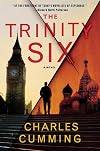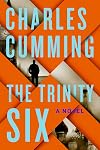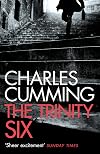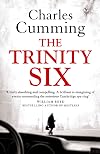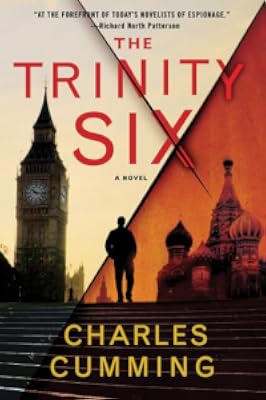
The Trinity Six
by Charles Cumming
On This Page
Description
Hard-up Russia expert Dr. Sam Gaddis finally has a lead for a book that could set his career back on track. He has staggering new information about an unknown sixth member of the infamous Cambridge spy ring -- a man who has evaded detection for his entire life. But when his source suddenly dies, Gaddis is left with just shreds of his investigation, and no idea that he is already in too deep.Tags
Recommendations












Member Reviews
This plain vanilla spy story proves that sometimes the old-fashioned plot ideas make the best rattling good suspense novels. It certainly was enough to keep me up all night reading to get to the end.
In some ways, the plotline of Cumming's latest spy thriller owes a lot to Hitchcock -- an ordinary guy, a university lecturer in London specializing in Russian history, is under financial pressure from his ex-wife and the Inland Revenue, when an old friend suggests they collaborate on a bestseller about the possible identity of a "Sixth Man" -- another Soviet spy in the group that included Burgess, Maclean and Philby. Then the friend suddenly dies of a heart attack and Sam, picking up the threads of her investigation, realizes that others show more who have been on the trail of the mysterious Edward Crane have also been found dead.
There are plenty of great twists and turns in this story -- is the peril that Sam finds himself in really because of a decades-old spy or something altogether more modern-day than that? That is what makes up the suspense in this "thumping good read" -- what is it, exactly, that Sam has stumbled across? This isn't a flawless book -- there are some improbable coincidences and at heart it's really a very familiar kind of story -- but after reading plenty of far less accomplished efforts to produce just this kind of book as well as lots of other noirish, spare, bleak spy stories with far-too convoluted narratives and far too unsympathetic characters, it was a pleasant relief to be able to delve into Cummings's latest. No, Sam Gaddis is no Smiley, but I didn't care. I kept turning the pages and saying "just one more chapter" until suddenly it was 4 a.m. and I was finished.
Rated 4.3 stars, recommending it to anyone looking for a decent spy novel. I have most of the author's other books; with the exception of his most recent, Typhoon, he seems to be struggling to find his voice and focus. If you kind of liked this one, or liked it and are looking for something even better, check out Remembrance by Henry Porter, and then read the rest of that author's excellent thrillers. Both he and Cummings are authors who deserve to be better known. show less
In some ways, the plotline of Cumming's latest spy thriller owes a lot to Hitchcock -- an ordinary guy, a university lecturer in London specializing in Russian history, is under financial pressure from his ex-wife and the Inland Revenue, when an old friend suggests they collaborate on a bestseller about the possible identity of a "Sixth Man" -- another Soviet spy in the group that included Burgess, Maclean and Philby. Then the friend suddenly dies of a heart attack and Sam, picking up the threads of her investigation, realizes that others show more who have been on the trail of the mysterious Edward Crane have also been found dead.
There are plenty of great twists and turns in this story -- is the peril that Sam finds himself in really because of a decades-old spy or something altogether more modern-day than that? That is what makes up the suspense in this "thumping good read" -- what is it, exactly, that Sam has stumbled across? This isn't a flawless book -- there are some improbable coincidences and at heart it's really a very familiar kind of story -- but after reading plenty of far less accomplished efforts to produce just this kind of book as well as lots of other noirish, spare, bleak spy stories with far-too convoluted narratives and far too unsympathetic characters, it was a pleasant relief to be able to delve into Cummings's latest. No, Sam Gaddis is no Smiley, but I didn't care. I kept turning the pages and saying "just one more chapter" until suddenly it was 4 a.m. and I was finished.
Rated 4.3 stars, recommending it to anyone looking for a decent spy novel. I have most of the author's other books; with the exception of his most recent, Typhoon, he seems to be struggling to find his voice and focus. If you kind of liked this one, or liked it and are looking for something even better, check out Remembrance by Henry Porter, and then read the rest of that author's excellent thrillers. Both he and Cummings are authors who deserve to be better known. show less
 This review was written for LibraryThing Early Reviewers.
Anyone who is in any way interested in spies, spying and the world of espionage in general, has surely read at least one of John le Carré's genre defining classics. Not the later gardening and Panama nonsense, but the unforgettable Cold War, 'Smiley' intrigues.
Especially if you're English, that is.
And if you are lucky enough to be English and of a certain age, then you probably already have the whole '30's Cambridge spy ring, the old boy network running the country from their hushed, mahogany and teak Club in The City, the Cold War and the whole East vs West thing as a big game, already with you when you read a book like this. You don't need the spy world explained to you again from scratch. You know what a 'dead letter-box' is, you show more know what 'tradecraft', 'Moscow Centre' and 'C' are. The author can, with a nod and a wink and relatively few words, have you with him and get on with other things. You understand the world he is writing about and what I can well imagine would seem a rather unbelievable, class-ridden, privileged, strange world - makes perfect sense.
(However, that could be surely be why a non-middle-aged, non-English person would get nothing from, for example, the recent (poor) 'Tinker, Tailor, Soldier, Spy' re-adaption. My Danish wife, for example).
But one big problem the way I see it, is like this: How much is fact and how much is John le Carré fiction become fact in our collective recollection? I can imagine that it might also be a problem for any new authors wanting to write a novel set in this world: Do you write about actual institutions, actual events and run the risk that no one believes the world you're describing, or do you use some of le Carré's inventions, base your fiction on fiction and have your readers assume you're writing about the truth.
Basically what I mean is, that all novels written into this particular period of the spy genre, surely have to be compared in some way or another, with the world le Carré created. How they stand up to that comparison is, unfortunately, how we then rate them. "It's good, but it's not as good as le Carré." "It's better than le Carré." "It's unrealistic (doesn't use le Carre's world)" That kind of thing. Maybe.
Whatever your opinions or experience of le Carré and the spy genre, it's well worth giving Charles Cummings' 'Trinity Six' a go. it won't disappoint. It is set in the recent past, after the fall of the Berlin Wall, but is actually all about the present day repercussions from events that took place over the eighty years up until the fall of Communism. A middle-aged, recently separated from his wife academic, a lecturer in Russian affairs and part-time writer, gets dragged into present day intrigues and puts himself unknowingly in danger by getting himself caught up in other, old spy games. We travel around in Europe (surely a little less exciting since the fall of the Berlin Wall?) and we meet a variety of nice, not so nice and not so sure if they're nice, characters. There are young spies, middle-aged spies and un-reformed old Cambridge spies. It's very nearly bang up-to-date, technology-wise, but with enough links back to the good old spying glory days, to satisfy those still missing decent books about the Cold War - me, for instance. It's nicely paced and focussed, it doesn't dash unnecessarily about all over the place, it stays believable and has some decent twists, turns and revelations. Of course, the ordinary person caught up in an extraordinary world the don't understand, is nothing new, but the intrigue is genuine and there's some nice moments of suspense and uncertainty.
'Trinity Six' is a good, enjoyable read which often feels like an Alan Furst, (obviously set today rather than between the wars). That's absolutely ok with me. For those of us who have read le Carré's spy books, there's no avoiding the fact that it's not quite be up there with the Master's best. But if you haven't read le Carré, you may actually be the lucky ones and so 'Trinity Six' is an excellent entré to the mirror world of British old-school espionage. show less
Especially if you're English, that is.
And if you are lucky enough to be English and of a certain age, then you probably already have the whole '30's Cambridge spy ring, the old boy network running the country from their hushed, mahogany and teak Club in The City, the Cold War and the whole East vs West thing as a big game, already with you when you read a book like this. You don't need the spy world explained to you again from scratch. You know what a 'dead letter-box' is, you show more know what 'tradecraft', 'Moscow Centre' and 'C' are. The author can, with a nod and a wink and relatively few words, have you with him and get on with other things. You understand the world he is writing about and what I can well imagine would seem a rather unbelievable, class-ridden, privileged, strange world - makes perfect sense.
(However, that could be surely be why a non-middle-aged, non-English person would get nothing from, for example, the recent (poor) 'Tinker, Tailor, Soldier, Spy' re-adaption. My Danish wife, for example).
But one big problem the way I see it, is like this: How much is fact and how much is John le Carré fiction become fact in our collective recollection? I can imagine that it might also be a problem for any new authors wanting to write a novel set in this world: Do you write about actual institutions, actual events and run the risk that no one believes the world you're describing, or do you use some of le Carré's inventions, base your fiction on fiction and have your readers assume you're writing about the truth.
Basically what I mean is, that all novels written into this particular period of the spy genre, surely have to be compared in some way or another, with the world le Carré created. How they stand up to that comparison is, unfortunately, how we then rate them. "It's good, but it's not as good as le Carré." "It's better than le Carré." "It's unrealistic (doesn't use le Carre's world)" That kind of thing. Maybe.
Whatever your opinions or experience of le Carré and the spy genre, it's well worth giving Charles Cummings' 'Trinity Six' a go. it won't disappoint. It is set in the recent past, after the fall of the Berlin Wall, but is actually all about the present day repercussions from events that took place over the eighty years up until the fall of Communism. A middle-aged, recently separated from his wife academic, a lecturer in Russian affairs and part-time writer, gets dragged into present day intrigues and puts himself unknowingly in danger by getting himself caught up in other, old spy games. We travel around in Europe (surely a little less exciting since the fall of the Berlin Wall?) and we meet a variety of nice, not so nice and not so sure if they're nice, characters. There are young spies, middle-aged spies and un-reformed old Cambridge spies. It's very nearly bang up-to-date, technology-wise, but with enough links back to the good old spying glory days, to satisfy those still missing decent books about the Cold War - me, for instance. It's nicely paced and focussed, it doesn't dash unnecessarily about all over the place, it stays believable and has some decent twists, turns and revelations. Of course, the ordinary person caught up in an extraordinary world the don't understand, is nothing new, but the intrigue is genuine and there's some nice moments of suspense and uncertainty.
'Trinity Six' is a good, enjoyable read which often feels like an Alan Furst, (obviously set today rather than between the wars). That's absolutely ok with me. For those of us who have read le Carré's spy books, there's no avoiding the fact that it's not quite be up there with the Master's best. But if you haven't read le Carré, you may actually be the lucky ones and so 'Trinity Six' is an excellent entré to the mirror world of British old-school espionage. show less
Espionage aficionados likely know of the Cambridge Five: Blunt, Philby, Burgess, Maclean, Cairncross. This book takes that idea and adds the possibility of a sixth man to the mix, with a professor of Russian history being put onto the scent by a journalist friend. He knows there's something going on because the bodies are starting to pile up -- will he himself survive long enough to tell the story?
My reaction to the premise was amused skepticism, but I figured it was worth a shot. And overall it proved enjoyable. Actually I ended up liking some of the peripheral characters more than the protagonist, Charles Gaddis -- particularly the retired spooks. I think what prevented me from liking Gaddis more was his ongoing impression that every show more woman he met was hitting on him. Vain much? Fortunately there are very few naughty scenes to detract from the espionage aspect, which, revolving as it does around old files and case histories, does have an air of Tinker Tailor to it (although Tinker Tailor has more depth). The story moves at a good clip and is easy to pick up and put down again, making it very suitable for travel reading -- in print format. I originally started reading this in audio and had to stop after one disc, as the narrator's voice seemed better suited to a non-fiction book: he spoke in a very Clipped. Tense and Dramatic. Manner. and the characters were a bit difficult to distinguish; in contrast, he read the introductory Note about the Cambridge Five very well.
To summarize: if you like spies and the Cambridge Five and are curious about this book, it's worth a shot (in print). show less
My reaction to the premise was amused skepticism, but I figured it was worth a shot. And overall it proved enjoyable. Actually I ended up liking some of the peripheral characters more than the protagonist, Charles Gaddis -- particularly the retired spooks. I think what prevented me from liking Gaddis more was his ongoing impression that every show more woman he met was hitting on him. Vain much? Fortunately there are very few naughty scenes to detract from the espionage aspect, which, revolving as it does around old files and case histories, does have an air of Tinker Tailor to it (although Tinker Tailor has more depth). The story moves at a good clip and is easy to pick up and put down again, making it very suitable for travel reading -- in print format. I originally started reading this in audio and had to stop after one disc, as the narrator's voice seemed better suited to a non-fiction book: he spoke in a very Clipped. Tense and Dramatic. Manner. and the characters were a bit difficult to distinguish; in contrast, he read the introductory Note about the Cambridge Five very well.
To summarize: if you like spies and the Cambridge Five and are curious about this book, it's worth a shot (in print). show less
A fast-paced, tension-filled "modern" spy novel covering mid-20th century through early 21st. Better than most of the best I've read...as good as John LeCarre's work (my highest praise for this genre). The characters were distinctive, clearly drawn, and interesting with just enough small details to make them memorable, and likeable (or detestable, as appropriate). The plot was complex enough to seem real and to maintain my keen interest, but not overly or unnecessarily convoluted. Many times I thought I knew something the characters hadn't figured out yet... and I was wrong, wrong again, doubly wrong, and so were they! I fell gleefully for the misdirection and enjoyed the ride. The author was particularly good at creating a lead show more character who was a bit of a bumbler, who took foolish risks, and who was habitually fearing and imagining the worst. At the most tense moments it was still possible to both identify with him, and laugh at his antics; his slight goofiness somehow balanced, but never interfered with, the stark tension and danger of the situations. I will definitely recommend this book to friends and will seek out more of his novels to read. show less
This review was written for LibraryThing Early Reviewers.Imagine if the head of counter-intelligence for the CIA were unmasked to be a Soviet agent. Seems inconceivable, doesn't it? Yet Britain underwent precisely that in the '50s and '60s as Kim Philby was revealed to be a Soviet double agent, along with his college friends, Burgess, Maclean, Blunt and Cairncross, who've come to be known as the Cambridge Five. Their decades-long betrayal of Britain was devastating.
Trinity Six is based on the premise that the so-called Cambridge Five were in fact the Trinity Six, to include a sixth man they met as undergraduates at Trinity. Sam Gaddis is an academic who studies Russian, and seems to have stumbled into evidence about the sixth man. Gaddis is a not-entirely-sympathetic divorced professor with show more womanizing instincts, trying to run the sixth man to ground.
To anyone interested in espionage or espionage fiction, the premise is promising. Yet the novel, while somewhat enjoyable, is proof that writing a great espionage novel is much harder than it looks. Trinity Six struggles to figure out what kind of novel it is - is it going to be a modern-day Robert Ludlum action adventure story, with only a veneer of historicity? Or is it going to be a le Carre study in character? Or a quasi-historical view into MI6 a la Robert Littell? Unfortunately in the end, it ends up being mostly a Ludlum-style adventure, crashing from incident to incident. The historical premise of the Cambridge Five is mostly wasted. There's no disclosure of any hidden historical mysteries. The plotting is often clumsy, and Gaddis often doesn't realize things that are obvious. Ever watched a horror movie where everyone but the main character knows there's a killer underneath the bed? That's how Trinity Six feels about once per chapter.
Trinity Six also struggles with what is supposed to be known, and not known - things are revealed early on that shouldn't be, and other things not revealed that should be. Is the identity of the sixth man supposed to be known to the reader or not? Hard to tell - the book often seems to accidentally disclose things. And virtually every other page, some character says something that just feels wrong, and jars your sense that what is happening is believable.
My advice? If you're stuck on a plane and you have Trinity Six, it will pass the time. But if you have a choice, pick up any of Robert Littell's novels (say, Legends), or an old le Carre novel you haven't read - a much better investment of your time. Or, if you want something a little different, Declare by Tim Powers (a fantastical story with roots in the legend of Kim Philby).
(I received a copy of The Trinity Six through the LibraryThing Early Reviewers program - thanks LibraryThing!) show less
Trinity Six is based on the premise that the so-called Cambridge Five were in fact the Trinity Six, to include a sixth man they met as undergraduates at Trinity. Sam Gaddis is an academic who studies Russian, and seems to have stumbled into evidence about the sixth man. Gaddis is a not-entirely-sympathetic divorced professor with show more womanizing instincts, trying to run the sixth man to ground.
To anyone interested in espionage or espionage fiction, the premise is promising. Yet the novel, while somewhat enjoyable, is proof that writing a great espionage novel is much harder than it looks. Trinity Six struggles to figure out what kind of novel it is - is it going to be a modern-day Robert Ludlum action adventure story, with only a veneer of historicity? Or is it going to be a le Carre study in character? Or a quasi-historical view into MI6 a la Robert Littell? Unfortunately in the end, it ends up being mostly a Ludlum-style adventure, crashing from incident to incident. The historical premise of the Cambridge Five is mostly wasted. There's no disclosure of any hidden historical mysteries. The plotting is often clumsy, and Gaddis often doesn't realize things that are obvious. Ever watched a horror movie where everyone but the main character knows there's a killer underneath the bed? That's how Trinity Six feels about once per chapter.
Trinity Six also struggles with what is supposed to be known, and not known - things are revealed early on that shouldn't be, and other things not revealed that should be. Is the identity of the sixth man supposed to be known to the reader or not? Hard to tell - the book often seems to accidentally disclose things. And virtually every other page, some character says something that just feels wrong, and jars your sense that what is happening is believable.
My advice? If you're stuck on a plane and you have Trinity Six, it will pass the time. But if you have a choice, pick up any of Robert Littell's novels (say, Legends), or an old le Carre novel you haven't read - a much better investment of your time. Or, if you want something a little different, Declare by Tim Powers (a fantastical story with roots in the legend of Kim Philby).
(I received a copy of The Trinity Six through the LibraryThing Early Reviewers program - thanks LibraryThing!) show less
This review was written for LibraryThing Early Reviewers.It is 1992, a few years after the cold war and in a hospital in London late one night, a low level diplomat, Edward Crane is declared dead. But Crane was much more than that, and not everything is as it seems.
A decade and a half later, Sam Gaddis, an academic with a particular interest in Russia, suddenly has a mountain of debt to pay. The huge tax bill, and demands from his ex wife means he needs to land a lucrative book deal. An old friend hints that she is onto the story of a lifetime, that she has discovered that there was a sixth member of the infamous Cambridge spy ring. He agrees to help with the research. But both the British and the Russians want this secret suppressed, and within a few hours she is dead from a heart show more attack.
With the blessing of her late husband, he picks up the investigation. His research is flagged at the heart of the British Secret service and the wheels are set in motion to counter what Gaddis is trying to find out. As he contacts people that knew about Crane, the Russians are not far behind, and they are taking steps to ensure that no secrets are ever spoken again.
He is contacted by a man in a nursing home, who hints that he knows about the enigmatic man, Crane. With his details and the records of a Russian journalist, Gaddis is closing in on his scoop of the century, but the threat to his life is ever more perilous.
Cummings has written here a magnificent spy thriller. He has plenty of tension, a plausible plot that rings almost true, and a way of writing that means that you connect with the main character Gaddis. It has a good pace too, even though it is just over 400 page in this edition, I zipped through this in no time at all. It has all the hallmarks of a classic spy novel too, cold war history, double agents, tradecraft and secrets. Cumming has also managed to convey that feeling of fear that as Gaddis suddenly realises that he is in way deeper than he imagined was possible.
Great stuff. Will definitely be reading all his others. show less
A decade and a half later, Sam Gaddis, an academic with a particular interest in Russia, suddenly has a mountain of debt to pay. The huge tax bill, and demands from his ex wife means he needs to land a lucrative book deal. An old friend hints that she is onto the story of a lifetime, that she has discovered that there was a sixth member of the infamous Cambridge spy ring. He agrees to help with the research. But both the British and the Russians want this secret suppressed, and within a few hours she is dead from a heart show more attack.
With the blessing of her late husband, he picks up the investigation. His research is flagged at the heart of the British Secret service and the wheels are set in motion to counter what Gaddis is trying to find out. As he contacts people that knew about Crane, the Russians are not far behind, and they are taking steps to ensure that no secrets are ever spoken again.
He is contacted by a man in a nursing home, who hints that he knows about the enigmatic man, Crane. With his details and the records of a Russian journalist, Gaddis is closing in on his scoop of the century, but the threat to his life is ever more perilous.
Cummings has written here a magnificent spy thriller. He has plenty of tension, a plausible plot that rings almost true, and a way of writing that means that you connect with the main character Gaddis. It has a good pace too, even though it is just over 400 page in this edition, I zipped through this in no time at all. It has all the hallmarks of a classic spy novel too, cold war history, double agents, tradecraft and secrets. Cumming has also managed to convey that feeling of fear that as Gaddis suddenly realises that he is in way deeper than he imagined was possible.
Great stuff. Will definitely be reading all his others. show less
This is the book I thought no one could write after the end of the Cold War. With the collapse of the Two Super-Power rivalry, spy fiction dried up. Except for a few brilliant historical thrillers like Robert Little’s “The Company”, the genre was dead.
But the players are not…yet. The secret services of West and East remain well-funded and the old games continue. Philby, McClain, Burgess and Blunt were members of the infamous Cambridge Five, a group of super spies at Trinity College. When they defected to the Soviet Union, they caused enormous damage to British intelligence. Four members were known. At least one was unidentified. Till now.
The hero of this tale is a middle-aged Russian studies professor (a truly endangered show more species!) interested only in a completing an academic biography that will interest only a few specialists. When he stumbles onto disturbing information, he is drawn into that world of shadows and half-truths where friend and enemy are barely distinguishable. And yes, his life is danger. And yes, there is a woman. And yes, the fate of the world depends on the outcome.
All of these tropes are woven into a taut narrative that moves like a freight train. A great read! show less
But the players are not…yet. The secret services of West and East remain well-funded and the old games continue. Philby, McClain, Burgess and Blunt were members of the infamous Cambridge Five, a group of super spies at Trinity College. When they defected to the Soviet Union, they caused enormous damage to British intelligence. Four members were known. At least one was unidentified. Till now.
The hero of this tale is a middle-aged Russian studies professor (a truly endangered show more species!) interested only in a completing an academic biography that will interest only a few specialists. When he stumbles onto disturbing information, he is drawn into that world of shadows and half-truths where friend and enemy are barely distinguishable. And yes, his life is danger. And yes, there is a woman. And yes, the fate of the world depends on the outcome.
All of these tropes are woven into a taut narrative that moves like a freight train. A great read! show less
This review was written for LibraryThing Early Reviewers.Members
- Recently Added By
Lists

Best Espionage (Fiction)
55 works; 20 members
Author Information

16+ Works 4,126 Members
Some Editions
Awards and Honors
Distinctions
Common Knowledge
- Canonical title
- The Trinity Six
- Original publication date
- 2011-03
- People/Characters
- Sam Gaddis; Edward Crane/ Thomas Neame; Charlotte Berg; Tanya Acocella; Holly Levette; Calvin Somers (show all 10); John Brennan; Robert Wilkinson; Bernard Meisner; Alexander Grek
- Important places
- London, England, UK; Vienna, Austria
- Epigraph
- You know, you should never catch a spy. Discover him and then control him, but never catch him. A spy causes far more trouble when he's caught.
—Harold Macmillan - Dedication
- For my sister, Alex
for her children, Lucy, Edward, and Sophie
and to the memory of Simon Pilkington (1938-2009) - First words
- "The dead man was not a dead man. He was alive but he was not alive. That was the situation."
- Last words
- (Click to show. Warning: May contain spoilers.)Kirsty didn't see a thing.
- Blurbers
- Boyd, William; Abbott, Jeff; Stock, Jon; Finder, Joseph
- Original language
- English
Classifications
Statistics
- Members
- 754
- Popularity
- 37,345
- Reviews
- 101
- Rating
- (3.61)
- Languages
- Danish, English, German, Spanish
- Media
- Paper, Audiobook, Ebook
- ISBNs
- 24
- ASINs
- 12