On This Page
Description
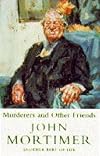
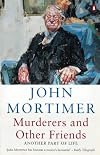
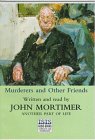
"As a boy, John Mortimer wanted to be an actor, as a young man a writer, but at his father's suggestion he also pursued a career in law - in which, as a defending barrister, he found himself establishing profound but short-term friendships with those accused of various crimes, including murder. The chief lesson he learned from all this was to refrain from judgment, a quality he maintained in his other life." "For alongside his work as a lawyer, Mortimer indulged a passion for writing. As show more this second career took over his life, it brought enriching yet frequently volatile friendships: with Tony Richardson, John Gielgud, Harold Pinter, David Niven, and Neil Kinnock, among others, from the worlds of theater, film, the law, and politics. John Mortimer brought his two worlds together in the character of Rumpole, for whom his creator is frequently mistaken." "Murderers and Other Friends is John Mortimer's summing up of himself through his friends. With wit, wisdom, and tenderness he has written the story of the second part of his life, of the strangely assorted characters that enriched it, and of his family at its heart."--BOOK JACKET.Title Summary field provided by Blackwell North America, Inc. All Rights Reserved show lessTags
Recommendations
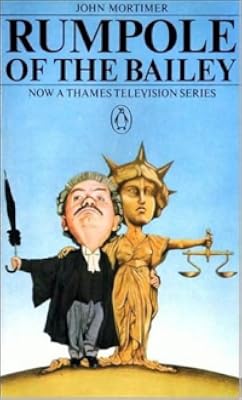




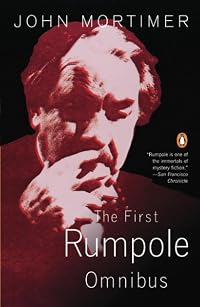











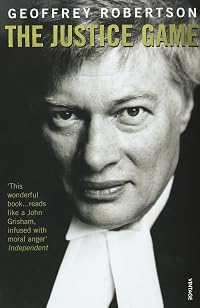



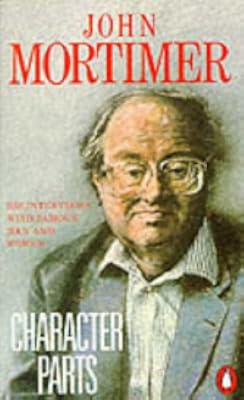
Member Recommendations

Member Reviews
British novelist and playwright Mortimer (Paradise Postponed) begins this second volume of his autobiography at the point when he left his career as a barrister in the 1960s and was appointed to the position of Queen's Counsel. In entertaining and perceptive vignettes, his sequel to Clinging to the Wreckage (1982) recalls trials over which Mortimer presided that inspired the plot lines and characters populating Rumpole of the Bailey and the series that followed. Eventually leaving the law entirely, he devoted himself to writing. His reminiscences mention his friendships with actors and authors, including John Gielgud, David Niven and Harold Pinter. A principled nonbeliever (he refers to himself as "an atheist for Christ"), Mortimer show more helped to found the "20th of June" group that protested the conservatism of the Thatcher government. (His collaborators in this effort included Pinter and various social activists.) Mortimer also describes the work he has done in adapting such novels for film and TV as Evelyn Waugh's Brideshead Revisited.
Mortimer, the former barrister turned author, writes, "Old lawyers never die, they simply lose their appeals." Not so with Mortimer. His appeal will go on and on, not unlike his creation, that old darling Rumpole of the Old Bailey. Wise, funny, and only occasionally sad, Mortimer is as readable as his scripts on television are watchable. His writing, regardless of the subject-father, mother, wife, daughter, friend, murderer, house, country-is full of affection, fully grounded in a view so dimensional that one would wish for his eyes, his ears, his heart. His profile of his father and mother, of David Niven and John Gielgud, snippets though they may be, are of considerable interest and even memorable. His view of the difference between the writing of a novel and the writing of a play is not only practical but affecting. Mortimer's writing is the stuff of flesh and blood, wronged and wooed, and should not be missed. show less
Mortimer, the former barrister turned author, writes, "Old lawyers never die, they simply lose their appeals." Not so with Mortimer. His appeal will go on and on, not unlike his creation, that old darling Rumpole of the Old Bailey. Wise, funny, and only occasionally sad, Mortimer is as readable as his scripts on television are watchable. His writing, regardless of the subject-father, mother, wife, daughter, friend, murderer, house, country-is full of affection, fully grounded in a view so dimensional that one would wish for his eyes, his ears, his heart. His profile of his father and mother, of David Niven and John Gielgud, snippets though they may be, are of considerable interest and even memorable. His view of the difference between the writing of a novel and the writing of a play is not only practical but affecting. Mortimer's writing is the stuff of flesh and blood, wronged and wooed, and should not be missed. show less
Mortimer is always worth reading, of course, but this loosely-linked collection of autobiographical essays is perhaps not the best place to start. There are some entertaining anecdotes, some interesting insights into the sources for his legal and political fiction, and some rather star-struck reminiscences of his film and stage work, but overall it's pretty slim pickings. More like dinner-party conversation than autobiography, really.
From the title, I was hoping for more on his work as a barrister, but we don't get very much. Most of the cases Mortimer discusses are ones he worked on together with Geoffrey Robertson, who has described them in far more detail in his own books. We don't learn anything new about Oz or Gay News here. show more Evidently, Mortimer wasn't that interested in the law by the time he wrote these memoirs. But it is nice to know that there was an actual legal precedent for the famous "tap end" incident in the Rumpole stories... show less
From the title, I was hoping for more on his work as a barrister, but we don't get very much. Most of the cases Mortimer discusses are ones he worked on together with Geoffrey Robertson, who has described them in far more detail in his own books. We don't learn anything new about Oz or Gay News here. show more Evidently, Mortimer wasn't that interested in the law by the time he wrote these memoirs. But it is nice to know that there was an actual legal precedent for the famous "tap end" incident in the Rumpole stories... show less
Although it started out a bit oddly, feeling like I was joining a story already in progress, this was still enjoyable read. Mostly a collections of anecdotes, very few about his law career and more about his writing and adventures in film and television. I did not realize that he adapted Brideshead Revisted for television or new about his various stage plays. I enjoyed spending time in his memoirs and I imagine he would an interesting person to sit and chat away the time with.
This book is a bit old, but I wanted to give it a try due to a recommendation heard on a favorite radio program. Frequently humorous and at times interesting, this biography did not always entertain. I got through it with some effort. A deeper awareness of all things 'British' may have made it more entertaining. I did enjoy a few hearty laughs at the stories about some of the strange defendants Mr. Mortimer represented at the Old Bailey. Indeed, the stories of some of Mortimer's theater friends, such as Sir Laurence Olivier and Sir John Gielgud, were likewise captivating. The repetition finally got to me, though.
John Mortimer narrates this autobiography, which details events connecting family, friends, people and places he has encountered during his career as a barrister, screenwriter, playwright and novelist. This account begins with his work as defense counsel for bizarre homicidal characters and continues through his literary occupations. In an English accent he languidly recounts the pleasures of his pursuits and discoveries. Whether describing his relationship with David Niven or his preparation for a murder case, the excitement of these moments is more in the facts than in the telling. While the reading is understated and rather droll, this is a tale filled with absorbing, if idiosyncratic, folks.
The title draws you in and makes you think you're about to hear something really juicy. But he gives up on the murderers quickly and moves on to all the famous he knows...knew.
Very amusing and enjoyable read
Members
- Recently Added By
Published Reviews
Following Clinging to the Wreckage (1982), a bracing and bounteous second helping of the British barrister/writer's life, works, and many, many opinions. The paramount lesson he learned from his ``second life'' as a Queen's Counsel defending accused criminals in jury trials, Mortimer says, was the value of suspending judgment on people inside the courtroom and out. Don't believe him for a show more minute. Though he could coolly defend the merits of books like The Return of the Enema Bag Rapist or or the innocence of a youth who claimed the gent he stabbed to death--a man on his way home from dinner with his fiancÇe--had been assaulting his virtue, Mortimer evidently never lost the habit of passing judgment, as the racy tone of each tart anecdote reveals again and again. show less
added by John_Vaughan
Author Information

146+ Works 15,677 Members
Series

Common Knowledge
- Original publication date
- 1994
Classifications
- Genre
- Biography & Memoir
- DDC/MDS
- 828.91409 — Literature & rhetoric English & Old English literatures English miscellaneous writings English miscellaneous writings 1900- English miscellaneous writings 1900-1999 English miscellaneous writings 1945-1999 Individual authors
- LCC
- PR6025 .O7552 .Z47 — Language and Literature English English Literature 1900-1960
- BISAC
Statistics
- Members
- 225
- Popularity
- 145,233
- Reviews
- 7
- Rating
- (3.86)
- Languages
- English
- Media
- Paper, Audiobook, Ebook
- ISBNs
- 9
- ASINs
- 3