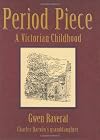
Period Piece
by Gwen Raverat
On This Page
Description
At the close of 1952, Bettrand Russell wrote to Gwen Raverat that he had been reading Period Piece "with the very greatest delight." Raverat's memories of childhood and coming of age during the final years of Victoria's reign capture a young woman's impressions of dons, eccentrics, and tradespeople in Cambridge during the 1890s. With astonishing power Period Piece brings us into the real presence of the late Victorian past.Tags
Recommendations











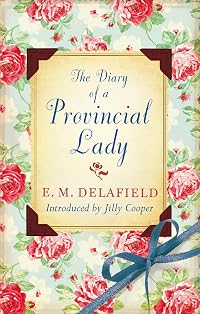


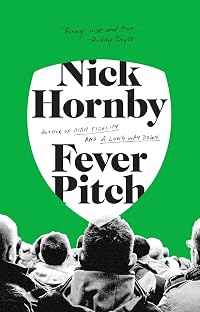

Member Recommendations


wandering_star Another charming and vivid childhood memoir, this time about growing up on the Argentinian pampas in the mid-nineteenth century.
Member Reviews
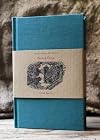
When your grandfather is Charles Darwin and you can also claim Josiah Wedgewood as an ancestor, it is to be expected that your family might not fit the run of the mill Edwardian and Victorian mold. Gwen Raverat's look back at her childhood is both enchanting and enlightening for its look at this extraordinary family with its scientists, artists, musicians and thinkers, but also for its snapshot of an era. Gwen's drawings of family members, homes, and events, are peppered throughout this reprint of her memoir in this lovely little Slightly Foxed Edition.
She begins by describing her home, Newnham Grange in Cambridge. moving through chapters named Theories, Education, Ladies, Propriety, followed by one of my favourite chapters, "Aunt show more Etty", a loving description of and tribute to her beloved Aunt Etty (Henrietta, one of Charles Darwin's daughters). The chapter about the Darwin family home, Down House, with its mulberry tree outside the nursery window and her cherished grandmamma in residence was another favourite. "Ghosts and Horrors" describes some of the nasty things which haunt childhood, including bullies who are cruel to animals and a group of Cambridge students carrying the body of a woman down the street at night.
Her chapter about her five uncles with her descriptions of the traits and characteristics of Uncle William, Uncle George (her father), Uncle Frank, Uncle Lenny, and Uncle Horace, was nothing short of brilliant for its acute observation of each man, his place in the family, and the view in which he was held by others. These were the sons of Charles Darwin, each as individual and different from the other as brothers can be, and yet very much family in their affection and regard for each other.
The chapter headed "Religion" was great fun, as you would expect from a granddaughter of Charles Darwin. This was followed by "Sport", "Clothes" (which she detested), and "Society" (in which she always felt extremely awkward, shy, and uncomfortable).
Sharp, acerbic, wonderfully funny and irreverent, I know I would have loved Gwen Raverat (nee Darwin) in person, should I have been lucky enough to get past her shy and prickly antisocial exterior to get to know her. She lets us in with this book, writing of her memories and experiences in a way which kept me engaged to the last word. Her drawings are so good, whether capturing her young self being forced to act as a kind of chaperon, a family outing on tricycles with the family spaniel trudging along behind, or running along a nine foot high wall in the garden by the river. It's a look at an era which I only had a whiff of through my own grandparents, guessed at from the silver button hooks on my Nana's dresser along with the hair jar where one put one's hair after cleaning one's hairbrush. An era of horse drawn vehicles, spats, gas light, whale bone corsets, layers and layers of clothing, innumerable rules and regulations for behaviour, all gone except for backward peeks in a gem of a book like this. show less
She begins by describing her home, Newnham Grange in Cambridge. moving through chapters named Theories, Education, Ladies, Propriety, followed by one of my favourite chapters, "Aunt show more Etty", a loving description of and tribute to her beloved Aunt Etty (Henrietta, one of Charles Darwin's daughters). The chapter about the Darwin family home, Down House, with its mulberry tree outside the nursery window and her cherished grandmamma in residence was another favourite. "Ghosts and Horrors" describes some of the nasty things which haunt childhood, including bullies who are cruel to animals and a group of Cambridge students carrying the body of a woman down the street at night.
Her chapter about her five uncles with her descriptions of the traits and characteristics of Uncle William, Uncle George (her father), Uncle Frank, Uncle Lenny, and Uncle Horace, was nothing short of brilliant for its acute observation of each man, his place in the family, and the view in which he was held by others. These were the sons of Charles Darwin, each as individual and different from the other as brothers can be, and yet very much family in their affection and regard for each other.
The chapter headed "Religion" was great fun, as you would expect from a granddaughter of Charles Darwin. This was followed by "Sport", "Clothes" (which she detested), and "Society" (in which she always felt extremely awkward, shy, and uncomfortable).
Sharp, acerbic, wonderfully funny and irreverent, I know I would have loved Gwen Raverat (nee Darwin) in person, should I have been lucky enough to get past her shy and prickly antisocial exterior to get to know her. She lets us in with this book, writing of her memories and experiences in a way which kept me engaged to the last word. Her drawings are so good, whether capturing her young self being forced to act as a kind of chaperon, a family outing on tricycles with the family spaniel trudging along behind, or running along a nine foot high wall in the garden by the river. It's a look at an era which I only had a whiff of through my own grandparents, guessed at from the silver button hooks on my Nana's dresser along with the hair jar where one put one's hair after cleaning one's hairbrush. An era of horse drawn vehicles, spats, gas light, whale bone corsets, layers and layers of clothing, innumerable rules and regulations for behaviour, all gone except for backward peeks in a gem of a book like this. show less
First off, I notice I've been using the word "charming" in a few reviews lately. So I will not refer to this book as being charming. It is, however, delightful, appealing, winning, and entrancing. It is a memoir of the author's childhood in the late Victorian period, and though her grandfather was Charles Darwin, and most of the relatives she profiles are Darwins or Wedgwoods, several of whom had quite distinguished careers, one doesn't read the book to find out about the lives of famous people. In fact, no one does anything particularly noteworthy in the book at all. What delights is rather the affectionate picture of a time and place, and the wonderful wonderful voice of the writer: "The first religious experience that I can remember show more is getting under the nursery table to pray that the dancing mistress might be dead before we got to the Dancing Class." "By all accounts I was a charming baby. As I have never been considered particularly charming since then, I think it only just to myself to set this on record…How I have gone off since then!" The book is illustrated thoughout with the author's own line drawings, with captions which quite often made me giggle with glee. A great escape from the tumult of one's own hurried life. show less
Wood engraver of the Bloomsbury Group. Raverat's down-to-earth reminiscences of her childhood in Cambridge, which sounds idyllic though she constantly grumbles about the restrictions of clothes, dancing class, having to attend church, and other hateful things, like the skin on boiled milk. Well written, well illustrated, funny and entertaining. Includes a short story about a little girl, Georgette, in the French town of Vence
Period Piece is an altogether delightful book, a kind of insouciant wit, too appreciative to be called cynical, too unillusioned to be called pious. Mrs Raverat is not a Darwin for nothing. Her book comes out of a highly civilized background – the English professional and intellectual middle-classes, which, if not the backbone of England, may be held to be, on the whole, its mainstream of culture, and of sophisticated intelligence and wit.
The preface to this book states 'This is a circular book. It does not begin at the beginning and go on to the end; it is all going on at the same time, sticking out like the spokes of a wheel from the hub, which is me. So it does not matter which chapter is read first or last'. That seems a pretty accurate description of this sweet, rambling autobiographical look into Cambridge at the turn of the century before the wars. Gwen, the granddaughter of Charles Darwin, is in an enviably priviledged position, although she has a wry eye for the constraints that that places upon her. I must confess, I think I loved this book mostly because I love Cambridge. The viewpoints it gives you on things I have taken forgranted for a long time - where the show more Mill pub is now there was once a Mill! Punts in Cambridge are a relatively new innovation! - were fascinating. show less
Funny, thoughtful and vivid - with marvellous illustrations.
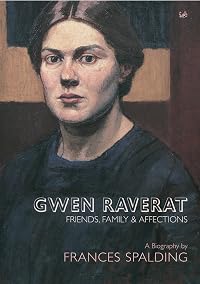
I first read this book at school, in about 1962. I've always loved it, and I still have my original copy, which is the pink Faber edition. I love the illustrations done by the author, and I often look at it and re-read sections. It's like time travel, and makes the whole era come alive. I've always loved totally everything about it, from when I was about 14. However not everyone in my class liked it, lots thought it boring.(!!) There is another book about Gwen Raverat that I just found, with examples of her beautiful woodcuts...I wish I had one - .
Members
- Recently Added By
Lists

Top Five Books of 2014
1,064 works; 397 members

Mustich's 1000 Books to Read Before You Die: A Life Changing List
1,001 works; 19 members
Author Information

5+ Works 602 Members
Awards and Honors
Distinctions
Notable Lists
Series
Belongs to Publisher Series
Common Knowledge
- Original publication date
- 1952
- People/Characters
- Charles Darwin [Charles Robert: 1809-1882]
- Important places
- Cambridgeshire, England, UK
Classifications
Statistics
- Members
- 578
- Popularity
- 50,949
- Reviews
- 7
- Rating
- (4.13)
- Languages
- English, German, Spanish, Swedish
- Media
- Paper, Audiobook
- ISBNs
- 18
- ASINs
- 18