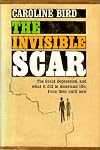
The invisible scar
by Caroline Bird
On This Page
Description
Hapless Herbert Hoover chose the term "depression" because he felt it did not have the fright potential of such established terms for financial disaster as "panic" or "crisis." This, and 1001 other facts have been rescued from the near oblivion that blankets the '30's in popular histories (or in tribal memory), and the buried gold of essential facts are burnished with personal anecdote and vivid passages from the contemporary record -- speeches and newspaper features. The title is the show more thesis, and this book contends that this willfully forgotten period has affected national attitudes and individual behavior with changes in politics, social welfare, employment, selling, marriage, women, and styles of dress, decor and decorum--along with failures to change. If your invisible scar twinges on hearing the refrain from "Brother, Can You Spare a Dime?" you should take the time for this -- it tells you why. show lessTags
Recommendations


















































Member Reviews
This book backs up all the stories that my mother told me and then some. It is well-researched and full of detail but it is also easy to see the Ms. Bird had her own opinions about some of the reasons that things went so very wrong and how ordinary people were affected.
Ratings
Members
- Recently Added By
Author Information

10 Works 275 Members
Awards and Honors
Distinctions
Common Knowledge
- Important events
- Great Depression
Classifications
- Genres
- Nonfiction, History, General Nonfiction, Business
- DDC/MDS
- 973.916 — History & geography History of North America United States 1901- World Wars and Depression Era (1901-1953) Herbert Hoover (1929-1933) Great Depression, Wall Street Crash of 1929,
- LCC
- HC106.3 .B5 — Social sciences Economic history and conditions Economic history and conditions By region or country
Statistics
- Members
- 46
- Popularity
- 651,230
- Reviews
- 1
- Rating
- (4.30)
- Languages
- English
- Media
- Paper
- ISBNs
- 2
- ASINs
- 4