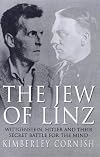
The Jew of Linz: Wittgenstein, Hitler and Their Secret Battle for the Mind
by Kimberley Cornish
On This Page
Description
Offering the theory that Hitler and Wittgenstein were in the same class at school, this book proposes that the latter was the specific target of Hitler's bile in Mein Kampf, in which he describes a Jew at school, and that Hitler's beliefs about Jews came from the experience of meeting Wittgenstein at this time. It also argues that Wittgenstein, a secret Stalinist, had his revenge on Hitler by recruiting Blunt, Philby and other spies at Cambridge, who undermined the German cause by passing show more military information to the Russians. show lessTags
Recommendations































Member Reviews
I am rather amazed that I re-read this thoroughly weird book, possibly because I was seduced by its first chapters. Essentially it postulates (on slim evidence) that the course of history was changed by boyhood contact in Linz between Ludwig Wittgenstein and Adolf Hitler.
The seduction of the first chapters is that Cornish really has done some interesting and quite deep research on connections between Hitler's world and Wittgenstein's world which are suggestive of many things that could be possible.
It could be that their boyhood contact did trigger different interpretations of Schopenhauer that became world-changing. It could be that Hitler's antisemitism was also triggered by Wittgenstein? It could be that Wittgenstein was an agent of show more the Comintern? And so forth.
His points may not be proven but they are not entirely implausible - given the evidence he provides - but then he ruins the glamour of it all by over-claiming, reading far too much into probable coincidences. And it really proves little if students' rooms were very close together at Trinity.
The book then, about half way through, switches to meet another agenda entirely following a rather intelligent disquisition on Schopenhauer, Collingwood, Wittgenstein and magical thinking that slides back and forth into the more doubtful territory of Hitler's alleged occultism.
There is merit in exploring the influence of Schopenhauer on both Wittgenstein's more mystical aspects and certainly on Hitler's thought which was uncomfortably often far more sophisticated than our politically necessary demonisation of him ever permits.
But Cornish then, as before, overplays his hand with a rather dubious, if well argued in technical terms, attempt to rescue the 'no ownership' theory of mind (the base of a great deal of 'spiritual' and New Age nonsense) from Hitler and restore it as some kind of truth.
To be frank, the last half of the book was just downright boring - academic philosophy based on self-evidently false assumptions about the mind and rather disconnected from the previous half which was a series of well researched if over-played historical researches.
Equally, frankly, it being the re-read, I simply skipped most of this second half because it soon became pretty clear that it was extended special pleading for nonsense. If anything, the net result was to diminish my previous appreciation of Wittgenstein (I never liked Schopenhauer).
This book is two decades old. Since then, we have detected a strong revival of interest in Schopenhauer's Idealism amongst gloomy bourgeois nihilists as the hippy model of universal consciousness (always nonsense) transforms into despair at the world (equally nonsense).
The turn back to Schopenhauer is an essentialist pose - a fear of engaging with what Nietzsche actually said against him and contra-Wagner - but it is one that suits the new breed of traditionalists and Kali Yuga Rightists who prefer Lovecraft to life.
This book is not quite of that ilk. It is hard to gauge Cornish's politics though he clearly condemns antisemitism and does not like communism. But the fluffy Eastern approach to Mind that underpins the book seems directed at resisting reality by reinventing it, a very bourgeois pose.
My resistance to all this is a matter of personality (I never deny this) but I see those who insist on the 'no ownership' theory of Mind as also representative of a personality type - so desperate for meaning in the universe that they will jump through hoops to get the one they need.
So, all in all, despite the useful and suggestive research on the worlds of Hitler and Wittgenstein and the thoughtful references on magical thinking, this cannot take up space in my library any longer. 'Spiritual writing' is always going to be dead weight when space is scarce. show less
The seduction of the first chapters is that Cornish really has done some interesting and quite deep research on connections between Hitler's world and Wittgenstein's world which are suggestive of many things that could be possible.
It could be that their boyhood contact did trigger different interpretations of Schopenhauer that became world-changing. It could be that Hitler's antisemitism was also triggered by Wittgenstein? It could be that Wittgenstein was an agent of show more the Comintern? And so forth.
His points may not be proven but they are not entirely implausible - given the evidence he provides - but then he ruins the glamour of it all by over-claiming, reading far too much into probable coincidences. And it really proves little if students' rooms were very close together at Trinity.
The book then, about half way through, switches to meet another agenda entirely following a rather intelligent disquisition on Schopenhauer, Collingwood, Wittgenstein and magical thinking that slides back and forth into the more doubtful territory of Hitler's alleged occultism.
There is merit in exploring the influence of Schopenhauer on both Wittgenstein's more mystical aspects and certainly on Hitler's thought which was uncomfortably often far more sophisticated than our politically necessary demonisation of him ever permits.
But Cornish then, as before, overplays his hand with a rather dubious, if well argued in technical terms, attempt to rescue the 'no ownership' theory of mind (the base of a great deal of 'spiritual' and New Age nonsense) from Hitler and restore it as some kind of truth.
To be frank, the last half of the book was just downright boring - academic philosophy based on self-evidently false assumptions about the mind and rather disconnected from the previous half which was a series of well researched if over-played historical researches.
Equally, frankly, it being the re-read, I simply skipped most of this second half because it soon became pretty clear that it was extended special pleading for nonsense. If anything, the net result was to diminish my previous appreciation of Wittgenstein (I never liked Schopenhauer).
This book is two decades old. Since then, we have detected a strong revival of interest in Schopenhauer's Idealism amongst gloomy bourgeois nihilists as the hippy model of universal consciousness (always nonsense) transforms into despair at the world (equally nonsense).
The turn back to Schopenhauer is an essentialist pose - a fear of engaging with what Nietzsche actually said against him and contra-Wagner - but it is one that suits the new breed of traditionalists and Kali Yuga Rightists who prefer Lovecraft to life.
This book is not quite of that ilk. It is hard to gauge Cornish's politics though he clearly condemns antisemitism and does not like communism. But the fluffy Eastern approach to Mind that underpins the book seems directed at resisting reality by reinventing it, a very bourgeois pose.
My resistance to all this is a matter of personality (I never deny this) but I see those who insist on the 'no ownership' theory of Mind as also representative of a personality type - so desperate for meaning in the universe that they will jump through hoops to get the one they need.
So, all in all, despite the useful and suggestive research on the worlds of Hitler and Wittgenstein and the thoughtful references on magical thinking, this cannot take up space in my library any longer. 'Spiritual writing' is always going to be dead weight when space is scarce. show less
Simply astonishing is the history of Wittgenstein and Hitler. With Wittgenstein having an annoying habit of correcting people and Hitler hating being corrected so much he once said that the composer was wrong when someone pulled him up about a mistake in his singing. Whether Wittgenstein set Hitler on course to being a Jew hater is not proved by this book but it certainly is suggested in an almost eerily believable fashion.
This is one of the most astonishing books I have ever read. It details the evidence to show that Adolf Hitler and Ludwig Wittgenstein, the philosopher, went to school together.
In itself, that fact is amazing. But it goes further. Wittgenstein may well have been the focus for the young Hitler's anti-Semitism; the author draws on evidence from Mein Kampf and other sources to suggest that this was so.
Starting from that premise, the book continues to explore Wittgenstein's philosophy in an accessible way (and the book is important for that very reason!), its links with the mainstream of European philosophical thought, and the role that Wittgenstein's thought played in the development of world politics and philosophy over the following fifty show more years. show less
In itself, that fact is amazing. But it goes further. Wittgenstein may well have been the focus for the young Hitler's anti-Semitism; the author draws on evidence from Mein Kampf and other sources to suggest that this was so.
Starting from that premise, the book continues to explore Wittgenstein's philosophy in an accessible way (and the book is important for that very reason!), its links with the mainstream of European philosophical thought, and the role that Wittgenstein's thought played in the development of world politics and philosophy over the following fifty show more years. show less
Ratings
Members
- Recently Added By
Published Reviews
ThingScore 25
Dabei handelt es sich bei Cornishs Buch um ein interessantes Kabinettstück eines nahezu paranoiden Geschichtsverständnisses, das die gesamte Geschichte des 20. Jahrhunderts von einem Gesichtspunkt (nämlich dem des vermuteten Austauschs zwischen den Schülern Wittgenstein und Hitler) her sieht. Auf diese Weise versucht Cornish, Belege für seine These aus der Geschichte selbst zu erhalten. show more Wer jedoch "Ludwig" und "Adolf" in den Wald hineinruft, sollte sich nicht wundern, wenn es "Wittgenstein" und "Hitler" herausschallt. Deutlich zeigt sich hier, wie inadäquat die Methode ist, zur Unterstützung einer These, für die keine Belege existieren, eine große Menge an Beinahe-Belegen anzuhäufen. show less
added by Indy133
Author Information
3 Works 90 Members
Common Knowledge
- People/Characters
- Ludwig Wittgenstein; Adolf Hitler
- Important places
- Linz, Austria
Classifications
Statistics
- Members
- 84
- Popularity
- 379,819
- Reviews
- 3
- Rating
- (3.00)
- Languages
- Dutch, English, French, German
- Media
- Paper
- ISBNs
- 5