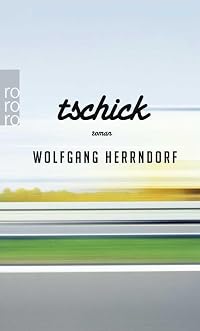
Why We Took the Car
by Wolfgang Herrndorf
On This Page
Description
Mike Klingenberg is a troubled fourteen-year-old from a disfunctional family in Berlin who thinks of himself as boring, so when a Russian juvenile delinquent called Tschick begins to pay attention to him and include Mike in his criminal activities, he is excited--until those activities lead to disaster on the autobahn.Tags
Recommendations





























Member Recommendations

by anonymous user
Member Reviews
Fourteen-year-old Berlin schoolboy Maik and his Russian-born classmate Tschick find themselves left at a loose end in the summer holidays. Maik's middle-class parents are too busy with their own concerns to worry about their son, whilst Tschick only seems to have his dodgy elder brother as family support. In a "borrowed" Lada, they set off to drive to Wallachia to find Tschick's grandfather. Unfortunately, they omit to take a map, and they haven't "done" Germany yet in their school geography lessons, so finding Wallachia doesn't prove to be all that easy.
This is a very funny book, but the joke is exactly the same one as in Catcher in the rye, Adrian Mole, and (nearer to home) Die neuen Leiden des jungen W. -- we are looking at the show more world of adults from the peculiar perspective of an alienated teenage boy, who is (of course) really just an adult novelist using his disguise as a first-person narrator to poke fun at his contemporaries. Herrndorf does it very well, and adds some 21st century Berlin detail to the usual mix, with references among much else to asylum-seekers, racism, open-cast mining, industrial agriculture, computer games, Beyoncé, a left-over old Nazi (or possibly Communist) and a very discreetly smuggled-in LGBT plotline. Although it is a kind of coming-of-age novel, it always feels more irresponsible and subversive than didactic. I'm not really a fan of "YA" books, but I can see that if I were, this would have a good chance of becoming a favourite. show less
This is a very funny book, but the joke is exactly the same one as in Catcher in the rye, Adrian Mole, and (nearer to home) Die neuen Leiden des jungen W. -- we are looking at the show more world of adults from the peculiar perspective of an alienated teenage boy, who is (of course) really just an adult novelist using his disguise as a first-person narrator to poke fun at his contemporaries. Herrndorf does it very well, and adds some 21st century Berlin detail to the usual mix, with references among much else to asylum-seekers, racism, open-cast mining, industrial agriculture, computer games, Beyoncé, a left-over old Nazi (or possibly Communist) and a very discreetly smuggled-in LGBT plotline. Although it is a kind of coming-of-age novel, it always feels more irresponsible and subversive than didactic. I'm not really a fan of "YA" books, but I can see that if I were, this would have a good chance of becoming a favourite. show less
I hate that the publisher makes sure I know the circumstances this book was written under; if I dislike a book written by a dying author, that makes me feel like an asshole. If I like it, I'm forever (or at least for a while) going to wonder how much of that is me projecting what I know of the author onto the text.
That said, I definitely wound up liking this a lot more than I expected. It looks really clichéd - two bored young teenage outsiders from Berlin, a rich dork and a dirt-poor immigrant, decide to just "borrow" an old car and take off on "holiday" for a few weeks. Because why the hell not, mostly. Turns out that the adult world is a strange and incomprehensible place, and it takes more than just knowing which pedals to push to show more make your way ... Along the way through the former GDR they bump into various strange people. Or at least they think they're strange, but what do they know?
Again, yeah, you've seen this plot before, and when it's all narrated by one of the 14-year-olds it makes me even more wary. But I ended up scoffing the whole book down in two long reads, because it's just that well done. There's a hunger, a force behind Herrndorf's writing, a sense of humour that refuses to turn into comedy. The situations the boys find themselves in aren't just wacky adventures, though they initially appear that way when filtered through a not-as-smart-as-he-thinks kid's view. There's a new Europe out there, one which consists of layers of lots of old ones, and it takes more than just a hotwired Lada to understand it. Freedom's just another word for nothing, etc. show less
That said, I definitely wound up liking this a lot more than I expected. It looks really clichéd - two bored young teenage outsiders from Berlin, a rich dork and a dirt-poor immigrant, decide to just "borrow" an old car and take off on "holiday" for a few weeks. Because why the hell not, mostly. Turns out that the adult world is a strange and incomprehensible place, and it takes more than just knowing which pedals to push to show more make your way ... Along the way through the former GDR they bump into various strange people. Or at least they think they're strange, but what do they know?
Again, yeah, you've seen this plot before, and when it's all narrated by one of the 14-year-olds it makes me even more wary. But I ended up scoffing the whole book down in two long reads, because it's just that well done. There's a hunger, a force behind Herrndorf's writing, a sense of humour that refuses to turn into comedy. The situations the boys find themselves in aren't just wacky adventures, though they initially appear that way when filtered through a not-as-smart-as-he-thinks kid's view. There's a new Europe out there, one which consists of layers of lots of old ones, and it takes more than just a hotwired Lada to understand it. Freedom's just another word for nothing, etc. show less
‘’Ever since I was a little boy my father had told me that the world was a bad place. The world is bad and people are bad. Don’t trust anyone, don’t talk to strangers, all of that. My parents drilled that into me. When you watched the local news - people were bad. When you saw primetime investigative shows - people were bad. And maybe it was true, maybe ninety-nine percent of people were bad.’’
The story starts in the police station with a frightened boy, a battered leg and quite a lot of dizziness. Just a few days earlier two boys wanted to go to the most important party of the year. An unlikely duo they were. Mike, a boy from a well-to-do family residing in the Berlin suburbs. His mother is an alcoholic. His father is a show more scum. Andrej, the new student who becomes a target because of his Russian heritage and his silence. However, the question is one: Why did they take the car?
Because of teenage love that knows no boundaries and is afraid of nothing. Because our partners in crime had to deliver a precious gift to a very special girl. And then, they needed to enjoy the taste of freedom, the carefree summer in the messy world their families have created. During their eventful road trip, they meet a family that adores trivia and Harry Potter, an old man who reminisces on love and war, a strange girl who lives alone in the middle of nowhere. They roam on streets that still bear the signs of the discrimination between the ‘’West’’ and the ‘’East’’, between the Germans and the foreigners, between the world of the adults and the universe of the children.
Wolfgang Herrndorf writes a remarkable journey of two teenage boys who need to overcome obstacles that were created by others. They take the car to see whether anything worthy exists beyond the harsh environment of teachers who seem to have been educated in the Nazi Youth during Hitler’s era, of classmates who have started formulating an excellent textbook on how to become a fully-functioning skinhead, of families that are criminally absent or criminally present. And still, through incidents that are funny and sad and messy, through moments that are heart-pounding fast or the epitome of summer serenity, Herrendorf gives us two boys that are clever and kind and able to find their way. Even in an old, stolen Lada. Rich in beautiful descriptions of the lazy suburbs, written in dialogue and prose that are both hilarious and sharp, Why We Took the Car is one more successful example of European YA Literature. In fact this is exactly how YA SHOULD be...In the end, this is not a journey about discovering yourself but about discovering the true nature of the ones around you and whether you can trust them or not. Most of the times, the answer is not simple…
‘’And just imagine: The bugs go to the bug movies! They make movies on their planet and they’re sitting in some bug cinema watching a movie set on Earth - it’s about two kids who steal a car.’’
My reviews can also be found on https://theopinionatedreaderblog.wordpress.com show less
The story starts in the police station with a frightened boy, a battered leg and quite a lot of dizziness. Just a few days earlier two boys wanted to go to the most important party of the year. An unlikely duo they were. Mike, a boy from a well-to-do family residing in the Berlin suburbs. His mother is an alcoholic. His father is a show more scum. Andrej, the new student who becomes a target because of his Russian heritage and his silence. However, the question is one: Why did they take the car?
Because of teenage love that knows no boundaries and is afraid of nothing. Because our partners in crime had to deliver a precious gift to a very special girl. And then, they needed to enjoy the taste of freedom, the carefree summer in the messy world their families have created. During their eventful road trip, they meet a family that adores trivia and Harry Potter, an old man who reminisces on love and war, a strange girl who lives alone in the middle of nowhere. They roam on streets that still bear the signs of the discrimination between the ‘’West’’ and the ‘’East’’, between the Germans and the foreigners, between the world of the adults and the universe of the children.
Wolfgang Herrndorf writes a remarkable journey of two teenage boys who need to overcome obstacles that were created by others. They take the car to see whether anything worthy exists beyond the harsh environment of teachers who seem to have been educated in the Nazi Youth during Hitler’s era, of classmates who have started formulating an excellent textbook on how to become a fully-functioning skinhead, of families that are criminally absent or criminally present. And still, through incidents that are funny and sad and messy, through moments that are heart-pounding fast or the epitome of summer serenity, Herrendorf gives us two boys that are clever and kind and able to find their way. Even in an old, stolen Lada. Rich in beautiful descriptions of the lazy suburbs, written in dialogue and prose that are both hilarious and sharp, Why We Took the Car is one more successful example of European YA Literature. In fact this is exactly how YA SHOULD be...In the end, this is not a journey about discovering yourself but about discovering the true nature of the ones around you and whether you can trust them or not. Most of the times, the answer is not simple…
‘’And just imagine: The bugs go to the bug movies! They make movies on their planet and they’re sitting in some bug cinema watching a movie set on Earth - it’s about two kids who steal a car.’’
My reviews can also be found on https://theopinionatedreaderblog.wordpress.com show less
Gyakorló apaként nyilván nem az az álmom, hogy a fiam 14 évesen az első életreszóló élményeit egy alkoholista orosz kamasz mellett élje át egy lopott Lada Nivában. Azt remélem, ennél azért nagyobb kontrollom lesz az eseményekre. De akárhogy is: ez egy varázslatos könyv. Tipikus "kamaszkorom legszebb nyara" regény, ami arról szól, hogy a világ egy izgalmas hely, tele kalandokkal és barátságokkal - a feladatunk csak annyi, hogy felemeljük a sejhajunk, és uccu neki. Ne együk magunkat azon, hogy nem mi vagyunk a világ köldöke, hanem teremtsük meg azt az univerzumot, aminek mi vagyunk a középpontja. Mondjuk amennyiben lehetséges, azért próbáljuk meg úgy megoldani, hogy Lada Nivát nem lopunk.
Ilyen show more Lada Nivát meg pláne nem: show less
Ilyen show more Lada Nivát meg pláne nem: show less
Until not all that long ago, there were basically only two kinds of German-language fiction being published – prettty much every released book fell either into the category of very cerebral, highly modernistic literary fiction, or that of trashy, iredeemably bad pulp, with all the huge middle ground between the two extremes being covered by translated books, mostly (and rather unsurprisingly) from the United States. This has somewhat changed over recent years, and these days you can find German genre authors who write for readers with more than the minimum intelligence required to decipher a text, and litfic authors to whom the concept of reading for enjoyment is not utterly alien. And sometimes you get a novel like Tschick (which show more would have been impossible thirty years ago) that is undoubtedly literary fiction but also is insanely fun to read, enjoyable on all kinds of levels, whether it’s analysis of structure and imagery or or whether it’s being swept away by a ripping good yarn.
The main reason for Tschick’s success (artistically as well as commercially – the novel was a bestseller in Germany) lies, I think, in its narrative voice, that of fourteen year old Maik who relates events from a first person view. Maik is your average awkward teenager, thinks of himself as boring and is in love with a girl from his class who barely knows that he exists. But then a new guy is introduced, Tschick, the son of Russian immigrants and very much a social outsider. Rather without intending to, Maik slides into a friendship with Tschick who one day stands at his door with a stolen car, and before Maik quite knows what is happening, the two of them are on their towards Wallachia where supposedly Tschick’s grandfather lives.
What then follows is a riff on simultaneously road movie, Bildungsroman and quest romance, a wild and hugely entertaining ride through Eastern Germany in the course of which encounter all sorts of bizarre characters while discovering both themselves and each other. It is a very hard thing to do, but Wolfgang Herrndorf manages to exactly hit the note of a fourteen-year old’s voice, giving his narrator just enough jargon and attitude to make him sound his age, but never so much as to make it come across as obtrusive and unconvincing. The novel is funny without being forced, touching without being sentimental, and while the story unfolds in what is quite recognisably present-day Germany it is never simply realistic (at least not in the sense of depicting things “just as they are” as realism is still most commonly understood). The narrative often has a dreamlike feel about it, sometimes peaking into the outright surreal, but it is always somewhat larger than life, as if common reality was not quite sufficient to hold Maik, Tschick and the people they encounter on their trip.
And while Wolfgang Herrndorf does not gloss over the bleakness of the East German Maik and Tschick travers in their stolen car, and does not serve the reader a facile happy ending, when all is said done, Tschick is not only a very funy and highly entertaining novel, but also a rather hopeful one; summarised neatly by the narrator at the end when he reflects that he has always been told how people are bad, and even though this might be true of 99% of everyone, he and Tschick on their journey enountered almost exclusively the one percent that was not bad. There is some melancholy in this, but also no small amount of optimism and I’d wager most readers will close this novel with a smile on their face and think back on it fondly. show less
The main reason for Tschick’s success (artistically as well as commercially – the novel was a bestseller in Germany) lies, I think, in its narrative voice, that of fourteen year old Maik who relates events from a first person view. Maik is your average awkward teenager, thinks of himself as boring and is in love with a girl from his class who barely knows that he exists. But then a new guy is introduced, Tschick, the son of Russian immigrants and very much a social outsider. Rather without intending to, Maik slides into a friendship with Tschick who one day stands at his door with a stolen car, and before Maik quite knows what is happening, the two of them are on their towards Wallachia where supposedly Tschick’s grandfather lives.
What then follows is a riff on simultaneously road movie, Bildungsroman and quest romance, a wild and hugely entertaining ride through Eastern Germany in the course of which encounter all sorts of bizarre characters while discovering both themselves and each other. It is a very hard thing to do, but Wolfgang Herrndorf manages to exactly hit the note of a fourteen-year old’s voice, giving his narrator just enough jargon and attitude to make him sound his age, but never so much as to make it come across as obtrusive and unconvincing. The novel is funny without being forced, touching without being sentimental, and while the story unfolds in what is quite recognisably present-day Germany it is never simply realistic (at least not in the sense of depicting things “just as they are” as realism is still most commonly understood). The narrative often has a dreamlike feel about it, sometimes peaking into the outright surreal, but it is always somewhat larger than life, as if common reality was not quite sufficient to hold Maik, Tschick and the people they encounter on their trip.
And while Wolfgang Herrndorf does not gloss over the bleakness of the East German Maik and Tschick travers in their stolen car, and does not serve the reader a facile happy ending, when all is said done, Tschick is not only a very funy and highly entertaining novel, but also a rather hopeful one; summarised neatly by the narrator at the end when he reflects that he has always been told how people are bad, and even though this might be true of 99% of everyone, he and Tschick on their journey enountered almost exclusively the one percent that was not bad. There is some melancholy in this, but also no small amount of optimism and I’d wager most readers will close this novel with a smile on their face and think back on it fondly. show less
Publicado originalmente: El Extraño Gato del Cuento
Adoré este libro de principio a fin, ya había comentado antes que busco nuevos escenarios para mis lecturas, expandir mi geografía mental (?) a Alemania y sus alrededores fue hermoso.
El libro está escrito de una manera tan bonita y a veces inocente y otras descarada, lo cual me hizo a mí como lector disfrutar cada uno de sus párrafos extensos. E uno de esos libros donde no hay muchos diálogos, pero cuando los hay son solo para dar el punto preciso a la escena. Soy amante de los libros con road trip, me encanta la fantasía pero hay algo más en la singularidad de la realidad, el esto-SÍ-puede-pasar. Amé cada uno de los personajes, todos, absolutamente todos, algunos solo salen show more dos o menos capítulos y me dolía despedirme de ellos. De uno en especial estuve completamente asustada, desde que apareció me generó tremenda ternura, de esos personajes que se roban completamente toda la escena, aunque debo decir que el escritor me dejó un poco picada, me hubiera gustado saber más.
El título original es Tschick, y como bien dice la sinopsis es el personaje que genera todo el alboroto, cuando terminé de leer solo quise sacarlo del libro y abrazarlo mucho, mucho.
Como dije el libro ya lo pueden encontrar en español, es una lectura que les recomiendo altamente, uno de esos tesoros escondidos, ojalá puedan leerlo pronto y disfrutarlo tanto o más de lo que yo lo hice.
Twitter || Blog || Pinterest || Tumblr || Instagram show less
Adoré este libro de principio a fin, ya había comentado antes que busco nuevos escenarios para mis lecturas, expandir mi geografía mental (?) a Alemania y sus alrededores fue hermoso.
El libro está escrito de una manera tan bonita y a veces inocente y otras descarada, lo cual me hizo a mí como lector disfrutar cada uno de sus párrafos extensos. E uno de esos libros donde no hay muchos diálogos, pero cuando los hay son solo para dar el punto preciso a la escena. Soy amante de los libros con road trip, me encanta la fantasía pero hay algo más en la singularidad de la realidad, el esto-SÍ-puede-pasar. Amé cada uno de los personajes, todos, absolutamente todos, algunos solo salen show more dos o menos capítulos y me dolía despedirme de ellos. De uno en especial estuve completamente asustada, desde que apareció me generó tremenda ternura, de esos personajes que se roban completamente toda la escena, aunque debo decir que el escritor me dejó un poco picada, me hubiera gustado saber más.
El título original es Tschick, y como bien dice la sinopsis es el personaje que genera todo el alboroto, cuando terminé de leer solo quise sacarlo del libro y abrazarlo mucho, mucho.
Como dije el libro ya lo pueden encontrar en español, es una lectura que les recomiendo altamente, uno de esos tesoros escondidos, ojalá puedan leerlo pronto y disfrutarlo tanto o más de lo que yo lo hice.
Twitter || Blog || Pinterest || Tumblr || Instagram show less
This book is great fun! The fourteen-year-old protagonist, Maik, has the time of his life with "Tschick," the new Russian kid from school, when the latter convinces him to take a real summer vacation with him in a stolen car while Maik's parents are away. At first, Tschick is just a silent individual, who brings an unconventional element to the classroom, and no one manages to get to know him. Maik is more concerned with his utter disappointment that the girl he has a crush on didn’t invite him to her birthday party after he’d spent weeks drawing a picture of Beyoncé to give her. He believes he wasn’t invited because he’s just too boring. But, on the day summer vacation begins, Tschick seeks out Maik, and then keeps turning up, show more first on a dilapidated women’s bike and then in a stolen Lada. Tschick and Maik embark on an adventure that is anything but boring. This coming-of-age novel has lots of twists and turns, and lot lots of hilarity. I highly recommend it. show less
Members
- Recently Added By
Published Reviews
ThingScore 100
I was eating breakfast in a hotel, reading a book, when the German illustrator Axel Scheffler (of Gruffalo fame) sat down opposite me. "Do you know about Herrndorf?" he asked. I shook my head. "He got cancer," he said. "Wrote a blog about it. Died." "How sad," I said. "Killed himself," said Scheffler. He had my full attention now. "Shot himself." Pause. "In the head."
He'd asked about Herrndorf show more because he'd seen I was reading the American-English translation of Herrndorf's Tschick, with the English title Why We Took the Car. I'd assumed "Tschick" to be the equivalent of our "Twoc" (Taking Without Owner's Consent), but it turned out it was short for Tschichatschow, the name of one of the two teenage-boy protagonists.
I have been irregularly reviewing children's books for the Guardian for more than 10 years and, if memory serves – with the exception of Tove Jansson's Moomin books – this is the first book I've read in translation for review. The lack of translated children's (in this case Young Adult) fiction is our loss. Fellow German Cornelia Funke aside, I am hard-pressed to think of other contemporary foreign children's authors available in English (though I know the Pushkin imprint is trying to redress this). Tim Mohr has done an excellent job with Why We Took the Car. Its American stoops and faucets and pants for trousers mixed with euros and kilometres-an-hour make for an interesting hybrid.
The story seems a simple one – two 14-year-olds sort of borrow a car – but the execution is beautiful. From the outset, it is clear that Mike is a square peg in a round hole. At school he is aloof and seemingly disconnected. At home, he has to deal with an alcoholic mother and a father who appears to be having a rather obvious affair.
Mike's crazy about Tatiana, a girl in his class, but is one of the few classmates who doesn't get invited to her party. He has done an amazing pencil drawing of Beyoncé for her but ends up tearing it to pieces. Tschick – the new Russian kid at school, who sometimes turns up reeking of booze – insists that they drive to Tatiana's house and give her the reconstituted gift. They arrive in a beaten-up old Lada that Tschick sometimes uses, borrowing it without permission from the street but always bringing it back. Until now. Until the road trip.
For much of the time, little happens. There are no big police chases (except for one involving a bicycle) and none of the more obvious rites of passage. But they do meet some interesting people in interesting places and, because it's seen through Mike's eyes, not too much is explained. Are they at some sort of religious community now? Is this scene set in a disused quarry? How and why did this girl get here?
This adds a very real, yet, at the same time, surreal edge to proceedings. In the same way that Frank McCourt's memoir Angela's Ashes related events as they were experienced at the time, with little, if any, adult reflection, we watch events unfold as Mike perceives them. The result is insightful and funny.
After finishing Why We Took the Car, I investigated Scheffler's breakfast revelations. Sadly, they were true. Diagnosed in 2010 (the year this book was originally published), Herrndorf shot himself in August 2013. Apparently, one of the first things he did after being told he had cancer was get himself a gun. He said it was his link to reality and his exit strategy. His was an extraordinary mind. show less
He'd asked about Herrndorf show more because he'd seen I was reading the American-English translation of Herrndorf's Tschick, with the English title Why We Took the Car. I'd assumed "Tschick" to be the equivalent of our "Twoc" (Taking Without Owner's Consent), but it turned out it was short for Tschichatschow, the name of one of the two teenage-boy protagonists.
I have been irregularly reviewing children's books for the Guardian for more than 10 years and, if memory serves – with the exception of Tove Jansson's Moomin books – this is the first book I've read in translation for review. The lack of translated children's (in this case Young Adult) fiction is our loss. Fellow German Cornelia Funke aside, I am hard-pressed to think of other contemporary foreign children's authors available in English (though I know the Pushkin imprint is trying to redress this). Tim Mohr has done an excellent job with Why We Took the Car. Its American stoops and faucets and pants for trousers mixed with euros and kilometres-an-hour make for an interesting hybrid.
The story seems a simple one – two 14-year-olds sort of borrow a car – but the execution is beautiful. From the outset, it is clear that Mike is a square peg in a round hole. At school he is aloof and seemingly disconnected. At home, he has to deal with an alcoholic mother and a father who appears to be having a rather obvious affair.
Mike's crazy about Tatiana, a girl in his class, but is one of the few classmates who doesn't get invited to her party. He has done an amazing pencil drawing of Beyoncé for her but ends up tearing it to pieces. Tschick – the new Russian kid at school, who sometimes turns up reeking of booze – insists that they drive to Tatiana's house and give her the reconstituted gift. They arrive in a beaten-up old Lada that Tschick sometimes uses, borrowing it without permission from the street but always bringing it back. Until now. Until the road trip.
For much of the time, little happens. There are no big police chases (except for one involving a bicycle) and none of the more obvious rites of passage. But they do meet some interesting people in interesting places and, because it's seen through Mike's eyes, not too much is explained. Are they at some sort of religious community now? Is this scene set in a disused quarry? How and why did this girl get here?
This adds a very real, yet, at the same time, surreal edge to proceedings. In the same way that Frank McCourt's memoir Angela's Ashes related events as they were experienced at the time, with little, if any, adult reflection, we watch events unfold as Mike perceives them. The result is insightful and funny.
After finishing Why We Took the Car, I investigated Scheffler's breakfast revelations. Sadly, they were true. Diagnosed in 2010 (the year this book was originally published), Herrndorf shot himself in August 2013. Apparently, one of the first things he did after being told he had cancer was get himself a gun. He said it was his link to reality and his exit strategy. His was an extraordinary mind. show less
added by kleh
Deze hilarische roman, over twee Berlijnse tieners die met een gestolen auto door Oost-Duitsland crossen, is om twee redenen opmerkelijk. Herrndorf, dertig jaar ouder dan zijn jeugdige hoofdpersonen, heeft zich opvallend goed verplaatst in hun denkwereld en taal.
added by sneuper
Herrndorf zet uitermate geloofwaardig de gedachtenwereld van veertienjarigen neer, zonder te vervallen in het overmatig gebruik van jeugdtaal of grofheid. Zijn stijl is fris en mede door de korte hoofdstukken heeft het boek veel vaart. Tsjik heeft een hoog in-één-ruk-uitgelezen-gehalte.
Ouders, tv en leraren hameren erop dat het een verrotte wereld is. Belangrijkste conclusie die de jongens show more na de dollemansrit trekken: misschien is 99 procent van de mensheid wel slecht, maar zij kwamen alleen die ene procent tegen die deugde.
Na 255 pagina’s is het gedaan. Aan de ene kant jammer dat het boek uit is, aan de andere kant is het natuurlijk een geweldig compliment als men langer met Maik en Tsjik op reis had gewild. show less
Ouders, tv en leraren hameren erop dat het een verrotte wereld is. Belangrijkste conclusie die de jongens show more na de dollemansrit trekken: misschien is 99 procent van de mensheid wel slecht, maar zij kwamen alleen die ene procent tegen die deugde.
Na 255 pagina’s is het gedaan. Aan de ene kant jammer dat het boek uit is, aan de andere kant is het natuurlijk een geweldig compliment als men langer met Maik en Tsjik op reis had gewild. show less
added by sneuper
Lists

Read the book and saw the movie
1,170 works; 195 members

German Literature
518 works; 56 members

Books Read in 2014
2,343 works; 89 members

Books Read in 2023
5,547 works; 145 members

Books Read in 2022
5,168 works; 114 members

Red Dot 2014-2015 - Mature Readers - Longlist
36 works; 5 members

Eton's list - the books every bright 16 year-old should read
40 works; 6 members

A Child's Book Tour of Germany
76 works; 5 members

Biggest Disappointments
606 works; 163 members

Hazel & Katniss & Harry & Starr Podcast
195 works; 1 member

Favorite Childhood Books
1,651 works; 519 members
Author Information

Some Editions
Awards and Honors
Awards
Series
Belongs to Publisher Series
Work Relationships
Has the adaptation
Common Knowledge
- Canonical title
- Why We Took the Car
- Original title
- Tschick
- Original publication date
- 2010-09-17
- People/Characters
- Maik Klingenberg; Andrej Tschichatschow (Tschick)
- Important places
- Berlin, Germany
- Epigraph*
- Dawn Wiener: I was fighting back.
Mrs. Wiener: Who ever told you to fight back?
Todd Solondz, Welcome to the Dollhouse - Dedication
- To my friends
- First words
- The first thing is the smell of blood and coffee.
- Last words*
- (Click to show. Warning: May contain spoilers.)Weil, man kann zwar nicht ewig die Luft anhalten. Aber doch ziemlich lange.
- Original language
- German
- Canonical DDC/MDS
- 833.92
*Some information comes from Common Knowledge in other languages. Click "Edit" for more information.
Classifications
- Genres
- Fiction and Literature, General Fiction, Teen, Young Adult
- DDC/MDS
- 833.92 — Literature & rhetoric German & related literatures German fiction 1900- 1990-
- LCC
- PT2668 .E7572 .T73 — Language and Literature German, Dutch and Scandinavian literatures German literature Individual authors or works 1961-2000
- BISAC
Statistics
- Members
- 1,110
- Popularity
- 22,868
- Reviews
- 33
- Rating
- (3.92)
- Languages
- 13 — Czech, Danish, Dutch, English, Estonian, Finnish, French, German, Hungarian, Italian, Portuguese, Spanish, Swedish
- Media
- Paper, Audiobook, Ebook
- ISBNs
- 50
- ASINs
- 9