
Eugen Ruge
Author of In Times of Fading Light
About the Author
Image credit: Wikipedia user Lesekreis
Works by Eugen Ruge
2013 1 copy
Associated Works
Tagged
Common Knowledge
- Canonical name
- Ruge, Eugen
- Birthdate
- 1954-06-24
- Gender
- male
- Education
- Humboldt University of Berlin
Akademie der Wissenschaften der DDR - Occupations
- author
film director
Übersetzer - Awards and honors
- Alfred-Döblin-Preis (2009)
Deutscher Buchpreis (2011) - Relationships
- Ruge, Wolfgang (father)
- Short biography
- Eugen Ruge ist ein deutscher Autor, Regisseur und Übersetzer aus dem Russischen. Eugen Ruge ist ein Sohn von Wolfgang Ruge. Nach einem Mathematikstudium und erfolgreichem Diplom an der Humboldt-Universität zu Berlin wurde Eugen Ruge wissenschaftlicher Mitarbeiter am Zentralinstitut für Physik der Erde der Akademie der Wissenschaften der DDR. Bereits 1986 begann er mit seiner schriftstellerischen Tätigkeit. Seit 1989 wirkt er hauptsächlich als Autor für Theater, Funk und Film. Neben seinen Übersetzungen mehrerer Tschechow-Texte und der Autorentätigkeit für Dokumentarfilme und Theaterstücke, übte er zeitweise noch eine Lehrtätigkeit in Berlin und Weimar aus.
- Nationality
- Germany
- Birthplace
- Sosva, Soviet Union
- Places of residence
- Berlin, Germany
Rügen, Germany - Map Location
- Germany
Members
Reviews

Intriguing to find a toga-saga by Eugen Ruge, whom we know mostly because of his two big novels about the communist elite in mid-20th-century Germany, In times of failing light and Metropol. But of course it turns out to be a political novel like the others, a dark satire about an opportunistic demagogue clawing his way up the political ladder in a city whose time — as we know but he doesn’t — is almost up. The irony is that the unemployed ex-labourer Josse gets his accidental first show more opportunity to mark his territory politically on a quite sensible and responsible platform of “volcano-awareness”, encouraging people to move out of the threatened city, but he is soon diverted into other policy directions as he forms alliances with wealthy Pompeians eager to exploit his popularity. And keep property values high...
Ruge refrains from telling us what, if anything, we should read into all this, but you could certainly take it as a fable about climate-change if you wanted to. In any case, it’s a well-written and enjoyable historical novel, staying within a plausible first-century world-view without ever getting unnecessarily stagey or didactic. Fun! show less
Ruge refrains from telling us what, if anything, we should read into all this, but you could certainly take it as a fable about climate-change if you wanted to. In any case, it’s a well-written and enjoyable historical novel, staying within a plausible first-century world-view without ever getting unnecessarily stagey or didactic. Fun! show less

This is effectively a book-length footnote to Ruge's historical novel about his family background, In Zeiten des abnehmenden Lichts. While researching that book, he became aware that his grandmother, Charlotte in the book, had lived in the Soviet Union for four years in the 1930s. Unlike her wartime exile in Mexico, which she loved to reminisce about, she never mentioned this period of her life, and for a long time Ruge knew nothing beyond his father's assumption that Charlotte and her show more second husband (Wilhelm in the book, a communist activist who had been heavily involved in the armed struggle in Germany in the 1920s) must have been working for the OMS, the secret service of the Comintern. The files of the OMS itself are still classified, but with the help of Russian historians, Ruge was able to gain access to the Comintern personnel files and piece together much of the story.
Charlotte and Wilhelm are suspended from their work for the Comintern in Summer 1936, because of their past friendship with one of the accused in the Zinoviev trial. Other foreign colleagues soon follow them, as the Stalinist purges strike further and further into the Comintern and the OMS is effectively dismantled, and bizarrely they are all sent to live in a famous Moscow luxury hotel, the Metropol, where they rub shoulders with Politburo members, the senior judge in the show trials, and distinguished foreign visitors (Lion Feuchtwanger has the room next to Charlotte and Wilhelm for a while). Then the night-time raids by the NKVD start, and there are fewer and fewer OMS staff members in the second-class dining area. But somehow Charlotte and Wilhelm are still there eighteen months later.
Ruge explores the things that must have been going through the minds of these committed communists as their friends and family members are arrested and killed or sent off to the Gulag. How long can you go on believing and convincing yourself that the Party still knows what it is doing? Far longer, he suggests, than we with our full-scale hindsight could ever imagine. Belief, and the accompanying feelings of guilt and inadequacy in the face of accusations, are very powerful forces. We all know how easy it is to ignore evidence that seems to contradict something you want to believe in, and that probably applies all the more when you have experience of fighting for those beliefs against real enemies with actual guns in their hands.
An interesting little sidelight on Soviet history, and a bit of real-life 1984. show less
Charlotte and Wilhelm are suspended from their work for the Comintern in Summer 1936, because of their past friendship with one of the accused in the Zinoviev trial. Other foreign colleagues soon follow them, as the Stalinist purges strike further and further into the Comintern and the OMS is effectively dismantled, and bizarrely they are all sent to live in a famous Moscow luxury hotel, the Metropol, where they rub shoulders with Politburo members, the senior judge in the show trials, and distinguished foreign visitors (Lion Feuchtwanger has the room next to Charlotte and Wilhelm for a while). Then the night-time raids by the NKVD start, and there are fewer and fewer OMS staff members in the second-class dining area. But somehow Charlotte and Wilhelm are still there eighteen months later.
Ruge explores the things that must have been going through the minds of these committed communists as their friends and family members are arrested and killed or sent off to the Gulag. How long can you go on believing and convincing yourself that the Party still knows what it is doing? Far longer, he suggests, than we with our full-scale hindsight could ever imagine. Belief, and the accompanying feelings of guilt and inadequacy in the face of accusations, are very powerful forces. We all know how easy it is to ignore evidence that seems to contradict something you want to believe in, and that probably applies all the more when you have experience of fighting for those beliefs against real enemies with actual guns in their hands.
An interesting little sidelight on Soviet history, and a bit of real-life 1984. show less

This is a very impressive, extremely well written family saga set against the background of the collapse of the communist system in East Germany. There are some superb set-piece scenes, and very clever use of descriptive writing to convey the mood of particular moments in time and layers of society. You can see why one critic (quoted, of course, in the back cover blurb) rather gushingly called it the "DDR-Buddenbrooks" — a comparison that Ruge was obviously angling for by the way he show more structured the book as a series of widely-spaced vignettes of family events whilst letting the big history happen offstage.
But of course it isn't a Buddenbrooks. I was disappointed with the book as a whole and felt that it didn't live up to the technical quality of the writing. The problem seems to be that Ruge doesn't have anything very challenging to tell us. His argument is that the system in the DDR was rotten to the core, based on hypocrisy, toadyism and fear, and doomed to fail. I don't think anyone is going to challenge that: he has hindsight on his side, after all. It might have been interesting if he had made some effort to show us how the idealism and optimism fell away (in the same way that Mann shows us the subsequent generations of the Buddenbrooks family failing to live up to the impossibly high standards set by their parents and grandparents), but Ruge doesn't seem to be able to acknowledge that there ever was anything good in communism. Whether or not that's a valid historical proposition, it doesn't make for a very interesting narrative progression. At the end of the book, we are exactly where we were at the beginning (except that we have now understood that capitalism has some pretty serious flaws too, in case we didn't realise that...). show less
But of course it isn't a Buddenbrooks. I was disappointed with the book as a whole and felt that it didn't live up to the technical quality of the writing. The problem seems to be that Ruge doesn't have anything very challenging to tell us. His argument is that the system in the DDR was rotten to the core, based on hypocrisy, toadyism and fear, and doomed to fail. I don't think anyone is going to challenge that: he has hindsight on his side, after all. It might have been interesting if he had made some effort to show us how the idealism and optimism fell away (in the same way that Mann shows us the subsequent generations of the Buddenbrooks family failing to live up to the impossibly high standards set by their parents and grandparents), but Ruge doesn't seem to be able to acknowledge that there ever was anything good in communism. Whether or not that's a valid historical proposition, it doesn't make for a very interesting narrative progression. At the end of the book, we are exactly where we were at the beginning (except that we have now understood that capitalism has some pretty serious flaws too, in case we didn't realise that...). show less
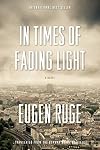
I read Anna Funder's book, "Stasiland", a year or two back and rather expected this to be of the same informative, but rather depressing, order (not to imply anything about Anna Funder's excellence as a writer). But here we have a book in which East Germany is merely the context for a journey of discovery through four generations of a family. Brilliantly plotted and so well translated, we move forward and backward in time to view family events through different character's minds. The Table show more of Contents is useful for keeping track.
Of course, East Germany in the latter part of the 20th centre is no "mere" context. It shaped all who lived within it, as do all cultures. Therein lies the opportunity to reflect on one's own present cultural context. How am I shaped by it? show less
Of course, East Germany in the latter part of the 20th centre is no "mere" context. It shaped all who lived within it, as do all cultures. Therein lies the opportunity to reflect on one's own present cultural context. How am I shaped by it? show less
Lists
Awards


You May Also Like


Associated Authors
Statistics
- Works
- 9
- Also by
- 1
- Members
- 788
- Popularity
- #32,299
- Rating
- 3.7
- Reviews
- 29
- ISBNs
- 79
- Languages
- 12