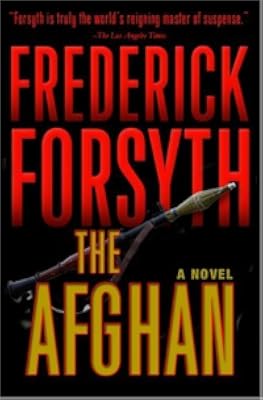
The Afghan
by Frederick Forsyth
On This Page
Description
When British and American intelligence catch wind of a major Al Qaeda operation in the works, they instantly galvanize--but to do what? They know nothing about it: the what, where, or when. They have no sources in Al Qaeda, and it's impossible to plant someone. Impossible, unless-- The Afghan is Izmat Khan, a five-year prisoner of Guantánamo Bay and a former senior commander of the Taliban. The Afghan is also Colonel Mike Martin, a twenty-five-year veteran of war zones around the world--a show more dark, lean man born and raised in Iraq. In an attempt to stave off disaster, the intelligence agencies will try to do what no one has ever done before--pass off a Westerner as an Arab among Arabs.--From publisher description. show lessTags
Recommendations





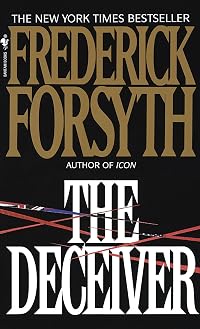
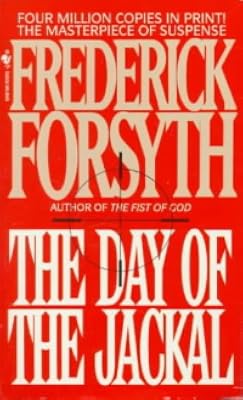

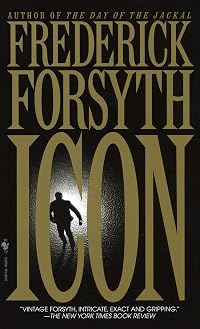
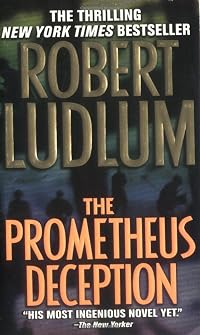
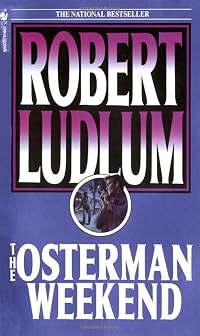
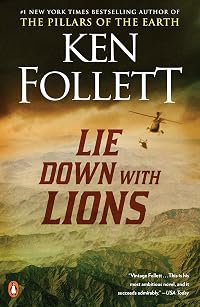
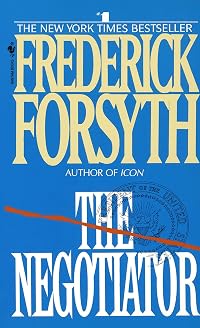
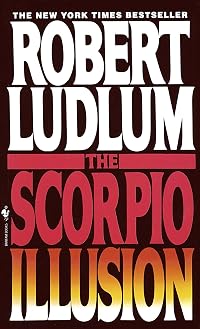
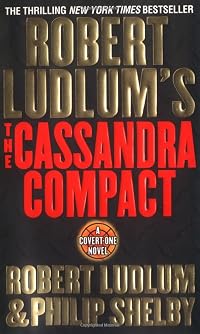
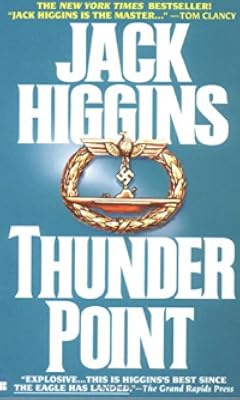



Member Recommendations
Member Reviews
This book can be seen as a sequel to [The Fist of God]. The hero of that work, Mike Martin, was too good not to have another excursion. The world has moved on past the 7/7 London tube bombings and Martin has retired to solitary roof repairs in Hampshire when some mobile phone tapping exposes the threat of an Al-Qaeda 'spectacular' the nature of which can only be discovered by infiltrating the Al-Qaeda high command. Martin is the only man for the job.
The first two-fifths of the book, while starting to develop the terror plot mostly deals with Martin's background from his childhood in Baghdad through his long service with the SAS in the Falklands, Afghanistan (during the Russian occupation), Northern Ireland, Kuwait and Baghdad in the show more First Gulf War, the Balkans and Sierra Leone before returning to Afghanistan again in the aftermath of 9/11. This is a long story of which much would be known by anyone familiar with [The Fist of God]. The reader is also introduced to the Afghan of the title, a young Pashtun named Izmat Khan, influenced by time in Pakistani madrassahs, but initially only interested in the well-being of his country. In one of the several coincidences in the book, he meets Mike Martin who save his life when wounded by a Russian bullet. In the Taliban field hospital both Khan and Martin meet Osama bin Laden. Khan is turned into a jihadist after the complete destruction of his home, family and neighbours by a missile strike and becomes involved in the so-called Battle of Qala-i-Jangi in which his life is again saved by Martin. Forsyth gives us a pretty full and partly factual account of this fighting: an interesting small detail is that, while Wikipedia credits four US troops with a rescue of a TV crew and a CIA agent, Forsyth give the job to four SBS men. Captured, Khan is transferred to Guantanamo Bay and the stage is set for his place in the story as the legend for Martin's character when he infiltrates Al-Qaeda.
The next two-fifths deal with the operation to allow Martin to assume his false identity and contact Al-Qaeda followed by considerable detail about the preparations for the act of terror. We are treated to a lot of typical Forsythian information about terrorist recruitment and organisation, smuggling across the Straits of Hormuz, and international shipping. He does this well, as usual, and never fails to keep the story moving along. After a somewhat irrelevant side track to deal with the loose end that Izmat Khan has become the last 50 pages or so deal with the denouement of the terror plot. After the very detailed preamble the finale seemed a bit rushed, but that is Forsyth's style.
The tradition of almost superhuman and nearly infallible foes is long and honourable from Moriarty through Fu Man Chu and Carl Peterson to Smersh and SPECTRE. Here Forsyth is giving that role to radical Islam. He succeeded in scaring me by his description of the brainwashing of young men in the madrassahs, by the plausible and effective financial management of terrorism and, most of all, by his emphasis on the world-wide scope of the threat to the West. A message that I take away is that we shouldn't get too exercised about phone-tapping and that there is a place for suspension of human rights. I don't like to feel that way but Forsyth is persuasive. I am prompted to seek out rather more objective modern middle Eastern history.
A well-crafted and informative book. show less
The first two-fifths of the book, while starting to develop the terror plot mostly deals with Martin's background from his childhood in Baghdad through his long service with the SAS in the Falklands, Afghanistan (during the Russian occupation), Northern Ireland, Kuwait and Baghdad in the show more First Gulf War, the Balkans and Sierra Leone before returning to Afghanistan again in the aftermath of 9/11. This is a long story of which much would be known by anyone familiar with [The Fist of God]. The reader is also introduced to the Afghan of the title, a young Pashtun named Izmat Khan, influenced by time in Pakistani madrassahs, but initially only interested in the well-being of his country. In one of the several coincidences in the book, he meets Mike Martin who save his life when wounded by a Russian bullet. In the Taliban field hospital both Khan and Martin meet Osama bin Laden. Khan is turned into a jihadist after the complete destruction of his home, family and neighbours by a missile strike and becomes involved in the so-called Battle of Qala-i-Jangi in which his life is again saved by Martin. Forsyth gives us a pretty full and partly factual account of this fighting: an interesting small detail is that, while Wikipedia credits four US troops with a rescue of a TV crew and a CIA agent, Forsyth give the job to four SBS men. Captured, Khan is transferred to Guantanamo Bay and the stage is set for his place in the story as the legend for Martin's character when he infiltrates Al-Qaeda.
The next two-fifths deal with the operation to allow Martin to assume his false identity and contact Al-Qaeda followed by considerable detail about the preparations for the act of terror. We are treated to a lot of typical Forsythian information about terrorist recruitment and organisation, smuggling across the Straits of Hormuz, and international shipping. He does this well, as usual, and never fails to keep the story moving along. After a somewhat irrelevant side track to deal with the loose end that Izmat Khan has become the last 50 pages or so deal with the denouement of the terror plot. After the very detailed preamble the finale seemed a bit rushed, but that is Forsyth's style.
The tradition of almost superhuman and nearly infallible foes is long and honourable from Moriarty through Fu Man Chu and Carl Peterson to Smersh and SPECTRE. Here Forsyth is giving that role to radical Islam. He succeeded in scaring me by his description of the brainwashing of young men in the madrassahs, by the plausible and effective financial management of terrorism and, most of all, by his emphasis on the world-wide scope of the threat to the West. A message that I take away is that we shouldn't get too exercised about phone-tapping and that there is a place for suspension of human rights. I don't like to feel that way but Forsyth is persuasive. I am prompted to seek out rather more objective modern middle Eastern history.
A well-crafted and informative book. show less
The ability to describe – convincingly and in detail – how skilled and knowledgeable people do things has always been Frederick Forsyth’s particular literary talent. The scene in Day of the Jackal where the assassin methodically adjusts the sights on his newly acquired, custom-made rifle involves one deliberately underdeveloped character and no suspense at all. Nonetheless, it’s riveting (and, even after decades, memorable) because Forsyth takes his time and describes the process step by methodical step . . . taking the reader inside a secret world that would otherwise be closed to them. The trick works so well that, in The Dogs of War, an extended episode involving the smuggling of small arms across the French border is as show more gripping as the use of them, in the book’s climax, to stage a coup in a small African country.
The Afghan has moments like that – you learn a great deal about the shipping business; about how cargoes are bought, sold, and documented; and about the tactics of modern-day pirates – and they’re as interesting as ever. Unfortunately, the story wrapped around them is far less interesting than Forsyth’s best work.
The plot (like all Forsyth’s plots) is easily summarized: A retired British special-forces officer with an uncanny ability to pass as an Afghan is infiltrated into an Islamic terrorist network, posing as a recently “released” high-ranking prisoner, in a desperate attempt to disrupt an impending attack whose timing and target remain unknown. It moves (again, like all his plots) with reasonable speed, but its movements are far from graceful. The pacing is awkward, the clichés abundant (the veteran operative lured out of quiet retirement for One Last Job, the hero and villain who share An Undisclosed Bond, the complicated ritual the hero must perform Exactly Right or be revealed), and the ending oddly unsatisfying. The need to keep the exact nature of the attack a secret from the reader limits Forsyth’s opportunity to craft his trademark “how they do it” scenes, and one mid-book plot development depends on not one but two coincidences that beggar belief.
The end result of all this is a book that carries you along and keeps you entertained, but never for a moment convinces you that any of it is real. It’s a routine, sometimes clunky thriller only occasionally enlivened by Forsyth’s gift for describing complex processes – not, as in his earlier work, an immersive experience that leaves you with a suspicion that “this might have happened.” show less
The Afghan has moments like that – you learn a great deal about the shipping business; about how cargoes are bought, sold, and documented; and about the tactics of modern-day pirates – and they’re as interesting as ever. Unfortunately, the story wrapped around them is far less interesting than Forsyth’s best work.
The plot (like all Forsyth’s plots) is easily summarized: A retired British special-forces officer with an uncanny ability to pass as an Afghan is infiltrated into an Islamic terrorist network, posing as a recently “released” high-ranking prisoner, in a desperate attempt to disrupt an impending attack whose timing and target remain unknown. It moves (again, like all his plots) with reasonable speed, but its movements are far from graceful. The pacing is awkward, the clichés abundant (the veteran operative lured out of quiet retirement for One Last Job, the hero and villain who share An Undisclosed Bond, the complicated ritual the hero must perform Exactly Right or be revealed), and the ending oddly unsatisfying. The need to keep the exact nature of the attack a secret from the reader limits Forsyth’s opportunity to craft his trademark “how they do it” scenes, and one mid-book plot development depends on not one but two coincidences that beggar belief.
The end result of all this is a book that carries you along and keeps you entertained, but never for a moment convinces you that any of it is real. It’s a routine, sometimes clunky thriller only occasionally enlivened by Forsyth’s gift for describing complex processes – not, as in his earlier work, an immersive experience that leaves you with a suspicion that “this might have happened.” show less
Vintage Forsyth – very long build-up with lots of irrelevant information on weapons (not used), military procedures (not followed), military hierarchies (not operationalised), and very little in terms of suspense and actual action. This is also how I remember ‘the day of the Jackal’, one of the biggest reading disappointments in my life probably. All this stuff about a planned assassination, and in the end a no show. In this case it is all about a British undercover agent infiltrating Al Qaida, trying to find out about a major operation (al Ishra) against the West. In the end he finds out what it is all about and even manages to self-lessly sabotaging it at the cost of his own life. What remains is an innocuous burial and show more inscription on some wall at some barracks. Forsyth builds his story around an innocent remark by a British professor of the Koran, who thought perhaps his retired MI5/SIS brother might be capable of infiltrating the AQ ranks to find out about an impending operation. They share a background growing up in Iraq, speaking Arabic, and a smattering of Pashto (NW Pakistan). His ‘legend’ is an Afghan prisoner in Gitmo, whom he personally knew from an earlier MI6 assignment in Afghanistan. Part of the story concerns his removal from Gitmo and subsequent spectacular (stage-managed) escape in Afghanistan. The real legend is put up in a remote snowed-in cabin near the Canadian border, from whence he escapes at some stage, resulting in the most dynamic part of the thriller (a desperate hunt in the snow). My final judgement is that the story could have been told in a much more exciting manner. Taking a leaf from the book of le Carre, why not start with the attack at full sea, or the chase for the escaped legend? And then start working your way back? Or alternatively use the voice and I person of the desperate agent, allowing the reader to identify with his supposed heroics and sense of desperation? But no, a linear narrative with lots of superfluous detail and no real suspense, except for the occasional flicker… show less
As the title suggests the story is about a terrorist attack on the leaders of the west. Well written, as usual with Forsyth's novels, and well researched. Forsyth provides a good overview about how we came to be in the mess we are in with the Taliban, ISIS and Pakistan. The only negative about it is that he spends more time on the historical developments in the Middle East than the characters of the book.
This is just the kind of book you would expect from Frederick Forsyth - thoroughly researched, good build up of character personalities, engaging style, excellent writing style which makes the book totally
un-put-downable!
However it is on his research that I would like to make a point or two, though probably minor indiscrepancies. India has been mentioned thrice in the book and twice in the context of Kerala, the other being that the book’s protagonist had an Indian grandmother.
He mentions Kerala in India as being a hotbed of Islamic terrorists, once having being a hotbed for communism.
Well the communism part is right- but I hope he knows that communism came to Kerala through an election, not as a revolution or a coup in other parts show more of the world - so it had to be a sort of popular communism and not the darker meaning his words intone.
Kerala being a hotbed of islamic terrorism is a new idea to me. Kerala has never witnessed a terrorist act. People generally respect the law, are highly educated and ever vigilant. It’s commmon for complete strangers while travelling, to ask each other their destination, their native town, about their close family, even their married status, and most people reach out to each other in times of distress.
The other time he mentions a couple of Indians from Kerala as being part of a pirate gang on the high seas. Likely.
The third instance he mentions Keralites is of them being part of a crew of a ship hijacked by terrorists. Here there is a mention of them being "good Christians" and "trusted". Well religion is never an issue in Kerala and people of every caste and creed enthusiastically celebrate each others festivals and intermingle amongst themselves as family. If Forsyth wants to hint that Christians anywhere in the world can be trusted, they be Indians or whatever, then he is wrong. Terrorism and religion cannot be interlinked. Especially in the context of Kerala.
These may be minor flaws but I wanted to keep the record straight through this forum, though of course the book was fiction.
I would say his book is good except for the feeling one gets that he is being partial to his own culture as compared to other cultures.
Well todays reader is cosmopolitan and his book would be read by almost anybody in any part of the world.
His book is a classic I agree, but reading trends are changing and the audience is a global one. Forsyth cannot belittle a country or a culture with prejudiced notions, marginalizing some of his readers that way.
English books are no longer for the English, by the English and of the English! show less
un-put-downable!
However it is on his research that I would like to make a point or two, though probably minor indiscrepancies. India has been mentioned thrice in the book and twice in the context of Kerala, the other being that the book’s protagonist had an Indian grandmother.
He mentions Kerala in India as being a hotbed of Islamic terrorists, once having being a hotbed for communism.
Well the communism part is right- but I hope he knows that communism came to Kerala through an election, not as a revolution or a coup in other parts show more of the world - so it had to be a sort of popular communism and not the darker meaning his words intone.
Kerala being a hotbed of islamic terrorism is a new idea to me. Kerala has never witnessed a terrorist act. People generally respect the law, are highly educated and ever vigilant. It’s commmon for complete strangers while travelling, to ask each other their destination, their native town, about their close family, even their married status, and most people reach out to each other in times of distress.
The other time he mentions a couple of Indians from Kerala as being part of a pirate gang on the high seas. Likely.
The third instance he mentions Keralites is of them being part of a crew of a ship hijacked by terrorists. Here there is a mention of them being "good Christians" and "trusted". Well religion is never an issue in Kerala and people of every caste and creed enthusiastically celebrate each others festivals and intermingle amongst themselves as family. If Forsyth wants to hint that Christians anywhere in the world can be trusted, they be Indians or whatever, then he is wrong. Terrorism and religion cannot be interlinked. Especially in the context of Kerala.
These may be minor flaws but I wanted to keep the record straight through this forum, though of course the book was fiction.
I would say his book is good except for the feeling one gets that he is being partial to his own culture as compared to other cultures.
Well todays reader is cosmopolitan and his book would be read by almost anybody in any part of the world.
His book is a classic I agree, but reading trends are changing and the audience is a global one. Forsyth cannot belittle a country or a culture with prejudiced notions, marginalizing some of his readers that way.
English books are no longer for the English, by the English and of the English! show less
I enjoyed this military/terrorist type thriller. The writing style was different from most military thrillers. It was less immediate than most. The author told the story from a degree of separation. There was a lot of technical stuff and descriptions of who was doing what, watching what, planning what. Still the story revolved around the character of Mike and ex SAS man who had the skills to pass as an Afghan. He went deep undercover to discover and foil a terrorist plot. Even though the story was told at a certain distance you still knew his character well and were invested in his story/quest. I wasn't real fond of the ending but it fitted the book.
This is another engaging tale of adventure from a writer who knows how to hold the reader’s attention. In this story, the American and British secret services come across an obscure mention of an al-Quaeda plot that has the hallmark of something extremely large and important that threatens a devastating attack on the west. Ex-SAS soldier, Mike Martin, is persuaded to leave his retirement to try to discover more about this. With his background and knowledge of Arabic and service in Afghanistan, he impersonates a high-ranking Afghan, Izmat Khan, who is being held in Guantanamo Bay. The story moves at a rapid pace as Martin’s missions in danger due to the suspicious nature of the al-Quaeda members. As the tension builds for both the show more CIA and MI6 and al-Quaeda as the target eventually emerges, the book hurtles towards an explosive conclusion. show less
Members
- Recently Added By
Lists

Best Spy Fiction
153 works; 102 members
Author Information

110+ Works 34,785 Members
Frederick Forsyth was born in Ashford, England on August 25, 1938. At age seventeen, he decided he was ready to start experiencing life for himself, so he left school and traveled to Spain. While there he briefly attended the University of Granada before returning to England and joining the Royal Air Force. He served with the RAF from 1956 to show more 1958, earning his wings when he was just nineteen years old. He left the RAF to become a reporter for the Eastern Daily Press, Reuters News Agency, and the British Broadcasting Corporation (BBC). While with the BBC, he was sent to Nigeria to cover an uprising in the Biafra region. As he learned more about the conflict, he became sympathetic to the rebel cause. He was pulled from Nigeria and reassigned to London when he reported this viewpoint. Furious, he resigned and returned to Nigeria as a freelance reporter, eventually writing The Biafra Story and later, Emeka, a biography of the rebel leader Chukwuemeka Odumegwu-Ojukwu. Upon his return to England in 1970, Forsyth began writing fiction. His first novel, The Day of the Jackal, won an Edgar Allan Poe award from the Mystery Writers of America. His other works include The Odessa File, The Dogs of War, The Fourth Protocol, Devil's Alternative, The Negotiator, The Deceiver, The Fist of God, Icon, The Veteran, Avenger, The Afghan, The Cobra and The Fox. (Bowker Author Biography) show less
Some Editions
Awards and Honors
Distinctions
Series
Belongs to Publisher Series
Work Relationships
Common Knowledge
- Canonical title
- The Afghan
- Original title
- The Afghan
- Original publication date
- 2006
- People/Characters
- Colonel Mike Martin
- Important places*
- Guantanamo Bay, Cuba
- Epigraph
- [None]
- Dedication
- To my wife, Sandy, as ever
- First words
- If the young Talib bodyguard had known that making the cell phone call would kill him, he would not have done it.
- Last words
- (Click to show. Warning: May contain spoilers.)Only those grouped round the Clock Tower knew that Mike Martin, Parachute Regiment and SAS colonel, retired, had done this for four thousand complete strangers, none of whom ever knew he existed.
*Some information comes from Common Knowledge in other languages. Click "Edit" for more information.
Classifications
Statistics
- Members
- 2,138
- Popularity
- 9,550
- Reviews
- 51
- Rating
- (3.39)
- Languages
- 21 — Bulgarian, Czech, Danish, Dutch, English, Estonian, Finnish, French, German, Italian, Lithuanian, Marathi, Norwegian (Bokmål), Norwegian, Farsi/Persian, Polish, Portuguese, Russian, Spanish, Swedish, Turkish
- Media
- Paper, Audiobook, Ebook
- ISBNs
- 88
- UPCs
- 1
- ASINs
- 20