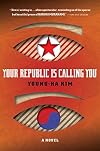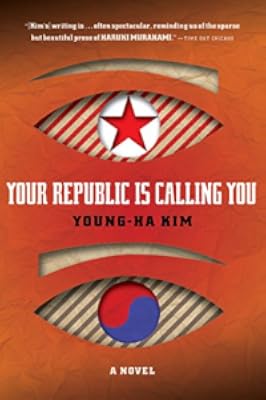
Your Republic Is Calling You
by Young-ha Kim
On This Page
Description
This psychological thriller of a North Korean spy living in Seoul is "perhaps the most intriguing and accomplished Korean fiction yet to appear in English" (Kirkus).Foreign film importer Kim Ki-Yong is a family man with a wife and daughter. Living a prosperous life in Seoul, South Korea, he's an aficionado of Heineken, soccer, and sushi. But he is also a North Korean spy who has been living among his enemies for twenty-one years. Then, after more than a decade of silence from the home show more office, he receives a mysterious email stating that he has one day to return to headquarters. But is the message really from Pyongyang—or has he been discovered? And if the message is real, is he being called home to receive new orders or to be executed for a lack of diligence?
Spanning the course of a single day, Your Republic Is Calling You delves deep into a gripping family secret to ask whether we ever truly know the people we love. Mining the political and cultural transformations of South Korea since the 1980s, author Young-ha Kim confronts moral questions on small and large scales.
"This intense novel's bristling plot—confined to the events of a single day—ironically echoes that of Joyce's masterpiece Ulysses."—Kirkus
. show less
Tags
Recommendations

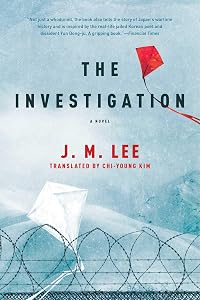

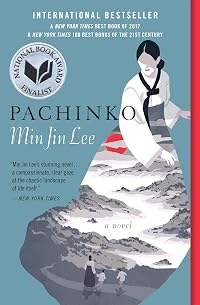
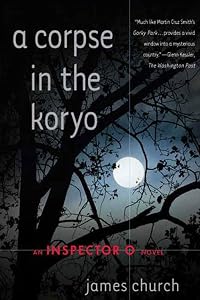


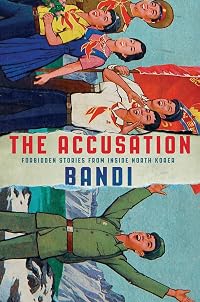








Member Recommendations


Member Reviews
He will have to go from an existence surrounded by books to one made up of walls. p. 56
The plot is interesting: a North Korean spy who has been living as a South Korean for 15 years without hearing from his handlers, is finally contacted to return to North Korea. By this time he has married and had a daughter. So now what? Take them? Leave them? They are unaware of his secret existence, which was easy to hide as he had no assignments the whole time. Or should he even respond? Is he a dead man if he does? What about if he doesn't? It is intriguing reading about what it is like to live outside of your own identity for so many years, having not just to learn a language or accent, but a different way of thinking and responding to show more EVERYTHING. As these things are addressed, so are the personal lives of his wife and daughter. These three people live very separate lives. And so we have the story of this dysfunctional family, which is not so unlike other families in many ways, as well as the spy story. This is not a thriller spy book, but rather the story of the characters. I'm giving it 3 1/2 stars, and will follow the author (this is his first book). show less
The plot is interesting: a North Korean spy who has been living as a South Korean for 15 years without hearing from his handlers, is finally contacted to return to North Korea. By this time he has married and had a daughter. So now what? Take them? Leave them? They are unaware of his secret existence, which was easy to hide as he had no assignments the whole time. Or should he even respond? Is he a dead man if he does? What about if he doesn't? It is intriguing reading about what it is like to live outside of your own identity for so many years, having not just to learn a language or accent, but a different way of thinking and responding to show more EVERYTHING. As these things are addressed, so are the personal lives of his wife and daughter. These three people live very separate lives. And so we have the story of this dysfunctional family, which is not so unlike other families in many ways, as well as the spy story. This is not a thriller spy book, but rather the story of the characters. I'm giving it 3 1/2 stars, and will follow the author (this is his first book). show less
I started out this book with serious doubts. The description looked really good but I had read a previous book by the author and hated it -- honestly it was one of the worst books I've read in my entire life. But I thought I'd give this a go, and just give up if I didn't like it. I'm glad I read it because it was excellent. It's a spy story, but it's more than just a thriller. All the characters have depth and texture.
The entire novel takes place over the course of one day in the lives of Ki-Yong, his wife Ma-Ri and their teenage daughter Hyon-Mi. They are an ordinary South Korean family: Hyon-Mi is a high-achieving student in high school, Ma-Ri sells cars and Ki-Yong is a film importer. However, problems lie underneath the surface: show more both Ki-Yong and Ma-Ri are secretly seeing other people. Oh, and Ki-Yong is actually a North Korean spy who just got recalled to the motherland.
The hours pass and the viewpoint shifts from character to character, and the tension rises. I didn't want to stop, in a hurry to learn what happened next. The ending wrapped up pretty well, and I also learned a great deal about society in North and South Korea. The only real problem I had with the book is that sometimes, when talking about the aforementioned society and history of the two Koreas, the author sounded a little too didactic. But it wasn't a big deal.
If Young-Ha Kim continues to put out books like this, he will regain my full confidence. show less
The entire novel takes place over the course of one day in the lives of Ki-Yong, his wife Ma-Ri and their teenage daughter Hyon-Mi. They are an ordinary South Korean family: Hyon-Mi is a high-achieving student in high school, Ma-Ri sells cars and Ki-Yong is a film importer. However, problems lie underneath the surface: show more both Ki-Yong and Ma-Ri are secretly seeing other people. Oh, and Ki-Yong is actually a North Korean spy who just got recalled to the motherland.
The hours pass and the viewpoint shifts from character to character, and the tension rises. I didn't want to stop, in a hurry to learn what happened next. The ending wrapped up pretty well, and I also learned a great deal about society in North and South Korea. The only real problem I had with the book is that sometimes, when talking about the aforementioned society and history of the two Koreas, the author sounded a little too didactic. But it wasn't a big deal.
If Young-Ha Kim continues to put out books like this, he will regain my full confidence. show less
Gi-yeong is a typical South Korean family man or so even his wife believes. He’s almost come to believe it himself until one day he gets a mysterious e-mail, recalling him to the home office and his duties as a North Korean spy. The book covers the 24 hours Gi-yeong has been given to report in. As he debates what to do and what to tell his family, he learns that his wife has some secrets of her own.
Like all of the translated fiction I’ve read so far, the writing style of Your Republic is Calling You was unlike any other book I’ve read. In some ways, it did remind me Murakami’s 1Q84. The sparse prose and the surreal feel of the events transpiring was very similar. Both books also have in common their inclusion of characters’ show more dreams, hopes, fears, sex lives, and most secret thoughts. This can be uncomfortable and would earn these books an R rating, but they’re also an amazing device for making characters seem like real people you know very well.
Despite these similarities, the content and tone of the book differentiated it completely from 1Q84. Murakami writes about mysterious hopes and desires, while Kim Young-ha writes about mysterious fear and dread. The magical realism of Murakami makes you see the magic in the most mundane of events, while Kim Young-ha’s thriller makes you see the mundane details influencing even the most extraordinary events. This book made me feel extremely uncomfortable throughout and is much darker than most books I enjoy. Other than the ending though, I really liked it anyway. The writing was beautiful and I loved the raw reality of the author’s descriptions. Sadly, the ending wasn’t even dark or tragic, it was just unresolved. That took a lot of the emotional punch out of the book and left me feeling as though the author just got tired of writing. However, even with the slightly disappointing ending, I would highly recommend this to anyone who likes Murakami or dark, psychological thrillers.
This review first published on Doing Dewey. show less
Like all of the translated fiction I’ve read so far, the writing style of Your Republic is Calling You was unlike any other book I’ve read. In some ways, it did remind me Murakami’s 1Q84. The sparse prose and the surreal feel of the events transpiring was very similar. Both books also have in common their inclusion of characters’ show more dreams, hopes, fears, sex lives, and most secret thoughts. This can be uncomfortable and would earn these books an R rating, but they’re also an amazing device for making characters seem like real people you know very well.
Despite these similarities, the content and tone of the book differentiated it completely from 1Q84. Murakami writes about mysterious hopes and desires, while Kim Young-ha writes about mysterious fear and dread. The magical realism of Murakami makes you see the magic in the most mundane of events, while Kim Young-ha’s thriller makes you see the mundane details influencing even the most extraordinary events. This book made me feel extremely uncomfortable throughout and is much darker than most books I enjoy. Other than the ending though, I really liked it anyway. The writing was beautiful and I loved the raw reality of the author’s descriptions. Sadly, the ending wasn’t even dark or tragic, it was just unresolved. That took a lot of the emotional punch out of the book and left me feeling as though the author just got tired of writing. However, even with the slightly disappointing ending, I would highly recommend this to anyone who likes Murakami or dark, psychological thrillers.
This review first published on Doing Dewey. show less
I imagine being a sleeper agent is a lot like crashing a drunken party. You walk in the door, pretending to be invited. You eat a couple chips and drink a beer. You join conversations and chat with people, avoiding specific conversation topics but not really holding back. ultimately the consequence of your actions may be discovery and ejection from the party. Depending on the climate of the group, you could be offered to stay, or you could be painfully beat to the ground, you could simply be ignored going forward.
I have trouble thinking about being a spy, let alone a sleeper agent. Coming to a country, melding myself with the culture, people, and policies but knowing full well that I did not belong. building relationships, having a show more family, working a job that ultimately may need to be shed like a second skin and left behind.
Young-Ha Kim’s “Your Republic Is Calling You” was an incredibly fascinating read. Ki-Yong imports movies from other countries. He is moderately successful South Korean businessman and enjoys life for the most part. He met his wife in college where they were both political dissidents. They have a teenage daughter who is well liked. They have their share of family concerns, but overall, things are going well.
The novel covers the full scope of a single day from the perspective of Ki-Yong’s family. Ki-Yong heads to work with a throbbing headache, and receives a coded message via email. He is a sleeper agent for the North Korean government. He came south as a spy during his college years, but lost contact with the north after a regime change. Ki-Yong has been given 24 hours to close out any open business he has, cover his tracks and disappear. A mini-sub will take him back north in the morning.
I have to wonder how I would react in a situation like this? The love for my wife and child would be legitimate, even if my name and history would be false. If I were to stay, the North could send down an assassin to clean me. If I leave, I lose the life i built and the world i have grown accustomed to… I do not think I could make the choice..
This book was very visually and emotional ambiguous. Portions were self destructive/hopeful, calm yet disconcerting. In the end, it was an excellent view into the New South Korean culture, very different in the last 20 years from how it was when the UN was assisting during the Korean War. show less
I have trouble thinking about being a spy, let alone a sleeper agent. Coming to a country, melding myself with the culture, people, and policies but knowing full well that I did not belong. building relationships, having a show more family, working a job that ultimately may need to be shed like a second skin and left behind.
Young-Ha Kim’s “Your Republic Is Calling You” was an incredibly fascinating read. Ki-Yong imports movies from other countries. He is moderately successful South Korean businessman and enjoys life for the most part. He met his wife in college where they were both political dissidents. They have a teenage daughter who is well liked. They have their share of family concerns, but overall, things are going well.
The novel covers the full scope of a single day from the perspective of Ki-Yong’s family. Ki-Yong heads to work with a throbbing headache, and receives a coded message via email. He is a sleeper agent for the North Korean government. He came south as a spy during his college years, but lost contact with the north after a regime change. Ki-Yong has been given 24 hours to close out any open business he has, cover his tracks and disappear. A mini-sub will take him back north in the morning.
I have to wonder how I would react in a situation like this? The love for my wife and child would be legitimate, even if my name and history would be false. If I were to stay, the North could send down an assassin to clean me. If I leave, I lose the life i built and the world i have grown accustomed to… I do not think I could make the choice..
This book was very visually and emotional ambiguous. Portions were self destructive/hopeful, calm yet disconcerting. In the end, it was an excellent view into the New South Korean culture, very different in the last 20 years from how it was when the UN was assisting during the Korean War. show less
Ki-yong is a film importer in South Korea, a family man who has a teenage daughter. Unbeknowst to anyone around him, he is also a North Korean spy. His life is split evenly: 21 years in the North, 21 in the South and no word from the North in the last 10 years. Lulled into security and becoming accustomed to South Korean culture, Ki-yong is shocked when he receives Order 4—the one that summons him back to North Korea.
The novel begins at 7 a.m. and goes through 24 hours, in which Ki-yong receives his orders. It follows several different characters including Ki-yong’s wife, Ma-ri, and daughter, Hyon-Mi. Each is keeping secrets from the other and has a life the family members are unaware of. Ki-yong’s, of course, is the most show more dangerous secret and he grapples with whether to return, or to surrender to the South Korean authorities. He is torn between two selves: the North Korean and the South Korean.
Through Ki-yong’s story, the novel provides a fascinating history of the two countries over the last 40 years and illuminates the cost of such sharp division between North and South. As ideologies are fought for, it’s the individuals who cannot win. Part spy novel and part exploration of national and personal identity, this is a fast-moving portrait of a complex country that was difficult to put down. show less
The novel begins at 7 a.m. and goes through 24 hours, in which Ki-yong receives his orders. It follows several different characters including Ki-yong’s wife, Ma-ri, and daughter, Hyon-Mi. Each is keeping secrets from the other and has a life the family members are unaware of. Ki-yong’s, of course, is the most show more dangerous secret and he grapples with whether to return, or to surrender to the South Korean authorities. He is torn between two selves: the North Korean and the South Korean.
Through Ki-yong’s story, the novel provides a fascinating history of the two countries over the last 40 years and illuminates the cost of such sharp division between North and South. As ideologies are fought for, it’s the individuals who cannot win. Part spy novel and part exploration of national and personal identity, this is a fast-moving portrait of a complex country that was difficult to put down. show less
Your Republic is Calling You is a fascinating book that almost unintentionally miscategorizes itself. It is commonly referred to as a "spy thriller", but I'm happy to say that it is not really much of one. There are indeed spy elements and a few scenes are genuinely exhilarating, but make no mistake; this isn't a North Korean version of Jason Bourne or James Bond. As entertaining as those franchises are, they've been done and they're predictable. Your Republic Is Calling You is so much more.
First off, it's a character-driven story chock-full of social commentary. The almost dozen supporting characters have plenty of back story and Kim boldly expounds upon each person's "undercover" life that he or she carries with them. Some are full of show more heartbreak, others are full of debauchery. Either way, it's a grippingly woven web of interrelated events miraculously occurring throughout the span of a single day. Everyone, it seems, has an undercover life, so to say, and the spy theme extends well beyond the protagonist.
Speaking of whom, Ki-Yong isn't your archetypal spy. He wasn't genetically engineered to possess superhuman perception skills or advanced martial arts training. He's just good at laying low, blending in, and not making a scene. After twenty years in North Korea, he infiltrated the South in the 80s and successfully gathered and reported data for some time. After his supervisor was ousted, time passed and soon his liaison office seemed to forget about Ki-Yong's quiet but secret existence. Eventually, his undercover life became his real life and he quietly settled into a uneventful middle-class actuality that feels more and more like reality. However, after a decade of no communication, he suddenly receives an encrypted message to return "home". He wonders if the message is intended to save his life from the South Korean government's persistent investigators or to bring him home in order to punish him for lazily adhering to his new capitalist lifestyle. The reader then follows Ki-Yong as he reacts to the news and tries to make sense of his former identity.
This is Kim Young-ha's fourth novel, which was originally published in 2006 under the title "빛의 제국", or "Empire of Light". I enjoyed Kim's portrayal of cultural identity crisis and applaud the translator for making it not only a salient ride, but also lots of fun. I recommend it for anyone looking at a unique take on South Korea's rapid commercialization and/or cultural identity confusion within Korea. Two thumbs up. show less
First off, it's a character-driven story chock-full of social commentary. The almost dozen supporting characters have plenty of back story and Kim boldly expounds upon each person's "undercover" life that he or she carries with them. Some are full of show more heartbreak, others are full of debauchery. Either way, it's a grippingly woven web of interrelated events miraculously occurring throughout the span of a single day. Everyone, it seems, has an undercover life, so to say, and the spy theme extends well beyond the protagonist.
Speaking of whom, Ki-Yong isn't your archetypal spy. He wasn't genetically engineered to possess superhuman perception skills or advanced martial arts training. He's just good at laying low, blending in, and not making a scene. After twenty years in North Korea, he infiltrated the South in the 80s and successfully gathered and reported data for some time. After his supervisor was ousted, time passed and soon his liaison office seemed to forget about Ki-Yong's quiet but secret existence. Eventually, his undercover life became his real life and he quietly settled into a uneventful middle-class actuality that feels more and more like reality. However, after a decade of no communication, he suddenly receives an encrypted message to return "home". He wonders if the message is intended to save his life from the South Korean government's persistent investigators or to bring him home in order to punish him for lazily adhering to his new capitalist lifestyle. The reader then follows Ki-Yong as he reacts to the news and tries to make sense of his former identity.
This is Kim Young-ha's fourth novel, which was originally published in 2006 under the title "빛의 제국", or "Empire of Light". I enjoyed Kim's portrayal of cultural identity crisis and applaud the translator for making it not only a salient ride, but also lots of fun. I recommend it for anyone looking at a unique take on South Korea's rapid commercialization and/or cultural identity confusion within Korea. Two thumbs up. show less
I have been reading some nonfiction lately trying to educate myself about the Korean War and the subsequent North Korean regime. This novel was a different look at the complex situation existing between North and South Korea, and the preconceptions held by each of the other.
On the surface Ki-Yong is an ordinary South Korean businessman and content husband and father. But just below the surface are tangled relationships and allegiances, for Ki-Yong is also a North Korean agent. One day he receives a message that turns his world upside down: North Korea wants its sleeping agent back. Ki-Yong has one day to decide if the message is real, whether fellow agents have received the message, and how he is going to respond.
I was intrigued by the show more premise of the book, and for the most part, it delivered. Twists in the plot kept it interesting, and there were some gems of description whose images lingered:
He looked like a man who had seen all of his dreams and hopes sputter and managed only to survive, powered by the few drops of cynicism left in the bottom of his fuel can. Ennui dripped down his plant legs with his every step.
A cross between a spy novel and a social commentary, I found the combination entertaining with a few moments of reflective pause. show less
On the surface Ki-Yong is an ordinary South Korean businessman and content husband and father. But just below the surface are tangled relationships and allegiances, for Ki-Yong is also a North Korean agent. One day he receives a message that turns his world upside down: North Korea wants its sleeping agent back. Ki-Yong has one day to decide if the message is real, whether fellow agents have received the message, and how he is going to respond.
I was intrigued by the show more premise of the book, and for the most part, it delivered. Twists in the plot kept it interesting, and there were some gems of description whose images lingered:
He looked like a man who had seen all of his dreams and hopes sputter and managed only to survive, powered by the few drops of cynicism left in the bottom of his fuel can. Ennui dripped down his plant legs with his every step.
A cross between a spy novel and a social commentary, I found the combination entertaining with a few moments of reflective pause. show less
Members
- Recently Added By
Author Information

25+ Works 984 Members
Some Editions
Common Knowledge
- Original title
- Biteui Jeguk
- Original publication date
- 2006
- People/Characters*
- Kiyeong Kim; Hyeon-mi Kim; Mari Jang; Ayeong; Cheol-su Pak; Seong-gon Wi (show all 14); Ji-seon So (So Ji); Seong-uk; Yi-yeob Kim; Jeong-hui; Pil Yi; Han-saem; Jin-guk; Jeong
- Important places*
- Séoul, Corée du Sud; Pyong yang, Corée du Nord
- Dedication
- To Eunsoo
- First words
- He opens his eyes.
- Last words
- (Click to show. Warning: May contain spoilers.)She goes into her room, takes out her school uniform from her closet, and closes her bedroom door. A new day.
- Publisher's editor*
- Philippe Picquier
*Some information comes from Common Knowledge in other languages. Click "Edit" for more information.
Classifications
- Genres
- Fiction and Literature, General Fiction
- DDC/MDS
- 895.734 — Literature & rhetoric Literatures of other languages Literatures of East and Southeast Asia Korean Korean fiction 1945–2000
- LCC
- PL992.415 .Y5863 .P5813 — Language and Literature Languages and literatures of Eastern Asia, Africa, Oceania Languages of Eastern Asia, Africa, Oceania Korean language and literature Korean literature
- BISAC
Statistics
- Members
- 246
- Popularity
- 132,113
- Reviews
- 15
- Rating
- (3.64)
- Languages
- 5 — Dutch, English, French, German, Korean
- Media
- Paper, Ebook
- ISBNs
- 8
- ASINs
- 6