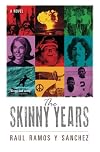
The Skinny Years by Raul Ramos y Sanchez
Once when I was reading the back cover of a book I was interested in, the author took it from me and said, “No That’s not how you decide! Here.” He opened it up and handed it back to me to read the first page of his book. “You start reading and see if the writing’s good!” That wasn’t how I chose, because I was a teacher and had to do a lot of reading for information. Whether the writing was good or not, I needed the information so didn’t have the luxury of ONLY reading good writing. The Skinny Years is one of those wonderful books where you get both: excellent writing that pulls you right in, AND important information. I have read all of this author’s books and recommend them to everyone. His books are my favorites, and the only ones I have ever reread, since I was a child. THIS one I was excited waiting for publication because I have a bit of an obsession with Cuba. I was happy to be able to get information from someone I have come to trust since reading and following him on Facebook.
I’ve read many, many books about Cuba, wanting to understand more and to specifically understand the main two different perspectives about the revolution from those who lived it. As I compare this fictionalized account of a Cuban family leaving for America to all of the non-fiction I have read, it seems to be reality based and consistent with what I have learned, while helping the reader experience for herself, both the cognitive show more and the emotional depth of such an experience. I also found it to be an interesting picture of psychosocial development of a young boy growing into a man in these circumstances.
Additionally, this is just a plain great read whether you have an interest in Cuba or not, but what a great coincidence to have it out as the relationship between the U.S. and Cuba is opening up. Very exciting. I haven’t been able to figure out which “side” of the story the author agrees with. For me that’s part of the beauty of this book. It’s not a political rant about “sides”. It’s a fascinating description of one person’s experience. As such, it has very effectively broadened my understanding not only of Cuba, but of human nature itself.
Highly recommended. Five star read. show less
Once when I was reading the back cover of a book I was interested in, the author took it from me and said, “No That’s not how you decide! Here.” He opened it up and handed it back to me to read the first page of his book. “You start reading and see if the writing’s good!” That wasn’t how I chose, because I was a teacher and had to do a lot of reading for information. Whether the writing was good or not, I needed the information so didn’t have the luxury of ONLY reading good writing. The Skinny Years is one of those wonderful books where you get both: excellent writing that pulls you right in, AND important information. I have read all of this author’s books and recommend them to everyone. His books are my favorites, and the only ones I have ever reread, since I was a child. THIS one I was excited waiting for publication because I have a bit of an obsession with Cuba. I was happy to be able to get information from someone I have come to trust since reading and following him on Facebook.
I’ve read many, many books about Cuba, wanting to understand more and to specifically understand the main two different perspectives about the revolution from those who lived it. As I compare this fictionalized account of a Cuban family leaving for America to all of the non-fiction I have read, it seems to be reality based and consistent with what I have learned, while helping the reader experience for herself, both the cognitive show more and the emotional depth of such an experience. I also found it to be an interesting picture of psychosocial development of a young boy growing into a man in these circumstances.
Additionally, this is just a plain great read whether you have an interest in Cuba or not, but what a great coincidence to have it out as the relationship between the U.S. and Cuba is opening up. Very exciting. I haven’t been able to figure out which “side” of the story the author agrees with. For me that’s part of the beauty of this book. It’s not a political rant about “sides”. It’s a fascinating description of one person’s experience. As such, it has very effectively broadened my understanding not only of Cuba, but of human nature itself.
Highly recommended. Five star read. show less
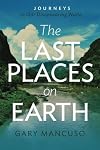
The premise of this book was admirable - visit the few places left on earth that are less changed by development, before it is too late to see and learn about the cultures. Mancuso may have been a little too ambitious in the number of places he chose to cover, leaving the reader not enlightened about the cultures, but merely getting a brief description of them. That could be a strength for those who are new to travel literature and want to taste a few different places before deciding where to delve in more deeply. However, this is a field crowded with wonderful authors and writing that offers much more engaging and educational reading.
 This review was written for LibraryThing Early Reviewers.
This book started out slowly and I had a hard time staying with it. I am glad I did, if only for what I learned about the history of Colombia. It was another example for me of how limited my knowledge can be if I only read mainstream media and don't dig for the other perspectives. Changed my perspective of both Colombia and once again, the U.S. media.
This review was written for LibraryThing Early Reviewers.
This author does a good job of bringing up some issues and difficulties experienced by Russian immigrants that I had not thought about. She goes beyond the typical issues of living, into deeper and subtle emotional experiences that are not always named. Because of that I kept reading. However, I had a hard time following the story and the relationships between the characters. Three stars.
I received this book from the early reviewers program.
I received this book from the early reviewers program.
This review was written for LibraryThing Early Reviewers.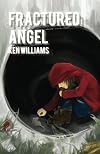
[Fractured Angel] by [[Ken Williams]]
I requested this book because of the subject matter, homelessness and mental health, and the social work experience of the author. The story tells of the frustrations of workers in social services, and the lack of knowledge of many of the general public. The main characters learn from each other, despite some initial hostility due to their different perspectives. It was a great premise that I looked forward to reading about, but the writing was stilted and the plot didn't flow naturally. I'm interested enough to try this author again and see if his skills develop because he has good information to pass on. Two star first novel.
I received this book through the Library Thing early reviewers program.
I requested this book because of the subject matter, homelessness and mental health, and the social work experience of the author. The story tells of the frustrations of workers in social services, and the lack of knowledge of many of the general public. The main characters learn from each other, despite some initial hostility due to their different perspectives. It was a great premise that I looked forward to reading about, but the writing was stilted and the plot didn't flow naturally. I'm interested enough to try this author again and see if his skills develop because he has good information to pass on. Two star first novel.
I received this book through the Library Thing early reviewers program.
This review was written for LibraryThing Early Reviewers.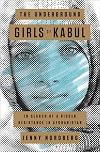
[The Underground Girls of Kabul: in Search of a Hidden Resistance in Afghanistan] by [[Jenny Nordberg]]
It was the "hidden resistance" phrase that attracted me to this book. I've been realizing more and more in the last few year that there is much more resistance worldwide from women to their oppression, than I see in the media. Nordberg, who has contributed to a Pulitzer winning series in the NYT, and was also awarded the Robert F. Kennedy Award for Excellence in Journalism for her documentary about Afghan women, seemed like an excellent source to address this topic.
While in Kabul, Norderg learned about a phenomenon known as bacha posh, the practice of Afghan girls living as boys. These girls dress as boys, take on the mannerisms and posture of boys, and talk and behave like Afghan boys. Perhaps most importantly, they are allowed outside the home, unlike most girls.
Poverty is one reason some parents choose to have a daughter live as a son. Boys can work, whereas girls cannot, so this "fake" boy can increase the household income. Another cause of bacha posh is an old belief that if a woman has not been able to have a male child, having one of her daughters live as a boy increases the woman's chance of birthing a son. Additionally, there are some parents who simply want their girls to have the increased opportunities that come with living as bacha posh. They are not only allowed to work, but also to attend school, to play outdoors, including sports, and to learn to behave show more in the more assertive and aggressive manner expected of males.
When puberty approaches, it is time for the girls to return to their female role. They simply begin to start dressing and behaving as a girl, and although people are aware of it, they simply do not speak of it. It is always a concern that if they wait too long there will be much difficulty in making this transition. Some girls are reluctant to give up the freedom that has accompanied this period. They must learn to walk like a female, talk like a female, etc. It could be difficult to find a husband for such an assertive woman. Alternatively, more educated men may prefer an educated wife so it can be a positive this way.
It was in this group of people that Nordberg found resistance by women to sexism. This resistance has grown. As these women who have lived as males mature, some of them have become active politically and in their communities, contributing to this resistance movement.
This is a fascinating study and a well written and intriguing read. Five stars.
I received a free copy of this book from the publisher in exchange for a review. show less
It was the "hidden resistance" phrase that attracted me to this book. I've been realizing more and more in the last few year that there is much more resistance worldwide from women to their oppression, than I see in the media. Nordberg, who has contributed to a Pulitzer winning series in the NYT, and was also awarded the Robert F. Kennedy Award for Excellence in Journalism for her documentary about Afghan women, seemed like an excellent source to address this topic.
While in Kabul, Norderg learned about a phenomenon known as bacha posh, the practice of Afghan girls living as boys. These girls dress as boys, take on the mannerisms and posture of boys, and talk and behave like Afghan boys. Perhaps most importantly, they are allowed outside the home, unlike most girls.
Poverty is one reason some parents choose to have a daughter live as a son. Boys can work, whereas girls cannot, so this "fake" boy can increase the household income. Another cause of bacha posh is an old belief that if a woman has not been able to have a male child, having one of her daughters live as a boy increases the woman's chance of birthing a son. Additionally, there are some parents who simply want their girls to have the increased opportunities that come with living as bacha posh. They are not only allowed to work, but also to attend school, to play outdoors, including sports, and to learn to behave show more in the more assertive and aggressive manner expected of males.
When puberty approaches, it is time for the girls to return to their female role. They simply begin to start dressing and behaving as a girl, and although people are aware of it, they simply do not speak of it. It is always a concern that if they wait too long there will be much difficulty in making this transition. Some girls are reluctant to give up the freedom that has accompanied this period. They must learn to walk like a female, talk like a female, etc. It could be difficult to find a husband for such an assertive woman. Alternatively, more educated men may prefer an educated wife so it can be a positive this way.
It was in this group of people that Nordberg found resistance by women to sexism. This resistance has grown. As these women who have lived as males mature, some of them have become active politically and in their communities, contributing to this resistance movement.
This is a fascinating study and a well written and intriguing read. Five stars.
I received a free copy of this book from the publisher in exchange for a review. show less
This review was written for LibraryThing Early Reviewers.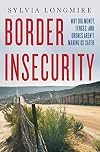
[Border Insecurity: Why Big Money, Fences and Drones Aren't Making Us Safer] by [[Sylvia Longmire]]
This is the best book I have read about border issues. As a former Air Force officer and special agent, Longmire is in an excellent position to elucidate the various factors that must be addressed if we are to have any success, regardless of how you define that success. The most important thing she does is to separate out security concerns from immigration issues. Once that is done, the problems, objectives, and solutions become easier to determine. For example, she state that the U.S. Border patrol is suited to handle security problems, but not immigration problems. That alone was worth the read for me. This is a very interesting and readable book on what can seem to be a complicated issue. I highly recommend it for anyone with even the slightest interest in border control.
I received this book from the LT Early Reviewers program.
This is the best book I have read about border issues. As a former Air Force officer and special agent, Longmire is in an excellent position to elucidate the various factors that must be addressed if we are to have any success, regardless of how you define that success. The most important thing she does is to separate out security concerns from immigration issues. Once that is done, the problems, objectives, and solutions become easier to determine. For example, she state that the U.S. Border patrol is suited to handle security problems, but not immigration problems. That alone was worth the read for me. This is a very interesting and readable book on what can seem to be a complicated issue. I highly recommend it for anyone with even the slightest interest in border control.
I received this book from the LT Early Reviewers program.
This review was written for LibraryThing Early Reviewers.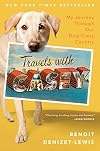
I very much enjoyed this book. The author travels around the US in an RV with his dog Casey with whom he has an ambiguous relationship. That in itself is quite refreshing after all the sappy dog books out. Each chapter addresses a different topic so there is nice variety. I also travel in an RV with a dog so found it all pretty interesting. Some topics: dog park drama, (:)), dog rescue, strays in general, strays on reservations, different cultural attitudes toward pets, homeless people with dogs, police dogs, dog photographers. There were actually several perspectives I had not considered that changed my mind on some topics. Good info, not technical but does cite several research studies I found interesting. For that: five stars.

In Tomlinson's first thriller [Sendero] Inez joins Peruvian rebel group the Shining Path, to avenge the death of her father. In this follow-up she tries to leave the group and gets caught up in one last assignment in order to buy her way out. She ends up involved with fascists in Argentina and gets a look at life from another perspective. I found that part fascinating, and the plot itself intriguing and entertaining. The reader sees what it is like to be inside the mansion when the mothers of the disappeared are demonstrating daily outside your front door. Five stars and I'm off to find out what happened to the other characters in [Sendero] in another Tomlinson book.

Revolution and mystery in Peru? I couldn't resist that. I know nothing at all about Peruvian politics and government and this was a great way to start getting a little info. This is one of those books I prefer reading electronically so I can click right to wiki and get some background and definitions. I learned about The Shining Path, the Communist party in Peru whose goal is world wide revolution, as well as the ruling government, and the corruption and ambiguity in everyone. Another look at what drives people to violence, how they choose a side, personal versus political. There were interesting female and male characters who were both important and a refreshing comparative lack of sexism. This is the first in the series and I'll be reading the next one. I think it will be fun to watch this author develop.

What's not to like about literary/books cartoons? Fun little collection. I didn't get all of them but several made me laugh out loud.
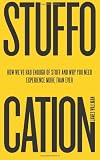
Wallman has brought something new to the analysis of the possible demise of materialism. Rather than another how-to book about minimalism or getting rid of stuff, this is a book of theory and analysis, illuminated with case studies. That combination makes for an interesting and informative read.
Wallman is known as a trend forecaster. This is a valuable skill which can be helpful in a multitude of areas such as economics, healthcare, education, etc. and Wallman takes it seriously. He has developed an algorithm based on research and facts. He examines a series of factors from how a particular phenomenon effects lives to how easily it is transmitted to determine if it will continue to grow.
The methodology is fascinating and can be applied to many other ideas by the reader. The main question being examined in this book is whether or not minimalism or some other contradiction to materialism will save us from our current model of overworking and drowning in our "rewards". Are those who become minimalists more satisfied and satisfied enough to maintain that style? What about a more happy medium? Is the current trend toward focusing on experiences rather than things sustainable? All of these questions are placed in historical context of the industrial revolution, which allowed humans to move from working for survival, to a place of working for luxuries, which gave us a choice in the type of work we do and how we spend our time. Some people have compared this occurrence to show more Maslow's Hierarchy of Needs, suggesting that now that society has been able to feed itself more easily, it can move up that hierarchy to fulfill other psychological needs.
I found the book intriguing and very well documented. My daughter found it useful enough to take several boxes of stuff to the thrift shop and is only getting started.
I received a free copy of this book from the publisher. show less
Wallman is known as a trend forecaster. This is a valuable skill which can be helpful in a multitude of areas such as economics, healthcare, education, etc. and Wallman takes it seriously. He has developed an algorithm based on research and facts. He examines a series of factors from how a particular phenomenon effects lives to how easily it is transmitted to determine if it will continue to grow.
The methodology is fascinating and can be applied to many other ideas by the reader. The main question being examined in this book is whether or not minimalism or some other contradiction to materialism will save us from our current model of overworking and drowning in our "rewards". Are those who become minimalists more satisfied and satisfied enough to maintain that style? What about a more happy medium? Is the current trend toward focusing on experiences rather than things sustainable? All of these questions are placed in historical context of the industrial revolution, which allowed humans to move from working for survival, to a place of working for luxuries, which gave us a choice in the type of work we do and how we spend our time. Some people have compared this occurrence to show more Maslow's Hierarchy of Needs, suggesting that now that society has been able to feed itself more easily, it can move up that hierarchy to fulfill other psychological needs.
I found the book intriguing and very well documented. My daughter found it useful enough to take several boxes of stuff to the thrift shop and is only getting started.
I received a free copy of this book from the publisher. show less
This review was written for LibraryThing Early Reviewers.
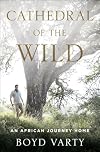
Boyd Varty is a third generation member of a widely known conservationist family in Africa. Many people have read the books of the previous generation and still not find this repetitive at all. Varty brings his perspective as a small child growing up on the Londolozi Game Reserve in South Africa. The mission of Varty and his family has been to restore wild lands to their earlier condition, causing rivers to flow again and animals to return. He writes about his life living closely with elephants, lions, impalas and other wild animals. His love for these creatures shines through in his lyrical writing, as does his love for smaller species, insects, butterflies and others. Varty presents a clear picture and understanding of the interworking of all species and plants. His life that includes many traumatic events and experiences, from almost losing a leg to a crocodile, to being assaulted by men, leading him to examine both "nature" and man, realizing they of course are one and the same.
Boyd's writing lit up my days there while I was reading this book; it was a very pleasurable experience. I have marked many beautiful passages to return to just to feel them again.
The last couple of chapters tell of Varty's spiritual search to find meaning and develop understanding of all that he has experienced.
This is a five star read. In one word: beautiful.
I received a free copy of this book from the publisher.
Boyd's writing lit up my days there while I was reading this book; it was a very pleasurable experience. I have marked many beautiful passages to return to just to feel them again.
The last couple of chapters tell of Varty's spiritual search to find meaning and develop understanding of all that he has experienced.
This is a five star read. In one word: beautiful.
I received a free copy of this book from the publisher.
This review was written for LibraryThing Early Reviewers.
[Designing for Behavior Change] by [[Stephen Wendel]]
Stephen Wendel has developed an excellent and specific, detailed plan for designing products that will help people change their lives for the better. He identifies the target behavior, the new behavior and what is needed to make that happen. What sets this book apart is that he also examines obstacles to behavior change and develops methods to work around those obstacles. He also determines where to place that product to trigger its use. We of course see these items everywhere around us, e.g. runners wearing devices to measure physiological performance and thereby providing immediate, reinforcing feedback. Many of us have different apps on our tablets/laptops to trigger relaxation, better organization, and other behaviors. Wendel's plan is up-to-date or ahead of its time, personalized, and again, specific and detailed. Recommended for anyone looking for new ways to change their own or others' behavior. Wendel combines research knowledge with the latest technology for a whole product.
I received free copy of this book from the publisher.m
Stephen Wendel has developed an excellent and specific, detailed plan for designing products that will help people change their lives for the better. He identifies the target behavior, the new behavior and what is needed to make that happen. What sets this book apart is that he also examines obstacles to behavior change and develops methods to work around those obstacles. He also determines where to place that product to trigger its use. We of course see these items everywhere around us, e.g. runners wearing devices to measure physiological performance and thereby providing immediate, reinforcing feedback. Many of us have different apps on our tablets/laptops to trigger relaxation, better organization, and other behaviors. Wendel's plan is up-to-date or ahead of its time, personalized, and again, specific and detailed. Recommended for anyone looking for new ways to change their own or others' behavior. Wendel combines research knowledge with the latest technology for a whole product.
I received free copy of this book from the publisher.m
This review was written for LibraryThing Early Reviewers.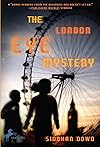
Recommended for anyone interested in autism and Asperger's, this story is told from the perspective of a boy on that spectrum. It is a good little mystery, written for 8-12 yr olds, and a quick trip inside the mind of the main character, Ted. He describes his mental processes very well, in a manner that adds to rather than detracts from the story. The interactions between family members and other characters are also well done and realistic. I especially appreciate that the strengths as well as the difficulties that come with some forms of autism are described. The author also illustrates how those with and without autism can work together well, with the different perspectives and talents creating a strong base that makes up for the weaknesses in each character. I recommended this book to my daughter for my granddaughter. I think it can teach them how to integrate different abilities into their Girl Scout troops to everyone's advantage. Then when they are all adults they will be able to do the same in life and work environments. There are many fields where it is advantageous to have people with these perspectives on staff together. Five stars.

I began looking for a book about Canadian history in order to plug up another hole in my knowledge of world history, and couldn't believe my luck when I stumbled across this. You KNOW this is way more interesting than a Columbus discovered AmericA kind of history! I just thought the stories of activists would be interesting and entertaining, but this volume is way more than that. It is a serious and well documented history. Each chapter covers a particular and specific activist or group with a different focus. Some of the topics covered are immigration, war, indigenous people, the labour movement, the anti-psychiatry movement and human rights. These are not "just stories" however. Neigh begins each chapter by placing the activists in context, that of a specific time and place in history and society as well as drawing a broader connection with other perspectives and experiences from across town to around the world. These are all long time activists within a multi-decade framework, so that we can see their successes, failures, changes and growth over time.
The introduction of this book alone is worth buying the book. There are good reminders about history being written and taught by the victor, along with discussion of power dynamics and control. This is history told "from the bottom up". It is not only about the idea that those with money and power typically control the narrative, but also describes the way history can and is also driven by the lower, middle and working show more classes. Neigh gives specific examples of this influence which can give hope and purpose to the lives of all people. He also gives a good lesson about the nature of power and its availability to all.
The first chapter is focused on pacifism in the Second World War. A good analysis of different levels of pacifism is given by participants, e.g. those who believe all killing is wrong, those who believe killing in self-defense is acceptable and maybe even a duty, those who believe in war but not unjust war, and more. I found it interesting to learn the perspective that earlier Christians, for example, were against war, but that when Canada decided to enter WWII, most churches changed their direction in support of the state. I was aware of beliefs in no harm by some churches such as Quakers, but not that the mainstream protestant churches had also taught that. It reminded me of the first Iraq/U.S. war when some people were calling for the church to stay out of government, i.e. stronger separation of church and state, while there was another group saying that it would harm the CHURCH, not the GOVT so much for churches to be involved and they needed to pay taxes and stay out of government least their mission be watered down. I hadn't thought about that view.
There is also discussion about the social gospel reflecting the prejudices of the society around it - another well of course moment for me. There were also descriptions of church contributions to social justice within govt agencies during the 1930s.
The second chapter goes into greater depth than I have seen regarding the multiple ways the law and legal system can be used for change from civil disobedience to pushing for new regulations when necessary.
Mostly what set this book apart for me was increased and specific information about the subtleties of social control, helping me to understand on a deeper level than I previously did. For example, I previously understood how local prejudice kept different groups from living in the same neighborhoods, but then learned more about banking, real estate, and town councils' roles.
Altogether a fascinating read. Five stars. show less
The introduction of this book alone is worth buying the book. There are good reminders about history being written and taught by the victor, along with discussion of power dynamics and control. This is history told "from the bottom up". It is not only about the idea that those with money and power typically control the narrative, but also describes the way history can and is also driven by the lower, middle and working show more classes. Neigh gives specific examples of this influence which can give hope and purpose to the lives of all people. He also gives a good lesson about the nature of power and its availability to all.
The first chapter is focused on pacifism in the Second World War. A good analysis of different levels of pacifism is given by participants, e.g. those who believe all killing is wrong, those who believe killing in self-defense is acceptable and maybe even a duty, those who believe in war but not unjust war, and more. I found it interesting to learn the perspective that earlier Christians, for example, were against war, but that when Canada decided to enter WWII, most churches changed their direction in support of the state. I was aware of beliefs in no harm by some churches such as Quakers, but not that the mainstream protestant churches had also taught that. It reminded me of the first Iraq/U.S. war when some people were calling for the church to stay out of government, i.e. stronger separation of church and state, while there was another group saying that it would harm the CHURCH, not the GOVT so much for churches to be involved and they needed to pay taxes and stay out of government least their mission be watered down. I hadn't thought about that view.
There is also discussion about the social gospel reflecting the prejudices of the society around it - another well of course moment for me. There were also descriptions of church contributions to social justice within govt agencies during the 1930s.
The second chapter goes into greater depth than I have seen regarding the multiple ways the law and legal system can be used for change from civil disobedience to pushing for new regulations when necessary.
Mostly what set this book apart for me was increased and specific information about the subtleties of social control, helping me to understand on a deeper level than I previously did. For example, I previously understood how local prejudice kept different groups from living in the same neighborhoods, but then learned more about banking, real estate, and town councils' roles.
Altogether a fascinating read. Five stars. show less
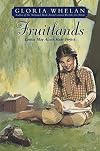
Although this book is published as recommended for 8-11 year olds, I wouldn't want my 8 year old to read it. If someone walked into a library and picked this up, reading it out of the context of the lives of the Alcott Family, I'm afraid it would be depressing with no hope or mention of the good things that came from this family. Bronson Alcott just sounds mentally ill and abusive of his family. It might be ok reading for a completist familiar with the whole story of the Alcotts and the Transcendentalists, which I am not. I realize it is a children's book but was still disappointed. It consists of two fictionalized diaries kept by Louisa May Alcott, one her parents had access to, and the other one secret. I couldn't resist that premise. I should have.
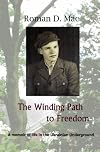
"Good Poles, bad Poles, Communist murderers, Communist brothers, Germans who might restore our culture and Germans who stole your food and shot at your feet - our lives were in constant jeopardy.....I had finally found an allegiance to a larger family - the Ukrainian Underground."
and that is the most important point I got from reading this book. I was looking for information on Ukraine, wanting to understand what is happening and wanting some history when I stumbled across this book. The author begins his memoir in Ukraine as a young teen, tells the story of his experiences in the underground, moving across borders, the war ending, his time in Poland and refugee camps and eventual road to citizenship in the U.S.
I've read revolutionaries from Cuba, Nicaragua, Spain, Russia, France, and what I read here was more of the same in many ways. On one hand, it leaves me feeling as if everyone else needs to stay out of their business. These conflicts have deep roots that aren't going away. There are, as usual, many factions within each "side" of the fight, although many do manage to work together, there are ultimately splits after the war as there are in any war or revolution.
The writing didn't pull me right in as some does, but I wanted the info and got lots of it, while developing affection for the author. He does a great job of illustrating the details of the daily life of an underground resistance worker including living in the forest and needing to find or build shelter and show more food, learning whom to trust, and having to constantly reevaluate that. He lives with the awareness that anyone who helps him may pay for it with their lives. He also has to accept the need to prove his own trustworthiness repeatedly to the same people as things change.
I especially found interesting the information about social classes, that is aways there of course, specifically comparing how he lived to how the elite switched allegiance to wherever the money and safety was coming from. Not that lower classes didn't do that also. But the upper classes were partying and hanging out with enemy tzars while the author was fighting and starving.
Recommended for anyone who wants to learn more about Ukraine and why things are developing the way they are today. Four stars. show less
and that is the most important point I got from reading this book. I was looking for information on Ukraine, wanting to understand what is happening and wanting some history when I stumbled across this book. The author begins his memoir in Ukraine as a young teen, tells the story of his experiences in the underground, moving across borders, the war ending, his time in Poland and refugee camps and eventual road to citizenship in the U.S.
I've read revolutionaries from Cuba, Nicaragua, Spain, Russia, France, and what I read here was more of the same in many ways. On one hand, it leaves me feeling as if everyone else needs to stay out of their business. These conflicts have deep roots that aren't going away. There are, as usual, many factions within each "side" of the fight, although many do manage to work together, there are ultimately splits after the war as there are in any war or revolution.
The writing didn't pull me right in as some does, but I wanted the info and got lots of it, while developing affection for the author. He does a great job of illustrating the details of the daily life of an underground resistance worker including living in the forest and needing to find or build shelter and show more food, learning whom to trust, and having to constantly reevaluate that. He lives with the awareness that anyone who helps him may pay for it with their lives. He also has to accept the need to prove his own trustworthiness repeatedly to the same people as things change.
I especially found interesting the information about social classes, that is aways there of course, specifically comparing how he lived to how the elite switched allegiance to wherever the money and safety was coming from. Not that lower classes didn't do that also. But the upper classes were partying and hanging out with enemy tzars while the author was fighting and starving.
Recommended for anyone who wants to learn more about Ukraine and why things are developing the way they are today. Four stars. show less
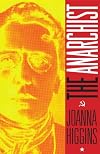
This is a fictionalized account of the lives of a few well known anarchists, surrounding the incident of the assassination of U.S. President McKinley by Leon Czolgosz. U.S. government agents decided Czolgosz was directed or incited by the anarchist Emma Goldman, whose political activities they desperately wanted to stop, and attempted to convict her of treason.
Higgins tells the story from several perspectives, making the coming together of these incidents and the interactions of these people, fascinating. The reader learns about the life and motivations of Goldman as well as the early life and motivations of Czolgosz and the importance of timing. The story of Goldman's lifelong relationship with AlexanderBerkman, one of her lovers and a longtime friend, is also told. I found the description of McKinley's relationship with his wife to be particularly touching.
Several moral dilemmas are examined, also from these multiple perspectives, such as who was responsible for McKinley's death. Was it the man who shot him, causing a wound that should not have been fatal, or the doctor who mistreated him.
I was glad to be reading this book in electronic form so I could keep pushing the wikipedia button! I am ambiguous about historical fiction, frustrated by not knowing what is real and what isn't, so appreciated the extensive notations and references by the author.
All in all a fascinating read for me - five stars. I recommend it both for students of anarchy and U.S. history and those show more with a passing interest in either. What would push you over the edge to attempt to kill someone?
This is an Early Review book. show less
Higgins tells the story from several perspectives, making the coming together of these incidents and the interactions of these people, fascinating. The reader learns about the life and motivations of Goldman as well as the early life and motivations of Czolgosz and the importance of timing. The story of Goldman's lifelong relationship with AlexanderBerkman, one of her lovers and a longtime friend, is also told. I found the description of McKinley's relationship with his wife to be particularly touching.
Several moral dilemmas are examined, also from these multiple perspectives, such as who was responsible for McKinley's death. Was it the man who shot him, causing a wound that should not have been fatal, or the doctor who mistreated him.
I was glad to be reading this book in electronic form so I could keep pushing the wikipedia button! I am ambiguous about historical fiction, frustrated by not knowing what is real and what isn't, so appreciated the extensive notations and references by the author.
All in all a fascinating read for me - five stars. I recommend it both for students of anarchy and U.S. history and those show more with a passing interest in either. What would push you over the edge to attempt to kill someone?
This is an Early Review book. show less
This review was written for LibraryThing Early Reviewers.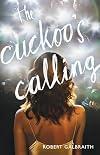
I have not read Harry Potter - just doesn't interest me, but when I heard J.K. Rowling had written a mystery under a pseudonym I thought it would be a good way to check out such a popular author. It was a good mystery with lots of plots twists and an ending I did not see coming. I also liked the main characters (meaning the detective and his assistant) enough to maybe read the next one, if there is one. Three stars.
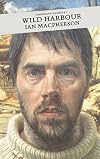
Three stars and yet, I'm glad I read it. Not the best reading I've experienced, but very interesting information. Hugh and Terry are married and live in pre WWII Scotland. As they see others joining up they have to decide: will they support the war, will they kill, can they support the war without killing? The questions they must face are alone worth the read. Can they survive being ostracized for their beliefs? Can they survive killing others? Can they survive, period? So the basic question seems to be what will be more difficult, killing or not killing? How will they fair if they live against their own beliefs? Heck what ARE their beliefs? They are going to learn a LOT about themselves because of course, it is a lot more complicated than that.This fictitious account describes their life literally in the wilds, scrounging for food and shelter and making a life for themselves. Will they stick with their initial decision? This is a multi-faceted story.
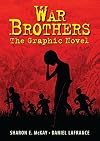
This is a graphic novel based on events in Uganda with Kony and his Lord's Resistance Army. The authors state that everything in the story has happened and they put the events into fiction story form. It is of course, a horrifying story. And yet, it is one of success for some characters, in the form of recovery from trauma and their attempts to help others. This book is one of those attempts at getting the story out. I don't suppose I can say I enjoyed a book about such a horrific topic, but some of the colored illustrations were certainly evocative of the beauty of Uganda. Four stars.
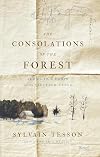
Tesson is a French travel writer (altho much more than that) and this is the first one of his works to be translated into English. I hope the rest of them will be soon as I would enjoy reading more. Tesson writes about spending six months alone in a cabin in Siberia (although he does occasionally have visitors). I have read quite a few of this type of book - solitude in nature - and this is one of my favorites. Many of them are about spiritual journeys or nature or animals. This one is very well balanced with all of the above included, with a small amount of political commentary thrown in regarding the meaning and experience of total freedom. There are also some interesting thoughts about Russian "types" based on geography. The writing was lovely and beautifully descriptive without being overdone. I enjoyed being in this location with this author and read this one more slowly than usual. It left me wanting more from Tesson. Five star read for me.
Edit | More
Edit | More
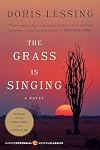
I wasn't as taken with this book as many others were and seem to have had a different experience of the story. Most readers seem to focus on the race relations and that is indeed perhaps most of the story. It is an excellent description of the horror and ambiguity of racial hatred and the enslavement of others. Lessing is able to express these ideas, both the overt and the covert very well, no doubt due to her life experience. My perspective was more focused on Mary, the lead character, as being raised in a neglectful, if not abusive home, by an emotionally absent mother and an alcoholic father. I'm not sure Mary ever had a chance at any normal intimate relationship aside from the fact of her other circumstances. I found the atmosphere to be rather flat actually, and depressed, but perhaps that was the point. Three stars.

In my mind, "hate mail" is by definition funny. Well written and valid complaints aren't hate mail. Hate mail should be watching someone throw a fit and barely be able to talk. You know, spit, sputter and stutter. I suppose that sounds mean but I can SO relate to being too upset to be articulate and just barely able to speak. These seemed mostly just silly to me and not funny. One star for the idea.
This is the first Oscar Wilde I have read. Initially I thought it was the most boring and irritating thing I had ever picked up. The topic of oh my I am aging and I won't be pretty anymore bores me to death. If you haven't grown out of that attitude by 30 at the latest, you are not someone I want to read about probably. And 30 is rather late. And no doubt you would not want to hang out with me either, but then I'm not writing a book. I kept reading because I wanted to know what all the fuss was about. I ended up thoroughly enjoying it and I don't think I can say why because I'm not sure. (Maybe I need to grow out of my uncertainty.) The writing was captivating, as I should have known it would be, but that doesn't always make up for a bad story. However, the description of a sunrise alone was worth reading the whole book. Not the beautiful peaches, pink and oranges usually talked about, but the earlier black and white of dawn. I could see it and be there for it. I very much enjoyed the other topics in the book, specifically about projection, i.e. the painting of an artist can only be the artist's projection, as can the viewed painting only be the viewer's projection. Three and a half stars, but I will read more.
Oh poor, poor William! I can SO relate to William. So of course since the book was about me I could hardly put it down! Also, the writing was wonderful and kept me drawn in, anxious to see what would happen next. William was WAY too obedient (to his mother) as a child and on into adulthood actually, just living as he thought he was supposed to, being what his mother told him to be. When she died he was still a young man with the financial means to no longer work and to simply do and be as he wanted. The problem was that he never learned just what that might be, having never been given the opportunity to explore a different life. William turned to another for help with ideas about what he should now do with his life, and ended up following this other person intellectually into the pacifist movement of pre-WWI. He learned a lot about pacifism and became a bit of a figure in the movement, hanging out only with those who thought as he did, read what he read, believed as he came to. He was very well read and analyzed and wrote and published. He even found a woman to marry who not only agreed with his beliefs but also worked as a suffragette herself. They were a perfect couple if you prefer marriage to yourself rather than to another.
William seemed to have only one problem, but it was a big one. He had no experience or even knowledge outside of his own culture and kind. He failed to make his philosophy of pacifism his own, failed to think his own thoughts, and followed blindly show more along using the thoughts and understanding of others. He did not have (or make) the opportunity to learn about and understand other points of view. Therefore, when he ended up (accidentally again) a prisoner, along with his wife, of German soldiers in the midst of his honeymoon, he had no basis for understanding what was happening to them. He had no world news while on his honeymoon in Belgium, and was shocked to find himself a prisoner, watching other prisoners being killed, and being separated from his bride, whom he adored. When they are rejoined, and are attempting to escape, he realizes his wife has been raped and otherwise pitifully physically and emotionally abused. They do escape and are helped along back to England, by way of Paris, but his wife dies before even reaching Paris.
William is severely traumatized and shocked by what he has experienced. It is not only the physical and emotional trauma, but his very world view of humanity is destroyed. He has no underlying infrastructure for his pacifist beliefs and falls into rage, hatred and an overwhelming desire for vengeance. His only hope and purpose for living is to join the English army and when he is rejected due to his small physical size, he is devastated and left with nothing to live for. Even when he is finally accepted, he is sent to work as a clerk, essentially having returned to the meaningless life he was living previously with his mother. And so he is back where he started.
One of my favorite quotations: Perhaps his contact with alien races, with strange buildings and habits once unknown, may have increased his vague sense of the impossibility of fitting all men to one pattern.
For me, this is the lesson of William, an Englishman.
Five stars show less
William seemed to have only one problem, but it was a big one. He had no experience or even knowledge outside of his own culture and kind. He failed to make his philosophy of pacifism his own, failed to think his own thoughts, and followed blindly show more along using the thoughts and understanding of others. He did not have (or make) the opportunity to learn about and understand other points of view. Therefore, when he ended up (accidentally again) a prisoner, along with his wife, of German soldiers in the midst of his honeymoon, he had no basis for understanding what was happening to them. He had no world news while on his honeymoon in Belgium, and was shocked to find himself a prisoner, watching other prisoners being killed, and being separated from his bride, whom he adored. When they are rejoined, and are attempting to escape, he realizes his wife has been raped and otherwise pitifully physically and emotionally abused. They do escape and are helped along back to England, by way of Paris, but his wife dies before even reaching Paris.
William is severely traumatized and shocked by what he has experienced. It is not only the physical and emotional trauma, but his very world view of humanity is destroyed. He has no underlying infrastructure for his pacifist beliefs and falls into rage, hatred and an overwhelming desire for vengeance. His only hope and purpose for living is to join the English army and when he is rejected due to his small physical size, he is devastated and left with nothing to live for. Even when he is finally accepted, he is sent to work as a clerk, essentially having returned to the meaningless life he was living previously with his mother. And so he is back where he started.
One of my favorite quotations: Perhaps his contact with alien races, with strange buildings and habits once unknown, may have increased his vague sense of the impossibility of fitting all men to one pattern.
For me, this is the lesson of William, an Englishman.
Five stars show less
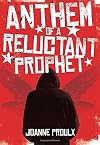
Proulx is a Canadian author who has created one of my all time favorite characters. Luke is stunned and almost completely knocked out when he experiences a premonition that one of his friends is going to die. When the premonition comes true, his life becomes a nightmare surrounded by media and freaked out friends. Although the book cover said nothing about paranormal happenings, some reviews have tagged it so. I found that to be misleading. This is an amazing piece of writing describing in detail, thoughts, attitudes and complicated relationships. It is the wonderful story of Luke learning to love and appreciate others in all of their glory, the loving pieces and the hateful parts. He gives up, he tries again. I love him! Proulx nails it. She is brilliant and I'll be following her work.
A couple of my favorite quotations:
I was so all over the place I could barely cast a shadow.
I had to pilfer the idea from John Asscraft.
A couple of my favorite quotations:
I was so all over the place I could barely cast a shadow.
I had to pilfer the idea from John Asscraft.
BOOK 18 - [Trapped] by [[April Christofferson]]
I was looking for something light, fast moving, hard to put down, after a couple of more difficult books, when I found this. The setting is Yellowstone and Glacier National Parks and it involves rangers, wild animals, poachers wild life activists and gun rights activists. I knew I would feel as if I were spending some time in two of my favorite places, while being caught up in a mystery, and I certainly did. I very much enjoyed this read and plan to read the other two the author has written on similar topics. Christofferson has the knowledge, background and experience for the topic so it is very realistic. Four stars
I was looking for something light, fast moving, hard to put down, after a couple of more difficult books, when I found this. The setting is Yellowstone and Glacier National Parks and it involves rangers, wild animals, poachers wild life activists and gun rights activists. I knew I would feel as if I were spending some time in two of my favorite places, while being caught up in a mystery, and I certainly did. I very much enjoyed this read and plan to read the other two the author has written on similar topics. Christofferson has the knowledge, background and experience for the topic so it is very realistic. Four stars