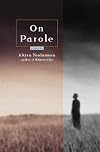
On Parole
by Akira Yoshimura
On This Page
Description
A man murders his wife, wounds her lover, and sets the lover's home-with the lover's mother in it-on fire. Sixteen years later, 50-year-old Shiro Kikutani, a former high-school teacher serving a life sentence for this crime, is released. In jail, he had thought of nothing but freedom. His release, however, creates a series of obstacles for which he is not prepared. While he continually examines his conscience, he feels no remorse. On parole, he slowly begins to lead a normal life, and that show more life seems livable, until his new wife pressures him to express remorse he does not feel. Once again, Yoshimura has written a finely detailed, subtle, powerful story that explores the fragile life of a murderer and the quality of freedom in an unforgiving society. show lessTags
Recommendations
















Member Recommendations


Member Reviews
This is a spare, thought-provoking novel out of Japan, telling the story of Kikutani's parole from prison after sixteen years of incarceration. The Japanese parole system is evidently a lot kinder and gentler than the American one, or at least it appears so from this novel. The parole officers in the story are unpaid volunteers, men of standing in the community. They go above and beyond the call of duty and act as friends and counselors more than they act as enforcers of the law, and Kikutani grows to enjoy his mandatory bimonthly meetings with them.
****SPOILER ALERT****
The reader follows Kikutani's confusion and nervousness as he struggles with higher prices, shopping malls, nosy coworkers and the freedom to choose. He appears to be a show more highly successful parolee, staying out of trouble, getting a steady job and keeping it, and even getting married again. Yet the violent ending didn't surprise me at all.
It certainly makes one think: what was responsible for Kikutani's later act of violence? Was it his own sociopathic tendencies, as evidenced by his total lack of remorse for two brutal murders? Or was it the nature of the parole system and society in general, which never allows a person to fully escape their past? Is the author in favor of the parole system, or against it? You could make the argument that were it not for the restrictions placed on him by his lifetime parole, Kikutani would never have re-offended. And you could make the argument that he should never have been given a second chance. show less
****SPOILER ALERT****
The reader follows Kikutani's confusion and nervousness as he struggles with higher prices, shopping malls, nosy coworkers and the freedom to choose. He appears to be a show more highly successful parolee, staying out of trouble, getting a steady job and keeping it, and even getting married again. Yet the violent ending didn't surprise me at all.
It certainly makes one think: what was responsible for Kikutani's later act of violence? Was it his own sociopathic tendencies, as evidenced by his total lack of remorse for two brutal murders? Or was it the nature of the parole system and society in general, which never allows a person to fully escape their past? Is the author in favor of the parole system, or against it? You could make the argument that were it not for the restrictions placed on him by his lifetime parole, Kikutani would never have re-offended. And you could make the argument that he should never have been given a second chance. show less
Shiro Kukatani, a high school English teacher, has been released on parole after 15 years in prison. He slowly reacquaints himself with the society he knew prior to his imprisonment. Feeling guilty that, despite his long years of confinement, he feels no remorse for his crime, Kukatani must adapt to living independently again albeit under the supervision of his probation officers.
ON PAROLE is a story unadorned with fluff, moving slowly and simply with words that evoke deep thought and emotions. It examines Kukatani’s feelings of tentativeness as he emerges from prison. Speaking of his attempts to reenter a world beyond prison bars, the reader can feel Kakatani’s yearning to reach back into his former life, the fascination and show more repulsion of discovering an environment that continued to change despite his stagnant years of imprisonment, and his longing to connect to other people while overpowered by his fear to do so. In essence, the story describes how a parolee’s life can never return to that of the past. The deed that sent Kukatani to prison is not the story, but rather it’s the psychological adaptation of a parolee to what lies beyond the prison’s gate and the question as to whether there is such a thing as true rehabilitation of a criminal. show less
ON PAROLE is a story unadorned with fluff, moving slowly and simply with words that evoke deep thought and emotions. It examines Kukatani’s feelings of tentativeness as he emerges from prison. Speaking of his attempts to reenter a world beyond prison bars, the reader can feel Kakatani’s yearning to reach back into his former life, the fascination and show more repulsion of discovering an environment that continued to change despite his stagnant years of imprisonment, and his longing to connect to other people while overpowered by his fear to do so. In essence, the story describes how a parolee’s life can never return to that of the past. The deed that sent Kukatani to prison is not the story, but rather it’s the psychological adaptation of a parolee to what lies beyond the prison’s gate and the question as to whether there is such a thing as true rehabilitation of a criminal. show less
Kikutani is a man who has just spent 16 years in prison for the murder of his wife and who has now been released under a provisional parole. This story is of his adjusting to a life he has never experienced, yet needs to survive. Yoshimura, as expected, excels again at describing the main character and his interaction with his environment. Every page is remarkable and brings you along with the story. The steady pace is impeccably well-done to emulate the thoughtfulness and slowness that Kikutani must calculate to yield a successful immersion into society. Additionally, Kikutani's relationship with his two parole officers, Kiyoura and Takebayashi, is something to be envious of. Unfortunately, as is typical with Yoshimura's works, tragedy show more is afoot and we know how the story must end. show less
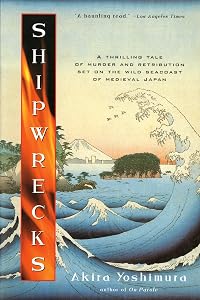
I have read one previous book by Yoshimura, the well regarded but unsettling '"Shipwrecks".
"On Parole" is a very moving story about a man who has been in prison for 15 or 16 years who becomes eligible for parole and is eventually released. Life back in the outside world is so different from his prison life. It is also so different from the world he left 15+ years before. He had been a model prisoner. He is released to a halfway house with a very concerned and sympathetic (but firm) parole officer. He learns that because of his sentencing he will be on parole for many more years and possibly forever. In the outside world things slowly seem to be getting better for him. The parole officer finds a job for him which helps him on his way show more back to the outside world in small steps. We the readers find out why he was in prison but note that the prisoner has repeatedly mentioned that he feels no remorse for his crime.
With "On Parole" our prisoner deserved to go to prison but his sentence may or may not be fair. Oddly he became comfortable with life in prison and works at a job there that he seems to enjoy very much (he is a printer and proofreader and had been a teacher prior to his crime). So although he had wished very strongly to be paroled (he was given an indefinite sentence which theoretically could be a life sentence) when it finally happened he was unprepared for it. The story is mostly about himself trying to reintegrate into Japanese society and provides many insights into Japanese life and culture of the 1980's when the story seems to be set. Japan had undergone a huge transformation between 1970 and the mid 80's. It was very important to the Japanese that the prisoner feel regret and remorse for his crime. Frankly, under the circumstances I could understand why he may not feel remorse. He certainly could have, but he didn't. That leads us to the very unhappy and unfortunate end of the story where despite all the help he had been given and everyone's good intentions, and the reader's hope that his life is finally getting better, something goes very wrong. Such a sad sad ending.
Recommended for those interested in Japanese literature show less
"On Parole" is a very moving story about a man who has been in prison for 15 or 16 years who becomes eligible for parole and is eventually released. Life back in the outside world is so different from his prison life. It is also so different from the world he left 15+ years before. He had been a model prisoner. He is released to a halfway house with a very concerned and sympathetic (but firm) parole officer. He learns that because of his sentencing he will be on parole for many more years and possibly forever. In the outside world things slowly seem to be getting better for him. The parole officer finds a job for him which helps him on his way show more back to the outside world in small steps. We the readers find out why he was in prison but note that the prisoner has repeatedly mentioned that he feels no remorse for his crime.
With "On Parole" our prisoner deserved to go to prison but his sentence may or may not be fair. Oddly he became comfortable with life in prison and works at a job there that he seems to enjoy very much (he is a printer and proofreader and had been a teacher prior to his crime). So although he had wished very strongly to be paroled (he was given an indefinite sentence which theoretically could be a life sentence) when it finally happened he was unprepared for it. The story is mostly about himself trying to reintegrate into Japanese society and provides many insights into Japanese life and culture of the 1980's when the story seems to be set. Japan had undergone a huge transformation between 1970 and the mid 80's. It was very important to the Japanese that the prisoner feel regret and remorse for his crime. Frankly, under the circumstances I could understand why he may not feel remorse. He certainly could have, but he didn't. That leads us to the very unhappy and unfortunate end of the story where despite all the help he had been given and everyone's good intentions, and the reader's hope that his life is finally getting better, something goes very wrong. Such a sad sad ending.
Recommended for those interested in Japanese literature show less
A good book is one that encourages you to do or be something beyond what you may previously have imagined. It motivates you to become a better person, imparting wisdom and insight through prose and pages that, when done correctly, can last a lifetime.
On the other hand, some books don't so much inspire as make the reader appreciate what they already have, humbling them by presenting them with a character that, for example, may have every basic human liberty stripped away from them. That is exactly what Akira Yoshimura's novel does.
Kikutani committed a horrible crime over 15 years ago, and was given an "indefinite sentence" to prison, which basically means they'll put them in there and maybe let him out eventually if they feel like it. show more The book begins with the miraculous revelation that Kikutani will be given parole, and will be allowed to live as normally as someone in his circumstance can. He will be ostracized by his hometown, and he will be paranoid that anyone he meets will discover his dark past, but he will be allowed to go and live outside of the cold, dark prison walls that have encapsulated his existence for the past decade-and-a-half.
The most mundane things that just about anyone would take for granted are a source of wonderment for Kikutani. When you are forbidden to get your prison clothes wet, even the simple act of being rained upon during your walk home is an symbol of freedom. When a book can make you appreciate something that would normally be bothersome, I would definitely consider it a successful one.
I won't deny that plot can feel like it's plodding along without direction at times. It is also true that the majority of the novel is about nothing in particular. The bulk of the "story" involves Kikutani doesn't the most ordinary things. But that is exactly why it is so great, because the most common, every-day activities can be so cherished by those among us who have been deprived of them. I'll take that over an exciting plot any day. show less
On the other hand, some books don't so much inspire as make the reader appreciate what they already have, humbling them by presenting them with a character that, for example, may have every basic human liberty stripped away from them. That is exactly what Akira Yoshimura's novel does.
Kikutani committed a horrible crime over 15 years ago, and was given an "indefinite sentence" to prison, which basically means they'll put them in there and maybe let him out eventually if they feel like it. show more The book begins with the miraculous revelation that Kikutani will be given parole, and will be allowed to live as normally as someone in his circumstance can. He will be ostracized by his hometown, and he will be paranoid that anyone he meets will discover his dark past, but he will be allowed to go and live outside of the cold, dark prison walls that have encapsulated his existence for the past decade-and-a-half.
The most mundane things that just about anyone would take for granted are a source of wonderment for Kikutani. When you are forbidden to get your prison clothes wet, even the simple act of being rained upon during your walk home is an symbol of freedom. When a book can make you appreciate something that would normally be bothersome, I would definitely consider it a successful one.
I won't deny that plot can feel like it's plodding along without direction at times. It is also true that the majority of the novel is about nothing in particular. The bulk of the "story" involves Kikutani doesn't the most ordinary things. But that is exactly why it is so great, because the most common, every-day activities can be so cherished by those among us who have been deprived of them. I'll take that over an exciting plot any day. show less
The story of a guy who did sixteen years in prison and get out to find life has changed. As someone who has worked in the prison system for 6 years the story seems very plausible. I think that Mr Yoshimura must have talked to a few former inmates.
The story of a guy who did sixteen years in prison and get out to find life has changed. As someone who has worked in the prison system for 6 years the story seems very plausible. I think that Mr Yoshimura must have talked to a few former inmates.
Members
- Recently Added By
Lists

Japanese Literature
230 works; 40 members

Top Five Books of 2022
736 works; 272 members

Books Read in 2014
2,343 works; 89 members

Favorite World Literature in English Translation
22 works; 5 members
Author Information

33 Works 1,303 Members
Japan's leading non-fiction writer on military and naval subjects, Akira Yoshimura was born in Tokyo in 1927. His published works in Japanese include a best-selling account of the construction and wartime role of the Zero fighter.
Some Editions
Series
Belongs to Publisher Series
Common Knowledge
- Canonical title
- On Parole
- Original title
- 仮釈放
- Alternate titles
- Libertad Bajo Palabra
- Original publication date
- 1988
- People/Characters
- Kikutani, Shiro; Kiyoura; Takebayashi
- Important places
- Tokyo, Japan
- First words
- The air on his skin was unfamiliar and left him strangely agitated.
- Last words
- (Click to show. Warning: May contain spoilers.)Kikutani bowed sheepishly as Kiyoura looked up from his desk.
Classifications
- Genres
- Fiction and Literature, General Fiction
- DDC/MDS
- 895.635 — Literature & rhetoric Literatures of other languages Literatures of East and Southeast Asia Japanese Japanese fiction 1945–2000
- LCC
- PL865 .O72 .K3713 — Language and Literature Languages and literatures of Eastern Asia, Africa, Oceania Languages of Eastern Asia, Africa, Oceania Japanese language and literature Japanese literature Individual authors and works
- BISAC
Statistics
- Members
- 169
- Popularity
- 193,901
- Reviews
- 9
- Rating
- (3.98)
- Languages
- 6 — English, French, German, Hebrew, Japanese, Spanish
- Media
- Paper
- ISBNs
- 11
- ASINs
- 1