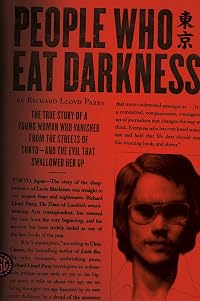
People Who Eat Darkness: The True Story of a Young Woman Who Vanished from the Streets of Tokyo and the Evil That Swallowed Her Up
by Richard Lloyd Parry
On This Page
Description
Lucie Blackman--tall, blond, twenty-one years old--stepped out into the vastness of Tokyo in the summer of 2000 and disappeared. The following winter, her remains were found buried in a seaside cave. The seven months in between had seen a massive search for the missing girl involving Japanese policemen, British private detectives, and Lucie's desperate but bitterly divided parents. Richard Lloyd Parry, an award-winning foreign correspondent, followed the case from the beginning. Over the show more course of a decade, he traveled to four continents to interview those connected with the story, assiduously followed the court proceedings, and won unique access to the Japanese detectives who investigated the case. Ultimately he earned the respect of the victim's family and delved deep into the mind and background of the man accused of the crime--Joji Obara, described by the judge as "unprecedented and extremely evil." The result is a book at once thrilling and revelatory. show lessTags
Recommendations


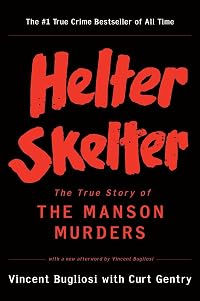

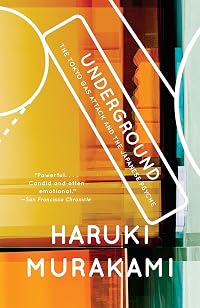
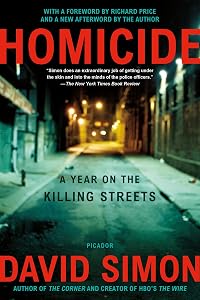
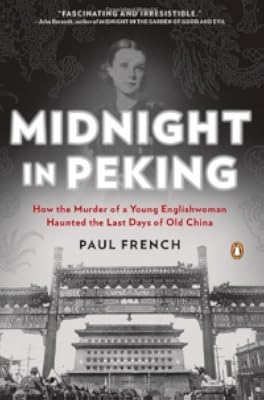
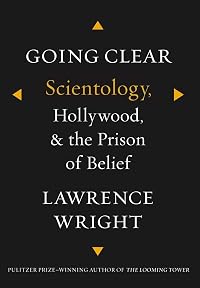


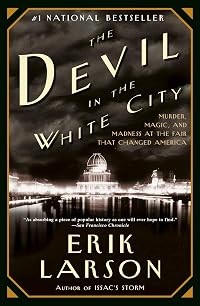

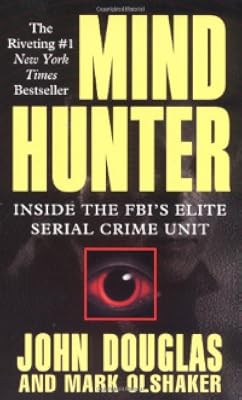
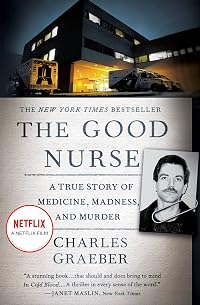
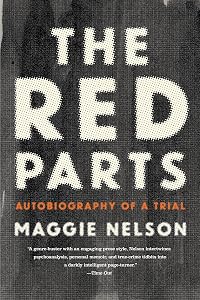






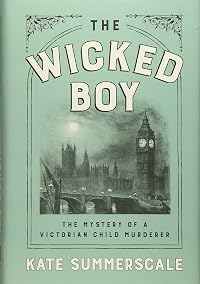
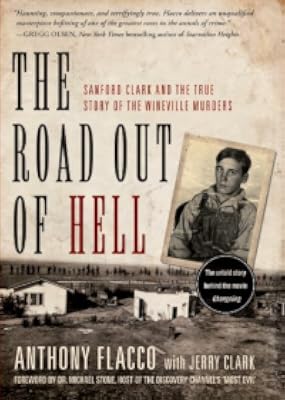
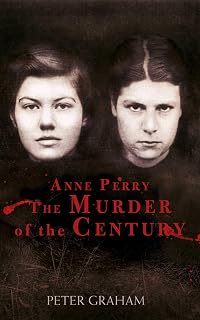
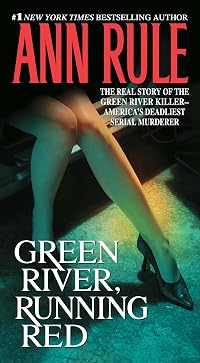
Member Recommendations

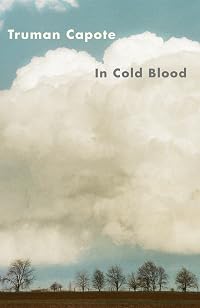
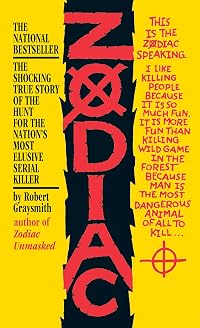
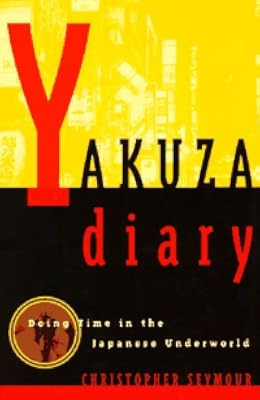
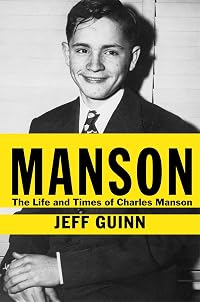
akblanchard Both books depict the seamy undersides of major cities.

Member Reviews
***SPOILERS HIDDEN***
Richard Lloyd Parry’s People Who Eat Darkness stands out for an almost otherworldly quality as it exposes the darker side of Tokyo while detailing the disappearance and murder of Lucie Blackman. Parry is an expert writer who's published something that avoids being lurid and pulpy and treats its subjects with respect and sensitivity.
The book shines when describing various things unique to Japan, things many Westerners might find exceedingly strange. Here is an intimate portrait of "Lucie's Tokyo," and it's an unreal, kooky place. Blackman's job there sends red flags flying like crazy--to the Western reader. To the Japanese, her job is merely another job, just on the seedy side.
The book's other major focus is show more Blackman's vividly depicted family, and these parts are moving as Parry describes exactly how the young woman's murder affected each member. He even focuses generously on how her murder affected some of her closest friends, including an ex-boyfriend. Although Parry recounts Blackman’s murder with journalistic accuracy, he never did so with journalistic stoicism.
At times, though, tangents slow the pace. At about the halfway point, the reader learns about the killer’s family, which is standard for true-crime books.However, Parry delves into the finer details of the killer’s brother and their relationship, with the focus then remaining on the brother. But this brother ends up having no connection whatsoever to the killer’s crimes or motives.
Another misstep is some author intrusion toward the end. Parry suddenly inserts himself into the account by relating an incident in which he was sent a suspicious missive containing, among other items, photos of himself taken without his knowledge. The missive may or may not have been from the killer, and the point of this anecdote is unclear. Later, Parry passes judgment on Blackman’s father accepting payment from the killer. Up until these points People Who Eat Darkness remains journalistically objective. Nevertheless, People Who Eat Darkness will satisfy fans of true-crime with a thorough examination of what happened to Blackman and a provocative peek into a shadow world of Tokyo. Riveting, sad, educational, and shocking all at the same time, this is an unforgettable true-crime. show less
Richard Lloyd Parry’s People Who Eat Darkness stands out for an almost otherworldly quality as it exposes the darker side of Tokyo while detailing the disappearance and murder of Lucie Blackman. Parry is an expert writer who's published something that avoids being lurid and pulpy and treats its subjects with respect and sensitivity.
The book shines when describing various things unique to Japan, things many Westerners might find exceedingly strange. Here is an intimate portrait of "Lucie's Tokyo," and it's an unreal, kooky place. Blackman's job there sends red flags flying like crazy--to the Western reader. To the Japanese, her job is merely another job, just on the seedy side.
The book's other major focus is show more Blackman's vividly depicted family, and these parts are moving as Parry describes exactly how the young woman's murder affected each member. He even focuses generously on how her murder affected some of her closest friends, including an ex-boyfriend. Although Parry recounts Blackman’s murder with journalistic accuracy, he never did so with journalistic stoicism.
At times, though, tangents slow the pace. At about the halfway point, the reader learns about the killer’s family, which is standard for true-crime books.
Another misstep is some author intrusion toward the end. Parry suddenly inserts himself into the account by relating an incident in which he was sent a suspicious missive containing, among other items, photos of himself taken without his knowledge. The missive may or may not have been from the killer, and the point of this anecdote is unclear. Later, Parry passes judgment on Blackman’s father accepting payment from the killer. Up until these points People Who Eat Darkness remains journalistically objective.
“The families of the missing are doubly burdened: first by the pain of their ordeal, and then by our expectations of them, expectations of a standard of behavior higher than we require of ourselves.”
Lucie Blackman was a twenty-one year old British woman, who had recently moved to Tokyo, with her best friend. In the summer of 2000, she suddenly vanished. A massive manhunt ensued. Seven months later, her dismembered body is found entombed in a seaside cave. What happened to this pretty, vivacious, young woman? If the reader can handle the disturbing nature of this true crime nightmare, there is plenty to sink your teeth into here, with a complex narrative, along with plenty of twists and turns. The author, an award-winning British show more journalist, followed this case, from the very beginning and had close contact with everyone involved, including the demoniac killer.
Once again, be forewarned- this is a creepy, unsettling exploration of pure evil, but it is also first rate nonfiction. I highly recommend it.
*I also highly recommend the audio, narrated by the wonderful Simon Vance. show less
Lucie Blackman was a twenty-one year old British woman, who had recently moved to Tokyo, with her best friend. In the summer of 2000, she suddenly vanished. A massive manhunt ensued. Seven months later, her dismembered body is found entombed in a seaside cave. What happened to this pretty, vivacious, young woman? If the reader can handle the disturbing nature of this true crime nightmare, there is plenty to sink your teeth into here, with a complex narrative, along with plenty of twists and turns. The author, an award-winning British show more journalist, followed this case, from the very beginning and had close contact with everyone involved, including the demoniac killer.
Once again, be forewarned- this is a creepy, unsettling exploration of pure evil, but it is also first rate nonfiction. I highly recommend it.
*I also highly recommend the audio, narrated by the wonderful Simon Vance. show less
Surely the best of the true crime genre must have elements that make it worth reading, like compelling forensic work, or fascinating legal procedures, or sympathetic friends and family of a victim who have much invested in an investigation's outcome, or even just plain good writing that pulls you in. People who eat Darkness, which is the story of an especially heartless crime, has none of these redeeming qualities. The Tokyo policework is plodding, enigmatic, and incompetent. The Japanese legal system is farcically obtuse and wholly incompatible and unfamiliar with the concept of reasonable doubt. It gives a whole new meaning to "justice is blind". This trial alone, even without the appeals, lasted six years. The victim's family is show more epically unhappy and unsympathetic even before the tragedy. The father is especially creepy, accepting one million dollars from the man who raped, murdered, and dismembered his daughter, a transaction for which the author essentially gives him a pass and instead admonishes the reader to judge not, that ye not be judged. As for the writing, it is listless and uninterested and whatever the opposite of incisive is. It reads like the author was himself tired of, and wanting nothing more than to be free of, this miserable tale. show less
This is such a good read. Thrilling, unheimlich, fascinating, disgusting and intriguing.
It's a story about the disappearance of a young British woman in the bizarre vortex of the Tokyo water business (the term used for a variety of adult or not so adult goings on). But it's also - and perhaps even more - a story of trying to understand what can't be understood. Of coming to grips with what can't be gripped. Why this girl? Why (spoiler) did the abductor do as he did? What made him tick? And most chillingly of all, what if there really is no explanation to his crimes? What if he is simply a human, not the devil his actions suggest? The story is also a story about Japan and the Japanese. About a culture so hard to fathom - and perhaps show more because of this, so fascinating.
I recommend this book highly. You will not be able to put it down or easily forget it. Four (very big) stars out of five. show less
It's a story about the disappearance of a young British woman in the bizarre vortex of the Tokyo water business (the term used for a variety of adult or not so adult goings on). But it's also - and perhaps even more - a story of trying to understand what can't be understood. Of coming to grips with what can't be gripped. Why this girl? Why (spoiler) did the abductor do as he did? What made him tick? And most chillingly of all, what if there really is no explanation to his crimes? What if he is simply a human, not the devil his actions suggest? The story is also a story about Japan and the Japanese. About a culture so hard to fathom - and perhaps show more because of this, so fascinating.
I recommend this book highly. You will not be able to put it down or easily forget it. Four (very big) stars out of five. show less
This true crime story really does have a lot going for it in terms of being gripping: young victim, foreign country, an in depth look at Japan's sex trade/industry, a divorced family trying to cope with a missing person, and a dogged reporter. I'm giving it 5 stars for the true crime genre. I feel it is up there with Helter Skelter and others like it . . .
Lucie, a British 21 year old, goes to Japan with her best friend in order to earn some money to pay off debt that she seems to accumulate with ease. She takes a job as a hostess in a club, but a hostess in Japan is not the same as what we think of here as a hostess. In fact, I can't even think of an equivalent here, but I guess the closest thing is an escort . . .where companionship is show more expected and sexual intercourse is not. I won't be spoiling anything here by telling you that the first we learn of Lucie is that she has been killed. The question is by whom and why?
What makes this book unique, in my mind, is that it goes to great lengths to really reveal the character of all of the major players. In addition, the author is a reporter and has a reporter's eye and interest in detail, but he doesn't totally distance himself. He actually shares his own feelings and perceptions while also trying to show the most impartial take on the situation. I felt that HOW he wrote the book really added a lot of interest. In addition, there is a lot about the Japanese culture and in some ways, how Tokyo was the perfect setting for this particular type of crime to take place.
All in all, I just felt very engrossed by the tale and also sort of horrified. The first half of the book is the more interesting as it details more about the crime. The latter half is the aftermath, the trial, and the analysis - - this part obviously is a little less suspenseful, but I still found it interesting. Some reviews on Amazon felt there was way too much detail. There's a lot of detail. You've been warned. Personally, I felt the detail was necessary so that you could begin to draw your own thoughts and conclusions. show less
Lucie, a British 21 year old, goes to Japan with her best friend in order to earn some money to pay off debt that she seems to accumulate with ease. She takes a job as a hostess in a club, but a hostess in Japan is not the same as what we think of here as a hostess. In fact, I can't even think of an equivalent here, but I guess the closest thing is an escort . . .where companionship is show more expected and sexual intercourse is not. I won't be spoiling anything here by telling you that the first we learn of Lucie is that she has been killed. The question is by whom and why?
What makes this book unique, in my mind, is that it goes to great lengths to really reveal the character of all of the major players. In addition, the author is a reporter and has a reporter's eye and interest in detail, but he doesn't totally distance himself. He actually shares his own feelings and perceptions while also trying to show the most impartial take on the situation. I felt that HOW he wrote the book really added a lot of interest. In addition, there is a lot about the Japanese culture and in some ways, how Tokyo was the perfect setting for this particular type of crime to take place.
All in all, I just felt very engrossed by the tale and also sort of horrified. The first half of the book is the more interesting as it details more about the crime. The latter half is the aftermath, the trial, and the analysis - - this part obviously is a little less suspenseful, but I still found it interesting. Some reviews on Amazon felt there was way too much detail. There's a lot of detail. You've been warned. Personally, I felt the detail was necessary so that you could begin to draw your own thoughts and conclusions. show less
This is my favorite kind of true crime book. It not only relates the crime in detail but it also gives the reader understanding about a specific place and time, in this case Roppongi in Minato, Tokyo. The crime against Lucie Blackman couldn't have happened anywhere else but in Japan and to understand it you have to appreciate how the Japanese culture views women, especially those who are foreign born. You also have to grasp the Japanese legal system were almost everyone who goes to trial is convicted and the police worry about arresting suspects when it will be least embarrassing to them. Unbeknown to Lucie Blackman she was on a collision course with a serial rapist who had already murdered another girl. The crime is only part of the show more story. The rest involves the Japanese legal system, what it meant to me a hostess, how he Japanese male culture viewed western women, and the toxic relationship of Lucie's family especially the relationship between her parents. I could not put this book down. It was riveting. I think the author did a terrific job of fairly portraying the main player in the story, especially those who have been maligned in other publications. show less
This was my first true-crime book. I read it based on a recommendation from June Thomas on Slate's Culture Gabfest podcast. It's well written and researched, with plenty of detail about Lucie's background; her and her best friend's daily routine in Tokyo; the so-called "water trade" which ranges from chaste flirtation in hostess bars through stripping to sex for money; the history of Japan's ethnically Korean Zainichi minority; and Japan's police and court systems. The crime, when it is revealed, is more sad and tawdry (roofies, chloroform) than truly shocking (the cult hinted at in the title*), but the author makes it all compelling to read without disrespecting the victim or her family. This is a fitting memorial for Lucie show more Blackman.
*The title is never explained or referred to in the text. I felt cheated. show less
*The title is never explained or referred to in the text. I felt cheated.
Members
- Recently Added By
Lists

Top Five Books of 2013
1,562 works; 721 members

True Crime
216 works; 16 members

Best Biographies
216 works; 26 members

True Crime
156 works; 1 member

Books Read in 2014
2,343 works; 89 members

Books Read in 2013
1,630 works; 51 members

Allie's List of Books I Want To Read
93 works; 1 member

Books Read in 2019
4,052 works; 110 members
Author Information

6+ Works 1,820 Members
Richard Lloyd Parry is Asia Editor of The Times and a foreign correspondent, based in Tokyo since 1995. He was born in 1969 and is an Oxford graduate. He has reported from all over Asia and in numerous war zones including Iraq, Afghanistan, Indonesia, East Timor and others. He is the author of In The Time of Madness: Indonesia on the Edge of show more Chaos, People Who Eat Darkness: The Fate of Lucie Blackman, and Ghosts of the Tsunami: Death and Life in Japan's Disaster Zone, for which he won the 2018 Rathbones Folio Prize. (Bowker Author Biography) show less
Some Editions
Awards and Honors
Awards
Distinctions
Common Knowledge
- Canonical title
- People Who Eat Darkness: The True Story of a Young Woman Who Vanished from the Streets of Tokyo and the Evil That Swallowed Her Up
- Original publication date
- 2012-04-22
- People/Characters
- Lucie Blackman; Tim Blackman; Jane Blackman; Rupert Blackman; Sophie Blackman; Louise Phillips
- Important places
- Tokyo, Japan
- Dedication
- For Mum and Dad
- First words
- Lucie wakes up late, as usual.
- Last words
- (Click to show. Warning: May contain spoilers.)And how sweet death would be, if it could all have ended there, with the image of a bird in a tree, pouring out its song.
- Blurbers
- Cleave, Chris; Peace, David; Myerson, Julie
- Original language
- English
- Canonical DDC/MDS
- 364.1523092
- Canonical LCC
- HV6535.J33
Classifications
- Genres
- General Nonfiction, Nonfiction
- DDC/MDS
- 364.1523092 — Society, government, & culture Social problems and social services Crime Criminal offenses Offenses against the person Homicide Murder History, geographic treatment, biography Biography
- LCC
- HV6535 .J33 — Social sciences Social pathology. Social and public welfare. Criminology Social pathology. Social and public welfare. Criminology Crimes and offenses
- BISAC
Statistics
- Members
- 1,151
- Popularity
- 21,865
- Reviews
- 60
- Rating
- (3.81)
- Languages
- 6 — Chinese, English, French, Polish, Portuguese, Spanish
- Media
- Paper, Audiobook, Ebook
- ISBNs
- 28
- ASINs
- 14