
Patrick Radden Keefe
Author of Say Nothing: A True Story of Murder and Memory in Northern Ireland
About the Author
Works by Patrick Radden Keefe
London Falling: A Mysterious Death in a Gilded City and a Family's Search for Truth (2026) 461 copies, 13 reviews
The Snakehead: An Epic Tale of the Chinatown Underworld and the American Dream (2009) 434 copies, 20 reviews
Associated Works
Unspeakable Acts: True Tales of Crime, Murder, Deceit, and Obsession (2020) — Introduction — 217 copies, 8 reviews
Tagged
Common Knowledge
- Canonical name
- Keefe, Patrick Radden
- Birthdate
- 1976-05-21
- Gender
- male
- Education
- Yale University (JD)
London School of Economics (AM)
University of Cambridge (AM)
Columbia University (AB) - Agent
- Tina Bennett
- Nationality
- USA
- Birthplace
- Massachusetts, USA
- Places of residence
- Dorchester, Massachusetts, USA
New York, New York, USA
Cambridge, Cambridgeshire, England, UK
London, Middlesex, England, UK
New Haven, Connecticut, USA - Map Location
- Massachusetts, USA
Members
Reviews
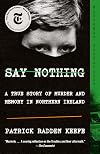
“I became intrigued by the idea that an archive of the personal reminiscences of ex-combatants might be so explosive: what was it about these accounts that was so threatening in the present day? In the intertwining lives of Jean McConville [a 38-year-old mother of 10, who was “disappeared” in 1972 by the IRA], Dolours Price [a key IRA “volunteer” involved in the 1973 London car-bomb attacks], Brendan Hughes [a prominent IRA tactician], and Gerry Adams [the enigmatic leader of Sinn show more Fein, who has repeatedly denied he was ever even a member of the IRA], I saw an opportunity to tell a story about how people become radicalized in their uncompromising devotion to a cause, and about how individuals—and a whole society—make sense of political violence once they have passed through the crucible and finally have time to reflect.”
—Patrick Radden Keefe
My maternal grandparents were from Belfast. Thankfully, they left the Northern-Irish city well before The Troubles. Growing up, I heard stories from my grandmother about her difficult, working-class childhood and youth in that conflicted, divided place, and I became familiar with the names of some of the main streets in Catholic and Protestant sections of the city. My grandmother died many years ago now, but I often wish I could talk to her. My interest in her early, formative experiences has only increased with time.
Keefe’s mosaic of a book grew out of a magazine article, “Where the Bodies Are Buried”, an extended piece he wrote for The New Yorker in 2015. Both the article and the book explore the 1972 abduction and execution of a Northern-Irish mother. Born a Catholic, Jean McConville married a Protestant 12 years her senior. He died a miserable death from lung cancer just as the political situation was heating up. Jean was left ground down by grief, poverty, and child-bearing. Some in the Provisional IRA claimed she was a British informant. The Provos—so the story goes—interrogated McConville sometime in the late fall of 1972, making it clear she was to cease and desist from providing intelligence to the enemy. IRA intimidation apparently did not dissuade her. McConville was one of 16 people who was “disappeared’ by the IRA during The Troubles. What makes her story compelling is that she was the only woman to have been abducted and murdered. She left ten kids behind. The McConville family was effectively destroyed the day masked IRA foot soldiers, neighbours of the family, dragged her from her home in the squalid Divis Flats, a housing complex in West Belfast. Most of the McConville children subsequently ended up in care. All of them would be haunted by their loss; all would struggle in life, some with addictions and trouble with the law.
Keefe’s book provides considerable context about the IRA operations and some of the key figures associated with Jean McConville’s disappearance. However, Say Nothing contains more than the story of Jean and her children. It also presents the narratives of four other key figures: Dolours and Marian Price (two sisters whose IRA involvement began with their idealistic participation in the 1969 civil rights march from Belfast to Derry—an initially peaceful demonstration that ended with a violent ambush by Protestant loyalists); Brendan Hughes (a daring and wily young IRA leader on the enemy’s most-wanted list); and the elusive (possibly sociopathic) strategist Gerry Adams (the head of the political wing of the IRA, who indisputably issued the orders).
Keefe’s wide-ranging and informative book also includes sections on major incidents during The Troubles; the differences and tensions between the Official IRA (the “Stickies”) and the newer, militant Provisional IRA (the “Provos”); the manner in which the British collected intelligence about republican operations; the secret units on both the loyalist and republican sides; the imprisonment and hunger strikes of young IRA volunteers; and the response of many in the paramilitary to the ceasefire and Good Friday Agreement, which officially ended the armed conflict. The author acknowledges in his afterward that he did not attempt to address the terrorism perpetrated by the loyalist side.
A significant portion of Keefe’s book concerns “The Belfast Project”, a possibly ill-conceived and undeniably poorly planned oral history research undertaking associated with Boston College. This project received none of the legal oversight it so obviously required. IRA and loyalist volunteers had consented in writing to being interviewed and recorded by former insiders. It was believed they’d be more likely to open up to interviewers intimately acquainted with the conflict. Many of those who’d agreed to take part were haunted by their experiences, the violence they’d perpetrated, and the secrets they’d kept. Some were eager to unburden themselves. The recordings and written transcripts, as well as documents related to interviewees’ consent, were stored in a secret archive at the Massachusetts university. The material was to be made available to scholars after the participants’ deaths. However, because the Boston College personnel responsible for the files had not exercised due diligence—i.e., they’d failed to seek legal counsel—the documents and recordings were able to be accessed by the British government before the ex-paramilitary members had died. I don’t think it’s an exaggeration to say that while all hell may not have broken loose, quite a lot of it did.
The Troubles, Keefe makes clear, have cast a long shadow over the North. Neighbourhoods and schools continue to be segregated along religious lines. “Peace wall” barricades continue to stand between Catholic and Protestant sections of Belfast, and the paramilitaries are still intact. Many former IRA members have struggled with substance abuse, unemployment, and mental health issues, including PTSD and depression.
Say Nothing is a rich, informative, and fascinating work. The only thing that bothered me was the way the book was organized. I sometimes wished that I could be led through the stories in a more orderly (chronological) fashion. Even so, I still learned a lot. I’m curious how this book is being received on the other side of the Atlantic. show less
—Patrick Radden Keefe
My maternal grandparents were from Belfast. Thankfully, they left the Northern-Irish city well before The Troubles. Growing up, I heard stories from my grandmother about her difficult, working-class childhood and youth in that conflicted, divided place, and I became familiar with the names of some of the main streets in Catholic and Protestant sections of the city. My grandmother died many years ago now, but I often wish I could talk to her. My interest in her early, formative experiences has only increased with time.
Keefe’s mosaic of a book grew out of a magazine article, “Where the Bodies Are Buried”, an extended piece he wrote for The New Yorker in 2015. Both the article and the book explore the 1972 abduction and execution of a Northern-Irish mother. Born a Catholic, Jean McConville married a Protestant 12 years her senior. He died a miserable death from lung cancer just as the political situation was heating up. Jean was left ground down by grief, poverty, and child-bearing. Some in the Provisional IRA claimed she was a British informant. The Provos—so the story goes—interrogated McConville sometime in the late fall of 1972, making it clear she was to cease and desist from providing intelligence to the enemy. IRA intimidation apparently did not dissuade her. McConville was one of 16 people who was “disappeared’ by the IRA during The Troubles. What makes her story compelling is that she was the only woman to have been abducted and murdered. She left ten kids behind. The McConville family was effectively destroyed the day masked IRA foot soldiers, neighbours of the family, dragged her from her home in the squalid Divis Flats, a housing complex in West Belfast. Most of the McConville children subsequently ended up in care. All of them would be haunted by their loss; all would struggle in life, some with addictions and trouble with the law.
Keefe’s book provides considerable context about the IRA operations and some of the key figures associated with Jean McConville’s disappearance. However, Say Nothing contains more than the story of Jean and her children. It also presents the narratives of four other key figures: Dolours and Marian Price (two sisters whose IRA involvement began with their idealistic participation in the 1969 civil rights march from Belfast to Derry—an initially peaceful demonstration that ended with a violent ambush by Protestant loyalists); Brendan Hughes (a daring and wily young IRA leader on the enemy’s most-wanted list); and the elusive (possibly sociopathic) strategist Gerry Adams (the head of the political wing of the IRA, who indisputably issued the orders).
Keefe’s wide-ranging and informative book also includes sections on major incidents during The Troubles; the differences and tensions between the Official IRA (the “Stickies”) and the newer, militant Provisional IRA (the “Provos”); the manner in which the British collected intelligence about republican operations; the secret units on both the loyalist and republican sides; the imprisonment and hunger strikes of young IRA volunteers; and the response of many in the paramilitary to the ceasefire and Good Friday Agreement, which officially ended the armed conflict. The author acknowledges in his afterward that he did not attempt to address the terrorism perpetrated by the loyalist side.
A significant portion of Keefe’s book concerns “The Belfast Project”, a possibly ill-conceived and undeniably poorly planned oral history research undertaking associated with Boston College. This project received none of the legal oversight it so obviously required. IRA and loyalist volunteers had consented in writing to being interviewed and recorded by former insiders. It was believed they’d be more likely to open up to interviewers intimately acquainted with the conflict. Many of those who’d agreed to take part were haunted by their experiences, the violence they’d perpetrated, and the secrets they’d kept. Some were eager to unburden themselves. The recordings and written transcripts, as well as documents related to interviewees’ consent, were stored in a secret archive at the Massachusetts university. The material was to be made available to scholars after the participants’ deaths. However, because the Boston College personnel responsible for the files had not exercised due diligence—i.e., they’d failed to seek legal counsel—the documents and recordings were able to be accessed by the British government before the ex-paramilitary members had died. I don’t think it’s an exaggeration to say that while all hell may not have broken loose, quite a lot of it did.
The Troubles, Keefe makes clear, have cast a long shadow over the North. Neighbourhoods and schools continue to be segregated along religious lines. “Peace wall” barricades continue to stand between Catholic and Protestant sections of Belfast, and the paramilitaries are still intact. Many former IRA members have struggled with substance abuse, unemployment, and mental health issues, including PTSD and depression.
Say Nothing is a rich, informative, and fascinating work. The only thing that bothered me was the way the book was organized. I sometimes wished that I could be led through the stories in a more orderly (chronological) fashion. Even so, I still learned a lot. I’m curious how this book is being received on the other side of the Atlantic. show less
Say Nothing is a history of The Troubles, a 30-year conflict in Northern Ireland among paramilitary forces of Republicans who wanted a united Ireland, Loyalists who wished to remain part of the United Kingdom, and the British military forces, ostensibly sent to Northern Ireland to keep the peace, but instead responsible for numerous atrocities. Keefe's narrative gives a broad overview of The Troubles and the ensuing peace process after the Good Friday Agreement of 1998. But he also focuses show more in on one incident that offers a window into the deep wounds and layers of memory of The Troubles.
In December 1972, a widowed mother of ten children, Jean McConville was abducted and murdered by the Irish Republican Army. According to the IRA, McConville was an informer for the British Army or a "tout" and was "disappeared" for her offenses. Her children were separated and suffered abuse in orphanages. As adults they continued to pursue justice for their mother.
Intertwined with the McConville story are the stories of two members of the IRA. Dolours Price, with her sister Marian, became a prominent IRA volunteer, partly because they were young, attractive women, who were imprisoned for their role in a bombing and participated in a lengthy hunger strike. Brendan Hughes was an IRA commander and military strategist who organized the Bloody Friday bombings of July 21, 1972, the IRA's biggest bombing attack in Belfast. Later, Hughes lead the first of two major hunger strikes by Republican prisoners in Long Kesh prison.
Another key figure in the book is Gerry Adams, the leader of Sinn Fein, the political party associated with the IRA. Adams is famed for his contributions to the peace process by willing to be flexible with the goals of Republican ideology. But this book reveals that he achieved his political aims by consistently denying any involvement in the IRA in the 1970s. Price and Hughes, both of whom claim they were ordered to commit atrocities by Adams, find a deep betrayal in how Adams washes his hands of guilt for the crimes they still struggle with.
A major factor in this history is The Belfast Project, an oral history project conducted in the early 2000s by Boston College. Former members of Republican and Loyalist paramilitaries (including Price and Hughes) participated in the project under the belief that the recordings would be kept secret until after their deaths. When the existence of the tapes became known, a legal battle ensued as UK authorities tried to use them to prosecute cold cases, including the murder of Jean McConville.
Keefe is an American writer with a journalistic writing style who offers empathy (but not without judgment) for the many figures in the history. The narrator, Matthew Blaney, lends an authentic Northern Ireland voice to the narrative. show less
In December 1972, a widowed mother of ten children, Jean McConville was abducted and murdered by the Irish Republican Army. According to the IRA, McConville was an informer for the British Army or a "tout" and was "disappeared" for her offenses. Her children were separated and suffered abuse in orphanages. As adults they continued to pursue justice for their mother.
Intertwined with the McConville story are the stories of two members of the IRA. Dolours Price, with her sister Marian, became a prominent IRA volunteer, partly because they were young, attractive women, who were imprisoned for their role in a bombing and participated in a lengthy hunger strike. Brendan Hughes was an IRA commander and military strategist who organized the Bloody Friday bombings of July 21, 1972, the IRA's biggest bombing attack in Belfast. Later, Hughes lead the first of two major hunger strikes by Republican prisoners in Long Kesh prison.
Another key figure in the book is Gerry Adams, the leader of Sinn Fein, the political party associated with the IRA. Adams is famed for his contributions to the peace process by willing to be flexible with the goals of Republican ideology. But this book reveals that he achieved his political aims by consistently denying any involvement in the IRA in the 1970s. Price and Hughes, both of whom claim they were ordered to commit atrocities by Adams, find a deep betrayal in how Adams washes his hands of guilt for the crimes they still struggle with.
A major factor in this history is The Belfast Project, an oral history project conducted in the early 2000s by Boston College. Former members of Republican and Loyalist paramilitaries (including Price and Hughes) participated in the project under the belief that the recordings would be kept secret until after their deaths. When the existence of the tapes became known, a legal battle ensued as UK authorities tried to use them to prosecute cold cases, including the murder of Jean McConville.
Keefe is an American writer with a journalistic writing style who offers empathy (but not without judgment) for the many figures in the history. The narrator, Matthew Blaney, lends an authentic Northern Ireland voice to the narrative. show less

I came to this with eyes open, willing to give the Sackler's the benefit of the doubt and recognize journalistic techniques that cherry picks the bad and ignores the good for the purpose of story. Indeed, some of that goes on here. Nevertheless, the evidence is damning. The Sacklers knew from the start OxyContin is addictive and destroyed lives, they had a limited amount of time to push opioids before they would be forced to stop. They cynically hauled in as much cash as possible, all the show more while denying. It is a smaller version of the tobacco and fossil fuel situation, played out over a compressed time frame because the drug is so devastating. The book is unsatisfying in the end because there is no resolution, the Sacklers are still free and have billions hidden away. But the case goes on. The family is currently fleeing to Western Europe (London, Switzerland) to live a discreet life with private banking. Can they be brought to justice? The writing is top notch, expect a Pulitzer contender and/or optioned. show less
Best for:
Those interested in how corporations and the government have failed us. Those who enjoy a little bit of schadenfreude (though, in my opinion, not nearly enough).
In a nutshell:
The Sackler family, obsessed with their reputation and ‘good name,’ help 400,000 people to their deaths via the opioid epidemic.
Why I chose it:
I loved the author’s book ‘Say Nothing’ about The Troubles in Northern Ireland and searched for other work. Saw this was being released in April so ordered it show more right away.
Review:
What is a name, really? Is philanthropy truly a gift if it comes with so many strings, including the need to have one’s name splashed across all the things? How do we hold accountable the leaders of corporations that cause pain and suffering for millions?
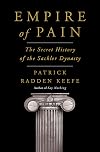
Author Keefe explores all these themes in his excellent book that focuses on the Sackler family, the name behind the billion-dollar pain empire via one of the ventures they chose not to put their name on, Purdue Pharma. If you’re not familiar, Purdue Pharma patented OxiContin, the extraordinarily strong opioid pain reliever introduced in the 1990s.
The book opens with a deposition in the late 2010s, but immediately jumps back to the early 1900s so we can follow three generations of the Sackler family, starting with boys Arthur, Raymund, and Mortimer. Arthur took the lead as the first born to take a bunch of jobs, supporting his family. He and his brothers all went to medical school, and all married (some of them multiple times). Over time Arthur especially starts to build the empire with medical marketing, then the purchase of Purdue Frederick and Purdue Pharma.
Each successive generation seems to be obsessed with putting their names on EVERYTHING. It kind of reminds me of the Trump family - there’s just this deep, almost pathological, need to piss all over the place. I don’t understand obsessions with names and legacy. Maybe it’s because I’m not having kids? To my mind, one’s legacy should be doing good things because they should be done, not because one wants credit and a fancy plaque at the entrance to a museum gallery.
The Sacklers do not ever get what they deserve - though the very last chapter does have a slight sense of comeuppance. They are helped in many ways by the FDA — who should have shut down OxiContin’s claims from the start — but also by the Trump DOJ, who chose not the prosecute the individual family members in addition to the privately owned company. The family made billions off of the addiction of others, essentially creating not just the opioid epidemic but, when they changed the formulation, helping push those individuals on to heroin.
They are evil. And while they do get to sleep on their giant pillows of ill-gotten money, at least one thing is now true: they have completely ruined the name they hold so dear. Museums and universities they donated to have started to strip their name from it (the Louvre, most notably, as well as medical programs at NYU and Tufts), as they don’t want to be associated with such immoral, vile individuals. But it still won’t bring back the lives lost at their hands.
Keep it / Pass to a Friend / Donate it / Toss it:
Pass to a Friend show less
Those interested in how corporations and the government have failed us. Those who enjoy a little bit of schadenfreude (though, in my opinion, not nearly enough).
In a nutshell:
The Sackler family, obsessed with their reputation and ‘good name,’ help 400,000 people to their deaths via the opioid epidemic.
Why I chose it:
I loved the author’s book ‘Say Nothing’ about The Troubles in Northern Ireland and searched for other work. Saw this was being released in April so ordered it show more right away.
Review:
What is a name, really? Is philanthropy truly a gift if it comes with so many strings, including the need to have one’s name splashed across all the things? How do we hold accountable the leaders of corporations that cause pain and suffering for millions?
Author Keefe explores all these themes in his excellent book that focuses on the Sackler family, the name behind the billion-dollar pain empire via one of the ventures they chose not to put their name on, Purdue Pharma. If you’re not familiar, Purdue Pharma patented OxiContin, the extraordinarily strong opioid pain reliever introduced in the 1990s.
The book opens with a deposition in the late 2010s, but immediately jumps back to the early 1900s so we can follow three generations of the Sackler family, starting with boys Arthur, Raymund, and Mortimer. Arthur took the lead as the first born to take a bunch of jobs, supporting his family. He and his brothers all went to medical school, and all married (some of them multiple times). Over time Arthur especially starts to build the empire with medical marketing, then the purchase of Purdue Frederick and Purdue Pharma.
Each successive generation seems to be obsessed with putting their names on EVERYTHING. It kind of reminds me of the Trump family - there’s just this deep, almost pathological, need to piss all over the place. I don’t understand obsessions with names and legacy. Maybe it’s because I’m not having kids? To my mind, one’s legacy should be doing good things because they should be done, not because one wants credit and a fancy plaque at the entrance to a museum gallery.
The Sacklers do not ever get what they deserve - though the very last chapter does have a slight sense of comeuppance. They are helped in many ways by the FDA — who should have shut down OxiContin’s claims from the start — but also by the Trump DOJ, who chose not the prosecute the individual family members in addition to the privately owned company. The family made billions off of the addiction of others, essentially creating not just the opioid epidemic but, when they changed the formulation, helping push those individuals on to heroin.
They are evil. And while they do get to sleep on their giant pillows of ill-gotten money, at least one thing is now true: they have completely ruined the name they hold so dear. Museums and universities they donated to have started to strip their name from it (the Louvre, most notably, as well as medical programs at NYU and Tufts), as they don’t want to be associated with such immoral, vile individuals. But it still won’t bring back the lives lost at their hands.
Keep it / Pass to a Friend / Donate it / Toss it:
Pass to a Friend show less
Lists
Non-Fiction (1)
Bina's reviews (1)
. (1)
To Read (1)
Ireland (1)
Best Audiobooks (1)
True Crime (1)
2024 (1)
Books for Birute (1)
Obama Reads (1)
Awards


You May Also Like


Associated Authors
Statistics
- Works
- 9
- Also by
- 1
- Members
- 7,808
- Popularity
- #3,120
- Rating
- 4.3
- Reviews
- 291
- ISBNs
- 119
- Languages
- 10
- Favorited
- 7


