
Forty Thousand in Gehenna
by C. J. Cherryh
Unionside (1), Alliance-Union Universe: The Era of Rapprochement, Alliance-Union Universe: Publication (11), Alliance-Union Universe (11 (Unionside 01))
On This Page
Description
The 40,000 colonists on Gehenna are abandoned for political reasons. The descendants become partners with the planet's native intelligence--the lizard like, burrowing Calibans.Tags
Recommendations
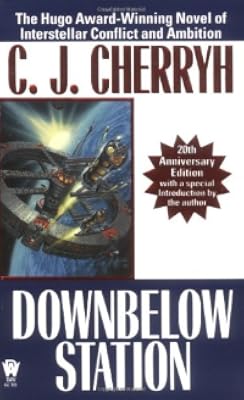

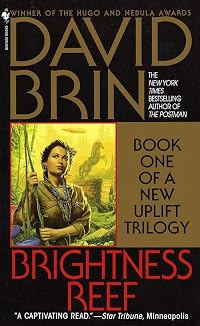
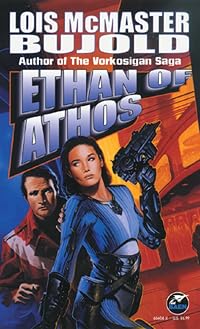
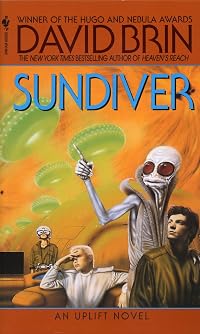















Member Recommendations

Member Reviews
I think of C J Cherryh as early Andre Norton SF but for adults. There's a tight focus on characters' life stories, growth through adversity, played out in detailed cultural contexts based on classic SF tropes of (mostly) human expansion to other planets. Anthropological SF is how I've always thought of Norton and how I think of Cherryh, at least in many of her 60 some books. Forty Thousand in Gehennah is an excellent example. It is a multi-generational tale, documenting the development of a mixed human-alien culture on an abandoned colony, told in several distinct arcs, beginning with the original settlement, then a transitional period, then the longest and primary story where what has evolved is revealed through several parallel show more clashes of cultures, both internal and external. Times are pretty tough for everyone throughout the book. While I wouldn't call this a dark book, it is dimly lit. But characters never give up and there are victories along the way. Recommended. show less
Found this at the annual C.H. Booth Library book sale. It's a standalone in the Alliance-Union Universe of which Downbelow Station is probably the most well-known. Having recently read The Pride of Chanur, I was curious to read something else by C.J. Cherryh. Unfortunately, this one wasn't as enjoyable.
The book is essentially divided into three parts: the founding of the colony by the Union and its demise, re-contact with the descendants of the survivors by the Alliance, and the rise of the Gehennan civilization. The first section starts out dull and then fades into a depressing morass of doom. The middle section is ok, but every time an interesting character comes onto the scene, their time on the stage is too short. The last section show more proves to be the best as not only do the characters stick around, but we get to learn about how humans and calibans have interacted to build their civilization together.
I think this book would've been better if Cherryh eliminated that first section altogether and just summed it up in a briefing of Alliance sociologists or had them figure things out as a mystery.
The majority of the colonists were azi, programmable clones. The azi got their skills uploaded into them via "tapes." While they didn't have a choice as to whether they would go to Gehenna or not, they were promised that they could live like "born men" and have children of their own. While it was a promise that was kept, eking out a life on Gehenna proved difficult as the climate was tough on both man and machine and the supply ships never came.
The first section of the book spent a great deal of time on them, even looked into the life of one of them, Jin. When the clones have children, they lack their parents' reverence and obedience. You could say that they're rebellious, or that, being smarter than their parents, they realize that they've been screwed over.
But that final section is where Cherryh really shines. The dynamics of the human-caliban relationship is brought to fore. It's a complex one as human leaders interact differently with the calibans than the weirds do. While it might seem like a caste society, genetics are the true determination. The "first" among a tower will quite likely have a child that shows the characteristics of a weird. The calibans have their own battles for dominance based on color and size. And calibans play a large role in human politics.
But getting to this last part required a lot of patience from me. While some readers have plenty of patience, other potential readers might not. If you're the type of person that can hold out for 100+ pages, you have a chance. If you're not, well...
Two-star start. Three-star middle. Four-star finish. So, three stars overall. show less
The book is essentially divided into three parts: the founding of the colony by the Union and its demise, re-contact with the descendants of the survivors by the Alliance, and the rise of the Gehennan civilization. The first section starts out dull and then fades into a depressing morass of doom. The middle section is ok, but every time an interesting character comes onto the scene, their time on the stage is too short. The last section show more proves to be the best as not only do the characters stick around, but we get to learn about how humans and calibans have interacted to build their civilization together.
I think this book would've been better if Cherryh eliminated that first section altogether and just summed it up in a briefing of Alliance sociologists or had them figure things out as a mystery.
The majority of the colonists were azi, programmable clones. The azi got their skills uploaded into them via "tapes." While they didn't have a choice as to whether they would go to Gehenna or not, they were promised that they could live like "born men" and have children of their own. While it was a promise that was kept, eking out a life on Gehenna proved difficult as the climate was tough on both man and machine and the supply ships never came.
The first section of the book spent a great deal of time on them, even looked into the life of one of them, Jin. When the clones have children, they lack their parents' reverence and obedience. You could say that they're rebellious, or that, being smarter than their parents, they realize that they've been screwed over.
But that final section is where Cherryh really shines. The dynamics of the human-caliban relationship is brought to fore. It's a complex one as human leaders interact differently with the calibans than the weirds do. While it might seem like a caste society, genetics are the true determination. The "first" among a tower will quite likely have a child that shows the characteristics of a weird. The calibans have their own battles for dominance based on color and size. And calibans play a large role in human politics.
But getting to this last part required a lot of patience from me. While some readers have plenty of patience, other potential readers might not. If you're the type of person that can hold out for 100+ pages, you have a chance. If you're not, well...
Two-star start. Three-star middle. Four-star finish. So, three stars overall. show less
A hard, disturbing, read, and it's impossible not to draw parallels with the history of anthropological science and it's studies of human settlements here on Earth.
Is it possible to only observe, without interfering with the culture/s you're observing? It seems to me that the answer is 'no', not if the studied knows they are being observed. Of course this is not based on this book, but it seems Cherryh shares this belief.
Into this mix Cherryh also pours a measure of interstellar/international politics, and the gender perspective - how do the way we look at ourselves, and our unquestioned prejudices, in the form of basic non-reflected tenets, within our own culture, affect they way we perceive others?
And what ARE the calibans? The story show more is told like a chronicle, but written from a present tense perspective, and so it unravels step by step.
Haunting. Provocative. I'd advice reading it. If you dare. show less
Is it possible to only observe, without interfering with the culture/s you're observing? It seems to me that the answer is 'no', not if the studied knows they are being observed. Of course this is not based on this book, but it seems Cherryh shares this belief.
Into this mix Cherryh also pours a measure of interstellar/international politics, and the gender perspective - how do the way we look at ourselves, and our unquestioned prejudices, in the form of basic non-reflected tenets, within our own culture, affect they way we perceive others?
And what ARE the calibans? The story show more is told like a chronicle, but written from a present tense perspective, and so it unravels step by step.
Haunting. Provocative. I'd advice reading it. If you dare. show less
This book is set in Cherryh's Union-Alliance Universe, but stands alone very well. Don't feel like you need to read anything else to enjoy this one, and enjoy it you will!
The basic premise doesn't seem very original - new colony starting out a fresh inviting earth type planet. It quickly departs from the expected and turns darker. From the way the 'azi' are transported and the rest of the colony shipped out to the reasons for the colony's very existence it's unsettling and thought provoking.
It continues on for the next 200 years without ever losing the darker edge.
It's not space opera moving the plot along with Hollywood abandon, but it's also not as 'meta' and internalized as many of Cherryh's other novels often are. A long book split show more into eight major parts, I suspect it was originally conceived as a trilogy or at least multiple novels, and then pared back. My biggest criticism of the whole book is the uneven transitions between some of those parts, which is only partially covered up by the change of characters and generations.
Start to finish it's a rewarding narrative of the rise of new culture from the mismatched building blocks of several old ones. Worth reading more than once. show less
The basic premise doesn't seem very original - new colony starting out a fresh inviting earth type planet. It quickly departs from the expected and turns darker. From the way the 'azi' are transported and the rest of the colony shipped out to the reasons for the colony's very existence it's unsettling and thought provoking.
It continues on for the next 200 years without ever losing the darker edge.
It's not space opera moving the plot along with Hollywood abandon, but it's also not as 'meta' and internalized as many of Cherryh's other novels often are. A long book split show more into eight major parts, I suspect it was originally conceived as a trilogy or at least multiple novels, and then pared back. My biggest criticism of the whole book is the uneven transitions between some of those parts, which is only partially covered up by the change of characters and generations.
Start to finish it's a rewarding narrative of the rise of new culture from the mismatched building blocks of several old ones. Worth reading more than once. show less
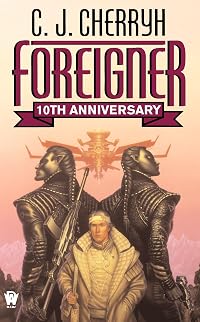
The was originally published in 1983, making it one of Cherryh's earlier works, and it is easy to see the development of many themes that Cherryh later mines for gold in the "Foreigner" series: the epic sweep of nations and politics, human/alien cultural divides, and individual endurance (in fact, it is easy to compare 40,000 to Foreigner, as the last half of the book centers around the observations and experiences of a "starman diplomat" to the native Gehennans). This is a book to savor, not just for Cherryh's excellent use of language and descriptions, but because of the hugeness of the story, which covers several hundred years of history and the lives of many characters.
It is an eminently satisfying read, and as usual Cherryh brings show more to life not only the human characters in all their glory and with all their faults (her humans are always, always genuinely, humanly flawed) but also the alien "dragons" of Gehenna, who are fascinating but truly otherworldly creatures. show less
It is an eminently satisfying read, and as usual Cherryh brings show more to life not only the human characters in all their glory and with all their faults (her humans are always, always genuinely, humanly flawed) but also the alien "dragons" of Gehenna, who are fascinating but truly otherworldly creatures. show less
A really excellent first contact/alien vs. human settlement book. An unusual group of 'human' settlers is sent to Gehenna, the home of what seem to be non-intelligent dinosaur like creatures. This is truly speculative fiction, the focus here is not on technology, but on what happens to humans when faced with a new world and a new species. Very well written and well conceived. This is not a long epic, significant parts of it are actually lectures, reports or short communications, but it gets the job done very well.
I have generally liked or loved just about everything I’ve ready by Cherryh. This one is a multi generational tale of a large group of colonists who are planted on a distant planet with expectations of follow-up supplies and support but then abandoned for political reasons. The book has some interesting ideas, but was overall a bit of a mixed bag. I would say it offered a promising if slow beginning, a boring middle, and strong if flawed ending.
For me the strengths of this book are the truly alien aliens and a satisfying if not particularly believable conclusion (in which the humans are revealed to have overestimated the extent to which they were running the show).
I would say that the book's biggest weakness is characterization (which show more is surprising, because I usually think Cherryh’s science fiction shines because of its complicated and deep characters). To some extent that is perhaps an inevitable challenge in a book which spends much of its length generation hopping. But even when the book slows down in the final section to focus on the Jin – Genley – Elai – McGee quadrangle, it seems that these characters exist more as vehicles to take the plot where Cherryh wants it to go than as convincing characters with whom I could empathize. Also, I never really understood the fifth column…or was there even a fifth column?
Still, worth your time. show less
For me the strengths of this book are the truly alien aliens and a satisfying if not particularly believable conclusion (in which the humans are revealed to have overestimated the extent to which they were running the show).
I would say that the book's biggest weakness is characterization (which show more is surprising, because I usually think Cherryh’s science fiction shines because of its complicated and deep characters). To some extent that is perhaps an inevitable challenge in a book which spends much of its length generation hopping. But even when the book slows down in the final section to focus on the Jin – Genley – Elai – McGee quadrangle, it seems that these characters exist more as vehicles to take the plot where Cherryh wants it to go than as convincing characters with whom I could empathize. Also, I never really understood the fifth column…or was there even a fifth column?
Still, worth your time. show less
Members
- Recently Added By
Published Reviews
ThingScore 100
"Cherryh tantalizes our minds with these enigmatic aliens, captures our hearts with her characters and involves us completely with her mix of broad and narrow views of a new culture’s rise. Once again, Cherryh proves herself a consistently thoughtful and entertaining writer"
added by lquilter
Lists

Favorite Science Fiction by Women Authors
737 works; 202 members

Best Science Fiction Novels
816 works; 430 members

Best First Contact Stories
33 works; 16 members

Space Colonization
100 works; 26 members

Books Read in 2019
4,052 works; 108 members
Author Information

256+ Works 74,874 Members
A multiple award-winning author of more than thirty novels, C. J. Cherryh received her B.A. in Latin from the University of Oklahoma, and then went on to earn a M.A. in Classics from Johns Hopkins University. Cherryh's novels, including Tripoint, Cyteen, and The Pride of Chanur, are famous for their knife-edge suspense and complex, realistic show more characters. Cherryh won the John W. Campbell Award for Best New Writer in 1977. She was also awarded the Hugo Award for her short story Cassandra in 1979, and the novels Downbelow Station in 1982 and Cyteen in 1989. (Bowker Author Biography) show less
Some Editions
Series

Unionside
3 works (1)

Alliance-Union Universe: The Era of Rapprochement
2 works

Alliance-Union Universe: Publication
34 works (11)

Alliance-Union Universe
39 works (11 (Unionside 01))
Belongs to Publisher Series
DAW Book Collectors (593)
Work Relationships
Is contained in
Is a reply to
Common Knowledge
- Canonical title
- Forty Thousand in Gehenna
- Original publication date
- 1983-10
- People/Characters
- Ada P. Beaumont (Captain, lieutenant general); James A. Conn (Colonel, governor general); Bob Davies (Ada Beaumont's husband); Mary Engles (captain, US Venture); Jane Flanahan-Gutierrez; Kate Flanahan (show all 29); Peter T. Gallin (Major); Green (son of Jin 458-9998); Marco X. Gutierrez (biologist); Matthew R. Mayes (specialist); Eron 678-4578 Miles (ex-azi); Jin 458-9998 (azi); Jin 2 (son of Jin 458-9998, Jin Younger); Pia 86-687 (azi); Pia 2 (daughter of Pia 86-687, Pia Younger, Ma Pia); Carl Ebron (Alliance scientist); Chandra Cartier (Alliance scientist); Cina Kendrick (Alliance scientist); Dain; Din; Elai; Ellai Eldest; Ellai Ellai's-daughter; Jin 12; Elizabeth McGee (MaGee); Paeia; Scar (caliban); Sun (caliban); Walker (caliban)
- Important places
- Gehenna (planet, Gehenna II); Cyteen Station (space station); US Venture (starship); Main Base, Gehenna; Cloud River Settlement, Gehenna; Styx River Settlement, Gehenna
- First words
- T-190 hours
Communication, Union Ministry of Defense,
to US Venture
in dock at Cyteen Station
ORIG: CYTHQ/MINDEF/CODE111A/USVENTURE
ATTN: Mary Engles, capt. US VENTURE
Accept cod... (show all)ed packet; navigation instructions contained herein. - Quotations
- There were photofaxes on the office walls, ships and faces, some of the photos scarred and scratched. Faces and uniforms. He had a gallery like that in his own duffle. The desk had a series of pictures of a young man, battere... (show all)d and murky. He was not about to ask. The photos never showed him older. He thought of Jean with a kind of grayness inside...had known a moment of panic, the realization of his parting from Cyteen, boarding another ship, leaving the places Jean had known, going somewhere her memory did not even exist.
- Last words
- (Click to show. Warning: May contain spoilers.)So they would go and see.
Classifications
Statistics
- Members
- 1,192
- Popularity
- 20,891
- Reviews
- 24
- Rating
- (3.78)
- Languages
- English, German, Italian
- Media
- Paper, Ebook
- ISBNs
- 9
- ASINs
- 12