On This Page
Description
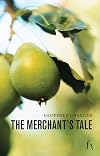
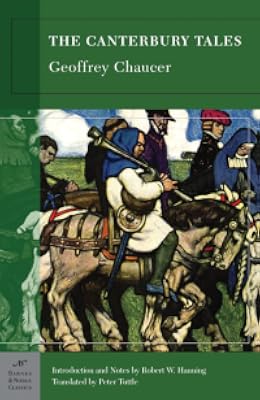
A well-established and respected series. Texts are in the original Middle English, and each has an introduction, detailed notes and a glossary. Selected titles are also available as CD recordings.Tags
Recommendations
























Member Reviews
Sweet and sour together can be better than either alone.
The Merchant's Tale is not one of the more popular Canterbury Tales, and rightly so. It might almost be called an anti-romance: Old January buys a wife, young May cheats on him, January discovers it but is tricked into believing it didn't happen. No one comes out well.
And yet, it fits well into the Canterbury framework, as Chaucer seems to be exploring what makes marriages work well. The Wife of Bath argues for men obeying women, the Clerk argues for women obeying men, the Merchant argues that May-January matches don't work -- and finally the Franklin points out that good marriages are just that: Good. They work by cooperation. Not everyone agrees that Chaucer was trying to make show more this point, but many do, and in that argument, the Merchant's Tale has an important place.
And this little book, although it cannot include the Wife's or Clerk's or Franklin's tales, brings out that point in the introduction, so that we can be aware of what we are getting ourselves into. It looks at the other tales on the topic, it looks at sources, it supplies historical context based on the horrid opinion many men of the time had of women. (An opinion Chaucer, happily, did not share.) Then it presents the Tale.
The presentation is not perfect. Many readers may miss the glosses found in more popular editions. And while there are extensive notes, there are no indications in the text to tell the reader which sections have explanations. Still, this is a good and useful book on a rather difficult topic. show less
The Merchant's Tale is not one of the more popular Canterbury Tales, and rightly so. It might almost be called an anti-romance: Old January buys a wife, young May cheats on him, January discovers it but is tricked into believing it didn't happen. No one comes out well.
And yet, it fits well into the Canterbury framework, as Chaucer seems to be exploring what makes marriages work well. The Wife of Bath argues for men obeying women, the Clerk argues for women obeying men, the Merchant argues that May-January matches don't work -- and finally the Franklin points out that good marriages are just that: Good. They work by cooperation. Not everyone agrees that Chaucer was trying to make show more this point, but many do, and in that argument, the Merchant's Tale has an important place.
And this little book, although it cannot include the Wife's or Clerk's or Franklin's tales, brings out that point in the introduction, so that we can be aware of what we are getting ourselves into. It looks at the other tales on the topic, it looks at sources, it supplies historical context based on the horrid opinion many men of the time had of women. (An opinion Chaucer, happily, did not share.) Then it presents the Tale.
The presentation is not perfect. Many readers may miss the glosses found in more popular editions. And while there are extensive notes, there are no indications in the text to tell the reader which sections have explanations. Still, this is a good and useful book on a rather difficult topic. show less
Ratings
Members
- Recently Added By
Author Information

461+ Works 45,745 Members
Geoffrey Chaucer, one of England's greatest poets, was born in London about 1340, the son of a wine merchant and deputy to the king's butler and his wife Agnes. Not much is known of Chaucer's early life and education, other than he learned to read French, Latin, and Italian. His experiences as a civil servant and diplomat are said to have show more developed his fascination with people and his knowledge of English life. In 1359-1360 Chaucer traveled with King Edward III's army to France during the Hundred Years' War and was captured in Ardennes. He returned to England after the Treaty of Bretigny when the King paid his ransom. In 1366 he married Philippa Roet, one of Queen Philippa's ladies, who gave him two sons and two daughters. Chaucer remained in royal service traveling to Flanders, Italy, and Spain. These travels would all have a great influence on his work. His early writing was influenced by the French tradition of courtly love poetry, and his later work by the Italians, especially Dante, Boccaccio, and Petrarch. Chaucer wrote in Middle English, the form of English used from 1100 to about 1485. He is given the designation of the first English poet to use rhymed couplets in iambic pentameter and to compose successfully in the vernacular. Chaucer's Canterbury Tales is a collection of humorous, bawdy, and poignant stories told by a group of fictional pilgrims traveling to the shrine of St. Thomas a Becket. It is considered to be among the masterpieces of literature. His works also include The Book of the Duchess, inspired by the death of John Gaunt's first wife; House of Fame, The Parliament of Fowls, and The Legend of Good Women. Troilus and Criseyde, adapted from a love story by Boccaccio, is one of his greatest poems apart from The Canterbury Tales. Chaucer died in London on October 25, 1400. He was buried in Westminster Abbey, in what is now called Poet's Corner. (Bowker Author Biography) show less
Series

Belongs to Publisher Series
Work Relationships
Is contained in
Has as a student's study guide
Common Knowledge
- Canonical title
- The Merchant's Tale
- Original publication date
- 1966; 1968 (corrected impression) (corrected impression); 1975 (appendix on astronomical influences) (appendix on astronomical influences)
- People/Characters
- Geoffrey Chaucer; The Merchant; Januarie; January; May
- Important places
- Garden of Love
- Important events
- Middle Ages
- Dedication
- FOR
GODFREY HARRISON - First words
- INTRODUCTION
It has become an axiom in the criticism of Chaucer's Tales that the teller himself shall be implicit in the tale he tells, and that the two shall be interdependent.
Classifications
Statistics
- Members
- 117
- Popularity
- 278,197
- Reviews
- 1
- Rating
- (3.37)
- Languages
- English
- Media
- Paper, Audiobook
- ISBNs
- 10