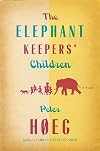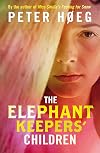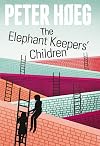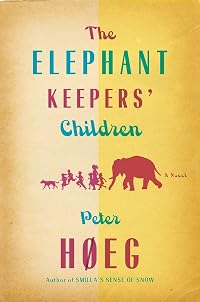
The Elephant Keepers' Children
by Peter Høeg
On This Page
Description
Told from the perspective of precocious fourteen-year-old Peter, The Elephant Keepers' Children is about three siblings and how they deal with life alongside their eccentric parents. Peter's father is a vicar, his mother an artisan, and both are equally and profoundly devout. The family lives on the fictional island of Finø, where people of all faiths coexist peacefully. Yet nothing is at it seems.When Peter's parents suddenly go missing, Peter and his siblings fear the worst—has show more their parents' relentless quest to boost church attendance finally put them in danger? Told with poignancy and humor, The Elephant Keepers' Children is a fascinating exploration of fundamentalism versus spiritual freedom, the vicissitudes of romantic and familial love, and the triumph of the human spirit.
. show less
Tags
Recommendations
















Member Reviews
This left me breathless. 14 year old son Peter narrates and Peter conveys all that is on his mind, nearly as soon as it comes to mind, narration like a tide that at times you wonder when you will be able to catch a breath. This is a wonderful coming of age story filled with action, adventure, mysticism, and world religion, the still quiet voice within and what lies beyond the loneliness one can feel in a room full of people one loves and of course, the Elephant in the room. Stunning, funny, thought provoking, and sweet. I think I'll carry it with me for a while.
I feel a little guilty giving this one star, because I think part of my dislike is that it pushes my personal taste buttons. Despite that, there's just too much wrong with this book. It is an overwritten mess that tries much too hard to be clever. It's meant to be fantastical, but instead is just irritating. Some authors manage to pull off children who know too much, clever names, zany characters, religion, and goodness knows what else... but stuffing it all into one novel with endless sentences is a tall order for the best novelist.
I made myself finish it on principle. If I were not so stubborn, I would have given up in despair.
I made myself finish it on principle. If I were not so stubborn, I would have given up in despair.
I think it took a genius to write this book and make it readable, likeable and fun. It could easily have been a book tossed into the dustbin. The story mocks every convention of modern society in tongue-in-cheek ways with hilarious plays on words even with the names of characters and places, some almost unintelligible in the audio addition because they are so foreign sounding.
The book is unusual in that it is not addressing the reader at large, but is supposed to be a private conversation between Peter (Petrus), the narrator, and the reader, you, and it feels that way, as well. You are engaged in a private conversation, almost outside the boundaries of the book.
The Fino children, Hans, Tilte, Peter (in order of their age), and Basker show more III (the dog), all reside on the island called Fino, in Denmark. The children are pranksters who have mastered the art of deception. They come from a strange background of characters, a hump-backed great-grandmother and parents who could easily be considered good-natured charlatans, who have been leaders in their Church. Their Father is the “miracle-making” pastor who leads services in which there are magical occurences and mother plays the organ and is a craftswoman, as well. She is multi-talented. All residents have many jobs since they live in a very small town, and she is no exception. Their jobs are often contradictory in nature, making the reader chuckle under their breath, as the thief may be the one in charge of the alarm systems and the person of religion may be dispensing advice on debauchery.
The head of the school is Alexander Beastly Flounderblood, aptly named, as is Leonora Ticklepalate who in Tibetan nun’s habit, lives the life of a monk while giving telephone advice about various sexual exploits. Basker III is the third in a line of hounds named after the supernatural hound in the book, The Hound of the Baskervilles. Tilte is the 16 year old sister of Petrus and Hans, whose spiritual nature and cleverness can have a mesmerizing effect on everyone, in essence tilting the world her way. She discovered that there is a door that exists within everyone that leads to freedom.
There are so many characters and their names are double entendres that also indicate their background. The reader will simply smile as Polly Pigonia comes to life on the page. She had a pig farm which she has turned into an ashram. Finn Flatfoot is the local policeman, Svend Sewerman was a builder of sewers, Pallas Athene is a goddess who runs a brothel. Is Peter the rock and is Hans a metaphor for Jesus, with Pallas Athene, his Mary Magdalene? Within the witty dialogue and the use of sleight of hand in this fantasy, there is also a serious message hidden, and it is apparent at the end, more than anywhere else, in Peter’s final words.
Peter wants to tell you, the reader, about the door to the room. “The self is a room inside the prison”. He wants to show you how to escape the prison which is our self. Within us there are rooms of joy and sorry, pain and pleasure. If we move outside the room, through the door, and we don’t think, we can let go of our baggage and become free. Within each of us is also an elephant which can be a dream, a burden an unfulfilled hope, both good and bad. Sometimes we have to let go of that elephant as well. Peter can see the elephant within. Does the reader also see the elephants people carry with them? When we stop thinking and walk through that door, is that the meaning of life or the end of it? What is the true escape?
This is not a book for everyone. Reading this is a trip into a world of madness, nonsense, mystery, romance, subterfuge, silliness, crime, religion, right and wrong, terrorism and bravery, and they are all mocked by the author. The book arouses so many conflicting thoughts in the reader, but the book is never overbearing. It turns all trials into triumphs, all tragedies into happy endings. The reader will wonder if it is not, perhaps, really about the meaning of life, on its serious level, even as it mocks all of society’s conventions, all of the religions, all of the mores, all of the people in power. One has to take the time to ferret out the true meaning of the tale and of each word, sentence and name, in order to discover the inner message of the author and not just be influenced by the lightness of the plot through the use of trompe l’oeill. There is much more to the story than meets the eye. Is everyone flawed, in a prison of their own making, or has the world created the prison for them? show less
The book is unusual in that it is not addressing the reader at large, but is supposed to be a private conversation between Peter (Petrus), the narrator, and the reader, you, and it feels that way, as well. You are engaged in a private conversation, almost outside the boundaries of the book.
The Fino children, Hans, Tilte, Peter (in order of their age), and Basker show more III (the dog), all reside on the island called Fino, in Denmark. The children are pranksters who have mastered the art of deception. They come from a strange background of characters, a hump-backed great-grandmother and parents who could easily be considered good-natured charlatans, who have been leaders in their Church. Their Father is the “miracle-making” pastor who leads services in which there are magical occurences and mother plays the organ and is a craftswoman, as well. She is multi-talented. All residents have many jobs since they live in a very small town, and she is no exception. Their jobs are often contradictory in nature, making the reader chuckle under their breath, as the thief may be the one in charge of the alarm systems and the person of religion may be dispensing advice on debauchery.
The head of the school is Alexander Beastly Flounderblood, aptly named, as is Leonora Ticklepalate who in Tibetan nun’s habit, lives the life of a monk while giving telephone advice about various sexual exploits. Basker III is the third in a line of hounds named after the supernatural hound in the book, The Hound of the Baskervilles. Tilte is the 16 year old sister of Petrus and Hans, whose spiritual nature and cleverness can have a mesmerizing effect on everyone, in essence tilting the world her way. She discovered that there is a door that exists within everyone that leads to freedom.
There are so many characters and their names are double entendres that also indicate their background. The reader will simply smile as Polly Pigonia comes to life on the page. She had a pig farm which she has turned into an ashram. Finn Flatfoot is the local policeman, Svend Sewerman was a builder of sewers, Pallas Athene is a goddess who runs a brothel. Is Peter the rock and is Hans a metaphor for Jesus, with Pallas Athene, his Mary Magdalene? Within the witty dialogue and the use of sleight of hand in this fantasy, there is also a serious message hidden, and it is apparent at the end, more than anywhere else, in Peter’s final words.
Peter wants to tell you, the reader, about the door to the room. “The self is a room inside the prison”. He wants to show you how to escape the prison which is our self. Within us there are rooms of joy and sorry, pain and pleasure. If we move outside the room, through the door, and we don’t think, we can let go of our baggage and become free. Within each of us is also an elephant which can be a dream, a burden an unfulfilled hope, both good and bad. Sometimes we have to let go of that elephant as well. Peter can see the elephant within. Does the reader also see the elephants people carry with them? When we stop thinking and walk through that door, is that the meaning of life or the end of it? What is the true escape?
This is not a book for everyone. Reading this is a trip into a world of madness, nonsense, mystery, romance, subterfuge, silliness, crime, religion, right and wrong, terrorism and bravery, and they are all mocked by the author. The book arouses so many conflicting thoughts in the reader, but the book is never overbearing. It turns all trials into triumphs, all tragedies into happy endings. The reader will wonder if it is not, perhaps, really about the meaning of life, on its serious level, even as it mocks all of society’s conventions, all of the religions, all of the mores, all of the people in power. One has to take the time to ferret out the true meaning of the tale and of each word, sentence and name, in order to discover the inner message of the author and not just be influenced by the lightness of the plot through the use of trompe l’oeill. There is much more to the story than meets the eye. Is everyone flawed, in a prison of their own making, or has the world created the prison for them? show less
Peter and Tilte are visiting their older brother Hans, when they are informed that their parents have disappeared. The authorities are very keen on keeping them under custody, but the teens have other plans. Tilte's extraordinary people skills and Peter's eye for game (developed at football field) help them scheme, cheat and masquerade their way from home to Copenhagen, where everything comes to an explosive end at an assembly of all the religions in the world.
I enjoyed this book immensely. It's humorous and fast paced, with ideas and characters so extreme that the novel is bordering magical realism and carnivalism. It doesn't lack depth, either. Peter, the narrator of the story, happily shares with us his thoughts and wisdom concerning show more things like death, happiness, true love and those pesky inner elephants that make individuals pursue greatness. show less
I enjoyed this book immensely. It's humorous and fast paced, with ideas and characters so extreme that the novel is bordering magical realism and carnivalism. It doesn't lack depth, either. Peter, the narrator of the story, happily shares with us his thoughts and wisdom concerning show more things like death, happiness, true love and those pesky inner elephants that make individuals pursue greatness. show less
I loved, loved, loved Hoeg's writing style. Quirky, ironic, hilarious - all the things that can combine to make an immensely enjoyable read. The plot was slow and meandering, but the writing made the pages fly by fast, still feeling fun. The characters were great, too, each one unique and interesting. It was difficult to predict what crazy plan or twist they would come up with next!
Though this was a fun read, I felt like the deeper ideas didn't come through. There's a lot about religion, especially mysticism, intertwined in this otherwise very mystery-like novel, but it seemed like the author only touched on the surface of the subject. The ideas on religious universality and skepticism at which he hinted were fascinating, yet Hoeg never show more completely delved into them. It was a rather unsatisfactory aspect of an otherwise extremely enjoyable and engrossing read.
Disclaimer: I received my copy of this book through the GoodReads First Look program in exchange for an honest review. show less
Though this was a fun read, I felt like the deeper ideas didn't come through. There's a lot about religion, especially mysticism, intertwined in this otherwise very mystery-like novel, but it seemed like the author only touched on the surface of the subject. The ideas on religious universality and skepticism at which he hinted were fascinating, yet Hoeg never show more completely delved into them. It was a rather unsatisfactory aspect of an otherwise extremely enjoyable and engrossing read.
Disclaimer: I received my copy of this book through the GoodReads First Look program in exchange for an honest review. show less
Imagine the family & religious narrative of The Poisonwood Bible by Barbara Kingsolver, but told with the humorous touch of P.G. Wodehouse's "Jeeves" series. That's precisely the flavor of The Elephant Keepers' Children: Peter Hoeg keeps serious subject matter light through magnificent exaggeration and wonderfully wacky character names.
I must say that it was Kirby Heyborne, the narrator of the CD version of this book, who kept me glued to this novel through the end. This was the story of 14-year-old Peter who, together with his sister Tilte and his brother Hans, went on a madcap adventure to find their missing parents, stalwarts of the Catholic church on the fictitious island of Fima. This was for me a dense book, filled with odd sorts of characters with colorful names, none of which I could remember very long. I'm not too good at deciphering mysteries, either. What held the book together, though, were the strong and almost psychic bond between Peter and Tilte and the delightful narration by Peter of his association with the many characters found throughout the story. show more This novel was not an easy read for me, but I found it great fun and especially loved the ending. show less
Members
- Recently Added By
Published Reviews
ThingScore 75
Danske Peter Høeg har skrevet en eventyrlig roman. «Elefantpassernes barn» er en storstilt, sjenerøs skrøne om svikefulle foreldre og særdeles livsdyktige barn
added by annek49
Høeg stævner ud med narreskibet
Med ’Elefantpassernes børn’ har Peter Høeg skrevet en storslået parodi på Peter Høeg.
Med ’Elefantpassernes børn’ har Peter Høeg skrevet en storslået parodi på Peter Høeg.
added by annek49
Lists

Top Five Books of 2014
1,064 works; 398 members

Books Read in 2023
5,547 works; 145 members

IMPAC Dublin Literary Award 2014 longlist
150 works; 3 members
Author Information

19+ Works 13,856 Members
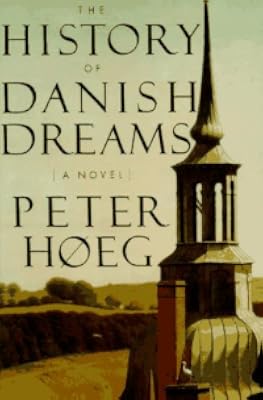
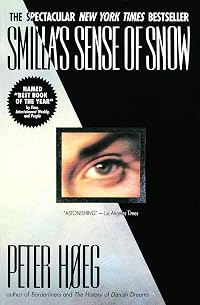
Peter Hoeg, is a writer. He was born in Copenhagen, Denmark in 1957. Hoeg's first book, The History of Danish Dreams, was published in 1988. Another book, Smilla's Sense of Snow, received the Glass Key Award from the Crime Writers of Scandinavia in 1992. The book was made into a film in 1997 starring Julia Ormond, Gabriel Bryne, and Vanessa show more Redgrave. (Bowker Author Biography) show less
Some Editions
Awards and Honors
Series
Belongs to Publisher Series
Keltainen pokkari (56)
Keltainen kirjasto (420)
Common Knowledge
- Canonical title
- The Elephant Keepers' Children
- Original title
- Elefantpassernes børn
- Original publication date
- 2010
- People/Characters
- Peter Finø; Tilte Finø; Alexander Bister Finkeblod, skoleleder; Rickardt Tre Løver, adelsmand; Gitte Grisanthemum, hinduist; Kalle Kloak alias Charles de Finø, milliardær
- Important places
- Denmark; Fino Island, Denmark; Copenhagen, Denmark
- Epigraph*
- Willst du der Freund eines Elefantenhüters sein?
Dann vergewissere dich, ob du Platz für den Elefanten hast.
Altes indisches Sprichwort - Dedication*
- Für Awiti, Adoyo, Ajuang, Apiyo, Akinyi und Karsten.
Für Stine und Daniel. - First words
- I have found a door to the prison. It opens out onto freedom. I am writing this to show you the door.
- Last words*
- (Click to show. Warning: May contain spoilers.)Er hebt die Arme, der Regen hat zugenommen. Ganz langsam, unter dem leuchtenden Nachthimmel, tanzen Peter Finø und Kaj Molester den Finøwalzer.
- Original language*
- Dänisch
- Disambiguation notice
- Original Danish title: "Elefantpassernes børn"
*Some information comes from Common Knowledge in other languages. Click "Edit" for more information.
Classifications
- Genres
- Fiction and Literature, General Fiction
- DDC/MDS
- 839.8 — Literature & rhetoric German & related literatures Other Germanic literatures Danish and Norwegian literatures
- LCC
- PT8176.18 .O335 .E4413 — Language and Literature German, Dutch and Scandinavian literatures Danish literature Individual authors or works 1961-2000
- BISAC
Statistics
- Members
- 408
- Popularity
- 76,125
- Reviews
- 19
- Rating
- (3.39)
- Languages
- 14 — Czech, Danish, Dutch, English, Estonian, Finnish, French, German, Greek, Italian, Lithuanian, Norwegian (Bokmål), Russian, Swedish
- Media
- Paper, Audiobook, Ebook
- ISBNs
- 39
- ASINs
- 7