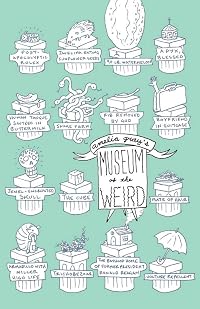
Museum of the Weird
by Amelia Gray
On This Page
Description
Winner of FC2's American Book Review/Ronald Sukenick Innovative Fiction Prize A monogrammed cube appears in your town. Your landlord cheats you out of first place in the annual Christmas decorating contest. You need to learn how to love and care for your mate-a paring knife. These situations and more reveal the wondrous play and surreal humor that make up the stories in Amelia Gray's stunning collection of stories: Museum of the Weird. Acerbic wit and luminous prose mark these show more shorts, while sickness and death lurk amids show lessTags
Recommendations









Member Reviews
Like many bookish folks I know, I have an unnecessarily complicated system for choosing my next read. I won't bore you with the details of it but I will tell you that without this unnecessarily complicated system I would never have wandered the aisles of the University of Iowa Library and come away with one of the weirdest, most darling gems I've read in quite a while: Amelia Gray's Museum of the Weird.
The New York Times described this series of . . . stories? short things? strange things? as "bizarre and darkly funny," which is as true as anything I could come up with. Experimental literature at both its best and worst, this book excelled for all the same reasons it didn't reach perfection. Initially: these characters are so weird, show more great! Then: oh, these characters are just so weird, what is happening? Finally: I think I'm glad I read whatever purposeful mess that was?
The stories, short things, strange things, etc. are mostly a few pages long, with a few exceptions including the one that's just half a page long. There's the woman who gives birth to a new baby every day, the overworked waitress, and the woman stealing money from a fountain. "That's illegal," the narrator tells her. "I reject laws. This fountain has no laws," she tells him. "What about gravity?" he asks.
"That's just a good idea," she tells him, and, indeed, it is a good idea, and it's clear that Amelia Gray rejects the laws of fiction - fiction has no laws. This book may be her proof that the rules of fiction, and storytelling in general, are just "good ideas." I don't know that she made a believer out of me but I can say that the hour or so I spent reading this sharp piece of writing was an hour well spent. show less
The New York Times described this series of . . . stories? short things? strange things? as "bizarre and darkly funny," which is as true as anything I could come up with. Experimental literature at both its best and worst, this book excelled for all the same reasons it didn't reach perfection. Initially: these characters are so weird, show more great! Then: oh, these characters are just so weird, what is happening? Finally: I think I'm glad I read whatever purposeful mess that was?
The stories, short things, strange things, etc. are mostly a few pages long, with a few exceptions including the one that's just half a page long. There's the woman who gives birth to a new baby every day, the overworked waitress, and the woman stealing money from a fountain. "That's illegal," the narrator tells her. "I reject laws. This fountain has no laws," she tells him. "What about gravity?" he asks.
"That's just a good idea," she tells him, and, indeed, it is a good idea, and it's clear that Amelia Gray rejects the laws of fiction - fiction has no laws. This book may be her proof that the rules of fiction, and storytelling in general, are just "good ideas." I don't know that she made a believer out of me but I can say that the hour or so I spent reading this sharp piece of writing was an hour well spent. show less
Amelia Gray's Museum of the Weird is concisely that. This little compendium of curios doesn't mess around; nay, it's a sucker-punch of surreal hurled straight to the breadbasket. While some of the stories in this collection are a slow time-release of quirk into the bloodstream, others are a full-on mainline of weird cooked freshly from Gray's meth lab of imagination. But in a good way, I assure.
The great thing about this work is the quality, as a majority of the stories, each contained within just a few pages, can easily be novellas or even larger works in scope. And while the sentiment typically flows from the wellspring of psychological insecurity of her characters, Gray's talent shines from the reserved awkwardness in their behavior. show more A waiter serves an entrée of hair but it's a matter of for whom, not if it's eaten; the work required to maintain a modern snake farm of the highest professionalism; the un-reciprocated dedication to a bag of frozen tilapia or a paring knife; or even the uneasy barroom conversation between a penguin and armadillo. Gray makes it work, no matter how strange the situation and delivers feeling, regardless of how absurd, creepily gothic or awkwardly sweet.
The downside to the work is that it's too bloody short. There's a great spectrum of stories to sample, but they're over too quickly. Throw in a couple of Gray's intriguing writing exercises to fatten it out a bit and the reader will soon enough finish the book, noting not only the thoroughness of her weirdview but perhaps a hunger for something more. Museum of the Weird is a freakishly well-written book, ideal for those geared for a reread in order to fully savor. show less
The great thing about this work is the quality, as a majority of the stories, each contained within just a few pages, can easily be novellas or even larger works in scope. And while the sentiment typically flows from the wellspring of psychological insecurity of her characters, Gray's talent shines from the reserved awkwardness in their behavior. show more A waiter serves an entrée of hair but it's a matter of for whom, not if it's eaten; the work required to maintain a modern snake farm of the highest professionalism; the un-reciprocated dedication to a bag of frozen tilapia or a paring knife; or even the uneasy barroom conversation between a penguin and armadillo. Gray makes it work, no matter how strange the situation and delivers feeling, regardless of how absurd, creepily gothic or awkwardly sweet.
The downside to the work is that it's too bloody short. There's a great spectrum of stories to sample, but they're over too quickly. Throw in a couple of Gray's intriguing writing exercises to fatten it out a bit and the reader will soon enough finish the book, noting not only the thoroughness of her weirdview but perhaps a hunger for something more. Museum of the Weird is a freakishly well-written book, ideal for those geared for a reread in order to fully savor. show less
You can read my entire discussion here: http://ireadoddbooks.com/museum-of-the-weird-by-amelia-gray/
Review snippet: There isn’t a bad story in this collection, and my innate hypergraphia is taking a nap at the moment, so I will just focus on the best of the bunch.
Let’s begin with “Waste.” This was one of those stories that, as I read it, made me feel like I was going a little insane. It’s a strange piece that I found compelling despite the fact that I find eating pig horrifying. Perhaps I liked the story because Gray’s characters explore the whole, “when does it stop being pig and become pork.” A man who works collecting medical waste from doctors’ offices shares odd culinary experiences with his neighbor, a woman with show more lovely collarbones who works as a line cook in a vegetarian restaurant. Olive is an exotic foodie, creating culinary experiences out of the strangest meats, making a sickening but sweet sacrifice that Roger may not wholly appreciate but at least his experiences with medical waste gave him the stomach to cope. As a woman who loves to cook, is meat-shy, and given to feeling deep disgust for any body process that would require a medical waste pick-up, it was unusual how much I enjoyed this story. Sometimes I enjoy having my disgust pinged, I guess. show less
Review snippet: There isn’t a bad story in this collection, and my innate hypergraphia is taking a nap at the moment, so I will just focus on the best of the bunch.
Let’s begin with “Waste.” This was one of those stories that, as I read it, made me feel like I was going a little insane. It’s a strange piece that I found compelling despite the fact that I find eating pig horrifying. Perhaps I liked the story because Gray’s characters explore the whole, “when does it stop being pig and become pork.” A man who works collecting medical waste from doctors’ offices shares odd culinary experiences with his neighbor, a woman with show more lovely collarbones who works as a line cook in a vegetarian restaurant. Olive is an exotic foodie, creating culinary experiences out of the strangest meats, making a sickening but sweet sacrifice that Roger may not wholly appreciate but at least his experiences with medical waste gave him the stomach to cope. As a woman who loves to cook, is meat-shy, and given to feeling deep disgust for any body process that would require a medical waste pick-up, it was unusual how much I enjoyed this story. Sometimes I enjoy having my disgust pinged, I guess. show less
I finished this book last weekend but I've been away from the computer this week and am just getting around to updating.
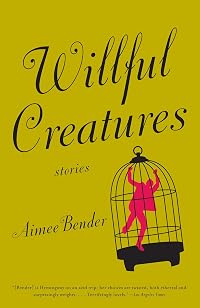
This was my first time reading Amelia Gray, and I'm quite taken with her. Not swept off of my feet and breathless like I was when I read my first Aimee Bender collection ([b:Willful Creatures: Stories|46209|Willful Creatures Stories|Aimee Bender|http://photo.goodreads.com/books/1170315682s/46209.jpg|2386]), but definitely in the same ballpark. Many of the stories are flash fiction length; some I wished were longer (Babies), while others were perfect in their brevity (Unsolved Mystery, The Quiet Complex). And one story (The Movement) inadvertently made me think of Radiohead, so extra thumbs up for that one. It seems show more kind of ridiculous to list my favorites here since it will probably consist of 2/3 of the stories in the book, but here they are anyway:
Babies
Waste
Unsolved Mystery
The Darkness
Trip Advisory: The Former Boyhood Home of President Ronald Reagan
Fish
The Cube
The Quiet Complex
Vultures
The Picture Window
The Movement show less
This was my first time reading Amelia Gray, and I'm quite taken with her. Not swept off of my feet and breathless like I was when I read my first Aimee Bender collection ([b:Willful Creatures: Stories|46209|Willful Creatures Stories|Aimee Bender|http://photo.goodreads.com/books/1170315682s/46209.jpg|2386]), but definitely in the same ballpark. Many of the stories are flash fiction length; some I wished were longer (Babies), while others were perfect in their brevity (Unsolved Mystery, The Quiet Complex). And one story (The Movement) inadvertently made me think of Radiohead, so extra thumbs up for that one. It seems show more kind of ridiculous to list my favorites here since it will probably consist of 2/3 of the stories in the book, but here they are anyway:
Babies
Waste
Unsolved Mystery
The Darkness
Trip Advisory: The Former Boyhood Home of President Ronald Reagan
Fish
The Cube
The Quiet Complex
Vultures
The Picture Window
The Movement show less
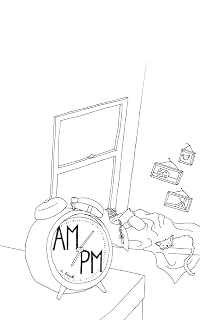
Not as in love with it as I was with her first book, AM/PM. Definitely weird. Favorite stories: "The Vanished", "This Quiet Complex", and "Trip Advisory: The Boyhood Home of Former President Ronald Reagan".
I would say I enjoyed moments within these stories more than the stories whole, but lots of 'em.
Ratings
Members
- Recently Added By
Author Information

12+ Works 1,033 Members
Some Editions
Awards and Honors
Common Knowledge
- Canonical title
- Museum of the Weird
- Original publication date
- 2010-09
- People/Characters
- Amelia Gray
Classifications
Statistics
- Members
- 164
- Popularity
- 200,133
- Reviews
- 6
- Rating
- (3.65)
- Languages
- English
- Media
- Paper, Ebook
- ISBNs
- 2
- ASINs
- 1