On This Page
Description
Fifteen-year-old Miss Penelope Lumley, a governess trained at the Swanburne Academy for Poor Bright Females, takes the three Incorrigible Children of Ashton Place to London, England, and learns they are under a curse.Tags
Recommendations

Member Reviews
I did not read The Mysterious Howling before starting on The Hidden Gallery: I was much too impatient to start reading about the Incorribles to take the time to go to the library (or bookstore) for a copy. I had been looking forward to reading about governess Penelope Lumley and the three children ever since I first heard of The Mysterious Howling, but I always had too many other books already at hand that were begging to be read... Luckily, I found that I didn't need to be familiar with the first book to enjoy the second.
Many references are made to the events in The Mysterious Howling, but always with just enough context to simply make me curious and eager to read that book, rather than confused and frustrated that I was missing part show more of the plot or story. Thus, while it is probably very helpful to have read the first book, I don't think it is necessary to do so before starting on this one, if by chance you can't get hold of The Mysterious Howling before acquiring The Hidden Gallery.
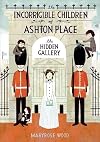
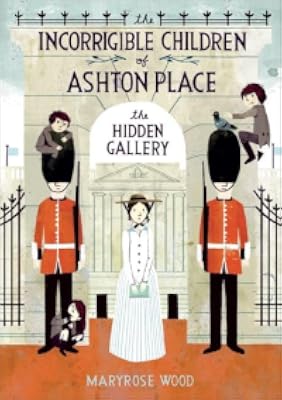
In The Hidden Gallery, the Ashton Place household temporarily relocates to London. Even for the clever Penelope, London is a confusing and strange city, which leads to some very humorous scenes, such as the children mistaking one of the Buckingham Palace guards for a bear. Luckily, Penelope was given an illustrated guidebook to help her find her way - though it, too, is strange, with illustrations of Alpine pastorals rather than city scenes, and short verses rather than proper descriptions save for eight pages going on in great detail about the Gallery of Overuse of Symbolism in Historical Portraits in the British Museum.
There is a mystery which never quite gets solved, though many clues are placed along the way, should a clever reader try to figure out the answer. Presumably, this mystery was introduced in the first book and will be answered in a future one.
I daresay that Lady Constance is my favorite character in the book, and I was sad that she had so few appearances. Her reactions to different things about London were a running joke throughout the book, as were descriptions/fondness of ferns, and quotes from Agatha Swanburne (I get the impression that they're also common in the first book).
If there was anything I didn't like about the book, it's that the third one is so far off from being published. The Hidden Gallery is positively delightful, terribly fun. The way Maryrose Wood plays with language in the storytelling is fantastic, rather like a gentler, tea-and-cake version of Lemony Snicket, whom I also love to read, particularly the first few books in that series.
I can't recommend this book enough for anyone who enjoys children's books! show less
Many references are made to the events in The Mysterious Howling, but always with just enough context to simply make me curious and eager to read that book, rather than confused and frustrated that I was missing part show more of the plot or story. Thus, while it is probably very helpful to have read the first book, I don't think it is necessary to do so before starting on this one, if by chance you can't get hold of The Mysterious Howling before acquiring The Hidden Gallery.
In The Hidden Gallery, the Ashton Place household temporarily relocates to London. Even for the clever Penelope, London is a confusing and strange city, which leads to some very humorous scenes, such as the children mistaking one of the Buckingham Palace guards for a bear. Luckily, Penelope was given an illustrated guidebook to help her find her way - though it, too, is strange, with illustrations of Alpine pastorals rather than city scenes, and short verses rather than proper descriptions save for eight pages going on in great detail about the Gallery of Overuse of Symbolism in Historical Portraits in the British Museum.
There is a mystery which never quite gets solved, though many clues are placed along the way, should a clever reader try to figure out the answer. Presumably, this mystery was introduced in the first book and will be answered in a future one.
I daresay that Lady Constance is my favorite character in the book, and I was sad that she had so few appearances. Her reactions to different things about London were a running joke throughout the book, as were descriptions/fondness of ferns, and quotes from Agatha Swanburne (I get the impression that they're also common in the first book).
If there was anything I didn't like about the book, it's that the third one is so far off from being published. The Hidden Gallery is positively delightful, terribly fun. The way Maryrose Wood plays with language in the storytelling is fantastic, rather like a gentler, tea-and-cake version of Lemony Snicket, whom I also love to read, particularly the first few books in that series.
I can't recommend this book enough for anyone who enjoys children's books! show less
 This review was written for LibraryThing Early Reviewers.
Of especially naughty children it is sometimes said, "They must have been raised by wolves."
The Incorrigible children actually were.
Thanks to the efforts of Miss Penelope Lumley, their plucky governess, Alexander, Beowulf, and Cassiopeia are much more like children than wolf pups now. They are accustomed to wearing clothes. They hardly ever howl at the moon. And for the most part, they resist the urge to chase squirrels up trees.
Despite Penelope's civilizing influence, the Incorrigibles still managed to ruin Lady Constance's Christmas ball, nearly destroying the grand house. So while Ashton Place is being restored, Penelope, the Ashtons, and the children take up residence in London. Penelope is thrilled, as London offers so many show more opportunities to further the education of her unique students. But the city presents challenges, too, in the form of the palace guards' bearskin hats, which drive the children wild--not to mention the abundance of pigeons the Incorrigibles love to hunt. As they explore London, however, they discover more about themselves as clues about the children's--and Penelope's--mysterious past crop up in the most unexpected ways. . . . show less
The Incorrigible children actually were.
Thanks to the efforts of Miss Penelope Lumley, their plucky governess, Alexander, Beowulf, and Cassiopeia are much more like children than wolf pups now. They are accustomed to wearing clothes. They hardly ever howl at the moon. And for the most part, they resist the urge to chase squirrels up trees.
Despite Penelope's civilizing influence, the Incorrigibles still managed to ruin Lady Constance's Christmas ball, nearly destroying the grand house. So while Ashton Place is being restored, Penelope, the Ashtons, and the children take up residence in London. Penelope is thrilled, as London offers so many show more opportunities to further the education of her unique students. But the city presents challenges, too, in the form of the palace guards' bearskin hats, which drive the children wild--not to mention the abundance of pigeons the Incorrigibles love to hunt. As they explore London, however, they discover more about themselves as clues about the children's--and Penelope's--mysterious past crop up in the most unexpected ways. . . . show less
Picking up shortly after the events of [b:The Mysterious Howling|6609748|The Mysterious Howling (The Incorrigible Children of Ashton Place #1)|Maryrose Wood|https://images.gr-assets.com/books/1347467632s/6609748.jpg|6803715], indefatiguable teenage governess Penelope Lumley is back, along with her charges, Alexander, Beowulf, and Casseopia Incorrigible, three siblings who were actually (probably) raised by wolves. Also back is Nutsawoo, the squirrel that Casseopia unexpectedly adopted as a pet after he crashed Lady Constance's Christmas party. When the human inhabitants of Ashton place are packed off to London during estate repairs, poor little Nutsawoo is left behind.
“Of course we will send postcards to Nutsawoo. And we shall bring show more him back a present as well. In fact,' she went on, with the instinctive knack every good governess has for turning something enjoyable into a lesson, and vice versa, 'I will expect all three of you to practice your writing by keeping a journal of our trip so that Nutsawoo may know how we spend our days. Why, by the time we return, he will think he has been to London himself! He will be the envy of all his little squirrel friends,' she declared.
Penelope had no way of knowing if this last statement was true. Could squirrels feel envy? Would they give two figs about London? Did Nutsawoo even have friends?”
While Penelope attempts to make the children's (and, indeed, her own) first trip to London educational and culturally enriching, strange events continue to follow the quartet, including a creepy warning from a mysterious gypsy woman, a guidebook that is often less than helpful, a confusing encounter with Penelope's former headmistress and more strange behavior from Lord Ashton. More questions than clues regarding the Incorrigibles' origins (as well as Penelope's) pile up, with no real answers, but since this is only the second of six books, I'll assume that all the mysteries will eventually be solved.
In the meantime, I'll be satisfied with charming passages like this:
“Nowadays, people resort to all kinds of activities in order to calm themselves after a stressful event: performing yoga poses in a sauna, leaping off bridges while tied to a bungee, killing imaginary zombies with imaginary weapons, and so forth. But in Miss Penelope Lumley's day, it was universally understood that there is nothing like a nice cup of tea to settle one's nerves in the aftermath of an adventure- a practice many would find well worth reviving.” show less
“Of course we will send postcards to Nutsawoo. And we shall bring show more him back a present as well. In fact,' she went on, with the instinctive knack every good governess has for turning something enjoyable into a lesson, and vice versa, 'I will expect all three of you to practice your writing by keeping a journal of our trip so that Nutsawoo may know how we spend our days. Why, by the time we return, he will think he has been to London himself! He will be the envy of all his little squirrel friends,' she declared.
Penelope had no way of knowing if this last statement was true. Could squirrels feel envy? Would they give two figs about London? Did Nutsawoo even have friends?”
While Penelope attempts to make the children's (and, indeed, her own) first trip to London educational and culturally enriching, strange events continue to follow the quartet, including a creepy warning from a mysterious gypsy woman, a guidebook that is often less than helpful, a confusing encounter with Penelope's former headmistress and more strange behavior from Lord Ashton. More questions than clues regarding the Incorrigibles' origins (as well as Penelope's) pile up, with no real answers, but since this is only the second of six books, I'll assume that all the mysteries will eventually be solved.
In the meantime, I'll be satisfied with charming passages like this:
“Nowadays, people resort to all kinds of activities in order to calm themselves after a stressful event: performing yoga poses in a sauna, leaping off bridges while tied to a bungee, killing imaginary zombies with imaginary weapons, and so forth. But in Miss Penelope Lumley's day, it was universally understood that there is nothing like a nice cup of tea to settle one's nerves in the aftermath of an adventure- a practice many would find well worth reviving.” show less
Description: Of especially naughty children it is sometimes said, "They must have been raised by wolves."
The Incorrigible children actually were.
Thanks to the efforts of Miss Penelope Lumley, their plucky governess, Alexander, Beowulf, and Cassiopeia are much more like children than wolf pups now. They are accustomed to wearing clothes. They hardly ever howl at the moon. And for the most part, they resist the urge to chase squirrels up trees.
Despite Penelope's civilizing influence, the Incorrigibles still managed to ruin Lady Constance's Christmas ball, nearly destroying the grand house. So while Ashton Place is being restored, Penelope, the Ashtons, and the children take up residence in London. Penelope is thrilled, as London offers so show more many opportunities to further the education of her unique students. But the city presents challenges, too, in the form of the palace guards' bearskin hats, which drive the children wild—not to mention the abundance of pigeons the Incorrigibles love to hunt. As they explore London, however, they discover more about themselves as clues about the children's—and Penelope's—mysterious past crop up in the most unexpected ways. . . .
Thoughts: I'd been meaning to get around to the rest of this series since soon after reading the first one, but something else always caught my fancy. Don't ask me why, in the midst of a SEVERE reading slump, this one finally got my attention, but I was sucked in immediately.
There is nothing absolutely amazing about this series. It is quite and charming but not explosive or revolutionary. But there is something about the quiet way it refuses to relinquish it's secrets, the way it taunts the reader with a near constant stream of references to the big mystery without hardly ever giving ANY actual insight whatsoever, that keeps you rabidly gobbling up pages.
I have 19 million theories about the mystery surrounding the Incorrigibles, Miss Lumley, Lord Ashton, even Judge Quinzy, but I can't say with ANY assurance that any of them is even close to being valid. It's delightfully infuriating. I'm used to children's mysteries being quaint but very easy to suss out and this one is just about the quaintest and the LEAST easy to suss out.
In this particular installment, very little real action takes place. The children and Ms Lumley see the sites of London, Mrs. Ashton acts like an idiot (shocking, I know), Ms Lumley makes a friend, and hints are dropped all over the place about the mystery, but there is really very little going on here. Does it matter? Nope. You still want to devour every page and run right on to the next book because, damnit, at some point someone HAS to give some concrete answers!
I've read eBooks of the first 2 of these but I luckily snagged the audio of #3, narrated by KATHERINE KELLGREN! Yay!
Rating: 3.9
Liked: 4
Plot: 3.5
Characterization: 4
Writing: 4
http://www.librarything.com/topic/160137#4402488 show less
The Incorrigible children actually were.
Thanks to the efforts of Miss Penelope Lumley, their plucky governess, Alexander, Beowulf, and Cassiopeia are much more like children than wolf pups now. They are accustomed to wearing clothes. They hardly ever howl at the moon. And for the most part, they resist the urge to chase squirrels up trees.
Despite Penelope's civilizing influence, the Incorrigibles still managed to ruin Lady Constance's Christmas ball, nearly destroying the grand house. So while Ashton Place is being restored, Penelope, the Ashtons, and the children take up residence in London. Penelope is thrilled, as London offers so show more many opportunities to further the education of her unique students. But the city presents challenges, too, in the form of the palace guards' bearskin hats, which drive the children wild—not to mention the abundance of pigeons the Incorrigibles love to hunt. As they explore London, however, they discover more about themselves as clues about the children's—and Penelope's—mysterious past crop up in the most unexpected ways. . . .
Thoughts: I'd been meaning to get around to the rest of this series since soon after reading the first one, but something else always caught my fancy. Don't ask me why, in the midst of a SEVERE reading slump, this one finally got my attention, but I was sucked in immediately.
There is nothing absolutely amazing about this series. It is quite and charming but not explosive or revolutionary. But there is something about the quiet way it refuses to relinquish it's secrets, the way it taunts the reader with a near constant stream of references to the big mystery without hardly ever giving ANY actual insight whatsoever, that keeps you rabidly gobbling up pages.
I have 19 million theories about the mystery surrounding the Incorrigibles, Miss Lumley, Lord Ashton, even Judge Quinzy, but I can't say with ANY assurance that any of them is even close to being valid. It's delightfully infuriating. I'm used to children's mysteries being quaint but very easy to suss out and this one is just about the quaintest and the LEAST easy to suss out.
In this particular installment, very little real action takes place. The children and Ms Lumley see the sites of London, Mrs. Ashton acts like an idiot (shocking, I know), Ms Lumley makes a friend, and hints are dropped all over the place about the mystery, but there is really very little going on here. Does it matter? Nope. You still want to devour every page and run right on to the next book because, damnit, at some point someone HAS to give some concrete answers!
I've read eBooks of the first 2 of these but I luckily snagged the audio of #3, narrated by KATHERINE KELLGREN! Yay!
Rating: 3.9
Liked: 4
Plot: 3.5
Characterization: 4
Writing: 4
http://www.librarything.com/topic/160137#4402488 show less
Description: Of especially naughty children it is sometimes said, "They must have been raised by wolves."
The Incorrigible children actually were.
Thanks to the efforts of Miss Penelope Lumley, their plucky governess, Alexander, Beowulf, and Cassiopeia are much more like children than wolf pups now. They are accustomed to wearing clothes. They hardly ever howl at the moon. And for the most part, they resist the urge to chase squirrels up trees.
Despite Penelope's civilizing influence, the Incorrigibles still managed to ruin Lady Constance's Christmas ball, nearly destroying the grand house. So while Ashton Place is being restored, Penelope, the Ashtons, and the children take up residence in London. Penelope is thrilled, as London offers so show more many opportunities to further the education of her unique students. But the city presents challenges, too, in the form of the palace guards' bearskin hats, which drive the children wild—not to mention the abundance of pigeons the Incorrigibles love to hunt. As they explore London, however, they discover more about themselves as clues about the children's—and Penelope's—mysterious past crop up in the most unexpected ways. . . .
Thoughts: I'd been meaning to get around to the rest of this series since soon after reading the first one, but something else always caught my fancy. Don't ask me why, in the midst of a SEVERE reading slump, this one finally got my attention, but I was sucked in immediately.
There is nothing absolutely amazing about this series. It is quite and charming but not explosive or revolutionary. But there is something about the quiet way it refuses to relinquish it's secrets, the way it taunts the reader with a near constant stream of references to the big mystery without hardly ever giving ANY actual insight whatsoever, that keeps you rabidly gobbling up pages.
I have 19 million theories about the mystery surrounding the Incorrigibles, Miss Lumley, Lord Ashton, even Judge Quinzy, but I can't say with ANY assurance that any of them is even close to being valid. It's delightfully infuriating. I'm used to children's mysteries being quaint but very easy to suss out and this one is just about the quaintest and the LEAST easy to suss out.
In this particular installment, very little real action takes place. The children and Ms Lumley see the sites of London, Mrs. Ashton acts like an idiot (shocking, I know), Ms Lumley makes a friend, and hints are dropped all over the place about the mystery, but there is really very little going on here. Does it matter? Nope. You still want to devour every page and run right on to the next book because, damnit, at some point someone HAS to give some concrete answers!
Rating: 4.08
Liked: 4
Plot: 3.5
Characterization: 4
Writing: 4
Audio: 5
http://www.librarything.com/topic/160137#4402488 show less
The Incorrigible children actually were.
Thanks to the efforts of Miss Penelope Lumley, their plucky governess, Alexander, Beowulf, and Cassiopeia are much more like children than wolf pups now. They are accustomed to wearing clothes. They hardly ever howl at the moon. And for the most part, they resist the urge to chase squirrels up trees.
Despite Penelope's civilizing influence, the Incorrigibles still managed to ruin Lady Constance's Christmas ball, nearly destroying the grand house. So while Ashton Place is being restored, Penelope, the Ashtons, and the children take up residence in London. Penelope is thrilled, as London offers so show more many opportunities to further the education of her unique students. But the city presents challenges, too, in the form of the palace guards' bearskin hats, which drive the children wild—not to mention the abundance of pigeons the Incorrigibles love to hunt. As they explore London, however, they discover more about themselves as clues about the children's—and Penelope's—mysterious past crop up in the most unexpected ways. . . .
Thoughts: I'd been meaning to get around to the rest of this series since soon after reading the first one, but something else always caught my fancy. Don't ask me why, in the midst of a SEVERE reading slump, this one finally got my attention, but I was sucked in immediately.
There is nothing absolutely amazing about this series. It is quite and charming but not explosive or revolutionary. But there is something about the quiet way it refuses to relinquish it's secrets, the way it taunts the reader with a near constant stream of references to the big mystery without hardly ever giving ANY actual insight whatsoever, that keeps you rabidly gobbling up pages.
I have 19 million theories about the mystery surrounding the Incorrigibles, Miss Lumley, Lord Ashton, even Judge Quinzy, but I can't say with ANY assurance that any of them is even close to being valid. It's delightfully infuriating. I'm used to children's mysteries being quaint but very easy to suss out and this one is just about the quaintest and the LEAST easy to suss out.
In this particular installment, very little real action takes place. The children and Ms Lumley see the sites of London, Mrs. Ashton acts like an idiot (shocking, I know), Ms Lumley makes a friend, and hints are dropped all over the place about the mystery, but there is really very little going on here. Does it matter? Nope. You still want to devour every page and run right on to the next book because, damnit, at some point someone HAS to give some concrete answers!
Rating: 4.08
Liked: 4
Plot: 3.5
Characterization: 4
Writing: 4
Audio: 5
http://www.librarything.com/topic/160137#4402488 show less
The worst part about this book was that it was compared to Lemony Snicket's A Series of Unfortunate Events. Comparing one book to another, arguably, more popular book, or series, or author, or what have you is very dangerous, as it causes the astute reader to view the work at hand through a more critical lens usually reserved for books and series and authors who have proven their worth enough to get there.
This gave me a terrible first impression of the book, as I've read other books in the past that have been likened to other, more popular books, series, and authors, some even to the point of declaring themselves superior, only to be let down.
So, what can I say about the author, Maryrose Wood, and her ability to overcome these show more publisher-laden handicaps?
One word: Wow.
Now other words: Wood has crafted here an atypical governess story, clearly inspired by the Victorian-era chick-lit, but also with a healthy dose of modern-day humor, and a bit of the hair of the dog that bit ya.
The premise of the series as a whole, The Incorrigible Children of Ashton Place, is that some feral foundlings, the eponymous children who are dubbed with the surname Incorrigible are put under the charge of a governess named Penelope who has more pluck than anything else. By the end of the first volume, she's managed to convince them to sit up straight, use utensils, and stop eating most woodland creatures. Nevertheless, their surrogate lupine parentage comes through at the most inopportune times.
In the second volume, the one I'm reviewing, the Ashtons, their servants, the Incorrigibles, and Penelope all go to London, where many mysteries are reveled, some are only slightly uncovered, and many, many more are introduced.
While Maryrose Wood is not exactly Lemony Snicket, she is Maryrose Wood, and that should be enough. show less
This gave me a terrible first impression of the book, as I've read other books in the past that have been likened to other, more popular books, series, and authors, some even to the point of declaring themselves superior, only to be let down.
So, what can I say about the author, Maryrose Wood, and her ability to overcome these show more publisher-laden handicaps?
One word: Wow.
Now other words: Wood has crafted here an atypical governess story, clearly inspired by the Victorian-era chick-lit, but also with a healthy dose of modern-day humor, and a bit of the hair of the dog that bit ya.
The premise of the series as a whole, The Incorrigible Children of Ashton Place, is that some feral foundlings, the eponymous children who are dubbed with the surname Incorrigible are put under the charge of a governess named Penelope who has more pluck than anything else. By the end of the first volume, she's managed to convince them to sit up straight, use utensils, and stop eating most woodland creatures. Nevertheless, their surrogate lupine parentage comes through at the most inopportune times.
In the second volume, the one I'm reviewing, the Ashtons, their servants, the Incorrigibles, and Penelope all go to London, where many mysteries are reveled, some are only slightly uncovered, and many, many more are introduced.
While Maryrose Wood is not exactly Lemony Snicket, she is Maryrose Wood, and that should be enough. show less
This review was written for LibraryThing Early Reviewers.Oh, those incorrigible children! In case you missed my raving review of the first book, let me assure you that this series is well worth your time. If you love Middle Grade books, especially ones full of charming characters and witty banter, then this is definitely for you. I fell head over heels for Miss Penelope Lumley and her three wolfish charges from the moment I met them. It's pretty much impossible not to. Perhaps it's "optoomuchistic" of me, but I do believe you'll adore this second book in the series!
Before I do my gushing about the story itself, please allow me to once again praise Katherine Kellgren for her gorgeous narration of this story. Her accents are spot on, her voices for the children too sweet for words, and she show more just has a way of making the whole story come to life. From her plucky portrayal of Miss Penelope Lumley, to her all but ear-splitting rendition of Lady Ashton's voice, each character is brilliantly done! I will listen to all of these on audio if I can help it. They are absolutely wonderful!
On to the story, shall we? In The Hidden Gallery, Miss Lumley and her spirited young charges are off to London! A new place to explore was thrilling enough, but what shot this into the five star category for me was the fact that this wasn't simply a jaunt into the big city. Adventures aplenty, and the revealing of some new clues about the origin of our the three wolfish children, made for a very fun read. I'm not certain whether my thoughts on how this will all work out are correct, but I'll say that I'm intrigued! Is there a possibility that our four main characters are linked? Perhaps, my friends. Perhaps.
I know I'm being vague, but trust me when I say that it's necessary. There is so much to love about this story, but all of it is much better appreciated if you're experiencing it first hand. Suffice it to say that the word I use entirely too much while chatting up these books to others is charming. They truly are. These are the novels I wish were around when I was a Middle Grade reader. Although that won't stop me from reading them now, that's for sure. On to the next! show less
Before I do my gushing about the story itself, please allow me to once again praise Katherine Kellgren for her gorgeous narration of this story. Her accents are spot on, her voices for the children too sweet for words, and she show more just has a way of making the whole story come to life. From her plucky portrayal of Miss Penelope Lumley, to her all but ear-splitting rendition of Lady Ashton's voice, each character is brilliantly done! I will listen to all of these on audio if I can help it. They are absolutely wonderful!
On to the story, shall we? In The Hidden Gallery, Miss Lumley and her spirited young charges are off to London! A new place to explore was thrilling enough, but what shot this into the five star category for me was the fact that this wasn't simply a jaunt into the big city. Adventures aplenty, and the revealing of some new clues about the origin of our the three wolfish children, made for a very fun read. I'm not certain whether my thoughts on how this will all work out are correct, but I'll say that I'm intrigued! Is there a possibility that our four main characters are linked? Perhaps, my friends. Perhaps.
I know I'm being vague, but trust me when I say that it's necessary. There is so much to love about this story, but all of it is much better appreciated if you're experiencing it first hand. Suffice it to say that the word I use entirely too much while chatting up these books to others is charming. They truly are. These are the novels I wish were around when I was a Middle Grade reader. Although that won't stop me from reading them now, that's for sure. On to the next! show less
Members
- Recently Added By
Lists

Books Read in 2011
684 works; 20 members

AR Level 6 in cloudLibrary
77 works; 1 member
Author Information

19+ Works 5,440 Members
Maryrose Wood was studying acting at New York University when she dropped out to be in the chorus of the Broadway musical Merrily We Roll Along, which flopped. She did eventually graduate from NYU's Gallatin School. She started out writing for the theater and film, as a lyricist, librettist, playwright and screenwriter. She was the first recipient show more of the Georgia Bogardus Holof Lyricist Award and a three-time recipient of the Richard Rodgers Award for New Musicals. Her first book, Sex Kittens and Horn Dawgs Fall in Love, was published in 2006. She also writes the Morgan Rawlinson series, The Incorrigible Children of Ashton Place series, and The Poison Diaries trilogy. (Bowker Author Biography) show less
All Editions
Some Editions
Awards and Honors
Awards
Notable Lists
Series

Common Knowledge
- Canonical title
- The Hidden Gallery
- Original publication date
- 2011
- People/Characters
- Penelope Lumley; Alexander Incorrigible; Cassiopeia Incorrigible; Beowulf Incorrigible; Simon Harley-Dickinson; Lady Constance Ashton (show all 8); Lord Fredrick Ashton; Charlotte Mortimer
- Important places
- London, England, UK
- Dedication
- For my two incorrigible siblings, Thomas and James.
We were not raised in a forest, but we did live among the Woods.
--M.W. - First words
- "But the workmen swore the repairs to the house would be finished by now!"
- Quotations
- ... as Agatha Swanburne once said, "To be kept waiting is unfortunate, but to be kept waiting with nothing interesting to read is a tragedy of Greek proportions" ...
Classifications
Statistics
- Members
- 866
- Popularity
- 31,370
- Reviews
- 55
- Rating
- (4.00)
- Languages
- Czech, English, French, German
- Media
- Paper, Audiobook, Ebook
- ISBNs
- 27
- ASINs
- 10