On This Page
Description
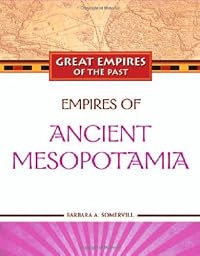
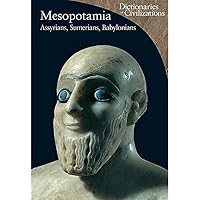
Mesopotamia, the land between the Tigris and the Euphrates rivers, was the site of the world's first stable civilizations, including Sumer, Babylonia, and Assyria. This title details the development of this area, the growth of its city-states, the daily life of its people, and how their influence is still felt today.Tags
Recommendations











Member Reviews
This is a flyby overview of the main cultures in Mesopotamia between ca 4,000 - 500 BC. It starts off with a bare-bones summary of the military-political history of the area, before devoting a couple of chapters to daily life among the Sumerians, the Babylonians and the Assyrians respectively. The book is definitely aimed at younger readers: words such as scholar, irrigation, dynasty and high priestess are explained between brackets, as are abbreviations such as ca.
Both of these are reasons why I picked up this book: I wanted an illustrated, quick-and-dirty overview aimed at non-specialists before I delved into some meatier books. I guess Empires of Ancient Mesopotamia did its job adequately, though not memorably so. I sped through this show more short booklet (+150pp) in two hours. The illustrations add significantly to the minimalist body text, and the whole is reasonably well-structured and informative.
I do have a number of quibbles, though. The constant references to bible stories ("this matches the bible story of Noah; X, which you can read about in the bible, ...") were a little puzzling: nowhere did the book say it was aimed specifically at christian children, yet Somervill assumes throughout that her readers are routinely familiar with the bible. Not only the stories of the flood and the tower of Babel, but also the Babylonian captivity and the book of proverbs are assumed to be known to the audience. The Gilgamesh epic is also said to "match the bible", even though it is older.
Sometimes the explanations came across as half-hearted or even uninformed. At one point the the explanation of "an Indo-European people" reads "people originated in Australia, Iran, or the Eurasian steppes". Is Somervill trying to balance three potential PIE homelands? Did she mix up Austria and Australia? To the best of my knowledge, Austria is not one of the current contenders for a PIE homeland. Whatever she meant, it was deeply puzzling, and it made me wonder if she made similar mistakes elsewhere that I, a casual non-specialist reader, would not spot. The final chapter, on Iraq/Mesopotamia today, contains a hand-wavy justification for the Iraq war; that, too, made me frown.
Would I recommend this booklet? I'm not sure. Not without a couple of caveats. On the one hand, Somervill did what she set out to do more or less competently: to provide a shallow summary of three and a half thousand years of alternating civilizations. I understand that any such effort is going to run into problems. But the christian point of view and the Indo-European thing put me off, and they were not the shortcomings I was expecting from a text such as this one.
So. On the whole, if you're looking for an intentionally superficial overview of Mesopotamian civilizations, you could do worse than this one; if you're looking for something more substantial, skip it. show less
Both of these are reasons why I picked up this book: I wanted an illustrated, quick-and-dirty overview aimed at non-specialists before I delved into some meatier books. I guess Empires of Ancient Mesopotamia did its job adequately, though not memorably so. I sped through this show more short booklet (+150pp) in two hours. The illustrations add significantly to the minimalist body text, and the whole is reasonably well-structured and informative.
I do have a number of quibbles, though. The constant references to bible stories ("this matches the bible story of Noah; X, which you can read about in the bible, ...") were a little puzzling: nowhere did the book say it was aimed specifically at christian children, yet Somervill assumes throughout that her readers are routinely familiar with the bible. Not only the stories of the flood and the tower of Babel, but also the Babylonian captivity and the book of proverbs are assumed to be known to the audience. The Gilgamesh epic is also said to "match the bible", even though it is older.
Sometimes the explanations came across as half-hearted or even uninformed. At one point the the explanation of "an Indo-European people" reads "people originated in Australia, Iran, or the Eurasian steppes". Is Somervill trying to balance three potential PIE homelands? Did she mix up Austria and Australia? To the best of my knowledge, Austria is not one of the current contenders for a PIE homeland. Whatever she meant, it was deeply puzzling, and it made me wonder if she made similar mistakes elsewhere that I, a casual non-specialist reader, would not spot. The final chapter, on Iraq/Mesopotamia today, contains a hand-wavy justification for the Iraq war; that, too, made me frown.
Would I recommend this booklet? I'm not sure. Not without a couple of caveats. On the one hand, Somervill did what she set out to do more or less competently: to provide a shallow summary of three and a half thousand years of alternating civilizations. I understand that any such effort is going to run into problems. But the christian point of view and the Indo-European thing put me off, and they were not the shortcomings I was expecting from a text such as this one.
So. On the whole, if you're looking for an intentionally superficial overview of Mesopotamian civilizations, you could do worse than this one; if you're looking for something more substantial, skip it. show less
Ratings
Members
- Recently Added By
Author Information

194+ Works 2,073 Members
Barbara A. Somervill has written more than 200 children's books about science, nature, and education.
Series

Common Knowledge
- Canonical title
- Empires of Ancient Mesopotamia
- Important places
- Mesopotamia
- Original language
- English
Classifications
Statistics
- Members
- 26
- Popularity
- 1,038,348
- Reviews
- 1
- Rating
- (2.50)
- Languages
- English
- Media
- Paper, Ebook
- ISBNs
- 3
- ASINs
- 1