The Bay of Angels
by Anita Brookner
On This Page
Description
Despite growing up with a widowed and reclusive mother, young Zoë Cunningham retains an unshakable faith in storybook happy endings. When her mother, Anne, finally decides to remarry, Zoë is thrilled with her prospective stepfather, Simon Gould, who is not only wealthy, but also kind and generous. Simon's affection for his new family allows Zoë to pursue what she thinks is an independent life: her own apartment in a fashionable part of London, a university education, casual affairs and show more carefree holidays at Simon's villa in Nice. When a series of unexpected calamities intervene, Zoë learns that the idyllic freedom she enjoys has come at a steep price. To preserve both her mother's and her own sense of wellbeing, Zoë must discern the real motives of the strangers on whom she now depends, including the silent and mysterious man whose nocturnal movements have attracted her attention. show lessTags
Recommendations



























Member Reviews
This is the third Brookner novel I've read now, with Hotel du Lac still being by far the best in my opinion. Brookner's writing can be quite melancholic; reality bites in her novels, and she sees no need to deliver us to a requisite happy ending. Although that can make her work a little depressive at times to read, at the same time there is an honesty to her approach that I much admire.
In The Bay of Angels, the protagonist Zoe is in her twenties and an only child of a single parent. She's cautiously delighted for her mother when she unexpectedly marries again later on in life and moves to Nice, enabling her own professional and personal life to develop as she discovers a new life of independence in London. However, an unexpected tragedy show more occurs which forces the path of Zoe's life as the parenting roles reverse.
It's a story not dressed up to be anything other than what it is - a tale of sad circumstances that snatch away life's choices. Interestingly, when I read of Brookner's own life there are clearly fictionalised echoes of her own experience in this novel, as she never married and cared for her parents throughout her life. Her forte was in developing characters who are on the outside looking in. This deep introspection isn't for everyone, and for this reason The Bay of Angels will not appeal to the masses. However, I do enjoy this sense of realism in Brookner's writing, so although this won't be a favourite read of the year I'm glad I read it nonetheless.
3.5 stars - bleak yet powerfully honest. show less
In The Bay of Angels, the protagonist Zoe is in her twenties and an only child of a single parent. She's cautiously delighted for her mother when she unexpectedly marries again later on in life and moves to Nice, enabling her own professional and personal life to develop as she discovers a new life of independence in London. However, an unexpected tragedy show more occurs which forces the path of Zoe's life as the parenting roles reverse.
It's a story not dressed up to be anything other than what it is - a tale of sad circumstances that snatch away life's choices. Interestingly, when I read of Brookner's own life there are clearly fictionalised echoes of her own experience in this novel, as she never married and cared for her parents throughout her life. Her forte was in developing characters who are on the outside looking in. This deep introspection isn't for everyone, and for this reason The Bay of Angels will not appeal to the masses. However, I do enjoy this sense of realism in Brookner's writing, so although this won't be a favourite read of the year I'm glad I read it nonetheless.
3.5 stars - bleak yet powerfully honest. show less
Without knowing anything about the author, other than the age at which she published her first book (53), here is my best guess at what’s going on here. Ms. Brookner enjoys good books, but hates novels. Good books are well-written, elegant, insightful, and satisfying. Novels are either about some unlikeable person getting crushed or about some likable person becoming unlikeable and then getting crushed. Heroes or heroines exist, but only in genre fiction or age-targeted books—and are thus not in good books. So, she sat out to write that most implausible of things: a good book about a good person who works for and achieves a form of happiness suited to her character.
So, is The Bay of Angels genre fiction, after all? Is it just show more another romance novel? Well, yes and no. It doesn’t read at all like a modern-day romance. But it does have certain Jane-Austen-esque elements to it. Most notably the straightened circumstances of the heroine’s family: After the step-father dies and it is discovered that he didn’t actually own villa into which he had moved them. There is an acceptance of class, too, and a strong, independent heroine, Zoe Cunningham.
But Brookner is no mere Austen imitator. Her subtle, underplayed characters could more plausibly have strolled out of a novel by Henry James novel or even by William Dean Howells. Zoe is not just independent; she is a solitary outsider in her social setting, never fully welcome in her environment but comfortable with herself and content to remain so forever. That she ultimately finds love, one feels, is entirely due to her refusal either to chase after or to flee it. But really, this is how relationship works—character dictates fate. And I, for one, find it refreshing to see an author who can see and reflect the beauty implied by that simple psychic fact. show less
So, is The Bay of Angels genre fiction, after all? Is it just show more another romance novel? Well, yes and no. It doesn’t read at all like a modern-day romance. But it does have certain Jane-Austen-esque elements to it. Most notably the straightened circumstances of the heroine’s family: After the step-father dies and it is discovered that he didn’t actually own villa into which he had moved them. There is an acceptance of class, too, and a strong, independent heroine, Zoe Cunningham.
But Brookner is no mere Austen imitator. Her subtle, underplayed characters could more plausibly have strolled out of a novel by Henry James novel or even by William Dean Howells. Zoe is not just independent; she is a solitary outsider in her social setting, never fully welcome in her environment but comfortable with herself and content to remain so forever. That she ultimately finds love, one feels, is entirely due to her refusal either to chase after or to flee it. But really, this is how relationship works—character dictates fate. And I, for one, find it refreshing to see an author who can see and reflect the beauty implied by that simple psychic fact. show less
All women in this novel are weak, they believe that happiness can only be found in marriage, they rely on men: “I looked at him helplessly. He was a man; let him make the decisions.” The men are seen as the saviors, both from unhappiness and complicated situations.
Of course it’s fiction, but after reading twenty novels by Anita Brookner I think I can by now fairly deduct Brookner’s views. In The Bay of Angels she calls the 1950s “prelapsarian”, a not commonly used expression which refers to the time before the fall of humankind.
To think that this was published in 2001 is mind blowing.
Of course it’s fiction, but after reading twenty novels by Anita Brookner I think I can by now fairly deduct Brookner’s views. In The Bay of Angels she calls the 1950s “prelapsarian”, a not commonly used expression which refers to the time before the fall of humankind.
To think that this was published in 2001 is mind blowing.
The Bay of Angels was Anita Brookner’s 20th novel – sadly she hasn’t published a novel since 2009, a short story was released as an ebook in 2011. Still, she has had a wonderfully prolific career, particularly when you consider she didn’t publish anything until she was in her 50’s.
Our narrator; Zoe Cunningham is in many ways a typical Brookner character; I found her a little warmer and more sympathetic than some Brookner female characters. Zoe is a young woman who yearns for independence but her life is one of passivity, although very young throughout this novel she comes across as a much older woman, again I think this is typical of Brookner women, they are reminiscent of women from another era.
Living with Anne her widowed show more mother, with no memory of her father, Zoe grows up reading fairy tales, believing in happy endings. Zoe and her mother’s life is one of easy routine, distant relatives of her father’s always referred to as “the girls” are occasional visitors, but Zoe and her mother’s lives are largely uneventful. As Zoe is preparing to leave home for university, her mother meets Simon, and re-marries. Zoe is happy for her mother, she feels her mother’s life is moving forward in the same way that hers is. Zoe is also thrilled in her perspective step father, not only wealthy, Simon is kind and generous, and Zoe is confident that as her life starts to take off her mother will be secure and cared for. Simon has a home in France, on the outskirts of Nice, and having paid for Zoe’s flat in London, he takes Anne back to Nice after their honeymoon. For Zoe, Simon is an appropriately happy ending for her mother, his paternalistic attitude to Zoe is comforting and Zoe will remain a regular visitor, making the villa a second home for her.
Zoe lives a fairly solitary life back in London, a young woman of university age, she lives in the flat paid for by her step-father and embarks on a relationship with Adam, who soon proves to not be the happy ending that she seeks. On her visits to Nice to see Anne and Simon, Zoe detects that although her mother is happy, she leads a passive existence, homesick for England. During a visit to the villa with Adam, Zoe is made to feel very uncomfortable and Simon makes no secret of his dislike for Zoe’s boyfriend.
Zoe’s ideas of happy endings are tested – what in fact does happen after the happy ending? Zoe is forced to confront some worrying possibilities for the future, when an unforeseen tragedy occurs.
“My life would be hedged in by duties, most of them of an unwanted nature, most of them inherited from other guardians who were more competent than I could ever be. And my mother’s longing for home might prove illusory once the reality of the small flat in the quiet street was seen as less reassuring than had been her distant view of it. Moving carefully around each other we should be polite, accommodating, yet uncomfortable, for nothing could revive those days of childhood when such companionship was second nature to us both. Now events had intervened, had altered us; we might find ourselves to be strangers, and that would be the saddest outcome of all”
Baie des AngesWhen Simon dies suddenly, everything is turned upside down. Anne’s shock propels her into a terrible decline, and Zoe struggles to help. Discovering that Simon’s assets were not quite as they thought and that crucially the villa does not belong to him; Zoe is forced to take a small room above a shop, from where she visits her mother in hospital, and later the nursing home where she is moved. Zoe and her mother are essentially trapped by their change in circumstances, surrounded by strangers and only wanting to go home. Zoe is required to go back and forth to London, but the needs of her mother pull her back to Nice after a few days, where she continues to live in a small dark room, eats her meals in cafes, taking walks at night in the Baie des Anges. Her walks begin to be intercepted by Dr Balbi, a doctor from the clinic where Anne was initially treated.
“I liked to think that the Baie des Anges was once inhabited by angels. I could visualize their phosphorescent descent, see them performing a brief spiritual dance on the shore, before heading inland to stimulate the economy. That economy was now thriving, but at night, on the edge of the sea, it was still possible to imagine a different sort of tourist, an unearthly visitation at one with the elements.”
The Bay of Angels is beautifully written – surely that is a given, Brookner’s prose is pretty near perfect, and there is a wonderfully, strong sense of place in this novel. From the glorious Baie des Anges, to the flat in London where Zoe lives her solitary life, to the Résidence Sainte Thérѐse nursing home, where Anne is installed, all are brilliantly portrayed and acutely observed. show less
Our narrator; Zoe Cunningham is in many ways a typical Brookner character; I found her a little warmer and more sympathetic than some Brookner female characters. Zoe is a young woman who yearns for independence but her life is one of passivity, although very young throughout this novel she comes across as a much older woman, again I think this is typical of Brookner women, they are reminiscent of women from another era.
Living with Anne her widowed show more mother, with no memory of her father, Zoe grows up reading fairy tales, believing in happy endings. Zoe and her mother’s life is one of easy routine, distant relatives of her father’s always referred to as “the girls” are occasional visitors, but Zoe and her mother’s lives are largely uneventful. As Zoe is preparing to leave home for university, her mother meets Simon, and re-marries. Zoe is happy for her mother, she feels her mother’s life is moving forward in the same way that hers is. Zoe is also thrilled in her perspective step father, not only wealthy, Simon is kind and generous, and Zoe is confident that as her life starts to take off her mother will be secure and cared for. Simon has a home in France, on the outskirts of Nice, and having paid for Zoe’s flat in London, he takes Anne back to Nice after their honeymoon. For Zoe, Simon is an appropriately happy ending for her mother, his paternalistic attitude to Zoe is comforting and Zoe will remain a regular visitor, making the villa a second home for her.
Zoe lives a fairly solitary life back in London, a young woman of university age, she lives in the flat paid for by her step-father and embarks on a relationship with Adam, who soon proves to not be the happy ending that she seeks. On her visits to Nice to see Anne and Simon, Zoe detects that although her mother is happy, she leads a passive existence, homesick for England. During a visit to the villa with Adam, Zoe is made to feel very uncomfortable and Simon makes no secret of his dislike for Zoe’s boyfriend.
Zoe’s ideas of happy endings are tested – what in fact does happen after the happy ending? Zoe is forced to confront some worrying possibilities for the future, when an unforeseen tragedy occurs.
“My life would be hedged in by duties, most of them of an unwanted nature, most of them inherited from other guardians who were more competent than I could ever be. And my mother’s longing for home might prove illusory once the reality of the small flat in the quiet street was seen as less reassuring than had been her distant view of it. Moving carefully around each other we should be polite, accommodating, yet uncomfortable, for nothing could revive those days of childhood when such companionship was second nature to us both. Now events had intervened, had altered us; we might find ourselves to be strangers, and that would be the saddest outcome of all”
Baie des AngesWhen Simon dies suddenly, everything is turned upside down. Anne’s shock propels her into a terrible decline, and Zoe struggles to help. Discovering that Simon’s assets were not quite as they thought and that crucially the villa does not belong to him; Zoe is forced to take a small room above a shop, from where she visits her mother in hospital, and later the nursing home where she is moved. Zoe and her mother are essentially trapped by their change in circumstances, surrounded by strangers and only wanting to go home. Zoe is required to go back and forth to London, but the needs of her mother pull her back to Nice after a few days, where she continues to live in a small dark room, eats her meals in cafes, taking walks at night in the Baie des Anges. Her walks begin to be intercepted by Dr Balbi, a doctor from the clinic where Anne was initially treated.
“I liked to think that the Baie des Anges was once inhabited by angels. I could visualize their phosphorescent descent, see them performing a brief spiritual dance on the shore, before heading inland to stimulate the economy. That economy was now thriving, but at night, on the edge of the sea, it was still possible to imagine a different sort of tourist, an unearthly visitation at one with the elements.”
The Bay of Angels is beautifully written – surely that is a given, Brookner’s prose is pretty near perfect, and there is a wonderfully, strong sense of place in this novel. From the glorious Baie des Anges, to the flat in London where Zoe lives her solitary life, to the Résidence Sainte Thérѐse nursing home, where Anne is installed, all are brilliantly portrayed and acutely observed. show less
Carefully wrought prose, like setting ornaments on a shelf in a just so manner.
It is the story of a young woman's entrance into adulthood told in the first person. Her passivity and determined naivete are irritating, especially in the context of her constant assertions that she is an independent and emancipated woman. She is completely dependent on, and constantly seeks, paternalistic oversight of some sort, and yet rarely or only obliquely acknowledges that reliance.
Some of the scenes were too contrived and jarringly unbelievable, such as the mother's hospitalisation, and the daughter's drifting helplessness. But the scenes in the Residence Saint Therese, especially the first scene, were wonderful. They were precise acute show more observations of the players and their roles in a nursing home.
Since this was my first novel by Brookner, I'm not sure if this claustrophobically precise style of writing is her own, or if it was the voice of the narrator. I'm looking forward to comparing it with another one of her novels. show less
It is the story of a young woman's entrance into adulthood told in the first person. Her passivity and determined naivete are irritating, especially in the context of her constant assertions that she is an independent and emancipated woman. She is completely dependent on, and constantly seeks, paternalistic oversight of some sort, and yet rarely or only obliquely acknowledges that reliance.
Some of the scenes were too contrived and jarringly unbelievable, such as the mother's hospitalisation, and the daughter's drifting helplessness. But the scenes in the Residence Saint Therese, especially the first scene, were wonderful. They were precise acute show more observations of the players and their roles in a nursing home.
Since this was my first novel by Brookner, I'm not sure if this claustrophobically precise style of writing is her own, or if it was the voice of the narrator. I'm looking forward to comparing it with another one of her novels. show less
Carefully wrought prose, like setting ornaments on a shelf in a just so manner.
It is the story of a young woman's entrance into adulthood told in the first person. Her passivity and determined naivete are irritating, especially in the context of her constant assertions that she is an independent and emancipated woman. She is completely dependent on, and constantly seeks, paternalistic oversight of some sort, and yet rarely or only obliquely acknowledges that reliance.
Some of the scenes were too contrived and jarringly unbelievable, such as the mother's hospitalisation, and the daughter's drifting helplessness. But the scenes in the Residence Saint Therese, especially the first scene, were wonderful. They were precise acute show more observations of the players and their roles in a nursing home.
Since this was my first novel by Brookner, I'm not sure if this claustrophobically precise style of writing is her own, or if it was the voice of the narrator. I'm looking forward to comparing it with another one of her novels. show less
It is the story of a young woman's entrance into adulthood told in the first person. Her passivity and determined naivete are irritating, especially in the context of her constant assertions that she is an independent and emancipated woman. She is completely dependent on, and constantly seeks, paternalistic oversight of some sort, and yet rarely or only obliquely acknowledges that reliance.
Some of the scenes were too contrived and jarringly unbelievable, such as the mother's hospitalisation, and the daughter's drifting helplessness. But the scenes in the Residence Saint Therese, especially the first scene, were wonderful. They were precise acute show more observations of the players and their roles in a nursing home.
Since this was my first novel by Brookner, I'm not sure if this claustrophobically precise style of writing is her own, or if it was the voice of the narrator. I'm looking forward to comparing it with another one of her novels. show less
I can’t remember how many times I’ve read this novel. I’m simply captivated by Brookner’s prose. Undeniably worthy of five stars. It has the best first paragraph, in my opinion, compared to other novels by Brookner.
Members
- Recently Added By
Author Information

35+ Works 12,809 Members
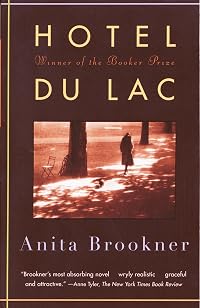
Anita Brookner was born in London, England on July 16, 1928. She received a BA in history from King's College London in 1949 and a doctorate in art history from the Courtauld Institute of Art in 1953. She went on to lecture in art at Reading University and the Courtauld Institute, where she specialized in eighteenth- and nineteenth-century French show more art. She became the first woman to be named as Slade Professor of Art at Cambridge University in 1967. Her first novel, A Start in Life, was published in 1981. Some of her other works include The Bay of Angels, The Next Big Thing, The Rules of Engagement, Latecomers, Leaving Home, Incidents in the Rue Laugier, Look at Me, and Strangers. Hotel du Lac won the Booker Prize for Fiction in 1984 and was adapted for television in 1986. She has also written scholarly works about Jacques Louis David, Jean Baptiste Greuze, and Jean-Antoine Watteau. She died on March 10, 2016 at the age of 87. (Bowker Author Biography) show less
Awards and Honors
Distinctions
Common Knowledge
- Original publication date
- 2001
- People/Characters
- Zoe Cunningham; Anne Cunningham Gould; Simon Gould
- Important places
- French Riviera; Nice, Alpes-Maritimes, Provence-Alpes-Côte d'Azur, France
- First words
- I read the Blue Fairy Book, the Yellow Fairy Book, and the stories of Hans Anderson, the Brothers Grimm, and Charles Perrault.
Classifications
Statistics
- Members
- 366
- Popularity
- 85,569
- Reviews
- 12
- Rating
- (3.46)
- Languages
- English, French
- Media
- Paper, Audiobook, Ebook
- ISBNs
- 20
- ASINs
- 6