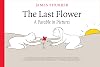
The Last Flower: A Parable in Pictures
by James Thurber
On This Page
Description
Originally published in November 1939, two months after World War II officially began, James Thurber's parable in pictures-- a graphic novel ahead of its day--about eternal cycles of war, peace, love, and the resilience of one little flower remains as relevant today as it was then. "The New York Times "called it "at once one of the most serious and one of the most hilarious contributions on war." Civilization has collapsed after World War XII, dogs have deserted their masters, all the groves show more and gardens have been destroyed, and love has vanished from the earth. Then one day, "a young girl who had never seen a flower chanced to come upon the last one in the world." Written among the sorrow and chaos of war, dedicated to this only child " in the wistful hope that her world will be better than mine." The new printing will feature new scans of Thurber's original 1939 drawings." show lessTags
Recommendations



















Member Reviews
I found this author-illustrated parable to be extremely powerful. After WW XII has destroyed nature and obliterated human civilization, the survival of one man , one woman, and one flower engenders hope that humanity has a future. With time, nature flourishes and civilization flowers, only to be destroyed by WWXIII. Yet, once more the world is left with one man, one woman and one flower. The blank pages at the end of the book invite us to complete the parable. I used this book in my adult ESL classes. The "cartoons" communicate their meaning so well. Each illustration has a single sentence at most, also good for language learners. The book stimulated much conversation and we all grew exploring the ideas in this unforgettable book together.
James Thurber was foremost known as an author of (very) short witty stories, and cartoons. The last flower. A parable in pictures is booklet of serial cartoons which tell the human condition, and the near extinction and fate of the human race. Thurber shows that very few words are needed to express the ultimate truth about one of mankind's biggest problems.
Th book is a flimsy, 5-minute read. However, quite memorable if not unforgettable.
Th book is a flimsy, 5-minute read. However, quite memorable if not unforgettable.
Very short, but a sheer pleasure. The great American humorist writes a short story, accompanied by pictures, of the last flower. Could be viewed as an environmental work, but also is a parable about modern life.
Absolutely stunning and still has meaning in what is happening in today's world.
Very simple yet very deep at the same time.
Very simple yet very deep at the same time.
Not funny. Not for young children. Not hopeful. Doesn't even hint at a lesson but rather seems to imply we should all just give up now. But still I don't want to discourage people from reading it, so I won't give it the 2 stars I was first tempted to.
Ratings
Members
- Recently Added By
Author Information

136+ Works 18,294 Members
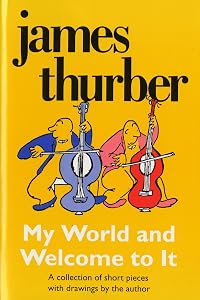
Born in Columbus, Ohio, Thurber was blinded in one eye in a childhood accident. He attended Ohio State University but left without earning a degree. In 1925 he moved to New York City, where he joined the staff of the New Yorker in 1927 at the urging of his friend E. B. White. For the rest of his lifetime, Thurber contributed to the magazine his show more highly individual pieces and those strange, wry, and disturbing pen-and-ink drawings of "huge, resigned dogs, the determined and sometimes frightening women, the globular men who try so hard to think so unsuccessfully." The period from 1925, when the New Yorker was founded, until the death of its creator-editor, Harold Ross, in 1951, was described by Thurber in delicious and absorbing detail in The Years with Ross (1959). Of his two great talents, Thurber preferred to think of himself primarily as a writer, illustrating his own books. He published "fables" in the style of Aesop (see Vol. 2) and La Fontaine (see Vol. 2)---usually with a "barbed tip of contemporary significance"---children's books, several plays (two Broadway hits, one successful musical revue), and endless satires and parodies in short stories or full-length works. "The Secret Life of Walter Mitty," included in My World---and Welcome to It (1942), is probably his best-known story and continues to be frequently anthologized. T. S. Eliot described Thurber's work as "a form of humor which is also a way of saying something serious." (Bowker Author Biography) show less
Series
Belongs to Publisher Series
rororo (1676)
Common Knowledge
- Original publication date
- 1939
- Dedication
- For Rosemary
In the wistful hope that her world
will be better than mine - First words
- World War XII, as everybody knows, brought about the collapse of civilization
- Last words
- (Click to show. Warning: May contain spoilers.). . . and one flower
- Blurbers
- White, E. B.
Classifications
Statistics
- Members
- 113
- Popularity
- 288,437
- Reviews
- 5
- Rating
- (4.13)
- Languages
- English, Esperanto, French, German
- Media
- Paper
- ISBNs
- 6
- ASINs
- 7