On This Page
Description
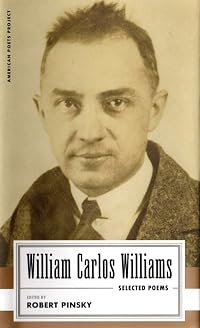
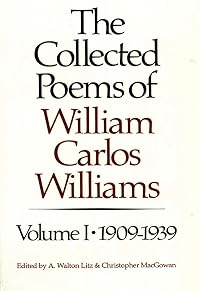
Presents approximately 140 poems by twentieth-century American poet William Carlos Williams and includes an introduction by poet Robert Pinsky and an index of titles and first lines.Tags
Recommendations



Member Reviews
Still radical. Still saying things about the ethics of perception no one else is. Fun to boot!
This is a volume from the American Poets Project published by Library of America. The editor describes Williams' poetry as fresh and challenging and I agree. I read many of the poems two and three times and each time was like a first reading. I only remember two specific poems. The first is titled "Danse Russe" about the author dancing naked in front of a mirror in the north room when everyone in the house is asleep. "Who shall say I am not the happy genius of the household?" That would be hard to forget. It was reading that poem in an anthology that piqued my interest in his poetry. I also remember a poem titled "To a Poor Old Woman". She was on the street munching a plum out of a paper bag. The author describes the action by repeating show more the phrase "they taste good to her".
What I remember most is the author's way of looking at the world and seeing what was there and only what was there. The poems had a down to earth realism that gave a special value to what he had to say. His writing was done with carefully selected words delivering a clear-cut meaning. His poems don't have any rhyme scheme and he was not the member of any "school" of poetry. I know I can read the book again and experience the same eye opening immediacy in his poems.
Williams kept up a busy medical practice all of his life. Along with poetry he wrote novels, short stories and plays. Late in his life he received two prestigious prizes for his poetry. show less
What I remember most is the author's way of looking at the world and seeing what was there and only what was there. The poems had a down to earth realism that gave a special value to what he had to say. His writing was done with carefully selected words delivering a clear-cut meaning. His poems don't have any rhyme scheme and he was not the member of any "school" of poetry. I know I can read the book again and experience the same eye opening immediacy in his poems.
Williams kept up a busy medical practice all of his life. Along with poetry he wrote novels, short stories and plays. Late in his life he received two prestigious prizes for his poetry. show less
Ratings
Members
- Recently Added By
Lists

Tom's Bookstore
346 works; 2 members
Author Information

188+ Works 9,323 Members
Poet, artist, and practicing physician of Rutherford, New Jersey, William Carlos Williams wrote poetry that was experimental in form, ranging from imagism to objectivism, with great originality of idiom and human vitality. Credited with changing and directing American poetry toward a new metric and language, he also wrote a large number of short show more stories and novels. Paterson (1946--58), about the New Jersey city of that name, was his epic and places him with Ezra Pound of the Cantos as one of the great shapers of the long poem in this century. National recognition did not come early, but eventually Williams received many honors, including a vice-presidency of the National Institute of Arts and Letters (1952); the Bollingen Prize (1953); the $5,000 fellowship of the Academy of American Poets; the Loines Award for poetry of the National Institute of Arts and Letters (1948); and the Brandeis Award (1957). Book II of Paterson received the first National Book Award for poetry in 1949. Williams was named consultant in poetry in English to the Library of Congress for 1952--53. Williams's continuously inventive style anchored not only objectivism, the school to which he most properly belongs, but also a long line of subsequent poets as various as Robert Lowell, Frank O'Hara, and Allen Ginsberg. With Stevens, he forms one of the most important sources of a specifically American tradition of modernism. In addition to his earlier honors, Williams received two important awards posthumously, the Pulitzer Prize for Poetry (1963) and the Gold Medal for Poetry from the National Institute of Arts and Letters (1963). (Bowker Author Biography) show less
All Editions
Series

Common Knowledge
- Canonical title
- William Carlos Williams: Selected Poems
- Disambiguation notice
- This is the Robert Pinsky-edited Selected Poems, first published by the Library of America as part of their American poets project. Please do not combine with similarly-named works that contain a different collection ... (show all)of poems.
Classifications
Statistics
- Members
- 186
- Popularity
- 176,149
- Reviews
- 2
- Rating
- (4.41)
- Languages
- English
- Media
- Paper
- ISBNs
- 1
- ASINs
- 1